







A coordinated whole-of-society approach is at the centre of Ireland’s latest efforts to reduce the growing threat of antimicrobial-resistant bacteria. Niamh Cahill reports
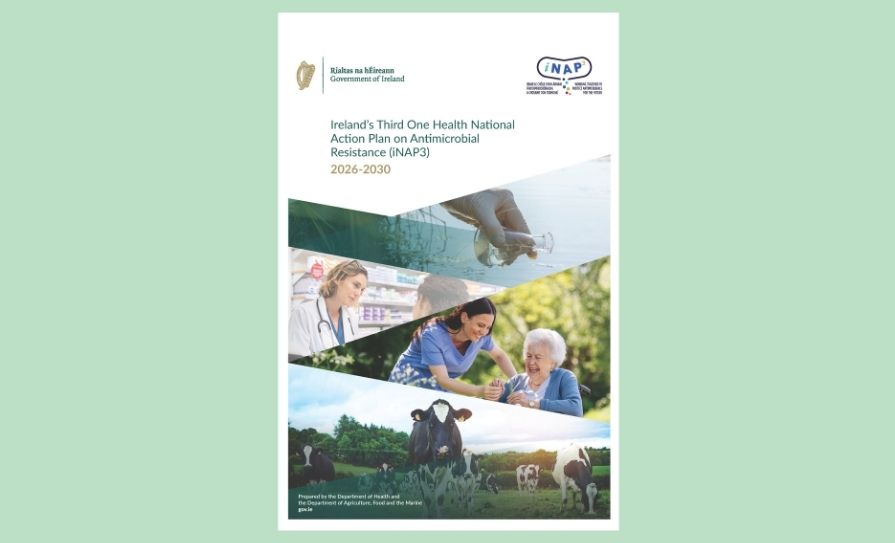
At the end of last year, the Government published Ireland’s One Health National Action Plan on Antimicrobial Resistance 2026–2030. Also known as iNAP3, it is the third national action plan on the issue.
The new plan was launched on European Antibiotic Awareness Day on 18 November and during World Antimicrobial Awareness Week, which ran from 18 to 25 November.
The HSE also launched its own document – Antimicrobial Resistance and Infection Control (AMRIC) Action Plan 2026–2030 – to complement the Government’s strategy.
The Medical Council and Irish Pharmacy Union, among other healthcare organisations, released statements and advisories during the awareness week regarding the misuse or overuse of antibiotics in an attempt to raise awareness among the public and remind all healthcare professionals of the dangers.
As iNAP3 outlines, it is widely known within healthcare that antimicrobial resistance (AMR) “presents a significant and escalating threat to public and animal health, food security, and our shared environment”.
But awareness among the public is not as widespread as it is among clinicians, and this needs to change if Ireland is to succeed in its efforts to reduce AMR within the community and prevent further unnecessary deaths, according to the plan.
‘One Health’
The ‘One Health’ approach is acknowledged as the most effective way to address AMR globally and is promoted by the European Commission and the World Health Organisation (WHO).
A spokesperson for the Department of Health explained to the Medical Independent that the goal of the concept “is to encourage multidisciplinary collaborative efforts across different sectors such as human health, animal health, agriculture, and the environment to achieve the optimal health outcomes for people and animals”.
“It advocates a ‘whole-of-society’ approach, recognising that the health of people is connected to the health of animals and the environment,” the spokesperson said.
According to the WHO, AMR was directly responsible for 1.27 million global deaths in 2019 and contributed to 4.95 million deaths. It has warned that without action deaths could rise to 10 million per annum by 2050.
In a factsheet it has published on the issue, the WHO states that the “misuse and overuse of antimicrobials in humans, animals and plants are the main drivers in the development of drug-resistant pathogens”.
It describes antimicrobial resistance as one of the top 10 global public health threats facing humanity.
This is why the Organisation has stepped up efforts to monitor AMR worldwide. In October last year, the WHO released its Global Antibiotic Resistance Surveillance Report 2025.
It found that between 2018 and 2023, antibiotic resistance increased in over 40 per cent of the pathogen-antibiotic combinations monitored by WHO, with an average annual rise of between 5 and 15 per cent.
The report noted how the incidence of AMR varies greatly worldwide. Resistance was highest in south-east Asian and eastern Mediterranean WHO regions where one in three reported infections were resistant.
The document highlighted how drug-resistant gram-negative bacteria are becoming more dangerous internationally, with over 40 per cent of E coli and more than 55 per cent of K pneumoniae resistant to third-generation cephalosporin antibiotic treatment.
More than 100 countries, including Ireland, reported data to the WHO on AMR, the report noted. However, many countries were unable to submit reports due to a lack of adequate systems to gather reliable information.
iNAP3, jointly published by the Minister for Health and Minister for Agriculture, Food and the Marine, also details how AMR is a growing threat to global health and how it can undermine the effectiveness of life-saving treatments. AMR can cause increased hospital admissions, greater healthcare costs, treatment failure, severe illness, and death, according to iNAP3. While it outlines various ways to tackle the growth in AMR nationally, it also notes the advances made to date.
The first Government plan seeking to tackle the rise in AMR was published in 2017. According to Minister for Health Jennifer Carroll MacNeill, much progress has been achieved since this time.
The progress includes a 50 per cent reduction in the sale of highest priority critically important antimicrobials for use in food-producing animals between 2018 and 2023. Separately, a 25 per cent overall reduction in antimicrobial sales for food-producing animals in the same period has occurred.
A national veterinary prescription system to facilitate enhanced monitoring and reporting of antimicrobial use in animals has been developed. The website (www.antibioticprescribing.ie) is another step forward, according to iNAP3.
But it is evident that much greater action is required, as well as an increased awareness among the public on ways they can help to reduce antimicrobial resistance.
AMR is a complex and evolving threat that will require “continued commitment from every sector and from each one of us”, according to Minister Carroll MacNeill.
Objectives
iNAP3 sets out six objectives. The first of these is an “increased emphasis on communication, behaviour change, education, and diagnostics”.
This will involve, among a number of other measures, the launch of a public information campaign to raise awareness of AMR and an assessment of the impact of the campaign.
Enhanced education and training of professionals within food, animal, and health sectors is also planned. Learning within schools and educational institutions will be another avenue being pursued under the plan.
The second objective sets out the enhancement of surveillance of antibiotic resistance and use. This will include the creation of a national system to monitor healthcare-associated infections in intensive care units and surgical site infections by 2030.
As part of the HSE Strategic Plan for Laboratory Services 2026–2035, improved detection of infection and AMR is also being sought.
The third objective seeks to reduce the spread of infection and disease through strengthening infection prevention control measures in healthcare facilities and communities, as well as increasing vaccine use.
The Government, under its fourth target, is seeking to optimise the use of antibiotics in human and animal health. It wants to reduce antibiotic consumption in Ireland by 27 per cent by 2030.
Some 90 per cent of antibiotic use in human health in Ireland occurs in the community, according to iNAP3.
The Government plan states the HSE will explore “population antimicrobial prescribing… in daytime GP services”.
The fifth objective focuses on research, with the promotion of research and sustainable investment in new medicines, diagnostic tools, vaccines, and other interventions.
The sixth and final aim centres on the coordination of a multi-sectoral approach across Government and State agencies in tackling AMR.
The plan notes that the national interdepartmental AMR committee “brings together the key stakeholders in the human health, animal health, and environmental sectors”. The HSE’s plan similarly sets out its targets under these six objectives.
Commenting on the HSE plan, Dr Eimear Brannigan, HSE National Clinical Lead for AMRIC, said: “We have become reliant on antibiotics being effective to treat or prevent infection during many of our routine operations, for critical surgery such as organ transplants, cancer treatment, and treatment of many illnesses.”
“Unfortunately, a lot of antibiotics have been used in people, animals, and crops, often when they were not always appropriate. Because of this, many bacteria or bugs have adapted and become resistant to different types of antibiotics.”
In a statement from the Medical Council, its CEO Dr Maria O’Kane said increasing awareness of AMR is critical to protecting patients, arguing that the issue cannot be addressed in isolation.
“For doctors, reducing AMR means ensuring that antibiotic medicines are only prescribed and administered when they are genuinely needed. Antimicrobial medicines should only be used where they are required to treat serious infections. For patients, not every illness requires an antibiotic, and your doctor will advise you on the most effective treatment. Avoiding unnecessary antibiotics helps protect their effectiveness for the future.”
For doctors, reducing AMR means ensuring that antibiotic medicines are only prescribed and administered when they are genuinely needed
Further detail is available at https://assets.gov.ie/static/documents/94afd4eb/106235_DOH_-_iNAP3_Report_v11_-_pages_1.pdf











Leave a Reply
You must be logged in to post a comment.