








Bette Browne examines the laws around assisted dying in other countries and what might be learned from them
Legalising assisted dying is a deeply complex issue, fraught with profound ethical and moral dilemmas.
Despite the concerns many have about the subject, the Irish Hospice Foundation (IHF) believes open discussion is essential.
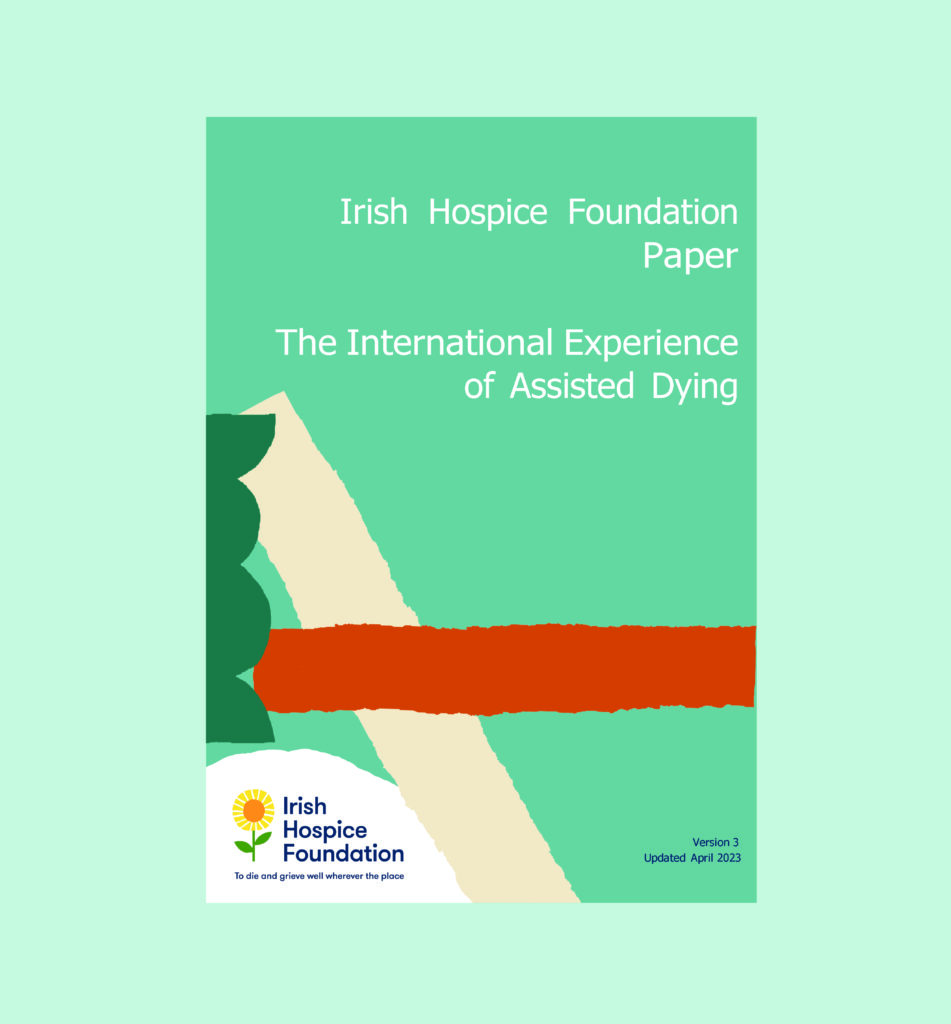
In 2023, the Foundation published a paper titled The International Experience of Assisted Dying.
“We recognise that a debate on assisted dying is required and we hope that any debate on this matter would be respectful and informed,” the paper stated.
We recognise that a debate on assisted dying is required and we hope that any debate on this matter would be respectful and informed
The document poses a key question: If assisted dying were to be legislated for in Ireland, what should such legislation look like – and what would be the ethical, social, and practical implications of doing so?
Some of these answers may be found in examining both the current Irish debate and how other countries have developed laws to safeguard rights and address public concerns.
‘Assisted dying’ is used as a broad term for situations in which medication is voluntarily administered to hasten death. It encompasses both assisted suicide – where the patient administers the medication themselves – and euthanasia, where a healthcare professional does so. Suicide was decriminalised in Ireland in 1993, but aiding or abetting suicide remains illegal.
Ireland
In 2012, a legal case was brought by Ms Marie Fleming, which challenged the prohibition of assisted dying. Her case was dismissed by the High Court in January 2013 and the Supreme Court later upheld that decision. However, the Supreme Court clarified that the Oireachtas is not constitutionally barred from legislating to decriminalise assisted dying in limited circumstances, provided appropriate safeguards are in place.
A subsequent case in 2014 involved the prosecution of Ms Gail O’Rorke for allegedly assisting, or attempting to assist, her friend to die. She was found not guilty on three charges.
Proposed legislation
A Private Members’ Bill – the Dying with Dignity Bill 2015 – was introduced in the Dáil by Independent Deputy John Halligan. It did not progress before the Government was dissolved ahead of the 2016 general election.
A second Dying with Dignity Bill was brought forward in September 2020 by People Before Profit–Solidarity Deputy Gino Kenny. The Bill passed second stage and was referred to the joint Oireachtas committee on justice, which invited public submissions between November 2020 and January 2021. More than 1,400 submissions were received during the consultation process.
After reviewing these submissions and a legal analysis from the Office of the Parliamentary Legal Advisers, the committee concluded that the Bill contained serious technical flaws, potential unintended policy consequences, and sections that required significant revision.
In July 2021, the committee recommended establishing a special committee to examine the issue in greater depth. The joint Oireachtas committee on assisted dying was subsequently established by Dáil motion on 24 January 2023.
On 20 March 2024, the committee recommended that the Government introduce legislation permitting assisted dying under specific, limited circumstances (see panel). It also left open the possibility of recommending no legislative or policy change. The committee’s remit was to examine the issue in general, rather than to assess a specific Bill.
The Assisted Dying Bill 2024 proposed to legalise assisted suicide for terminally ill individuals with a prognosis of six months or less to live, who were mentally competent to make the decision. It included strict safeguards, such as independent medical assessments to confirm eligibility and ensure that requests were voluntary and free from coercion. The Bill lapsed in November 2024 with the dissolution of the Dáil, having reached only the first stage of the legislative process.
The issue did not appear in the 2025 Programme for Government.
However, Deputy Kenny said in January this year that he was optimistic that it would come before the Dáil again over the next five years.
“There’s four and a half years there for it to be legislated for,” he said.
UK
Legislation on assisted dying has recently advanced in the UK. In England and Wales, the Terminally Ill Adults (End of Life) Bill 2024-25 proposes to legalise assisted dying for terminally ill adults. The Bill would allow individuals with a prognosis of six months or less, who are mentally competent, to request assistance in ending their life. It does not extend to Northern Ireland. However, MPs have passed an amendment permitting the manufacture of the lethal drugs used in assisted dying within Northern Ireland.
Only one of Northern Ireland’s MPs supported the new legislation during a key House of Commons vote.
Social Democratic and Labour Party MP Colum Eastwood backed the Bill. He said it was right that people “get the opportunity in very limited and very protected circumstances to die in a way which gives them more comfort than we are doing now”. He added: “We all know these things are happening, people with lots of money can go to Switzerland. We need to ensure that it is available to more people and it is important that a legal framework is put around this.”
The Bill includes safeguards to ensure requests are voluntary, such as assessments by two independent doctors and a mandatory 14-day waiting period after approval before assistance can be provided. Currently, the Bill remains at the report stage in the House of Commons and has not yet been enacted. On 19 September, the House of Lords – also examining the Bill – formed a committee required to report back by 7 November before the Bill can move to the next stage of the legislative process.
In Scotland, the Assisted Dying for Terminally Ill Adults (Scotland) Bill was introduced in March 2024 and successfully passed the first stage of parliamentary debate in May 2025. The Bill proposes to allow mentally competent, terminally ill adults to receive assistance in ending their life, though it still faces further stages before becoming law.
Legislation on assisted dying generally seeks to strike a careful balance between compassion and autonomy, while safeguarding against potential abuse. An estimated 300 million people worldwide now have legal access to assisted dying.
Other countries
In most jurisdictions where assisted dying is permitted, eligibility is limited to individuals aged 18 and over. This includes Luxembourg, Canada, New Zealand, the Australian states of Victoria and western Australia, as well as the US state of Oregon and several other US states. Similarly, the proposed Dying with Dignity Bill 2020 in Ireland specified that a person must be at least 18 years old on the day they make a formal declaration requesting assisted suicide.
Different legislative frameworks for assisted dying have been introduced worldwide. It is legal in eight European countries, in 10 US states, in Canada, New Zealand, and several Australian states. Colombia remains the only country in South America where assisted dying is legal.
Common safeguards in relation to requests for assisted dying are evident in legislation in many countries that have legalised the act. These safeguards include:
▶ The request is a self-request only, meaning it has to come directly from the eligible person.
▶ The request is voluntary, well-considered, and made without undue influence.
▶ The request is a formal, written request.
▶ The patient gives informed consent, ie, has been made aware of all treatment options.
▶ The request must be witnessed and signed by independent witnesses and/or medical practitioners.
Switzerland: Switzerland has allowed assisted suicide since 1942. The Swiss Criminal Code 1942 outlaws “incitement or assistance to suicide from selfish motives”, so consequently acts with non-selfish motives remain legal. This includes permitting non-Swiss residents to access assistance from a number of organisations set up for that purpose, such as Dignitas.
The Netherlands: The Netherlands has allowed voluntary euthanasia or assisted dying since 2001. People who have an incurable condition, face “unbearable suffering”, and are mentally competent may be eligible for voluntary euthanasia or assisted dying. Parental consent is required for 16- and 17-year-olds.
Belgium: Assisted dying was legalised in 2002 under the Belgian Act on Euthanasia. The law allows adults who are in a “futile medical condition of constant and unbearable physical or mental suffering that cannot be alleviated” to request voluntary euthanasia.
Luxembourg: Luxembourg legalised assisted dying in 2008 when the parliament approved a Law on the Right to Die with Dignity. The law allows a person who is suffering unbearably from an illness, and is mentally competent, to request medical assistance to die.
Germany: Germany’s Constitutional Court declared on 26 February 2020 that a ban on suicide in 2015 was unconstitutional. It found that there is a constitutional right to a “self-determined death”. It includes the freedom to seek and make use of assistance provided by a third party. The Bundestag is drafting legislation to regulate this based on the ruling.
Spain: Spain passed a law to legalise euthanasia and assisted suicide in March 2021. The law allows adults with serious and incurable diseases that cause intolerable pain to choose to end their lives. They must be able to give informed consent. The law allows both voluntary euthanasia and assisted suicide. The law only applies to Spanish nationals and residents.
Austria: Assisted dying was legalised by the Austrian parliament in 2022 and it is legal for adults who are terminally ill or have a permanent, debilitating condition. Eligible people can get access to life-ending medication which they self-administer. Austria’s constitutional court lifted the absolute ban on assisted dying when it ruled that it “violated the right of self-determination”.
Portugal: Portugal legalised euthanasia in 2023 for terminally ill people in great suffering. Euthanasia is accessible to mentally competent adults if they are terminally ill and suffering lasting and unendurable pain. The law only applies to Portuguese nationals and legal residents.
Oregon, US: Oregon was the first US state to allow assisted dying. On 27 October 1997, Oregon enacted the Death with Dignity Act. It allows terminally ill individuals to end their lives through the voluntary self-administration of lethal medications, expressly prescribed by a physician for that purpose. The terminally ill person must be over 18, be mentally competent, have a terminal illness that will lead to their death within six months.
A doctor, known as the ‘consulting doctor’, must confirm that the person is able to make and communicate decisions about their health and has a terminal illness with less than six months to live. Another doctor, known as the ‘attending doctor’, must inform the person of alternatives, including palliative care, hospice and pain management options.
If either doctor thinks the person’s judgement is affected they can be referred for psychological evaluation and may be considered ineligible. The person must make a written request to the attending doctor. This must be witnessed by two individuals who are not primary care givers or family members.
The person must request the medication twice. There must be 15 days between each request – called a ‘cooling off’ period – unless this exceeds their life expectancy.
The person can cancel the verbal and written requests at any time.
The terminally ill person must be able to take the life-ending medication themselves.
They can only get the medication after meeting the legal safeguards.
The Oregon model is cited as the blueprint for a safe and effective assisted dying law because of such safeguards.
For now, Ireland has proposed legislation. But the fate of the Assisted Dying Bill 2024 remains to be seen.
The Oregon model is cited as the blueprint for a safe and effective assisted dying law because of such safeguards
Recommendations to Irish Government on Assisted Dying
A joint committee on assisted dying was established by Dáil Éireann on 24 January 2023. On 20 March 2024, the committee’s recommendations were published. The recommendations on any proposed legislation included:
- That the Government introduces legislation allowing for assisted dying, in certain restricted circumstances.
- That the Optional Protocol to the United Nations Convention on the Rights of Persons with Disabilities should be ratified as a precondition of the commencement of assisted dying legislation. (The Protocol came into effect on 30 November 2024.)
- That the right to conscientious objection of all doctors and health workers directly involved in the provision of assisted dying should be protected in law.
- That a person inquiring about assisted dying, following a terminal diagnosis, should be informed of, and assisted in, accessing all end-of-life care options, including palliative care.
- That palliative care and the operation of assisted dying should operate completely separately and independently of each other.
- That resources and funding for, and information about, palliative care services should be substantially increased to ensure consistent and accessible services of the highest quality are provided throughout the country.
- That research be carried out on the relationship between economic disadvantage and health inequalities and the question of people feeling a burden.
- That where any person has failed to adhere to relevant statutory requirements governing assisted dying, he or she will have committed a criminal offence.
- That any potential legislation on assisted dying provides that where a person has been proven guilty of coercion, they will have committed an offence under the Act.
- That doctors and healthcare workers involved in the provision of assisted dying be trained to the highest level possible to identify coercion when assessing or treating a patient.
- That if a medical professional has been proven to have acted outside of the permitted regulations or has attempted to coerce an individual, they will have committed an offence under the potential legislation and may be held liable.
- The inclusion in any legislation on assisted dying of mandatory reporting to An Garda Síochána of any information or evidence concerning the issue of possible coercion in relation to assisted dying.
- That where capacity is in doubt, a functional test for decision-making capacity should be part of the assessment for eligibility for assisted dying.
- That any doctor involved in determining eligibility for assisted dying must have professional training in assessing capacity and voluntariness.
- That following an initial successful assessment for assisted dying that finds a patient eligible, if the patient temporarily loses decision-making capacity, then that eligibility is suspended for the duration of their incapacity.
- That advanced healthcare directives allow for individuals to make requests for assisted dying. The consideration of the issue may be included in any review of assisted dying legislation.
- That if assisted dying is introduced, an assessment by a qualified psychiatrist should be required in circumstances where the patient is deemed eligible, but there are concerns about whether the person is competent to make an informed decision.
- That eligibility for assisted dying should be limited to Irish citizens or those ordinarily resident in the State for a period of not less than 12 months. That assisted dying should be limited to people aged 18 or over.
- That only a person diagnosed with a disease, illness or medical condition that is: A) both incurable and irreversible; B) advanced, progressive and will cause death; C) expected to cause death within six months (or, in the case of a person with a neurodegenerative disease, illness, or condition, within 12 months); and D) causing suffering to the person that cannot be relieved in a manner that the person finds tolerable, is eligible to be assessed for assisted dying.
- That two formal requests for assisted dying must be made, with a set specified interval between. At least one of these requests must be recorded in writing, and before two independent witnesses.
- That all assisted dying applications and related processes should be overseen and governed by an independent national body for assisted dying services and related supports.
- That family members, carers, guardians or holders of an enduring power of attorney cannot request assisted dying in the interest of another person.
- That if assisted dying is legislated for, a doctor or nurse practitioner must be present for the duration of the assisted dying process and must remain until after the patient’s death and must account to the responsible authority for any remaining substances.
(Source: Houses of the Oireachtas record)










Leave a Reply
You must be logged in to post a comment.