








A conference in Dublin recently explored the opportunities and challenges involved in integrating health services.
More than 2,000 people gathered in Dublin recently to explore how health services can be better integrated across hospitals, primary care, and community settings. The HSE’s Integrated Healthcare Conference 2026 was held on Thursday 3 September in the Convention Centre Dublin.
Issues such as weekend rostering, the impact of regionalisation, and how best to develop services in the community were raised in a series of sessions during the meeting.
Over 400 posters from HSE teams across the country were also on display, highlighting examples of local innovation that could be “scaled up” across the health service.
The conference was held against the backdrop of over two years of significant organisational change with the creation of the six health regions.
While many speakers focused on positive developments in integrated care, the challenges were also discussed.
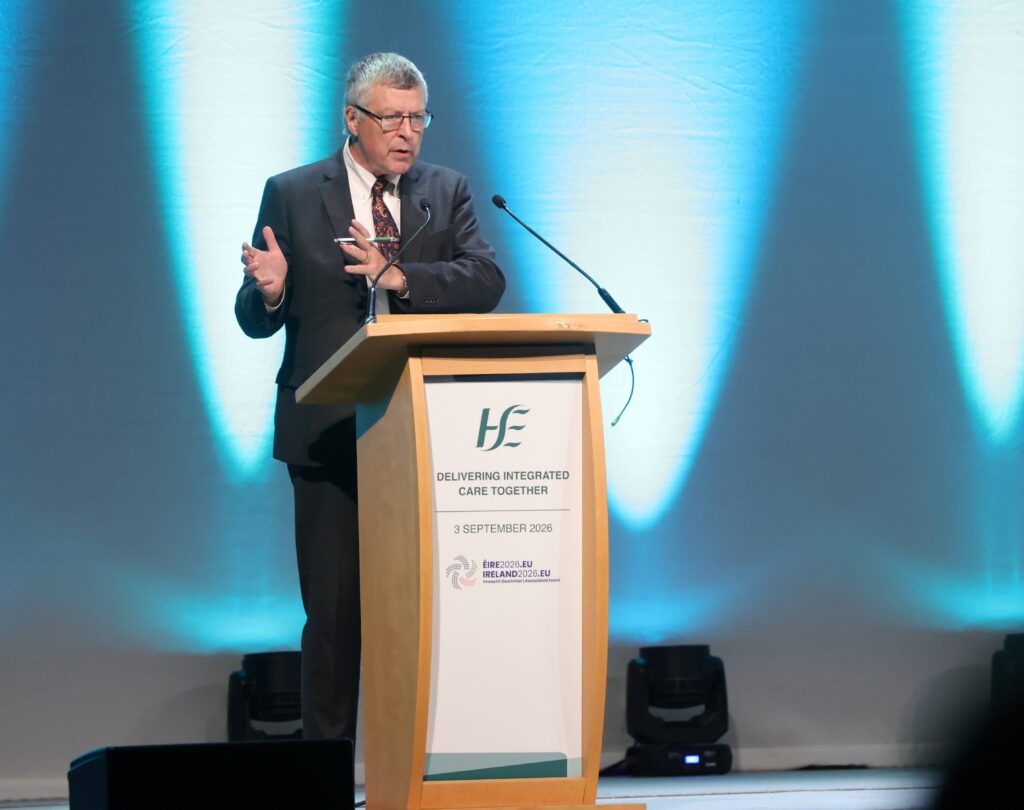
In his final address to the annual conference as HSE board Chair, Mr Ciarán Devane noted that for the fourth year in a row Ireland had “the highest self-reported [good] health… of any country” within the European Union.
“Over 80 per cent of men and just under 80 per cent of women are saying they are in good, or very good health….So something is going right. Now, that is bigger than the HSE and bigger than health itself, of course, but it is a fantastic position to be in.”
Compared to a decade ago, Mr Devane said there are more doctors, nurses, and health and social care professionals employed across the system. Progress had come from “good work, good policy, and really substantial investment”.
However, he warned that this level of investment “cannot, and should not, be expected to continue”.
In terms of challenges, he emphasised the need for improvements within the area of e-health and the importance of reducing long patient waiting times and the high numbers on waiting lists.
Innovation
Speaking to the Medical Independent (MI) following his address, Mr Devane, who has been HSE Chair since September 2018, said the most positive aspect of regionalisation has been the ability of local hospitals and regions to “take the lead” on innovation.
He referenced the hundreds of posters at the conference showing localised examples of integrated innovation that could spread across the regions.
“That is also the challenge [of regionalisation],” he said.
Mr Devane explained that it is important to get the best examples of integration and innovation at a local level scaled-up to a regional and then national level quickly.
Each of the recently established 20 integrated health areas (IHA) “should have a list of things” on which they have driven innovation, he said. This could then feed into driving progress in other IHAs.
Mr Devane acknowledged that urgent and emergency care would always receive significant focus in terms of reform. However, he said there was also scope to pursue a much wider range of innovations across the health service.
In particular, Mr Devane said there needed to be a greater focus on developing care in the community over the coming years. He pointed to the opening of new primary care centres, the chronic disease management programme, and the introduction of the respiratory syncytial virus (RSV) immunisation programme for newborns as examples of initiatives that have helped reduce presentations in the acute sector.
Mr Devane said primary care hubs and community diagnostics were key developments, which not only bring services closer to people’s homes, but also reduce pressure on hospitals.
In addition, he said RSV vaccination is “a good example of a really specific intervention that had a very quick, measurable outcome”.
However, Mr Devane said there was still significant scope to strengthen health prevention, particularly within communities, to help further reduce demand on acute services.
MI asked Mr Devane what he believes will be the greatest challenge facing the health service when his term comes to an end in June 2027.
He said it would be to ensure patients receive care in the “right place” – something on which the health service still has “a long way to go”.
In terms of progress during his time as Chair, Mr Devane pointed to improvements in governance, audit and risk management, and corporate plans.
“If you are sitting in my position, I think it is like night and day from where it would have been seven years ago.”
In general, the HSE workforce had “grown in confidence” since the Covid-19 pandemic.
“I think after that, people knew they could innovate… knew they could deal with crisis,” according to Mr Devane.
From an interface level, a live electronic health record that everyone can access no matter where you are working would help
Integrated care
A morning session during the conference focused on “delivering impact through integrated care”, with doctors from both the acute and community sectors sharing ‘real-world’ examples from their work.
Dr John Butler, Consultant Geriatrician, Sligo University Hospital, and member of the Sligo/Leitrim/West Cavan/South Donegal Integrated Care Team for Older People (ICPOP), was among the speakers.
Dr Butler outlined that the experience of integrated care for older patients had been positive, with encouraging statistics regarding patients avoiding emergency department (ED) admissions.
It is “essentially getting the right care, for the right person, at the right time, and in the right place”, Dr Butler told attendees.
“Which often might be in your own home or very close to where you live.”
For staff, it was about working in a “joined-up manner” between hospitals, primary care settings, and nursing care homes.
“I think from an integrated care perspective [the best thing for staff] is that we are co-located and we work together,” Dr Butler told MI following his presentation.
“Putting integration into practice means that you cross each other’s borders. So, the hospital teams don’t just stay in the hospital, and the community teams don’t just stay in the community. You cross the interface regularly and we have quite a bit of that. That really helps, certainly from a community perspective.”
He said the ICPOP multidisciplinary team meets regularly. “We look at things like what’s changing in the world of older people’s medicine, service development initiatives, and we have invited speakers,” Dr Butler said.
He said it was becoming increasingly vital for healthcare professionals not only to continue with their day-to-day work, but also to keep their skills and knowledge up to date, and share that learning across the different parts of the service.
Weekend rostering
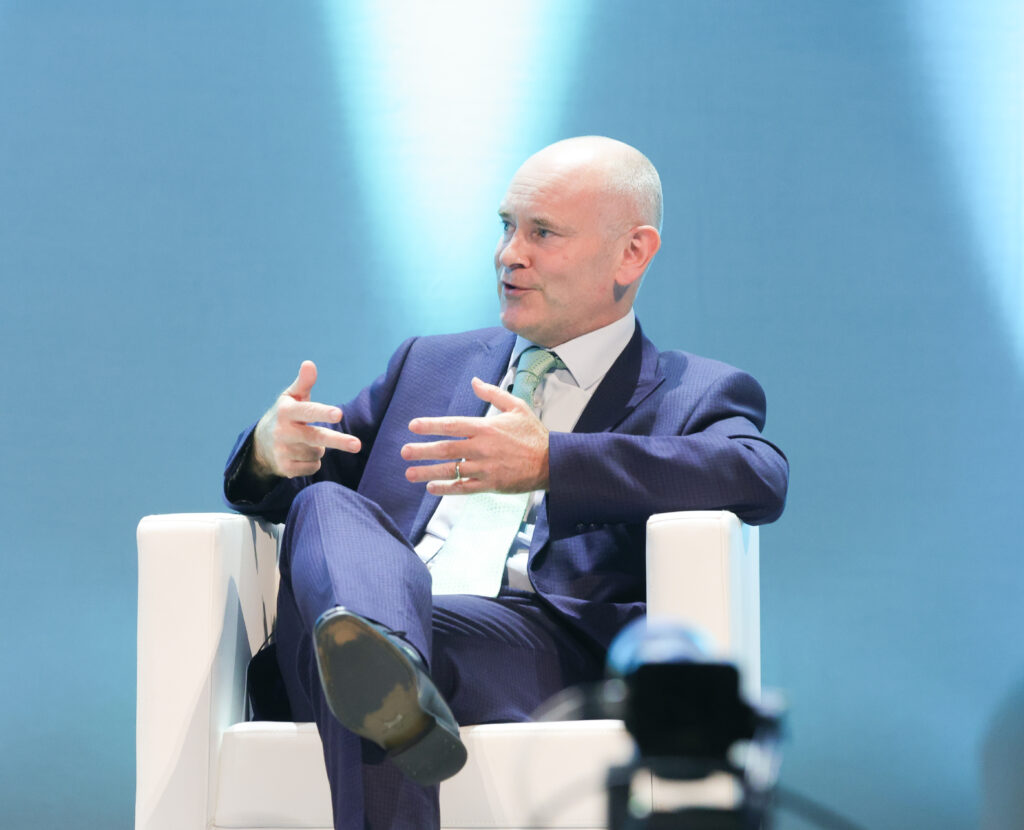
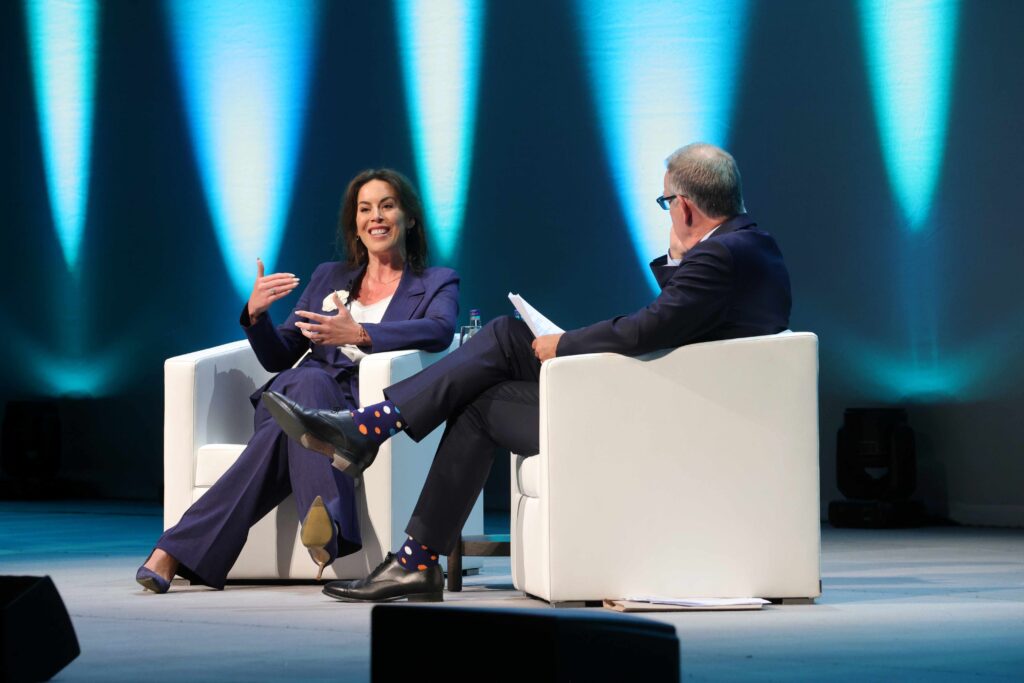
Speaking during her onstage interview with Mr Brian Dobson, the Minister for Health Jennifer Carroll MacNeill emphasised the value of the public-only consultant contract (POCC) to allow for rostering on weekends and evenings.
However, the IMO has highlighted the need for appropriate support services to fully implement the POCC. In a statement last month, Prof Mick Molloy, Chair of the IMO consultant committee, said that where a consultant has access to a full team, services, and infrastructure on a Monday, but not on a Saturday, rostering them on a Saturday results in “less productivity”.
“This is why hospitals are in some cases slower to roster consultants on a Saturday,” Prof Molloy said.
“The contract allows such rostering, but there is no recognition of the additional staff required to make a comprehensive six-day health service a practical reality.”
Echoing concerns raised from both the IMO and the IHCA, Dr Butler told MI it is important that consultants who are rostered at a weekend have adequately staffed teams working with them.
While the health service has a “great system 9am to 5pm” on weekdays, he said consultants working on Saturdays may not have the same level of support.
“I don’t have the whole team with me,” he said when he works at weekends.
Dr Butler emphasised that there was also a need for fully staffed support teams to be available in the community.
He described the move towards six- and seven-day working as “the biggest challenge”, particularly at the interface between community and acute services. Many services still close at weekends, he noted, leaving the ED often as the only service that remains fully operational.
Clinical leadership at regional level
Speaking to this newspaper at the IHCA Annual Conference last October, Dr Colm Henry, HSE Chief Clinical Officer, said that the creation of the health regions and the drive towards integrated care was one of the chief reasons why he had instigated an internal HSE review of the clinical director role.
The HSE Integrated Healthcare Conference 2026 was given an early insight into the findings of the as-yet unpublished review during an address by Prof Pat Nash, Regional Clinical Director for HSE West and North West.
Prof Nash, who is leading the review, told the conference that the role of clinical director was “a unique role” because usually it is “hybrid” in nature.
While it has evolved historically in Ireland, the 2008 consultant contract was the first time there was a clear definition.
“That is still the definition, because the new POCC [public-only consultant contract] didn’t change the description,” Prof Nash said.
“The current models have evolved by themselves. There wasn’t a rigid template ascribed. We have a ‘dolly mixture’ of titles, from associate clinical director to clinical director. We have executive clinical directors in mental health. We also have executive medical directors in some of our large model four hospitals. And now we have the new regional clinical director and this role interfaces with hospital.”
He also said that the review team has examined the role of GPs in clinical leadership
As reported in the last issue of the Medical Independent (MI), Prof Nash outlined results from a survey the group conducted of current clinical directors. Among its findings were that 50 per cent said the current model had “average effectiveness”.
Only 17 per cent “reported that they had access to timely and relevant performance data”.
Some 12 per cent felt they had the ability to influence the allocation of resources, while 83 per cent said they had influence over quality and safety.
Further findings from the survey showed that 40 per cent of respondents said they had the “authority to implement agreed changes”. Some 80 per cent felt “involved” in service planning, but this fell to 56 per cent when it came to workforce planning.
Prof Nash said that “one of the things that comes up again and again” was that clinical directors often felt they had “all the responsibility without the authority”.
Recurring issues from stakeholder engagement included the substantial variation in role titles, remit, and organisational structures.
There was also reported to be inconsistent contractual, working time, and remuneration arrangements, and poorly defined relationships between department, directorate, hospital, and regional leadership roles.
Other issues identified included inconsistent access to information, management expertise, and administrative support, as well as limited integration of clinical governance across acute, community and mental health services. Uncertainty was also reported around indemnity, education, appointments, and performance review arrangements.
Speaking to MI following his address, Prof Nash said he hoped the review would help clarify and improve the role of the clinical director within the new regional structure.
During her opening address to the conference HSE CEO Ms Anne O’Connor said: “When the health service is under pressure, that is when we need momentum to redesign services around the patient. Many of the solutions to challenges experienced locally, already exist within our health service. Our task now is to share them, learn from them, and turn the best examples into consistent everyday practice for patients and staff across the country.”
Putting integration into practice means that you cross each other’s borders
E-health
The problems of developing integrated care posed by Ireland’s current poor e-health infrastructure was a common theme during the conference.
While Mr Devane said the electronic healthcare record (EHR) would bring great benefits, he stressed that these would depend on more than simply putting the technology in place.
“It is not really so much about the tech getting in, it is about having the ability to make the use of that data,” he told MI.
The HSE Chair highlighted the potential convenience for patients of being able to access their medical records in real time, receive a text notification when test results are available, and view information through the HSE App.
However, he said that the larger task will be using the population-based evidence that comes from patient data, “and having the skill to drive real insight out of that.”
From his perspective, Dr Butler said the role of e-health in integrated care is crucial. The eventual introduction of an EHR across the health regions would impact his service “absolutely”.
“It will mean [information] follows the patient, not the service,” he told MI. “The patient [currently] crosses the interface between the community, hospital, and back again, and if things aren’t done electronically then processes are much slower.”
“From an interface level, a live electronic health record that everyone can access no matter where you are working would help.”
Dr Butler said having an EHR accessible to healthcare professionals across settings would make it much easier to share information and coordinate care. For example, a clinician treating a patient in the ED could access relevant information from their GP or public health nurse, such as previous treatment for a wound. He said having access to this information could ultimately have a significant impact on patient outcomes.
In this regard, Dr Butler said the inconsistent wi-fi availability in some rural areas in Co Sligo and Co Leitrim is an “issue” that requires addressing.











Leave a Reply
You must be logged in to post a comment.