








Doctors and policymakers recently gathered in Dublin for the Health Summit to discuss the final years of Sláintecare and what comes next. David Lynch reports
Sláintecare is… coming to the end. Now is the time to get a plan in place going forward.”
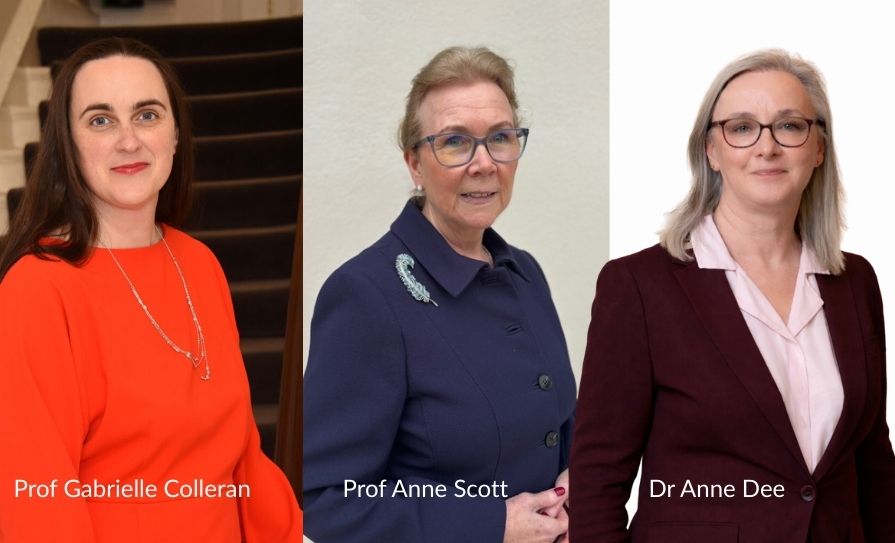
IHCA President Prof Gabrielle Colleran was speaking to this newspaper at the annual Health Summit in Croke Park, Dublin, on 5 February.
The theme of this year’s event was transforming the way healthcare is planned, delivered, and experienced, particularly as we enter the final 24 months of Sláintecare.
Ireland’s 10-year cross-party health strategy (2017–2027) to transform the health system into a universal, single-tier service has officially only two years to run. Asked about what comes after Sláintecare, or whether work has begun on a replacement, a Department of Health spokesperson noted that the Sláintecare Progress Report 2025 and Sláintecare Action Plan 2026 are currently in development.
“The next steps will be considered following their publication.”
Prof Colleran told the Medical Independent (MI) that under Sláintecare certain objectives have been achieved.
“But a lot hasn’t – so where to next?”
She said the concept behind Sláintecare, as a cross-party political agreement, was “really positive”. However, the plan “was definitely under-funded”.
“So it hasn’t delivered on the capacity side,” said Prof Colleran, who is Clinical Associate Professor in Paediatrics, Trinity College Dublin, and Assistant Clinical Professor in Women’s and Children’s Health, University College Dublin. “What I would hope is that the next plan will have a lot more clinician voices in it and hopefully [it will be] focused on practically delivering, so that patients aren’t waiting as long.”
As part of the process of considering a post-Sláintecare landscape, the IHCA organised the FutureCare Conference last month, and released a new document FutureCare: Action Plan for Health 2026 (full coverage in the next issue).
“As consultants, instead of giving out about the things that aren’t working… the purpose [of the conference and action plan] is what practical measures do we think we can do now that will improve things. And how we can contribute to setting the mission of what the post-Sláintecare plan is,” said Prof Colleran.
She believes a greater focus on hospital capacity and patient waiting lists will need to be part of that.
“The quality overall [of healthcare in Ireland] is very good and patients’ satisfaction is very high when they get in,” said Prof Colleran. “But people are waiting too long to see consultants in general, and as a result some of them are experiencing harm.”
Community
Dr Anne Dee, IMO President and Consultant in Public Health Medicine, also addressed the Health Summit during a panel discussion on progress and challenges in relation to Sláintecare.
Dr Dee praised the positive impact of the GP-led structured chronic disease management (CDM) programme. However, she said beyond the CDM, there had “been no real meaningful expansion of care into the community”. On challenges around health inequalities and prevention, she told attendees that Sláintecare had “barely started”.
Speaking to MI following her address, Dr Dee insisted that a greater shift of care into the community “needs to happen”. In the longer term, this would be one way of helping “address… capacity issues” across the system.
“Really putting care actually into the community, rather than moving care around from level 4 hospitals, to level 3 to level 2. It’s really quite urgent. So much can be done in primary care.”
In the context of the new national public health strategy and the broader public health reform agenda, MI asked Dr Dee if she is hopeful a greater focus on prevention may help positive transformation in the healthcare system.
“Yes, I’m very hopeful,” said Dr Dee. “But again, it needs investment. It’s not going to happen without staff, especially if you have consultants in public health medicine with no teams… there is a need for huge investment… in order to really improve the health of the population.”
She said this investment is vital if the Sláintecare vision of “right care, in the right place, at the right time” is to be realised.
Population
The event was also addressed by Dr Aoife Brick (PhD), Senior Research Officer, Economic and Social Research Institute (ESRI). She reflected on an ESRI report that projected that public acute hospitals will need at least 40 per cent more inpatient beds by 2040, in response to a growing and ageing population. The report predicted that by 2040, the health service will require an additional 650 to 950 beds for day cases – a rise of 25 to 37 per cent. Inpatient bed demand is projected to grow even more sharply, with a need for 4,400 to 6,800 extra beds, representing a 40 to 60 per cent increase.
Last year, the IMO warned weekend rostering alone will not solve patient delays and the ‘trolley crisis’. The Organisation also said at least 5,000 additional beds are required in the system immediately to address “chronic” under-resourcing.
Dr Dee told MI that seven-day care “is not a bad idea”, but “you have to have seven-day staffing”.
“So if you take your five-day staff and spread them around seven days, we are not increasing anything, unless there is a full cohort of staff [in hospitals] and unless there is a full cohort of staff in the community.” She cited resource and staffing examples, including the need for an increased number of public health nurses in the community.
“So it’s about a whole shift in the way we operate.”
She said bed capacity is key. “Even to become safe, even to keep the current level of provision and make it safe, we would need [more] beds. So, we are a long way from that,” said Dr Dee.
Prof Colleran echoed some of Dr Dee’s concerns regarding beds. She told MI there is “currently not enough urgency” in political and health policy circles around hospital capacity.
“Because it’s very clear when you look at the ESRI data we are going to see that increased need for inpatient days,” she said.
Prof Colleran said that while efforts to improve the health of older adults and reduce co-morbidities must continue, the benefits of health promotion measures will take 30 to 40 years to fully materialise. In the meantime, people who already have co-morbidities in their 50s and 60s will continue to age over the coming decades, meaning the health system must have sufficient capacity to care for them.
She is also sceptical that changes in working practices or broader system reforms will eliminate the need for increased bed capacity.
“There is no way that the extended working days or that AI [artificial intelligence], or all those other things that we can do, are enough for that demographic shift [growth in demographic of over-65s in the general population]. We really need to have the infrastructure.”
She added that Ireland still has the “lowest number of consultants” per capita in the European Union. But even if the number of consultants is increased, they “can only be effective if they have the IT, the EHR [electronic health record], beds, the access to CT, MRI. The consultants by themselves are not a magic bullet [without] that whole package.”
Prof Colleran spoke to the Summit on the topic of hospitals of the future and how investment in transformation can meet “tomorrow’s needs”.
She told attendees that Ireland does not have a strong record at building new hospitals. Later, when speaking to this newspaper, she said the fall-out from the National Children’s Hospital may create even further challenges in this respect.
“My concern is that the negative experience around procurement of the National Children’s Hospital means that they [Government] pull back from building instead of leaning in.”
Prof Colleran added that a possible future border poll means that planning must be done on an all-island basis.
“I think we have to step back and look at the whole island, and what the island needs, because if we are potentially going to be an all-island for healthcare services in 20 years or 30 years… we actually need to start planning for that now.”
She said her own opinion is that we “have too many” acute hospitals.
Prof Colleran recognised that it was “very hard for politicians” to close a smaller local hospital.
“But actually, if we improve the transport links between hospitals, it’s much easier to staff and more cost effective to have bigger hospitals with larger teams, rather than multiple small hospitals,” she said.
“But of course, we have quite a large rural population and an older rural population. So all of that has to be taken into account.
“My concern is that I feel like these difficult challenges and conversations aren’t happening at the speed that they need to, if we are actually going to deliver for the people who need it over the next 20 years.”
Lessons from Covid
The number of individual doctors and healthcare workers who made submissions to the Covid-19 evaluation panel was low, the panel Chair told this newspaper.
Ireland’s Covid-19 evaluation panel is an independent non-statutory entity, chaired by Prof Anne Scott. Its remit incorporates pandemic responses across hospitals, the community and nursing homes, along with wider economic and societal impacts. The panel is to deliver a final evaluation report to the Government by the end of the year.
During an onstage discussion at the Health Summit in Dublin, Prof Scott, who is Professor Emerita at University of Galway, talked about what possible lessons could be gleaned from Ireland’s experience and management of the pandemic. She said the evaluation would review issues including human rights and civil liberties, the impact on bereaved families, the impact on the public’s mental and physical health, on young people’s education, and other issues.
The panel made a public call for submissions last year.
“In terms of the individual submissions, we have received some from health workers, but not very many,” Prof Scott told the Medical Independent (MI).
“I think, possibly in terms of somebody identifying themselves as a GP, or something like that, probably only three or four.”
Prof Scott said this meant that the panel made a particular effort to reach out to “stakeholder organisations” in healthcare to make sure they made submissions.
“So, we have received submissions from the ICGP, the IMO, the IHCA, for sure, and a few other groups.… But where we felt there was a lack, we actively sought submissions.”
In January, RTÉ News reported the panel had received more than 7,000 individual responses from the public to its consultation call last year, as well as submissions from many organisations.
Prof Scott said the final report is expected to be published towards the end of this year and will include learnings for doctors and other healthcare workers.
“In many ways, the evaluation is divided into work packages and one of the work packages is health and social care system performance,” she told MI.
“And obviously the health workforce is an important part of that. So, as part of the evaluation, we will be looking at the impact on the workforce… submissions have talked about burnout, the need for more planned occupational support. Because, obviously, people at the frontline not only experienced [a] huge increase in work hours and intensity of work, they were also placed in very traumatic situations on a regular basis for a prolonged period of time.
“I think in terms of some of the submissions from the health workforce unions and organisations, they very much talk about the need, not only to recognise the commitment and resilience of staff, but also the need to support staff on an ongoing basis. So, yes, I would expect that to feature [in the report].”
Time for an overarching policy on disinformation?
Health policymakers need to re-focus efforts on the growing challenge of disinformation, the Health Summit in Croke Park heard.
A panel discussed combating public health misinformation, particularly online.
Dr David Robert Grimes (PhD), Assistant Professor in Biostatistics, Institute of Population Health, Trinity College Dublin, told attendees that public health needed to be proactive on messaging.
Asked by this newspaper whether policies on disinformation should form part of larger health strategies such as Sláintecare or its possible successors, he said “absolutely, it should be”.
“We can plan the best vaccine strategy, the best screening strategy, the best whatever you like, but if there is an active [disinformation] agent… that has to be factored into the modelling” and countered accordingly.
He said it was important public health policy was “proactive and to be looking ahead, rather than being on the back foot, and reactive”.
During his presentation at the Summit, Dr Grimes criticised the role of social media platforms in the spread of health disinformation.
At the end of last year, Australia implemented a world-first ban prohibiting children under 16 from accessing major social media platforms in an effort to protect their mental health.
“I think we should be watching the Australian situation very, very closely,” Dr Grimes told the Medical Independent. “It’s a very blunt instrument, but it could potentially be a very effective one. Because again, long-term, what we need to do is improve people’s critical thinking.”
He said such a ban is “not the final solution” to the problem of disinformation, but “it is part” of the solution.
In regard to public health consultants and other doctors, Dr Grimes said they are on the frontline of combating disinformation.
“A recommendation from a doctor about vaccination is still the strongest determinant of whether a parent gets their children vaccinated or not. They have a hugely powerful voice, and they are the most trusted people in society, and they can use and leverage that for their patient and the benefit of society.”
In this context, the small number of doctors who spread “health disinformation” play a particularly problematic role. He questioned whether bodies like the Medical Council “should have more teeth” to address this challenge.








Leave a Reply
You must be logged in to post a comment.