







The UN warns that shrinking aid budgets and escalating conflicts are forcing life-and-death decisions about who receives help this year. Bette Browne reports
As 2026 began, an estimated 239 million people worldwide were in urgent need of humanitarian assistance and protection. Across multiple regions, entrenched conflicts were not only intensifying, but increasingly targeting civilians. Recent wars are also lasting longer than at any point since World War II, deepening suffering, and complicating relief efforts.
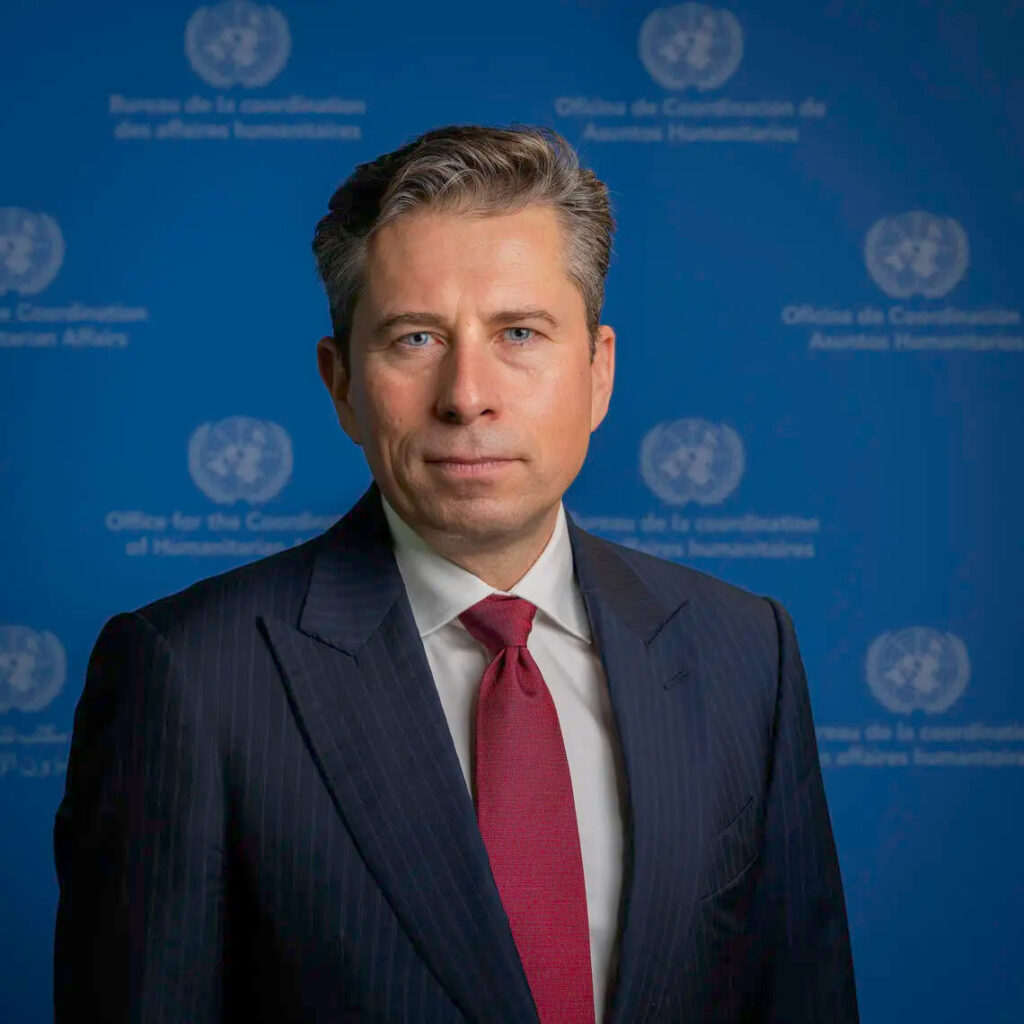
That is the stark message from the United Nations (UN) Office for the Coordination of Humanitarian Affairs (OCHA) in its Global Humanitarian Overview 2026. However, despite the scale of the crisis, international funding continues to decline because of what the agency characterised as a retreat from global humanitarian action.
“In 2026, millions of people caught in conflict and disaster face their hardest test yet – survival,” said Mr Tom Fletcher, United Nations Under-Secretary-General for Humanitarian Affairs and Emergency Relief Coordinator, in comments on 8 December 2025 launching the humanitarian review. The late-February strikes by the US and Israel on Iran – and the subsequent escalation – have added new volatility to an already fragile global landscape.
Cuts
The number of people in desperate need of aid is so great that the stark fact is that millions of those people will not receive assistance primarily because of global cuts in financial aid and agencies’ staff.
The scale of need outlined in the report contrasts with the level of resources available. The OCHA notes that humanitarian funding has declined in recent years, limiting the capacity of agencies to respond fully to crises. As a result, despite the record number of people requiring assistance, significant gaps in aid delivery are expected in 2026.
Out of the 239 million people in need, humanitarian groups collectively aim to help 135 million of them, with the immediate priority being to save 87 million lives, according to plans detailed by the OCHA in its overview.
About $33 billion (€28 billion) will be needed in assistance. It is a substantial amount, yet the figure is about only 1 per cent of global military spending. The world spent $2.7 trillion on defence last year on armaments. The OCHA also points out that the $33 billion could be fully funded if the global top 10 per cent of earners – those making roughly $100,000 (€85,000) or more annually, – gave just 20 cents per day for one year.
The answer to the question of whether governments and individuals will respond to the call for funding “will define who lives and who dies”, Mr Fletcher said.
“[Assistance] is therefore based on excruciating life-and-death choices. We have to start somewhere, and this plan identifies where – on the basis of data and on the basis of a massive evidence-gathering exercise across 50 countries.”
The agency chief warned that retreat from humanitarian action would spark negative consequences for global stability.
“We’ve assumed for a generation that global development and stability lift all boats. The argument was that economic progress was the best way to reduce humanitarian need. But the retreat from global order and humanitarian action now reverses that equation. The humanitarian crises that as a consequence lie ahead of us will themselves have negative consequences – mass migration, pandemics, conflicts – consequences for global development and stability.”
In 2025, he said, hunger surged as food budgets were reduced – even as famine hit parts of Sudan and Gaza.
“Health systems broke apart. Thousands lost access to essential services. Disease outbreaks spiked. Millions went without essential food, healthcare, and protection. Programmes to protect women and girls were slashed, hundreds of aid organisations shut. And over 380 aid workers were killed – the highest on record.”
Mr Fletcher said he was hopeful about getting a positive response from governments and individuals.
“I would be lying if I said that this moment isn’t daunting. It feels like we’re jumping off a cliff, not knowing whether anyone will catch us. But I don’t believe for a moment that the sense of human kindness and solidarity that we’re seeking here has been eliminated by a few elections, a pandemic, a financial crash. I have more belief in humans than that.”
It feels like we’re jumping off a cliff, not knowing whether anyone will catch us
Israel
However, 2026 began amid fresh operational challenges for humanitarian agencies. At the end of 2025, Israel announced that it would revoke the operating licences of 37 aid organisations from 1 January, citing non-compliance with new government regulations.
The rules require international NGOs working in Gaza and the occupied West Bank to provide detailed information on staff, funding sources, and operational activities.
Médecins Sans Frontières (MSF) which was among the 37 NGOs affected by the move, called it “a cynical and calculated attempt” to prevent organisations from providing services in Gaza and the West Bank.
MSF said it was a breach of Israel’s obligations under international humanitarian law.
“Denying medical assistance to civilians is unacceptable under any circumstances and it is appalling to use humanitarian aid as a tool of policy or collective punishment. Now is the time for action. Israel is escalating its grave attack on humanitarian response, directly threatening medical care and humanitarian aid to civilians,” according to the organisation’s statement on 5 January.
“MSF unequivocally refutes the allegations made by the Israeli authorities in recent days. MSF would never knowingly employ anyone involved in military activities, which contradicts our core values and ethics. If the descriptions of what our teams see with their own eyes in Gaza – death, destruction and the human consequences of genocidal violence – are unpalatable to some, the fault lies with those committing these atrocities, not with those who speak of them.”
The statement added: “MSF has legitimate concerns around the registration requirement to share personal information of our Palestinian staff with Israeli authorities, heightened by the fact that 15 MSF colleagues have been killed by Israeli forces.”
The Israeli decision came as a coalition of foreign ministers from countries including the UK, Canada, France, Japan, and the Nordic states urged Tel Aviv to ensure NGOs can operate “sustained and predictable” aid deliveries, while expressing serious concerns about the humanitarian situation in Gaza.
Earlier in 2025, more than 100 aid organisations accused Israel of blocking life-saving assistance from reaching Gaza and urged it to end the “weaponisation of aid” after it refused to allow aid trucks into the devastated territory.
The UN also accused Israel in 2024 of intentionally striking Gaza’s medical infrastructure and killing health workers in an effort to dismantle the enclave’s healthcare system, charges Israel has rejected.
However, the OCHA reported in October 2025 that an average of four aid workers had been killed each week in the Gaza Strip in 2025 and at least 565 aid workers had been killed since 7 October 2023. That month Israel launched an attack on Hamas after they killed about 1,200 people within Israel and took 251 hostages. Since then, an estimated 60,000 Palestinians have been killed in Gaza, among them some 20,000 children. A ceasefire came into effect in October 2025, but killings are still being recorded.
In 2026, the OCHA hopes to spend over $12 billion (€10 billion) on aid to the Middle East and North Africa.
Of the total, $4.1 billion (€3.4 billion) is to be allocated to the Occupied Palestinian Territory, €6 billion (€5 billion) to Syria and the wider region, and $2.5 billion (€2.1 billion) to Yemen.
It is unclear how the new conflict in the Middle East will affect these projections.
Global need
It also hopes to spend almost another $12 billion in Southern and Eastern Africa and West and Central Africa – $6.9 billion (€5.8 billion) to alleviate the world’s largest displacement crisis in and around Sudan and in West and Central Africa $5.1 billion (€4.3 billion).
The remaining funding required will be $2.6 billion (€2.2 billion) in Latin America and the Caribbean, and $2.3 billion (€1.95 billion) for Ukraine.
But all of this is contingent on a robust response by governments and agencies for the OCHA’s $33 billion target, of which $23 billion is required immediately to respond to the most life-threatening needs.
This, it said, reflects “excruciating decisions – forced by funding cuts – regarding who and where should be prioritised for assistance, grounded in the principle of impartiality. It is laser-focused on the places hit the hardest by crises and the people with the most life-threatening needs.”
The agency warned that without urgent and sustained funding, millions more people could be pushed into deeper food insecurity. “This will simultaneously increase their protection risks, including the adoption of harmful coping strategies. The time to act is now. There is space to hope. With political will and the right investment, humanitarians can work with communities and countries to prevent the worst outcomes, build resilience, and end the vicious cycle of hunger.”
2026 should be a year of renewed global solidarity following the decimation wrought by funding cuts in 2025, the agency said. “Humanitarian action remains the most effective lifeline for millions of people in crisis and costs just a fraction of global expenditure.”
International humanitarian law (IHL) must be respected too, it emphasised. “Global trends of rising atrocities and impunity for violations, including attacks on healthcare and educational facilities, imperil the lives of people in need of assistance and the aid workers striving to help them.”
IRC
The International Rescue Committee (IRC), which assists those affected by humanitarian crises, has also compiled its annual Emergency Watchlist for countries in need. The IRC’s theme this year is ‘New World Disorder’, highlighting what it calls “a dangerous divergence” as humanitarian crises are surging while the global support to address them is collapsing.
“The surging crises and shrinking support that IRC’s clients face are not just a humanitarian failure, but instead the direct consequence of the geopolitical trends redefining how countries interact with one another.”
It warns that the facts on the ground reveal a humanitarian system overwhelmed when it is needed most. “Conflict is escalating dramatically, compounded by climate change and entrenched poverty, while global aid funding has collapsed.”
The countries on the IRC’s emergency list are home to just 12 per cent of the global population, but account for 89 per cent of global humanitarian need.
The committee’s view for this year is also starkly similar to that of the OCHA. “In 2026, tens of millions of people are set to face deepening hunger, displacement, and violence as international funding and political attention continue to decline.”
Conflict is escalating dramatically, compounded by climate change and entrenched poverty, while global aid funding has collapsed
Countries in crisis
Sudan
Number of people requiring humanitarian aid: 33.7 million
The Sudanese Civil War will enter its fourth year in April 2026, extending a crisis that has more than doubled humanitarian need in the country since 2022. The OCHA estimates that 33.7 million people will require assistance in 2026, a 10 per cent increase compared to 2025.
Famine was first confirmed in the country in 2024.
South Sudan
Number of people requiring humanitarian aid: 10 million
Since March 2024, humanitarian needs in South Sudan have begun to rise higher than projected, largely due to the protracted conflict in Sudan. This has compounded the existing challenges facing South Sudan, including insecurity, violence, displacement, hunger, and severe flooding. In 2026, some 10 million South Sudanese will require some form of humanitarian assistance, as will an additional 2.4 million refugees and asylum-seekers
Syria
Number of people requiring humanitarian aid: 16.5 million
The situation in Syria remains uncertain for millions of civilians. More than one million refugees have returned home, and another two million internally displaced Syrians have done the same. However, nearly 11 million remain displaced due to ongoing violence, and many who have returned home have found their houses reduced to rubble. The UN estimates that 16.5 million people will require some form of humanitarian assistance as they recover from what had been, for more than a decade, the world’s largest refugee crisis and largest internal displacement crisis.
Occupied Palestinian Territory
Number of people requiring humanitarian aid: 3.6 million
The total of 3.6 million accounts for over 63 per cent of all Palestinians living in the Occupied Palestinian Territory. Most of that need is concentrated in Gaza, where the most recent UN reports indicate that roughly 90 per cent of the population has been displaced after two years of violence.
Yemen
Number of people requiring humanitarian aid: 23.1 million
According to UN estimates, the Yemeni Civil War has left nearly 80 per cent of the country’s population in need of some form of assistance. Fighting has also severely damaged food systems, local infrastructure, the economy, and education prospects. In 2026, 23.1 million people will require humanitarian assistance, an increase of 18 per cent compared to last year.
Ukraine
Number of people requiring humanitarian aid: 10.8 million
24 February 2026 marks four years of full-scale conflict in Ukraine (after more than 10 years of long-simmering crisis). By mid-March of 2022, it had become one of the world’s largest refugee crises, with additional internal displacement and other issues including fuel shortages, electricity outages, and lost livelihoods. The OCHA estimates that 10.8 million Ukrainians will require assistance in 2026.
Afghanistan
Number of people requiring humanitarian aid: 22 million
Afghanistan has been caught in a protracted crisis since 1978, meaning that three generations of Afghans have never known life without conflict and political instability. The current situation has left 22 million people in need of humanitarian assistance in the country, with an additional 4.27 million Afghans displaced abroad. Conditions for women and girls are particularly dire.
Haiti
Number of people requiring humanitarian aid: 6.4 million
Humanitarian need in Haiti in 2026 will be at its highest in years, and nearly triple the amount from when the country’s current crisis began in 2019. In that time, millions of civilians have faced unprecedented levels of violence, particularly in the densely-packed capital of Port-au-Prince. Women and children are especially vulnerable, as are 5.7 million Haitians facing emergency levels of food insecurity.
(Sources OCHA, Concern)










Leave a Reply
You must be logged in to post a comment.