








Ms Fiona McLoone provides an update on the work of the FutureNeuro Research Ireland Centre
for Translational Brain Science
The FutureNeuro Research Ireland Centre for Translational Brain Science is Ireland’s national research centre focused on neurological, neuropsychiatric, and neurodevelopmental disorders, with a remit spanning discovery science, clinical translation, and patient involvement. Led by Prof David Henshall at the RCSI, the Centre brings together researchers and clinicians from eight academic institutions, integrated with a national clinical network across adult and paediatric services.
When FutureNeuro entered its second phase in late 2023, the ambition was clear: To move faster and more deliberately towards changing the patient journey for people living with conditions affecting the brain. Since then, that ambition has gained momentum, driving progress across diagnostics, therapeutics, digital health, clinical trials, training, and patient involvement.
For clinicians, policymakers and healthcare leaders, the critical question is not just whether neuroscience is advancing, but how those advances are being translated into real-world care. This update outlines FutureNeuro’s work over the past year, and why it matters for Ireland’s health system.
The scale of the challenge and the opportunity
Brain conditions remain one of Ireland’s most significant health challenges. Around one in three people will be affected by a neurological or mental health condition during their lifetime, with a combined annual societal cost estimated at €30 billion. More than 800,000 people in Ireland are living with conditions affecting the brain, many of which involve diagnostic delays, limited treatment options, and fragmented care pathways.
Progress in diagnostics: Towards precision neurology
A consistent theme in modern neurology is the shift from symptom-based diagnosis towards biologically informed disease stratification. FutureNeuro’s diagnostics programme combines genomics, blood- and fluid-based biomarkers, neurophysiology, imaging, and artificial intelligence (AI) to better stratify patients for clinical trials, and predict outcomes.
FutureNeuro’s diagnostics programme combines genomics, blood- and fluid-based biomarkers, neurophysiology, imaging, and artificial intelligence to better stratify patients for clinical trials and predict outcomes
In epilepsy, multi-centre studies have demonstrated blood-brain barrier disruption in people with drug-resistant epilepsy using advanced MRI techniques. These findings, which align with earlier preclinical work, strengthen the case for targeting vascular integrity as part of future treatment strategies and may ultimately help identify patients at higher risk of poor seizure control.
Genomics continues to transform care pathways. FutureNeuro Deputy Director, Prof Gianpiero Cavalleri, is leading Ireland’s contribution to major European initiatives, including the Genomic Data Infrastructure Ireland (GDI) and Genome of Ireland (GoI) projects, aligned with the 1+ Million Genomes initiative. Collectively, these initiatives link cutting-edge research with clinical services and support the progression of genetic and genomic medicine in Ireland, in line with the implementation of the National Strategy for Accelerating Genetic and Genomic Medicine (2022). GDI Ireland aims to create a secure infrastructure for sharing genomic data across Europe, while GoI is building a reference dataset of DNA from adults living in Ireland to help distinguish genetic variation linked to traits and disease. For clinicians, the practical impact could be transformative: Improved diagnostic yield in paediatric neurology; earlier access to precision therapies; and more consistent identification of patients suitable for clinical trials.
Patient registries are providing clear evidence of the benefits of coordinated genomic data. The Collaboration in Genomic Disorders in Ireland registry, funded by Children’s Health Foundation through the Children’s Health Ireland seed funding programme and FutureNeuro, has enrolled over 100 children and young people with diagnosed or suspected neurogenetic conditions. FutureNeuro is taking a lead in ensuring that the infrastructure and governance underpinning national registries are aligned with emerging European Health Data Space requirements, enabling Irish patients to be included in key European diagnostic and research initiatives. By integrating genomic research into routine care, the registry has supported faster diagnosis and more targeted treatment: 14 children have received precision therapies tailored to their condition; five have been matched to clinical trials; and many others have undergone advanced testing – shortening diagnostic journeys that can otherwise take years.
Beyond epilepsy and genomics, diagnostic advances span autoimmune encephalitis, multiple sclerosis, psychosis, and rare neurogenetic conditions. In psychosis research, work has linked frequent cannabis use in young people to elevated levels of inflammatory biomarkers, including suPAR, a marker of immune activation that may affect brain development. This research points to new directions for early intervention and innovative treatments in a field that has seen limited progress in recent decades.
FutureNeuro researchers are also developing tools to improve the reliability of physiological biomarkers. In neuromodulation research, a standardised system for recording electrical signals from the spinal cord is now being applied in multiple sclerosis studies, supporting more reproducible measurements and enabling future work on disease monitoring and treatment response. In parallel, collaborative epilepsy research is using stereoelectroencephalography to link electrical activity recorded from deep brain structures with molecular signals recovered from implanted electrodes, offering a rare opportunity to study gene activity in the living human brain and potentially informing more precise surgical decision-making in drug-resistant epilepsy.

From targets to trials: Strengthening the therapeutic pipeline
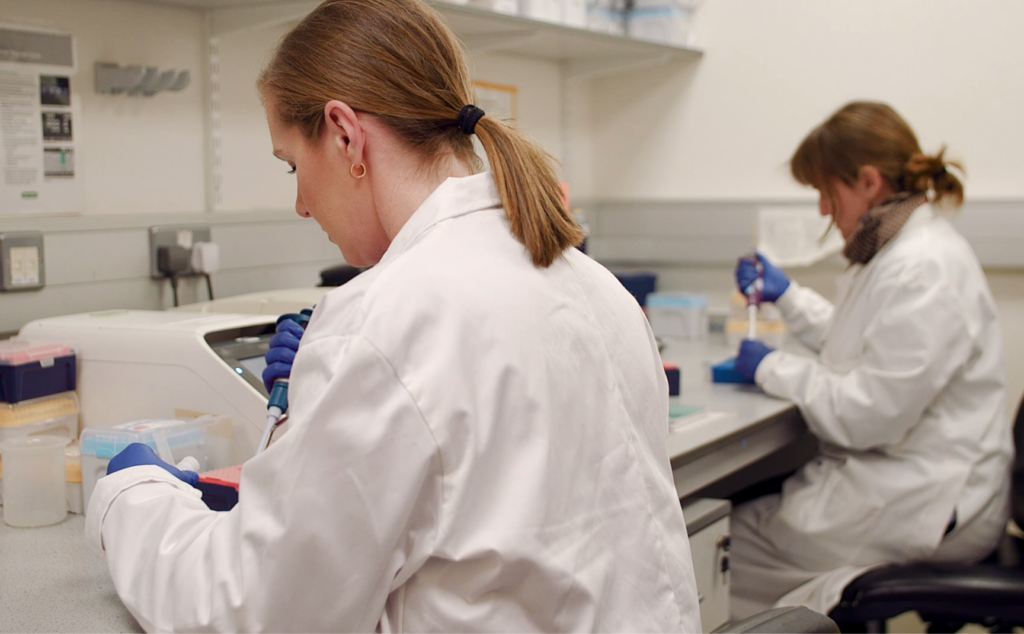
Therapeutic development within FutureNeuro is organised as a translational pipeline, moving from molecular discovery, through target validation and preclinical testing, to early-phase clinical studies.
A key advance has been the application of breakthroughs in cell biology to generate human brain cells in the laboratory, enabling safer and more predictive disease modelling and drug screening. This platform underpins multiple projects focused on epilepsy, amyotrophic lateral sclerosis (ALS), Parkinson’s disease and psychosis.
Gene therapy has become a particular area of momentum. Under the leadership of Prof Orla Hardiman and collaborators, Irish sites are participating in international gene therapy trials for ALS. In parallel, epilepsy-focused projects are advancing viral vector delivery systems designed to target specific brain regions and cell types, with built-in safety switches to control gene expression.
At the molecular level, FutureNeuro researchers have identified new roles for non-coding RNAs, including microRNAs and tRNA-derived fragments, in epilepsy and ALS. These discoveries point towards disease subtypes that cut across traditional diagnostic categories, reinforcing the potential of shared therapeutic strategies across neurological conditions.
Several of these projects are now supported through national translational funding mechanisms, including the Accelerating Research to Commercialisation Hub for Therapeutics, signalling growing alignment between discovery science and commercial development. In early 2025, four FutureNeuro-led or collaborative projects received support, spanning gene therapies for epilepsy, disease-modifying approaches in Parkinson’s disease, and novel RNA-based and vision-related therapeutics.
Digital health and data
Ireland’s health system holds vast amounts of clinical data, but its research potential has historically been underutilised. FutureNeuro’s digital health programme focuses on ethically unlocking this resource to support clinical decision-making, service planning, and personalised care.
A landmark national analysis of epilepsy care, involving records from more than 5,700 patients, provided the first comprehensive picture of specialist service use across Ireland. The findings highlighted regional variation in access, patterns of treatment escalation, and opportunities for more efficient resource allocation, insights of direct relevance to clinicians, and health service managers.
Building on this work, the LEGEND project, seed-funded with Novartis Ireland through the Research Ireland EMPOWER Data Governance Spoke, developed the EpiData Dashboard, allowing clinicians and policymakers to explore how anonymised secondary use of health data can inform service design without compromising patient trust.
Trust is central. Qualitative research led by FutureNeuro has shown strong public support for health data use in research, provided governance is transparent, and patients are meaningfully involved. These findings are directly informing national discussions as Ireland prepares for implementation of the European Health Data Space.
Digital tools are also being developed at the patient level, including a smartphone-based app called Neureka, which combines lifestyle data with personalised mental health support, an area of growing relevance as demand for services continues to outpace capacity.
Clinical trials and industry collaboration
Industry collaboration remains essential to translating research into patient benefits. Since launching in 2017, FutureNeuro has executed more than 40 research agreements spanning small- and medium-sized enterprises to global pharmaceutical partners. Recent collaborators include Roche, UCB, Angelini, Ono, Johnson & Johnson, IQVIA, Neumirna, Chemestmed, and UNEEG Medical.
One of 2025’s major developments was Ireland’s participation in a European multi-site clinical trial testing UNEEG Medical’s EpiSight system, a small device placed under the skin that records brain activity continuously at home. Irish sites, led by Prof Norman Delanty, Beaumont Hospital, Dublin, and Dr Daniel Costello, Cork University Hospital, enrolled more than half of all participants. If adopted more widely, this technology has the potential to shorten diagnostic timelines, reduce the need for inpatient monitoring, and support more tailored treatment decisions within routine clinical practice.
Progress in monitoring was matched by advances in prevention. In complementary studies with pharmaceutical partners Johnson & Johnson and Affectis, Prof Tobias Engel’s team built on their research into the P2X7 protein receptor, advancing its potential as a target for preventing epilepsy following head trauma. The team also developed a PET imaging tool that may help clinicians identify individuals at highest risk of developing seizures after brain injury, opening the door to earlier intervention – before epilepsy develops.
Training the workforce neurology needs
Scientific and clinical progress is inseparable from workforce development. As of 2025, FutureNeuro is supporting the training of almost 100 PhD candidates, postdoctoral researchers and clinical Fellows, building capacity in areas such as AI, genomics and translational neuroscience, and supporting progression into academic, industry and clinical roles.
As of 2025, FutureNeuro is supporting the training of almost 100 PhD candidates, postdoctoral researchers and clinical Fellows
Alongside research training, clinical education remains a priority. Under Prof Hardiman’s leadership, FutureNeuro contributed to the development of a new level 9 postgraduate diploma in neurology nursing, addressing a recognised gap in specialist training as neurological care becomes more complex and technology-driven.
Patients as partners, not participants
A defining feature of FutureNeuro is the systematic embedding of patient and public involvement across its research themes. Fifteen patient panels, covering conditions such as epilepsy, Parkinson’s disease, data governance, autism, and rare diseases, now contribute to study design, priority setting, and dissemination.
For researchers, this structured collaboration provides direct insight into lived experience, helping to ensure that research outcomes align with what matters most to people living with or impacted by brain conditions, including quality-of-life, timely diagnosis, and continuity of care. This commitment to involvement extends beyond research into public engagement. Initiatives such as My Moving Brain, delivered nationwide with patient organisations and local sports partnerships, are opening up conversations around inclusion, physical activity, and brain health across the lifespan, particularly for those living with brain conditions.
2026
The Centre will continue to build momentum in 2026. FutureNeuro’s Clinical Conference on AI in Neurology recently brought together clinicians, researchers, and industry partners to explore how emerging technologies can improve care. The Centre will continue competing for national and international funding while strengthening industry partnerships to enable new collaborative studies across multiple disease areas. Most importantly, FutureNeuro will continue listening to and learning from the people whose experiences guide the research, because the future of brain health is built on partnership.










Leave a Reply
You must be logged in to post a comment.