







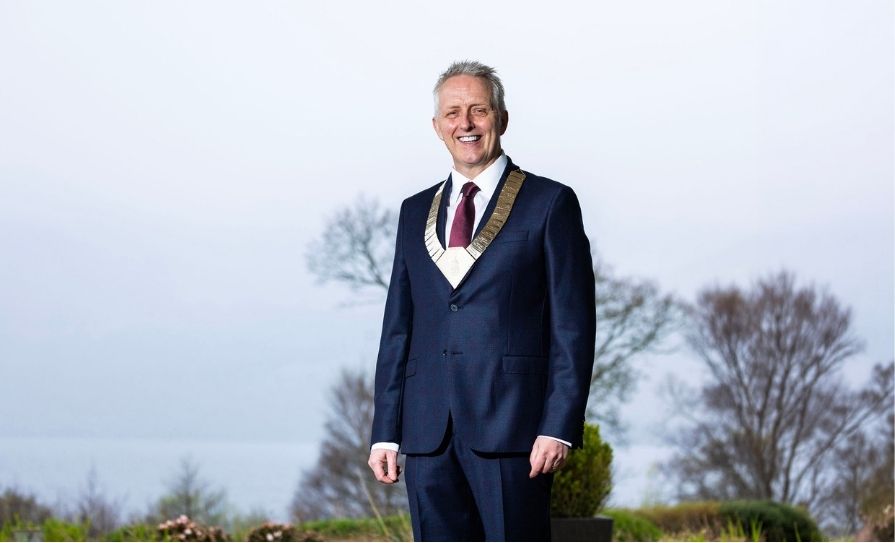
Former President of the IMO, Dr Denis McCauley, officially retired from general practice at the end of 2025. He speaks to Niamh Cahill about his long and varied career
“If you’re not laughing, you’re losing” is a mantra Dr Denis McCauley has repeated many times over his 40-year career in medicine.
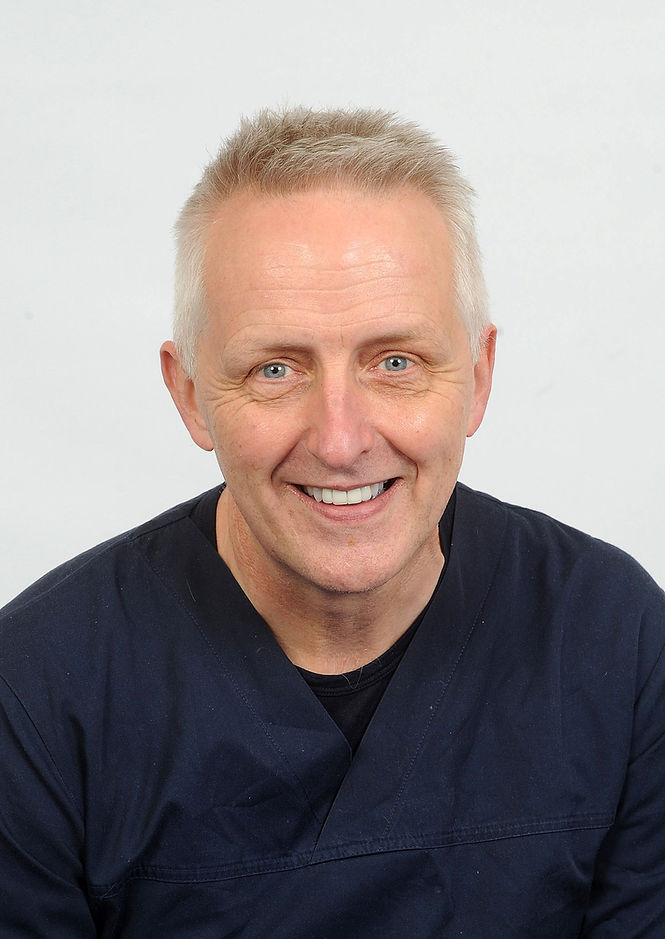
It is a phrase and attitude that has served him well as a rural GP in Co Donegal. And it is one he repeats during this interview, as he recalls key moments and shares anecdotes from his time in general practice.
“We had great fun,” he told the Medical Independent (MI), when noting how he will miss both patients and staff at his practice in Stranorlar, Co Donegal now that he is retiring.
“Even though you might feel… miserable, when the patient walks in you have to be smiling because it immediately puts them at ease.”
This upbeat outlook was to prove critical during the Trinity College Dublin (TCD) graduate’s first day as a GP locum in Donegal, which proved to be something of a baptism of fire.
“I was in Moville and the first patient was a house call to a wee lad aged about seven or eight. He was the first patient I ever saw in general practice; a child lying on a couch with a meningococcal septicaemic rash,” Dr McCauley recalled.
“The child was very seriously ill. We were closer to Altnagelvin [Area Hospital] in Derry than we were to Letterkenny [Hospital] and there was really no emergency ambulance service. So, I gave the child penicillin and asked the father did he drive and told him to not stop and arranged for an ambulance to meet him across the border. He went into Altnagelvin and he survived.”
Another serious incident followed later that day when Dr McCauley “crawled into an upside-down car full of petrol to put a collar on a classmate of mine from national school who had broken his neck”.
He remembered: “I was putting the collar on the guy in the car as nobody else would go near the car because there was a risk it would go on fire.”
The drama continued when “on that same day I was called to the Garda station to do a drink driving assessment on [another] classmate of mine…. That was my first day in general practice as a locum.”
After these initial experiences, did he think he had made the right career choice?
“I knew that day, this is what I want to do…. [But] it was a terrifying day,” Dr McCauley said.
“You had to react on your feet. It was terrifying and exciting and exhilarating.”
Dr McCauley traces his decision to become a GP back to one man – Dr Ken O’Flaherty, the Moville GP who practised in the town where he grew up.
“He was the best GP I’ve ever met. He was ever present. He was accessible. He was so well trained and decisive and just knowing he was in the town, people felt more comfortable because he was there. He was a marvellous man. I never wanted to be anything other than a GP from very young. I always looked at Dr O’Flaherty and said, ‘I’m going to be like him’.”
Principles
After qualifying as a doctor at TCD, Dr McCauley completed an intern year at the Adelaide Hospital, Peter Street, Dublin.
According to Dr McCauley, it was at the hospital (which closed in 1998) that he learned “a person’s health decisions are made between the patient and the doctor and that the State should in no way interfere with that”.
“That was a very good founding principle that I followed for the rest of my life,” he said.
“The decisions are made by the patient with the help of the doctor and there should be no other third party interfering. The principles I was taught at the Adelaide gave me a great foundation. That was during the time when tubal ligations, contraception and women’s sexual health were in dispute…. We forget how much the State tried to interfere with the healthcare system. Things have evolved since then.”
Dr McCauley completed his GP training in Donegal under Dr Paul Stewart and, “I haven’t left since.”
However, he recounted how he may have emigrated to Canada were it not for the fact he was offered a GP position in the ‘forgotten county’.
Originally from the coastal town of Moville on the Inishowen Peninsula in Co Donegal, close to Derry, he has been based at his practice in Stranorlar, which serves the twin towns of Ballybofey and Stranorlar in the Finn Valley region, since 1990.
Dr McCauley became a partner there within a year, “because they were obviously very stuck,” he said wryly.
Retirement
Although he has now officially retired from general practice, Dr McCauley will not be going “from superhero to zero”, as he put it.
He will remain coroner for Co Donegal and will take up the position of President of the Coroner’s Society in October 2026.
The position comes to him at a time of upheaval within the coronial service, as new legislation and reform plans are in train following a Department of Justice consultation process with stakeholders. A report on the issue was published in 2024.
Plans are being costed and Heads of Bill were due to be brought to Government last year, but to date have not been published.
A Department of Justice spokesperson told MI that the Programme for Government commits to enacting legislation to “establish a modern, fit-for-purpose coronial system”.
“A central aspect of this is the establishment of a national coronial agency under the aegis of the Department of Justice, Home Affairs and Migration. The Department of Justice, Home Affairs and Migration officials are currently working on drafting Heads of Bill in this regard.”
There are about 34 coroners in Ireland and each of them are on call 24 hours a day, 365 days a year.
However, currently many have other roles besides that of coroner. It is anticipated that coroners in the future will be full-time, according to the Department of Justice.
Dr McCauley is concerned about the proposed reforms and their impact on the service. He believes the Department of Justice lacks an understanding of what the “coroner actually does”.
“I don’t think they understand the coroner’s system in Ireland. They seem to want a judge-led system like there is in the UK. It’s going to take all the parts we do well here and replace it with a system that isn’t responsible and accessible. It will become a very inaccessible and unresponsive system to the bereaved families. I’m really worried about it.”
[W]hen the patient walks in, you have to be smiling because it immediately puts them at ease
Covid
When Covid-19 struck in 2020, Dr McCauley was Chair of the IMO GP committee. He recounted how it was “supposed to be a straightforward role”, with the restoration of cuts to general practice made by the FEMPI Act 2009 having recently been agreed. However, the position of Chair did not proceed as anticipated due to the pandemic.
“On reflection I think we in Ireland handled the Covid emergency as well as we could have. I think we should be very proud of what we did,” he said.
“I think we used the carrot rather than the stick in Ireland and people responded to that. That’s one of the highlights of my career, being involved in the Covid emergency through the IMO with the HSE, Department, and ICGP. I think we worked hand in glove and we worked really well.”
The IMO GP committee helped to ensure consistency of information and communication in public messaging, he added.
“The HSE messaging was filtered through the IMO, ICGP… anything that was going to be released to the public, we had to have a look at it. We would have changed it quite regularly and as a result of that there was excellent messaging. We were consistent and we were always reassuring because there was so much negativity. The general public reacted to the carrot more than the stick. I think they reacted magnificently during Covid and I think they did it because they understood what was going on because the messaging was good and the decision-making was excellent.
“We, overall, did a really good job. If we were doing it again, we would do some things differently, but we should be proud of what we did. It’s important we articulate that.”
However, one particular incident during the pandemic has remained with him, especially as a native of Donegal.
“Coming from Inishowen, that was the one time there was disharmony between the HSE and the IMO when the Chief Medical Officer and [Deputy Chief] Medical Officer made some disparaging comments that the dogs in the street know the people of north Donegal are not following the rules. And that’s when I went on radio and said they were disingenuous and should only talk when they know what they’re talking about,” he said.
“We are in the hinterland of Derry. So the Covid rate in Derry and in Inishowen was always dictated by the highest rates. Because the people of Derry moved in and out of Inishowen, the rate of Covid in Inishowen was always the same as in Derry. It was nothing to do with the actions of the people of Donegal. It was epidemiology and the passage of the virus. So if people are moving freely from Derry into Inishowen, the Covid rate will always be the same. That was a fact.”
Both the IMO and the Coroner’s Society of Ireland have been asked to make submissions to the Covid-19 independent review, which is due to be submitted to Government by the end of the year.
Medical negligence
Dr McCauley was appointed President of the IMO in 2024. During his acceptance speech at the IMO AGM that year, he raised the issue of medical negligence litigation in Ireland, which he said was having a detrimental effect on how doctors practise medicine.
Now almost two years later, Dr McCauley remains extremely concerned for the future of medicine in Ireland.
“I think the medico-legal environment in Ireland is ultimately going to destroy the practice of medicine in Ireland, particularly in general practice. I think there has been no proper discussion of a no-fault compensation system in Ireland. The recent reports on this have been flawed. Justice Meenan’s report about the medico-legal system in Ireland basically ignored the possibility of a no-fault compensation system here and the reasons he gave for it were very poor. I think we have to consider it.”
Dr McCauley pointed out that the HSE currently has a significant sum – around €5–6 billion – set aside for medico-legal claims in Ireland.
“FEMPI has come and gone, but what is on the horizon is the destruction of the gatekeeping role primarily because the State isn’t taking the medico-legal issue seriously,” he warned.
“I know the HSE are aware that younger GPs refer more, and there’s almost a criticism of that while not recognising the circumstances in which they live now.
“We used to be able to deal with diagnostic uncertainty, and that’s one of the bedrocks of general practice. If you look at medico-legal litigation in Ireland… almost all of the things that come into general practice are undifferentiated, just vague symptoms. We have a process by which we filter those and it’s a process… but those days are coming to an end where time is used as a filter.
“I’ve a friend who was sued because he waited a month before referring someone. That is going to destroy general practice and medicine in Ireland. We’ve gone from diagnostic uncertainty to risk management and now it’s fear management, and that’s dictating decisions.”
Highs and lows
It has been a career of many highs and lows over the years. Some of the positives include the establishment of primary care centres between GPs and the HSE, improved GP access to diagnostics, the restoration of FEMPI, and the introduction of chronic disease management, all of which have been “fantastic”, according to Dr McCauley.
But, of course, cuts to general practice made via the FEMPI Act should never have occurred in the first instance, Dr McCauley noted.
“FEMPI was probably one of the most stupid and devastating decisions that was ever made for primary care. It put general practice back a decade. It has ensured we have this situation now where we have a shortage of GPs. All my cohort are now retiring. The Government suddenly realised this year we’re going to have a shortage of GPs due to GP retirements and we’ve only been telling them that for a decade.
FEMPI was probably one of the most stupid and devastating decisions that was ever made for primary care
“This [shortage] was signposted for a decade and FEMPI contributed to that enormously. Single-handed GPs were finding it so difficult to manage their practice, they hadn’t the resources to take on an assistant… FEMPI was devastating. It was a malign decision…. It was a stupid decision.”
He recalled feeling very fortunate that, when he began his career in general practice, the then North Western Health Board was in place and provided strong support to GPs across Co Donegal.
“They were very proactive for general practice. At that stage they had developed a software package for GPs in Donegal. We had bloods back the next day. This was in 1990 and the HSE in collaboration with GPs built primary care centres all over Donegal and we’re still benefiting from that. We have been working in a HSE building since 2004 and it is only now reaching the stage where we’re at maximum capacity. So that was fantastic.
“Because of the very good approach to general practice by the local health board at that time there was a recognition that for Letterkenny Hospital, which was a very small hospital, to survive, they had to ensure that general practice thrived. They were receptive to any ideas we had and there was a HSE doctor arrangement with no third parties to build purpose-built health centres. Each building was planned with the GP involved, that encouraged group practices all over Donegal and therefore the quality of care for patients and the work environment for GPs was very good. I arrived at a golden era in Donegal and I have benefited from that all my life.”
Wisdom
In terms of lessons he can impart from his career, Dr McCauley advised young GPs to prioritise work/life balance, seek partnership in a practice, and learn to live comfortably with clinical uncertainty.
He also stressed the need for GPs to “care for the patient, as well as treat them”.
“This is important. Continuity of care is a much forgotten concept,” he said. Accessibility is another important factor in general practice, he added. “Accessibility is very important to a patient, if they know they can see a GP quite easily they won’t attend as often.” But the GP workload currently means that access is a concern.
“We need more GPs and more infrastructure,” he said. “Young GPs should be encouraged to set up in general practice. There is no incentive for a young GP to set up in a town currently. They will make no money for three years and there has to be recognition of that, and something done.”
But for now Dr McCauley is enjoying the simpler aspects of life, such as spending time with his two grandchildren.
“I baked bread this morning and then drove to collect one of the grandkids,” he said.
But even though he has now moved on from general practice, it is evident that his love for the profession will remain.
“I love giving 10–15 minutes of solid listening and trying to work out what a person’s problems and worries are, to give them satisfaction that when they leave their worries have been listened to and that we have a plan for those.
“I still love general practice, but I have other lives to live.”






Leave a Reply
You must be logged in to post a comment.