








January
The year began with the appointment of a new Minister for Health.
Fine Gael Deputy Jennifer Carroll MacNeill assumed the role, following the failure of former Minister Stephen Donnelly to get re-elected in the November 2024 election.
During the month, the HSE National Service Plan (NSP) 2025 was published. The plan set out a range of health and social care services that will be provided within the allocated budget of €26.9 billion – a €1.6 billion increase on 2024.
The Medical Independent (MI) reported from an IHCA symposium in Dublin, which discussed opportunities to champion sustainability in the health service. The event focused on the theme of “implementing sustainable healthcare solutions”.
“Hospital consultants are uniquely positioned to lead the charge in integrating sustainable practices across our healthcare system,” IHCA President Prof Gabrielle Colleran told attendees. “This symposium is a positive, ground-up movement, driven by the expertise and innovation of consultants who are committed to creating a healthier, more sustainable future for patients, the healthcare sector, and society
as a whole.”
Hospital consultants are uniquely positioned to lead the charge in integrating sustainable practices across our healthcare system
February
Minister Carroll MacNeill brought a memo to Government regarding the rise in trolley numbers over the February bank holiday weekend.
“There are two problems,” the new Minister said.
“The first is the underlying question of continuing to extend our hospital and care capacity. We are committed to ensuring there are more beds for our hospitals and to removing some elective procedures from acute hospitals into new surgical hubs and then
elective hospitals.”
“However, there is a second problem, which is specifically the increased numbers of patients on trolleys, especially the spikes after weekends, most notably after the St Brigid’s Day bank holiday weekend. I was quite alarmed by the growth in the number of patients waiting on trolleys after this bank holiday.”
In an interview with RTÉ’s Morning Ireland, the Minister stated this was “in large part connected to the presence of senior decision makers on site”. As a result, the Minister requested an analysis of the consultants rostered over the bank holiday. This data revealed that 1,000 more patients were admitted
than discharged.
Responding to the comments, an IHCA spokesperson told MI that the Association “welcomed” the new Minister’s “focus on this important matter”.
“Patient flow is central to the delivery of medical care and the overall functioning of our hospital network.”
The spokesperson added that hospital consultants are medics, not administrators, and that consultants do not have the ultimate say on rostering.
This newspaper also reported that the HSE was not recruiting any further physician associates/assistants (PAs) pending the conclusion of an independent review of the role. The NSP 2025 stated that “an independent expert” would carry out an assessment of the PA
role internationally.
The first version of the HSE Health App was launched. It was one of the first initiatives delivered as part of Digital for Care, Ireland’s health and social care digital framework.

MI also reported that an agreement between the IMO and the Department of Health to establish 84 public health consultant posts had “essentially” been implemented across three phases, according to the HSE. In May 2021, public health doctors in the IMO had voted to approve the terms of an agreement that included a commitment to establish these posts.
“With the exception of a small number of positions, each recruitment campaign has resulted in the successful filling of the posts,” said a HSE spokesperson.
March
Minister for Mental Health Mary Butler launched a public consultation to inform the development of Ireland’s next suicide reduction policy. The new policy intends to set out the Government’s approach to suicide reduction from
2026 onwards.
The College of Psychiatrists of Ireland called for a major overhaul of the management and governance of HSE child and adolescent mental health services (CAMHS) across the country. Dr Patricia Byrne, Chair, Faculty of Child and Adolescent Psychiatry, said that reform of CAMHS was critically urgent.
“CAMHS in Ireland has been beset by chronic under-funding and under-resourcing. There have been failures to provide fit-for-purpose governance systems to facilitate CAMHS development in line with the Government’s mental health policies.”
Also, during March, industrial action by more than 80,000 healthcare workers was averted after a deal was reached by management and unions.
April
HIQA’s report into Children’s Health Ireland (CHI) was published. The Authority had been requested by the previous Minister for Health, Stephen Donnelly, to conduct the investigation into experimental spinal procedures carried out at CHI at Temple Street. HIQA found these procedures to be a deviation from standard medical practice, which placed vulnerable children at
serious risk.
The report led to the immediate resignation of CHI board Chairperson Dr Jim Browne and an apology by the Minister for Health to the three young children affected and their families.
“What happened was wrong, should not have happened, and should not have been allowed to happen,” stated Minister Carroll MacNeill.
The findings prompted sustained calls in the Dáil for a full public inquiry and heavy political scrutiny of
CHI’s governance.
Meanwhile, the Government launched Sharing the Vision: A Mental Health Policy for Everyone Implementation Plan 2025–2027 at the second National Mental Health Policy Conference in
Dublin Castle.
At the end of the month, during the IMO AGM in Killarney, the new President of the Organisation warned that health inequalities in Ireland are having a “disastrous” impact on public health.
Dr Anne Dee argued that communities on the margins in Ireland are suffering from far poorer health outcomes than those with access to better housing, education and work opportunities. She said these differing health outcomes represented a “cauldron of future problems for the State”.
Speaking to MI at the meeting, the HSE CEO ruled out any evaluation of weekend rostering for consultants before such arrangements were rolled out across the health service. Earlier in the AGM, the Organisation’s national consultant committee had voted for a “comprehensive review” of increased rostering of consultants over weekends. When asked by MI about the motion, Mr Bernard Gloster said: “I’m certainly not in favour of any further analysis, or any other long-term debate, about it before we start it. And we have to start it.”
During the month, this newspaper also reported that implementation of the six health regions was being externally evaluated to establish what the Department of Health described as a “continuous learning feedback loop”.
May
A significant moment at the top of the HSE came when CEO Mr Gloster confirmed he would step down at the start of March 2026.
Commenting on his decision, Mr Gloster said: “I continue to be privileged to serve in this very important role and for the coming months I will be working hard with the board, the
Minister, and the Department to advance many improvements and responses to challenges.”
The Sunday Times reported on a CHI investigation which questioned the manner in which public patients were treated through the National Treatment Purchase Fund (NTPF).
Mr Gloster said he was “shocked” by the report’s findings and that any evidence of misuse of public funds would be referred to the gardaí.
The Medical Council announced the appointment of Dr Maria O’Kane as its new CEO. Dr O’Kane had been Chief Executive Officer of the Southern Health and Social Care Trust in Northern Ireland.
June
The NTPF revealed it had paused funding for insourcing at a public hospital, subsequently identified as Beaumont Hospital, Dublin, on foot of “potential financial irregularities”.
Our lead story reported that there was no planned increase in HSE funding for GP continuing medical education (CME) in 2025.
It had been several years since the Irish College of GPs received any increase in CME funding. This situation has forced the College to offset funding deficits to ensure small group learning is maintained.
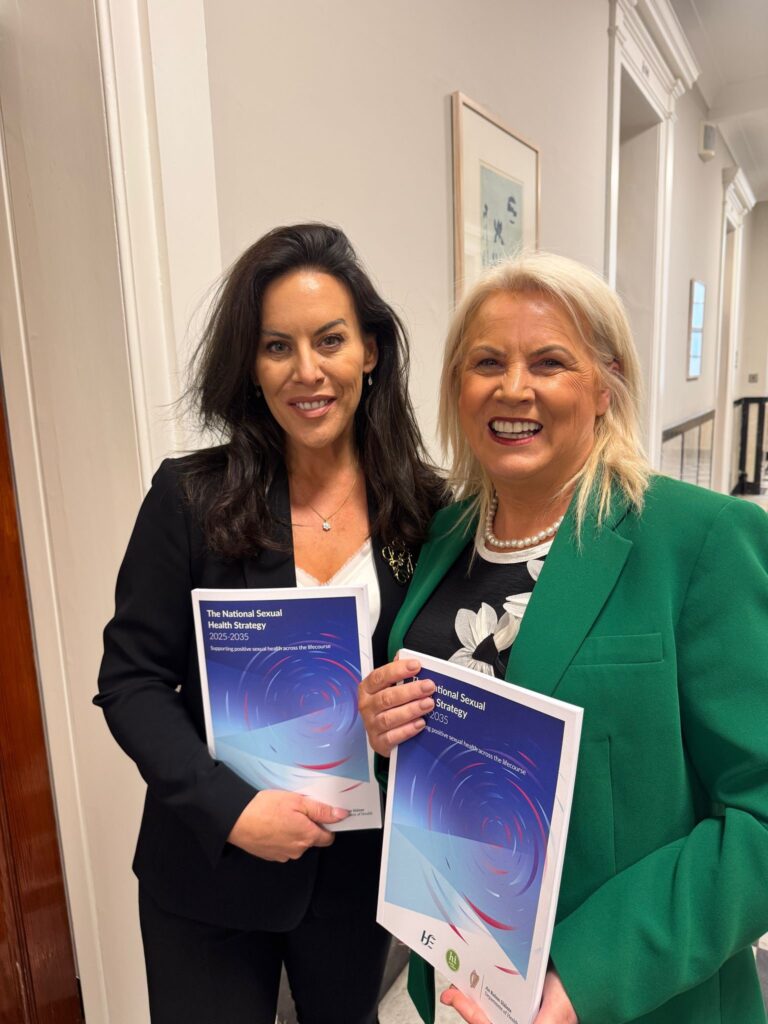
Minister Carroll MacNeill, and Minister of State for Public Health, Wellbeing and the National Drugs Strategy, Jennifer Murnane O’Connor, published the National Sexual Health Strategy, 2025–2035, following Government approval.
MI reported an increase in the number of doctors presenting to the Practitioner Health Matters Programme (PHMP), as outlined in the PHMP’s new annual report.
The PHMP was launched in 2015 and provides a confidential service to doctors, dentists, and pharmacists who may be experiencing stress, burnout, mental health, or substance use issues.
This newspaper also reported that the Medical Director of HSE National Doctors Training and Planning (NDTP) raised concerns over the recent decline in the number of consultant posts approved by the consultant applications advisory committee. Writing in the NDTP’s Medical Workforce
Analysis Report 2024–2025, Prof Anthony O’Regan said the drop could impact the continued expansion of the consultant workforce.
Meanwhile, the HSE said agreement had been reached with health unions on the introduction of an extended working day and week in the HSE and HSE-funded agencies.
July
The HSE announced it planned to phase out insourcing funded through the NTPF following a review of the practice.
MI reported that the Medical Council planned to increase doctors’ annual retention fees due to serious concerns about its financial sustainability. There had been no increase in fees since 2015 despite a 23 per cent rise in the Consumer Price Index, according to a spokesperson for the Council.
Meanwhile, the group Irish Healthcare Workers for Palestine (IHCW4P) demanded that the Irish Government take “stronger action” against Israel for its devastating war on Gaza.
“Nothing they have done or said so far has slowed Israel’s genocide,” Dr Angy Skuce, GP and member of IHCW4P, told this newspaper. IHCW4P members met in Dublin and joined healthcare workers worldwide to launch the campaign Pledge4Humanity/Pledge2EndGenocide.
“Although Ireland has been better than most countries in Europe in speaking out against Israel’s genocide, and in support of the Palestinian people, their [the Government] efforts to date have been ineffective,” Dr Skuce told MI. “We have definitely not done everything in our power to prevent the crime of genocide.”

Pictured at the tournament are (L-to-R): Dr Aidan McGrath, GP; Dr Colm Kirby, Consultant Rheumatologist; Mr Paul McGrath, former Ireland international; and Dr Padraic McCarthy, GP
August
Minister Carroll MacNeill welcomed an “improved emergency department performance” over the August bank holiday weekend.
Our lead story reported that HIQA had encountered challenges in implementing escalation measures due to the health service’s new regional structure. The Authority’s CEO Ms Fitzgerald made the comment in a letter to the HSE CEO on 29 May 2025.
The Minister for Health launched the National Rare Disease Strategy 2025–2030. This strategy set out a vision to improve the lives of the estimated 300,000 people living with rare diseases in Ireland.
The HSE also started digitally collecting information on consultant rosters. A spokesperson outlined to MI that the data will be aggregated, anonymised, filtered, and utilised “to support workforce and service planning initiatives”.
September
MI revealed that the Department of Health and the HSE raised serious concerns about the NTPF’s decision to suspend funding to Beaumont Hospital, believing that the move was taken without due process.
Internal documents obtained by MI under Freedom of Information law showed that both the HSE and Department were surprised by the step, which followed an allegation that NTPF funding for insourcing had been utilised in Beaumont Hospital during core public hours.
The HIQA report into urgent and emergency care in University Hospital Limerick (UHL) was published. The report pointed out that UHL had the lowest number of inpatient beds relative to the number of emergency attendances of any model 4 hospital in the country. It also treats some of the sickest patients, as many less serious injuries are managed in local injury units elsewhere in the region.
HIQA’s advice highlighted an immediate need for action and investment to address current risks to patient safety in the shortest timeframe and safest way possible. The solution must also have regard for the ESRI’s projected capacity requirements to 2040.
The Authority presented the Minister with three options. These included the expansion of capacity at UHL on the Dooradoyle site (Option A); the extension of the UHL hospital campus to include a second site in close proximity under a shared governance and resourcing model (Option B); and the development of a model 3 hospital in HSE Mid West, providing a second emergency department for the region (Option C). HIQA considered that options A or B would likely yield the required inpatient capacity in the mid-west within a shorter timeframe, thereby addressing the immediate risk to patient safety. Option C may have the potential to meet longer-term bed requirements, but would be least capable of addressing immediate capacity deficits, while being associated with the longest lead times
The Irish Nurses and Midwives Organisation (INMO) called for urgent action to be taken to radically reduce the number of patients on trolleys in the west and north-west. The call came on World Patient Safety Day on 17 September. A total of 458 patients were being treated on trolleys, chairs, or other inappropriate spaces on the day. Of these, 155 patients were in the west and north-west.
Also during the month, Dr Yvonne Traynor was appointed as Chairperson of the CHI board by the Minister for Health.
Elsewhere, the Irish Society of Specialists in Public Health Medicine (ISSPHM) called on the Taoiseach and Government to intensify efforts to help alleviate the suffering of people in Gaza.
In a letter, ISSPHM Chair Dr Kenneth Beatty said public health doctors are “once again” urging the Taoiseach to “do more for the people of Gaza as a matter of grave urgency”.
In a letter, ISSPHM Chair Dr Kenneth Beatty said public health doctors are ‘once again’ urging the Taoiseach to ‘do more for the people of Gaza as a matter of grave urgency’
October
Our lead story reported that critical findings arising from an inspection of the anatomy department at University College Cork (UCC) had been “addressed”, according to the Medical Council. The inspection in September 2023 found that copies of the medical certificate of the cause of death and death registration certificate were not kept at the UCC Department of Anatomy and Neuroscience with the anatomical donors’ records.
In a submission to the Oireachtas public accounts committee, Beaumont Hospital CEO Ms Anne Coyle said the HSE audit found the hospital billed the NTPF €25,000 in error for rheumatology waiting list services. This amount had been reimbursed to the NTPF and no consultant received any additional income or reimbursement for the clinics that the hospital billed to the NTPF, according to Ms Coyle.
In Budget 2026, the Government announced €27.4 billion in funding for health. The ‘record allocation’ of current expenditure represented a €1.5 billion or 6.2 per cent increase on 2025 funding and “will enable faster and fairer access to care for everyone in Ireland”, according to the Department of Health.
However, the IMO was critical of the healthcare allocation. It described the funding increase as inadequate given the scale of existing capacity and workforce deficits.
In Kilkenny, the IHCA Annual Conference took place in Mount Juliet Estate. Two afternoon sessions focused on the topic of clinical leadership, specifically issues related to the role of clinical director. A review of the role within the health service was “well underway”, Dr Colm Henry, HSE Chief Clinical Officer, told this newspaper. The review would provide a “standardised” description of the role across the health regions.
A number of speakers from the floor identified challenges faced by doctors who may seek to take up clinical director positions. “You heard today from people about the concerns about the [staff] supports and the various time commitments,” Dr Henry told MI.
“It is timely, in 2025, in order to deliver on Sláintecare, that we have the resources and dedicated time for [the] needs [of] clinical directors.”
MI also reported that a group of consultant clinical microbiologists formally requested the HSE to pause the national roll-out of the clinical microbiology component of the MedLIS system.

and Mr Robert Watt, Secretary General, Department of Health
November
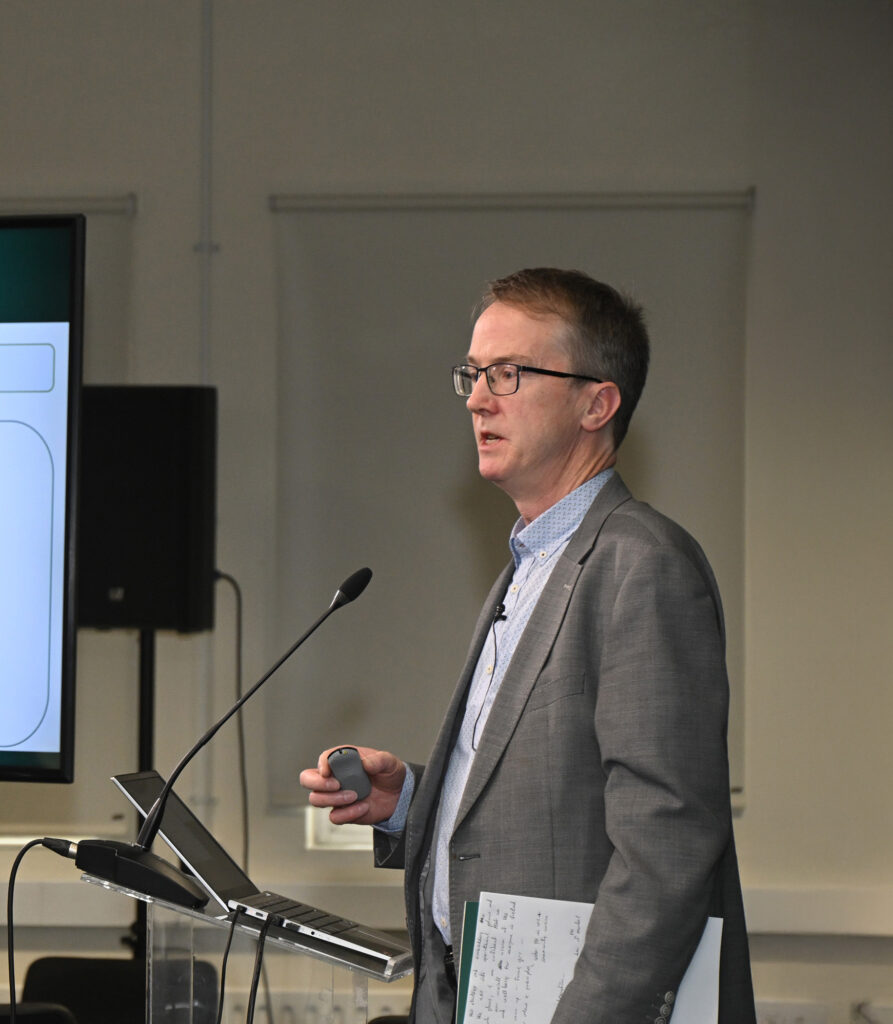
The business case for a national electronic health record had been reviewed by the major project assurance group, and updates to the document were being undertaken, a HSE spokesperson told this newspaper.
The Minister for Health received Government approval to publish the Public Health (Single Use Vapes) Bill 2025 and bring it forward for enactment. The Bill will prohibit the retail sale of single-use or disposable vapes.
The Minister also received approval to develop a law to prohibit the sale to minors of other nicotine products such as pouches. That law will prohibit the advertising of these products in all retail outlets and their display in mixed retail outlets.
Meanwhile, new statistics showed that the number of births in Ireland had fallen by more than 20 per cent over the past 11 years, according to the HSE’s 2024 National Report for the Irish Maternity Indicator System.
December
The month began with the INMO announcing that the HSE has failed to adequately plan for the influenza season.
The INMO’s statement was made on 2 December, when 616 patients were being treated on a trolley or other inappropriate space.
On 7 December, the IMO warned that influenza had hit Ireland “fast and hard”. The Organisation said the wave would add enormous strain to the already stretched public hospital system.
“The flu has come early and is accelerating in terms of the number of cases presenting to general practice and emergency departments,” according to Dr Peadar Gilligan, Consultant in Emergency Medicine, Beaumont Hospital, Dublin.
“There was a doubling of cases over the course of the last two weeks reported to the Health Protection Surveillance Centre. The number of people hospitalised with influenza is in excess of 500 currently and is projected to exceed 1,000 in the coming weeks. In real terms that means the equivalent of two large hospitals in a system hugely challenged by the lack of hospital beds.”
Dr Gilligan said that the surge in patients needing hospital beds has again highlighted the shortage of beds in the healthcare system.
On 11 December, the HSE launched its Public Health Strategy 2025–2030. The document sets out a roadmap to improve health outcomes, reduce inequalities, and strengthen Ireland’s public health system over the next five years.
Later in the month, it was announced Ms Anne O’Connor would be the new CEO of the HSE, following an open, competitive selection process. Ms O’Connor, who is currently Managing Director, Vhi Health and Wellbeing, is expected to take up the role in spring 2026.











Leave a Reply
You must be logged in to post a comment.