







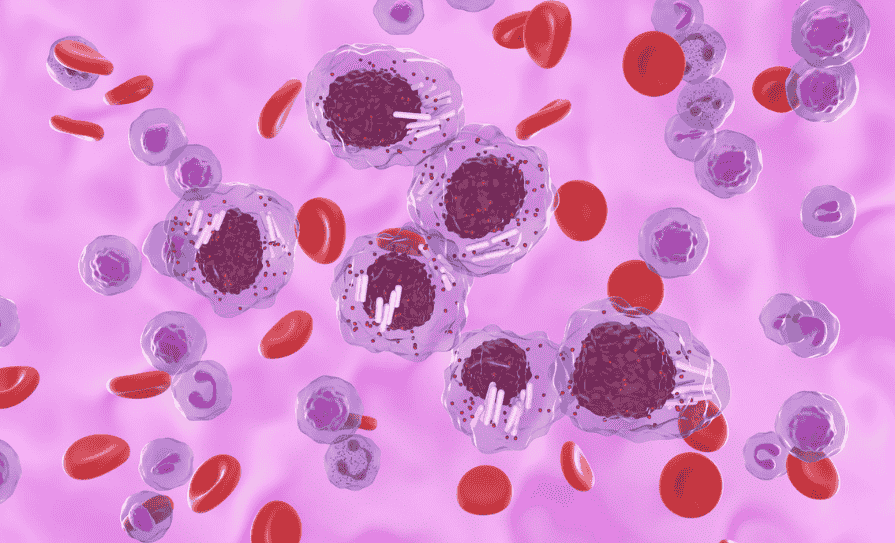
One of the keynote speakers at the Chronic Lymphocytic Leukaemia (CLL) Alliance Annual Conference 2026 was Prof Arnon Kater, Consultant Haematologist and Chair of the HOVON Group at Amsterdam UMC in the Netherlands. Prof Kater delivered a talk titled ‘Merging clinical with the science on immunocompromise’.
He began the presentation by providing an overview of problems in immune dysregulation and a brief synopsis of current treatment guidelines.
“What we have seen from our trials is… if patients get complete remission, those patients seem to have a PFS [progression-free survival] advantage,” said Prof Kater.
“It’s a bit early to say if they have been ‘cured’ of their disease… but at least they have meaningful PFS…. The problem is that it was only possible [in trials] to reach this complete remission in 18 per cent of the patients, so if you don’t do good patient selection, or if you don’t know how to select, then you have a problem.”
He also discussed why it is that people with CLL have T-cell complications.
“CLL is malignant – not extremely malignant, but still very active in communicating with its microenvironment and B-cells. There are many types of differentiation from a B-cell to a memory T-cell, but it needs B-cell help. It feels almost natural that if you have a disease with so many strange CLL cells, that there might be an impact on the T-cells. But understanding exactly why that is and how to overcome it is something that we have been exploring for some years in the lab. Although we have some interesting leads, we still can’t answer exactly why these CLL cells do this.”
The prerequisites for metabolic plasticity include fuel availability, uptake capacity, intracellular fuel processing, and functional mitochondrial machinery, he told the conference.
He also pointed out that the more CLL cells a person has, the lower their T-cell fitness is, and studies point to a form of “T-cell exhaustion”.
Prof Kater described work to evaluate the role of lipids in cells. His research using microscopy shows that CLL cells have even more lipid droplets than normal T-cells, and preliminary data indicates that there could be a problem with lipid utilisation.
“Accumulation of impaired, depolarised mitochondria correlates with T-cell effector-skewed phenotype,” said Prof Kater.
“CLL T-cells show a progressive shift towards
hyper PI3K-AKT and diminished AMPK signalling, and ex vivo treatment with a PI3Kδ inhibitor reprogrammes CLL T-cells into less-exhausted memory cells with
improved mitochondrial activity, leading to improved expansion and persistence and long-term
tumour control.”







Leave a Reply
You must be logged in to post a comment.