







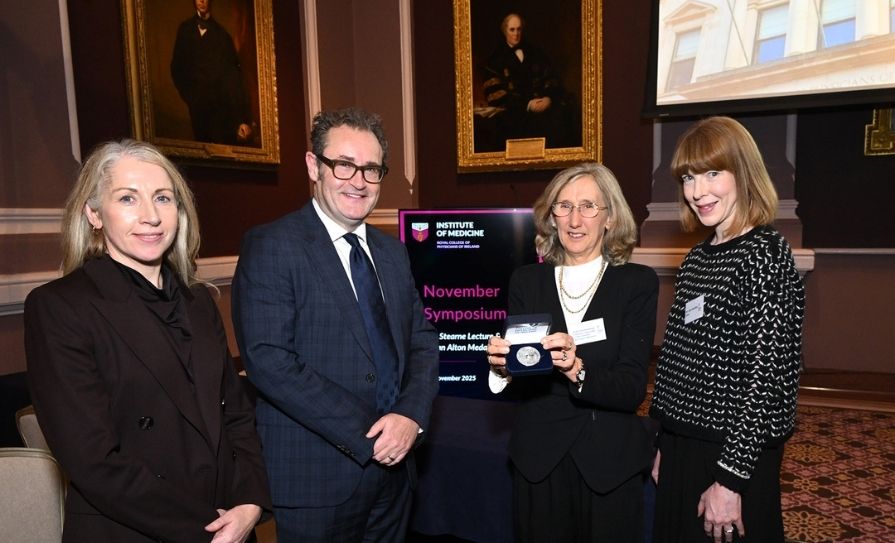
Prof Orla Hardiman delivered the 2025 Bryan Alton Medal Lecture on advances in amyotrophic lateral
sclerosis research, and what is required for future progress
This year’s RCPI Institute of Medicine Bryan Alton Medal was awarded to Prof Orla Hardiman in recognition of her exceptional contributions to clinical neurology, translational neuroscience, and the global understanding of amyotrophic lateral sclerosis (ALS).
The awarding of the medal took place during the Institute’s November Symposium, held on 27 November 2025 in No 6, Kildare Street, Dublin.
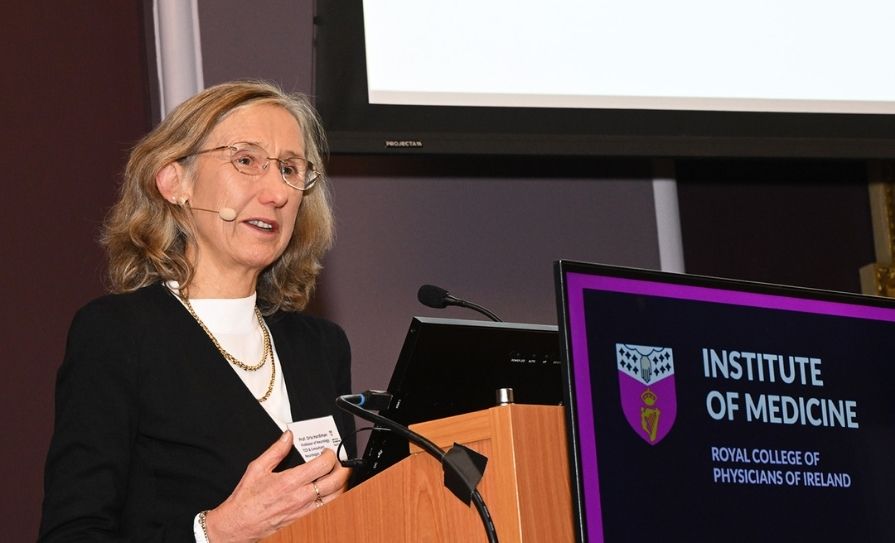
In her 2025 Medal Lecture – titled ‘Deconstructing amyotrophic lateral sclerosis: From bedside to bench and back again’ – Prof Hardiman explored why ALS research has reached a critical juncture and what changes are needed for meaningful therapeutic progress. Central to her lecture was the message that advances in ALS depend on a continuous interplay between clinical observation and laboratory investigation, with each informing and strengthening the other.
Heterogeneous
Prof Hardiman highlighted a central insight that has guided much of her research: ALS is far more heterogeneous than traditional definitions suggest. While typically described as a progressive motor neurone disorder, that definition misses the broader clinical reality.
“Amyotrophic lateral sclerosis is known as a rapid-onset loss of upper and lower motor neurones, but up to 13 per cent of patients present with frontotemporal dementia [FTD] and a further 50 to 70 per cent have significant cognitive and behavioural impairment.”
Prof Hardiman explained that this offers essential information about the underlying biology of the disease.
“Understanding the basis of heterogeneity is crucial to the success of future drug development.”
Despite its complexity, ALS remains one of the most reliably diagnosed neurodegenerative conditions with near-perfect clinicopathological correlation. It is this combination of diagnostic clarity and broad heterogeneity that makes the condition, in her view, “an exemplar of the wider family of neurodegenerations.”
Unlike Alzheimer’s or Parkinson’s disease, ALS often presents in late mid-life and its variants such as slow progressors, restricted phenotypes, rapidly advancing forms, those with cognitive impairment and those without, challenge any assumption that it is a single disease.
A cornerstone of Prof Hardiman’s research philosophy is the conviction that the bedside must inform the bench and not the other way around.
“My primary objective as a clinician scientist has been to understand the heterogeneous pathological mechanisms underlying ALS and FTD and to develop processes and technologies that can characterise that heterogeneity,” she explained.
Her research spans epidemiology, genomics, cognition and behaviour, neurophysiology, neuroimaging and early-phase clinical trials. By capitalising on the Irish ALS/MND [motor neurone disease] population-based register, which she began over 30 years ago, her team has made several landmark contributions in the field.
My primary objective as a clinician scientist has been to understand the heterogeneous pathological mechanisms underlying ALS and FTD
These include identifying a new susceptibility gene (ANG), showing that ancestral background affects risk and disease features and uncovering biological links between ALS and certain neuropsychiatric conditions. Advanced neurophysiology techniques developed by her team allow researchers to track network-level changes as the disease progresses, reinforcing the view of ALS as a multi-system disorder.
“By focusing on patient attributes at the bedside as the starting point, our objective is to provide a scientifically robust pathway back from the bench to guide future therapeutics,” she said.
Prof Hardiman emphasised that, despite over 80 phase 2 and 3 clinical trials, life expectancy for ALS patients still remains just three to five years from symptom onset.
This stark reality highlights the urgent need to rethink traditional approaches to research and treatment. This, she noted, is further compounded by the limits of traditional research models.
Limitations
Current research models have significant limitations: Animal studies cannot capture the full complexity of the human nervous system, particularly the cognitive and behavioural aspects of ALS, while post-mortem studies provide only static snapshots rather than dynamic insights into disease progression.
She outlined several critical unanswered questions:
▶ Why do some individuals carrying high-risk genetic variants never develop ALS?
▶ Why do some patients progress rapidly while others remain stable for years?
▶ What is the basis of discordant families, where disease manifests in non-gene carriers?
▶ What drives cognitive or behavioural symptoms in only a subset of patients?
▶ What are the pathobiological implications of the clinical and genomic overlap between neuropsychiatric conditions and ALS?
▶ And crucially, what protective or homeostatic mechanisms might delay or prevent disease onset, or even lead to a neuropsychological endophenotype rather than clinical disease?
“To make real progress, we need large-scale human datasets and improved analytic tools. Unless we embrace this approach, we risk repeating past errors, and the likelihood of developing truly effective disease-modifying therapies will be greatly reduced,” she argued.
Precision ALS
Looking ahead, Prof Hardiman discussed Precision ALS, an Ireland-led project supported by Research Ireland, ADAPT, and FutureNeuro. The initiative aims to combine clinical data, biomarker results, genomic information, and device-based measures in one large system.
The goal is to allow researchers to apply artificial intelligence (AI) and machine learning to large datasets, helping to identify new subgroups of patients who share biological features. These subgroups may respond differently to treatments and could form a basis for precision medicine trials.
Given the extent of clinical heterogeneity in ALS, she argues that artificial intelligence and machine learning will be essential for identifying new, data-driven patient subcohorts like groups that may share underlying biology, but appear indistinguishable in the clinic.
The initiative reflects a broader trend in neurology – moving beyond one-size-fits-all approaches and embracing precision medicine strategies that consider genetic background, biomarkers, and functional phenotypes. By leveraging these tools, researchers hope to develop therapies targeted to specific subgroups, improving both efficacy and patient outcomes.
Multidisciplinary care
However, scientific innovation alone is not enough. A significant part of Prof Hardiman’s career has focused on improving clinical care for people with ALS. Her team has shown that outcomes are better when care is delivered through a centralised multidisciplinary service, backed by community outreach and home visits.
“We now know that clinical care for those with ALS is radically improved by a multidisciplinary model with extensive community outreach and home visits,” she said.
“We have shown that this type of model has a significant impact on both survival and quality-of-life.”
This model also provides researchers with detailed longitudinal data, helping to link clinical observations with underlying biological mechanisms and inform the direction of research and the development of new treatments.
Prof Hardiman acknowledged the difficulties the field has faced, but also expressed optimism. ALS will not be solved with a single treatment because it is not a single disease. But the tools now becoming available such as large-scale data, advanced analytics, and detailed phenotyping offer real hope.
“Traditional clinicopathological correlation served us well in the 20th Century, but a rigorous, data-rich 21st Century approach now has the capacity to address its limitations,” she added.
Medal
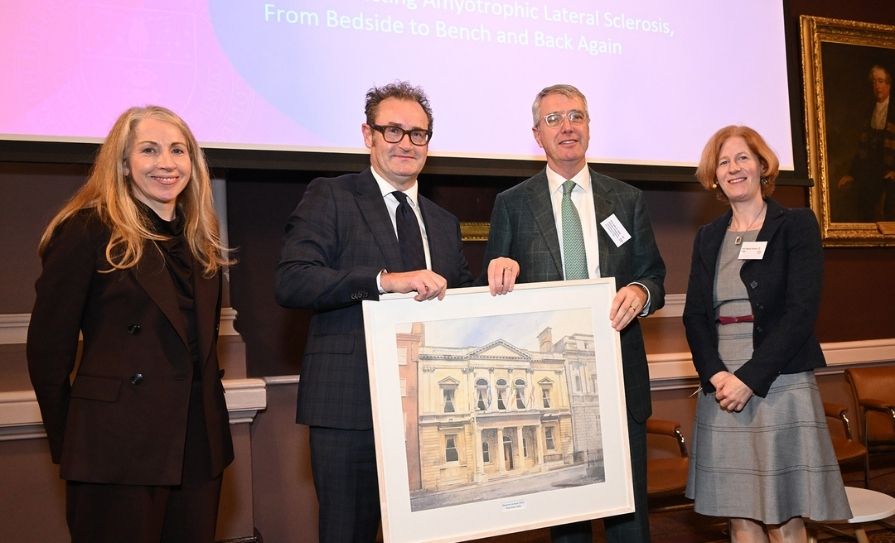
Prof Edward McKone, Dean of the Institute of Medicine, presented the Bryan Alton Medal to Prof Hardiman, one of the Institute’s highest honours recognising significant contributions to clinical and academic medicine in Ireland.
She joins previous recipients including Prof Rose Anne Kenny, Prof Geraldine Murphy, Prof Tim O’Brien, and Prof Fergus Shanahan.
The medal presentation coincided with the annual Stearne Lecture, delivered this year by Prof John V Fahy, University of California, San Francisco, US, whose talk on sub-phenotyping asthma and chronic obstructive pulmonary disease reflected the Symposium’s broader emphasis on precision medicine.
The Institute of Medicine will continue these important discussions in 2026 starting with its Spring Symposium taking place on 22 January. This event brings together leading voices from medicine, academia, and industry to share diverse perspectives on how structured training, effective communication, and focused learning can inspire and retain trainees in today’s demanding healthcare environment.
To register for the Spring Symposium, visit https://web-eur.cvent.com/event/15bd1670-3788-4584-9a3d-abfb1dc953c1/summary
This article was produced by the RCPI.
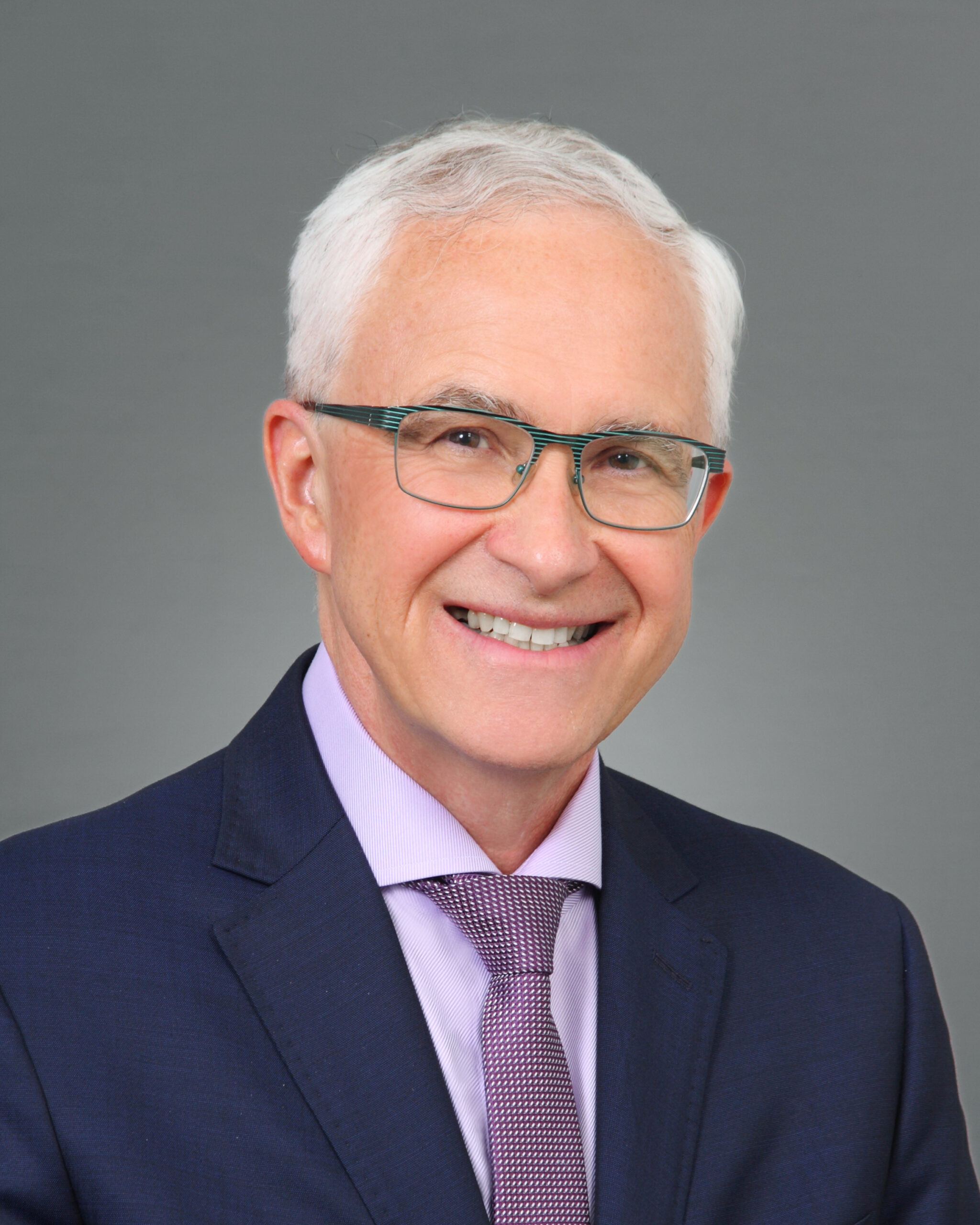
Profile: Prof Orla Hardiman
Prof Orla Hardiman is a graduate of University College Dublin (UCD). Following postgraduate training in Dublin, she moved to Boston in the US to complete her neurology residency at the Harvard Longwood Neurology Programme, where she served as Chief Resident in Neurology. She subsequently undertook Fellowship training in neuromuscular disease at Massachusetts General Hospital and Harvard Medical School.
Prof Hardiman returned to UCD in 1991 as a Newman Scholar in the Department of Physiology and was appointed College Lecturer in Physiology in 1994. She became a Consultant Neurologist at Beaumont Hospital, Dublin, in 1996 and was elected a Fellow of the RCPI in 2001. In 2004, she became the first Irish-based neurologist to be elected a Fellow of the American Academy of Neurology, followed by Fellowship of the American Neurological Association in 2014.
In 2007, she received a Health Research Board Clinician (HRB) Scientist Award and established an affiliation with Trinity College Dublin (TCD) as Clinical Professor of Neurology. She founded the Academic Unit of Neurology at TCD in 2011 and, in 2013, was appointed Ireland’s first Professor of Neurology. She was the HSE National Clinical Lead for Neurology before the current Clinical Lead, Prof Sinead Murphy, assumed the role.
Prof Hardiman has received numerous international honours and awards, including the inaugural American Academy of Neurology Palatucci Award for Advocacy in Neurology (2003), the ALSA/AAN Sheila Essey Award in ALS (2009), and the Forbes Norris Award from the International ALS Alliance (2011). She also won the HRB Impact Award in 2023 and was presented with a Lifetime Achievement Award from the Irish Motor Neurone Disease Association earlier this year.
Her primary research interests include the epidemiology, causes, and treatment of amyotrophic lateral sclerosis (ALS). Her work has focused on the clinical and genetic overlap between ALS and frontotemporal dementia, as well as the epidemiology, clinical features, and healthcare needs of people with young-onset neurodegenerative conditions.
She is the author of a large number of international peer-reviewed research articles, a textbook on neurodegeneration, and serves on numerous national and international boards and advisory panels.




Leave a Reply
You must be logged in to post a comment.