







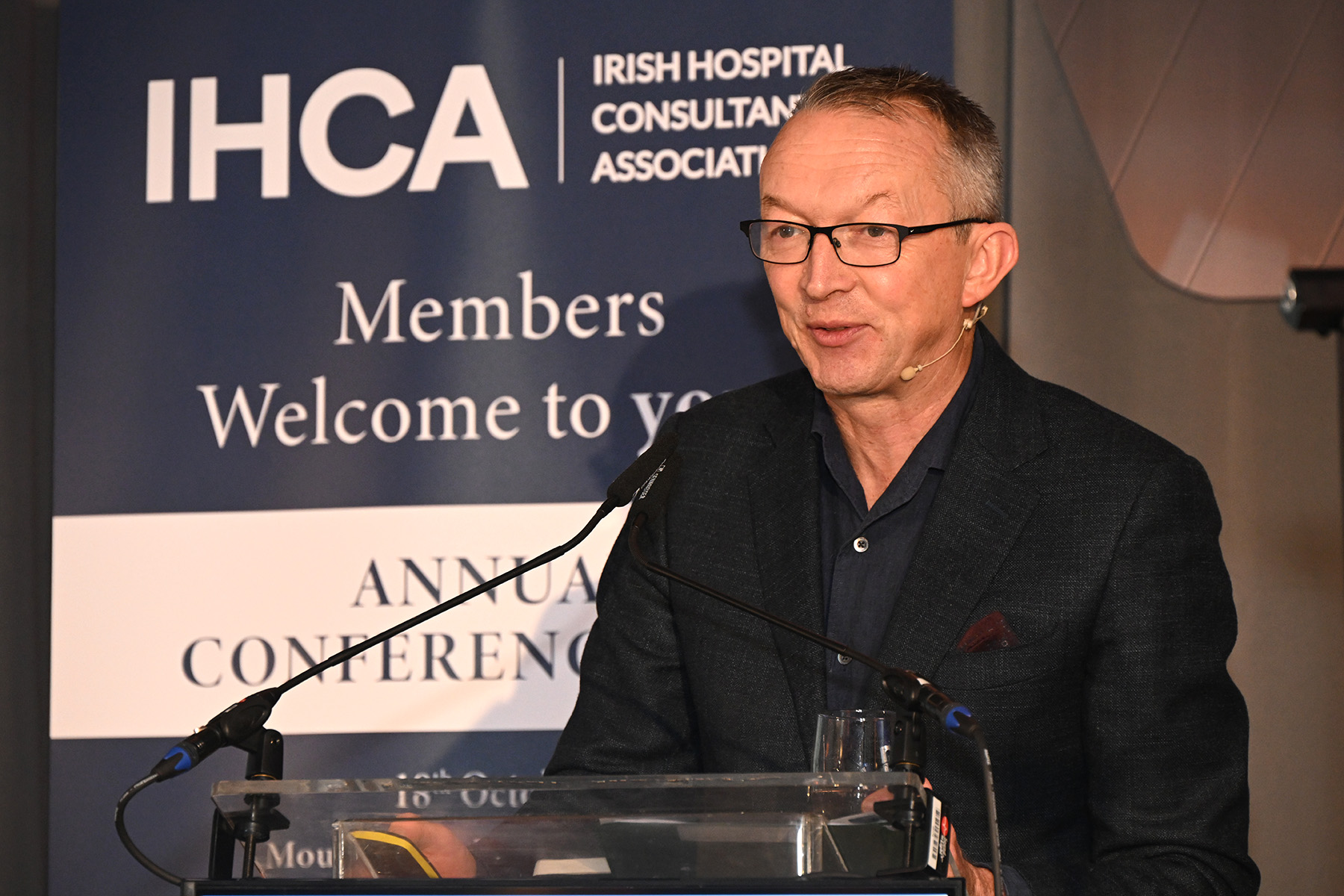
IHCA Annual Conference, Mount Juliet Estate, Kilkenny, 18 October 2025
Two afternoon sessions at this year’s IHCA Annual Conference focused on the topic of clinical leadership, specifically issues related to the role of clinical director
A review of the clinical director position within the health service is “well underway”, the Medical Independent (MI) has been informed.
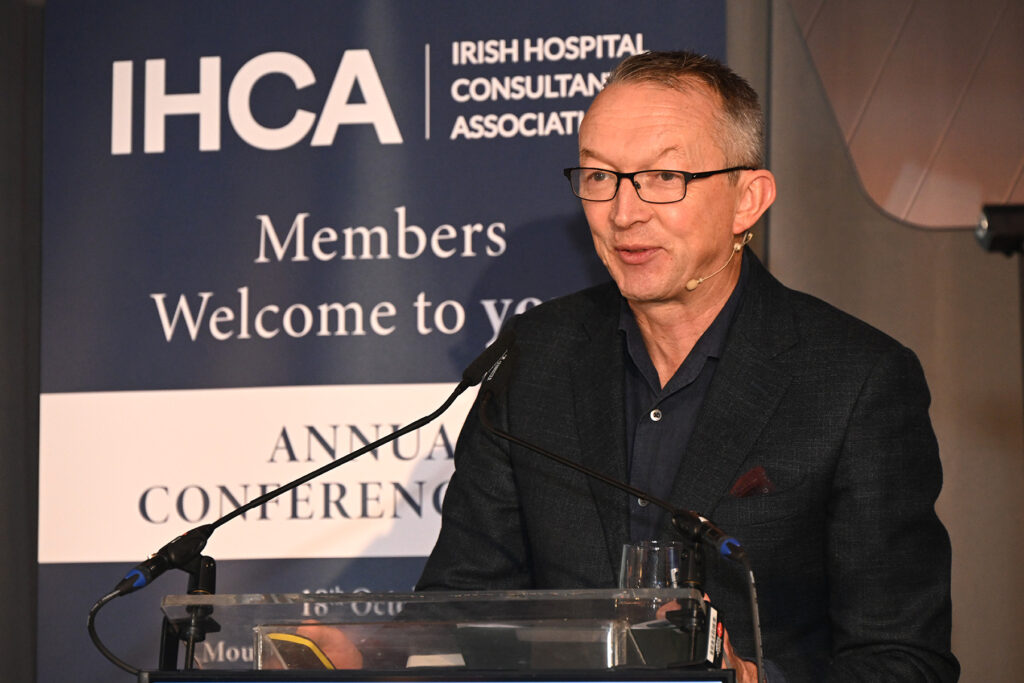
The review will provide a “standardised” description of the role across the health regions.
Dr Colm Henry, HSE Chief Clinical Officer (CCO), was commenting after his address on clinical leadership to the IHCA Annual Conference. The meeting took place at the Mount Juliet Estate, Co Kilkenny, on Saturday 18 October.
Dr Henry told MI that there were different “drivers” for the review.
The first of these was the “proliferation of titles” and a “dilution of the original clinical director role” as outlined in the 2008 consultant contract.
The second reason was the devolution of the health service into different regions.
“So that situation demands that we now standardise the role across all six regions,” he said.
Two afternoon sessions at this year’s IHCA conference focused on the topic of clinical leadership, specifically issues related to the role of clinical director.
A number of speakers from the floor identified challenges faced by doctors who may seek to take up clinical director positions.
“You heard today from people about the concerns about the [staff] supports and the various time commitments,” Dr Henry told MI.
“It is timely, in 2025, in order to deliver on Sláintecare, that we have the resources and dedicated time for [the] needs [of] clinical directors.”
He said that establishing a clear and consistent definition of the clinical director role is essential to ensure standardised practice across all regions. Such clarity, he added, would enable clinical directors to work more effectively in delivering the highest level of care for patients nationwide.
The review would not require any change to the definition of clinical directors, “as we believe it is captured in the existing contract,” according to the HSE CCO.
“It is more a question of laying down how clinical directors work, how they are supported, where they sit in executives and their relative domains for different specialties, so that we can deliver integrated care across the regions.”
Prof Pat Nash, Regional Clinical Director, HSE West and North West, is leading the review.
“He is in the middle of this at the moment, so the work is well underway,” according to Dr Henry.
“[The review is] also looking at international models of clinical directors and how that could best inform the Irish system.”
Dr Henry believes the findings of the review will support doctors working as clinical directors and that it will be “welcomed by them”.
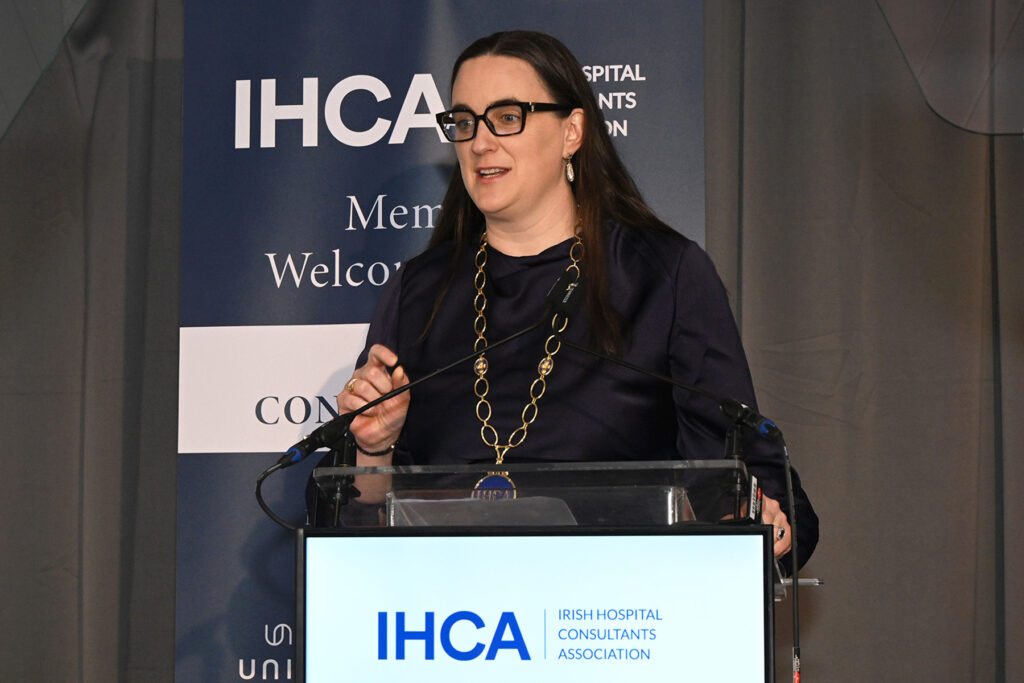
Speaking at the beginning of the panel discussions on clinical leadership, IHCA President Prof Gabrielle Colleran told attendees that clinicians must be at the centre of decision-making and champion good governance from “the bedside to the boardroom”.
Prof Colleran said that the introduction of clinical directors in the 2008 consultant contract “created an opportunity” for improved clinical governance in service delivery in Ireland.
“But we believe that this opportunity has never been fully realised,” she added.
Prof Colleran noted that this was acknowledged by the former Minister for Health Stephen Donnelly in his address to the IHCA Annual Conference last year.
“For the clinical director role to achieve its full potential, the health service as a whole needs to create the right environment for this to flourish.”
For the clinical director role to achieve its full potential, the health service as a whole needs to create the right environment for this to flourish
She revealed that the IHCA is carrying out its own “body of work” to examine the role of clinical directors – including the authority and powers vested in them – to ensure they can provide effective clinical leadership and uphold the highest standards of governance.
The Association is also engaging in cross-sectoral collaborations “aimed at expanding access to high-quality leadership and management training” for its members.
“It is a challenging time to step up and take on clinical director and other leadership roles, but patients and the wider system will be better for it,” Prof Colleran said.
“We applaud all our members who lean in and embrace the responsibility of clinical leadership roles.”
The conference was also addressed by Mr Robert Watt, Secretary General of the Department of Health. Mr Watt spoke of the importance of clinical leadership against the background of the “challenges” faced by the health service.
These include “the enormous changes in the demands for our health system”, he said.
“Health demand is growing by something like 3 or 4 per cent a year,” according to Mr Watt.
“We have a population [that is] ageing, demographic changes and … [we have] so much more [medical] treatments, and so many more drugs available in the system.”
He said it is not sustainable for the health system to continue to work the way it does currently.
“So, we have to work differently,” according to Mr Watt.
“In order for us to have change and reform, it needs to be led by many of the people in this room. It has to be clinically led – it has to be led by people who are at the frontline providing the service. The monopoly of wisdom does not lie on Baggot Street with the Department of Health and we are very much aware of that.”
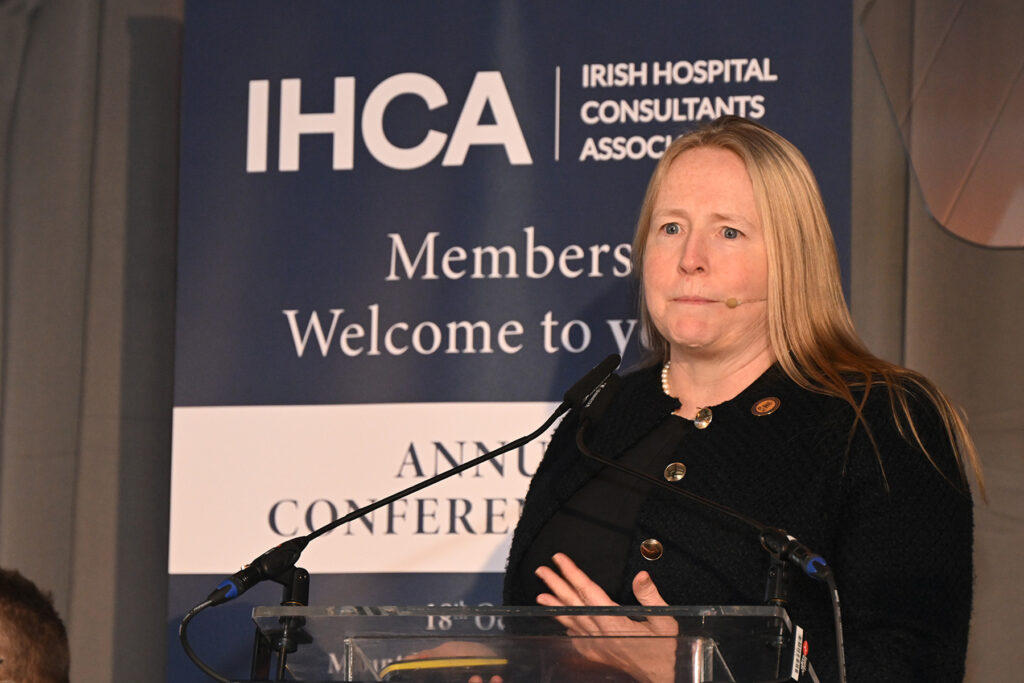
RCSI President Prof Deborah McNamara told the conference that real medical leadership meant that clinical leaders needed not only the delegation of “responsibility”, but also authority.
She said that sufficient resources were required for clinical director roles to operate effectively.
Speaking before the gathering, IHCA CEO Mr Jim Daly said the Association is entering a “new chapter”, which puts consultants at the heart of shaping reform.
“This year’s conference reflects that shift. It’s not just about identifying problems, but offering solutions rooted in the daily realities of clinical care,” according to Mr Daly.
“Our members are leading teams, managing complexity, and caring for patients under immense pressure, and their experience must guide the next phase of national reform.”











Leave a Reply
You must be logged in to post a comment.