







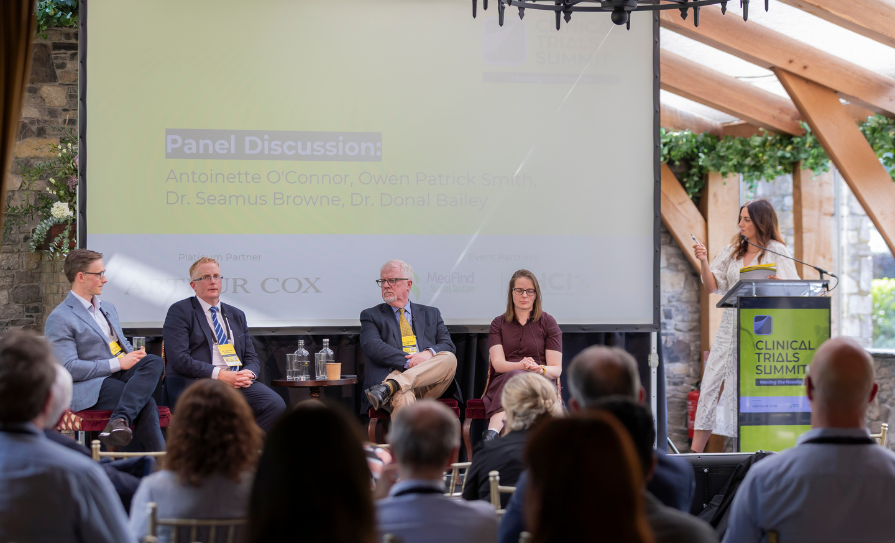
The recent Clinical Trials Summit heard that reform is needed for Ireland to realise its potential in the area. Danielle Barron reports
When it comes to clinical trials, Ireland needs to be more ambitious. That was the clear message from the inaugural Clinical Trials Summit 2026, which took place in Barberstown Castle Hotel, Co Kildare, on 10 June.
The meeting convened senior decision‑makers from across research, regulation, industry, and the healthcare system to explore how Ireland’s role in global clinical research can reach its full potential.
The goal of the Summit was to examine how Ireland can strengthen its position as a high‑quality, high‑trust clinical trials destination, attract new investment, expand national research capacity, and embed patient‑focused innovation across care pathways.
Minister for Health Jennifer Carroll MacNeill has been vocal about her willingness to help maximise Ireland’s clinical trials capabilities, and she sent a video message to the meeting reinforcing this commitment.
Overview
Consultant Medical Oncologist Dr David Fennelly opened proceedings by giving an overview of the Irish clinical trials landscape. There is a “clear performance gap”, he told attendees, with Ireland ranking just 18th out of 24 countries for trials per capita.
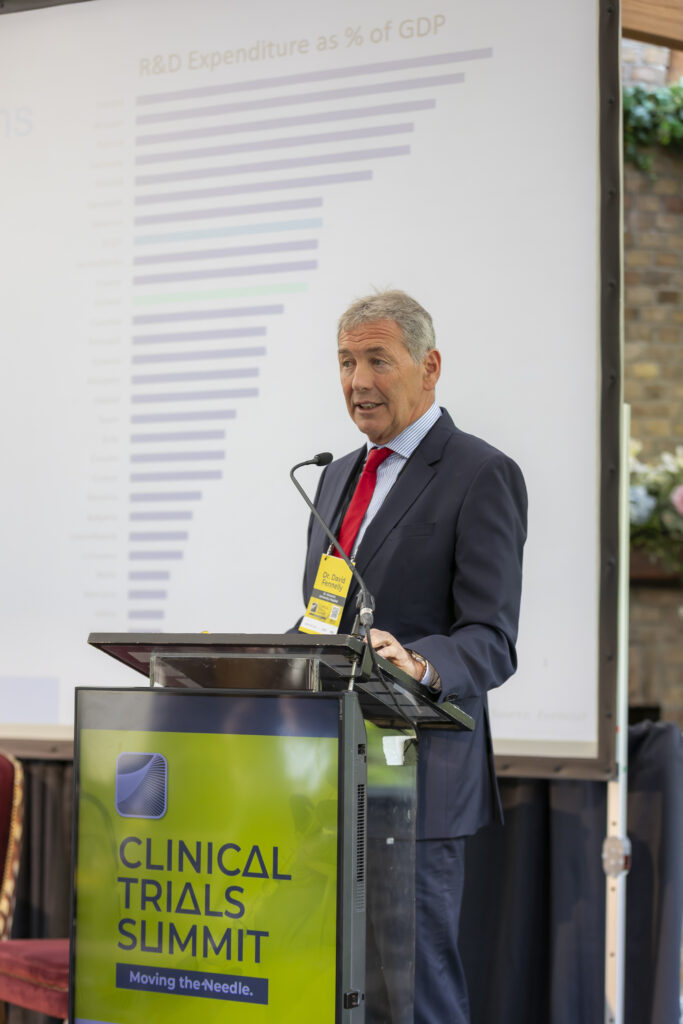
The national trials accrual rate remains at 2–3 per cent, compared with the stated six per cent target in the National Cancer Strategy. Dr Fennelly also pointed out that OECI (Organisation of European Cancer Institutes) accreditation requires a 10 per cent accrual rate. And despite efforts to raise awareness of clinical trials and encourage participation, some two-thirds of cancer patients in Ireland are still not offered a clinical trial.
The National Clinical Trials Oversight Group report, recently published, identified numerous barriers stymieing Ireland’s progress in clinical trials. These include: A fragmented infrastructure; the absence of a national electronic healthcare record (EHR); workforce instability; a lack of national funding; and administrative complexity, among others. The good news is that the Group’s recommendations are now being actioned, including the establishment of a Clinical Trials Advisory Council, the membership of which will be announced imminently.
Dr Fennelly, who is also the Clinical Director of Cancer Services at St Vincent’s University Hospital, Dublin, emphasised the need for strategic vision and collaboration. He pointed out the University College Dublin (UCD) Cancer Trials Cluster, launched in 2022, has seen trial accrual rise steadily since its establishment, having almost doubled. A strategic partnership with the Irish Research Radiation Oncology Group has also enhanced access to radiation oncology trials, while non-drug trials have increased significantly.
“We need to make ourselves more attractive to the pharma companies so we can participate in more clinical trials,” he said.
“We need to add value and incentivise activity to those trials, and we need to avail of the innovative technologies that are available currently. While we await an electronic healthcare record, there are undoubtedly alternative solutions that we can come up with.”
We need to make ourselves more attractive to the pharma companies so we can participate in more clinical trials
START
Also speaking at the event was Prof Austin Duffy, Consultant Medical Oncologist, the Mater Misericordiae University Hospital (MMUH), Dublin, and Associate Professor of Translational Oncology, UCD.
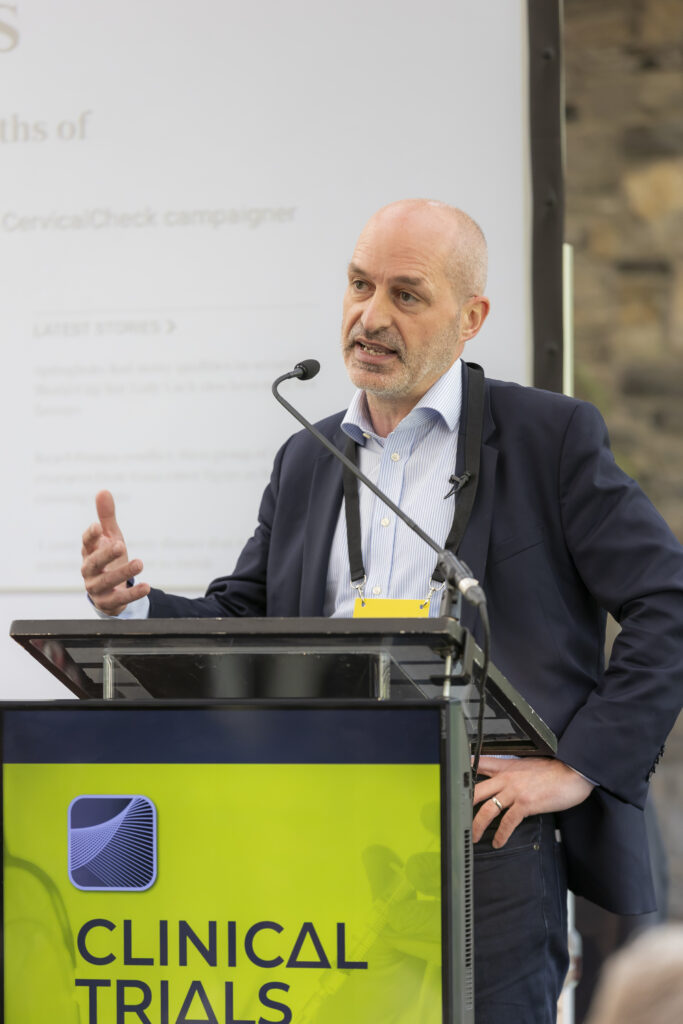
In his talk, Prof Duffy outlined the journey involved in establishing START Dublin, Ireland’s first dedicated phase I clinical trials unit. START is a physician-run clinical trials company based in San Antonio, Texas, US, and is the largest phase I cancer clinical research network in the world. He said START Dublin is already driving global-standard research and having real patient impact.
Early phase clinical trials are experiencing a surge in growth and now represent 60 per cent of all trials, he noted.
They usually provide a broader option for less common cancers and also tend to be less selective.
Given the long waiting times for innovative medicines in this country, Prof Duffy said it was his belief that Ireland would benefit from joining the START network.
“I became convinced that moving towards more earlier phase studies was a better fit for our country, actually, because it would answer a medical need that was there in the community.”
A tripartite agreement was signed in 2022, making Ireland the eighth site to join the global network, which now has 16 members.
START treated its first patient in Ireland in December 2024 and now has 90 patients under its care, with 16 studies currently open and eight more due to open.
Prof Duffy emphasised the “extremely streamlined process” which ensures rapid start-up times for START studies.
“Our reputation is increasing, our sponsors are happy, and they’re coming back, which is so important, and most importantly of all, we’re able to provide these drugs to patients and know that they’re actually helping them.”
Ms Jacinta Marron, Head of Operations, Cancer Trials Ireland (CTI), was also present to outline what the not-for-profit organisation does and also what it believes is needed to increase Ireland’s clinical trial activity.
“Our mission is to be an indispensable, all-Ireland hub for cancer trials, recognised for our governance and collaboration in research,” she explained.
CTI has 123 open studies and around another 40 either in development or close to opening.
It also engages extensively with international organisations to help bring more trials to Ireland.
Yet Ireland faces significant challenges, particularly when it comes to study start-up time. Ms Marron noted that Ireland is ranked as the slowest European Union (EU) member state for the time from EU clinical trials regulation approval to the opening of the first site, with a median time of 213 days.
“CTI is focusing on streamlining clinical trial start-up processes and reducing delays to activation,” she explained.
By helping with contracts and budget negotiations, ethics and regulatory coordination, and site activation and readiness, they have seen some improvements in key timelines, she said.
CTI is focusing on streamlining clinical trial start-up processes and reducing delays to activation
“But there is a lot more to do, and we need to do it to strengthen Ireland’s competitiveness and give trial sponsors confidence.”
Ms Marron also emphasised the importance of public-patient involvement in clinical trial design, noting that this will ultimately improve not only accrual, but ensure positive trial results.
Digital health
A recurring theme throughout the day’s proceedings was Ireland’s status as a laggard in the digital health space.
The meeting was told that patient identification is a core problem. Ireland’s low trial activity – 124 trials compared to Denmark’s 548 – stems from the inability of sites to identify eligible patients from unstructured electronic medical record (EMR) data, not from an overall lack of patients.
Mr Kevin Barrett, the co-founder of Evident, explained that its platform uses artificial intelligence to analyse unstructured medical notes, creating a ranked list of eligible patients and reducing patient identification time from 12–18 months to “overnight”.
“Even with the best EMR, you’re going to have 80 per cent of that information wrapped up in unstructured notes,” he stated. “And from a trial sponsor standpoint, it really does de-risk your site selection.”
In addition, its federated model keeps data on-site, addressing understandable privacy concerns. The platform is disease-agnostic, Mr Barrett explained, and will now be piloted at five sites for 12 weeks.
Mr Muiris O’Connor is Assistant Secretary in the Department of Health and leads the Department’s research and development and health analytics division. He outlined the national strategy to build a unified data infrastructure, acknowledging past failures to secure funding for a national EHR.
While momentum is gathering pace in this area, Mr O’Connor explained the ultimate goal is to move from Ireland’s current fragmented “pockets of excellence” to a national data spine, mirroring Denmark’s model. Data will be critical to gathering real-world evidence, he said, adding that the new HSE Health App will be very helpful in this respect.
Mr O’Connor also spoke of the need to share critical information from failed trials.
“We don’t get the shared learning around all the money that’s spent on clinical trials that aren’t so successful, and that’s really frustrating for governments who are paying dear.”
Also speaking during the session on building capacity was Ms Erin Daly, Operations Manager, MMUH. The Pillar Centre for Transformative Healthcare was established in 2018 as MMUH’s hub for education, research, and innovation.
Ms Daly detailed the Centre’s successful transformation, which was driven by a 2022 review of its research governance. Central to this was the establishment of a clinical research support office, which functions as a single point of contact for all clinical research.
Ms Daly explained it provides centralised support for feasibility, regulatory guidance, and finance.
“It has reduced researcher administrative burden, strengthened governance, and increased patient access to trials,” she said. “This dedicated expertise allows researchers to focus more of their time on research.”
Ms Daly also highlighted the hospital’s participation in the National Electronic Research Management System (NIRMS), which is being developed and led out of the HSE research office.
“Essentially NIRMS will standardise and streamline research governance processes nationally, and it is hoped that this will improve efficiency, consistency, and oversight across institutions,” she explained.
The importance of research infrastructure cannot be understated, Ms Daly concluded. “It’s valuable because it enables ambitious projects.”
Partnership
The final session of the day focused on partnership. It underscored a key theme of the Summit, which was that successful clinical trials are ultimately built on collaboration.
Dr Antoinette O’Connor is a Consultant Neurologist at Tallaght University Hospital, Dublin, who has a keen interest in dementia research, working with Dementia Trials Ireland and Dementia Research Network Ireland.
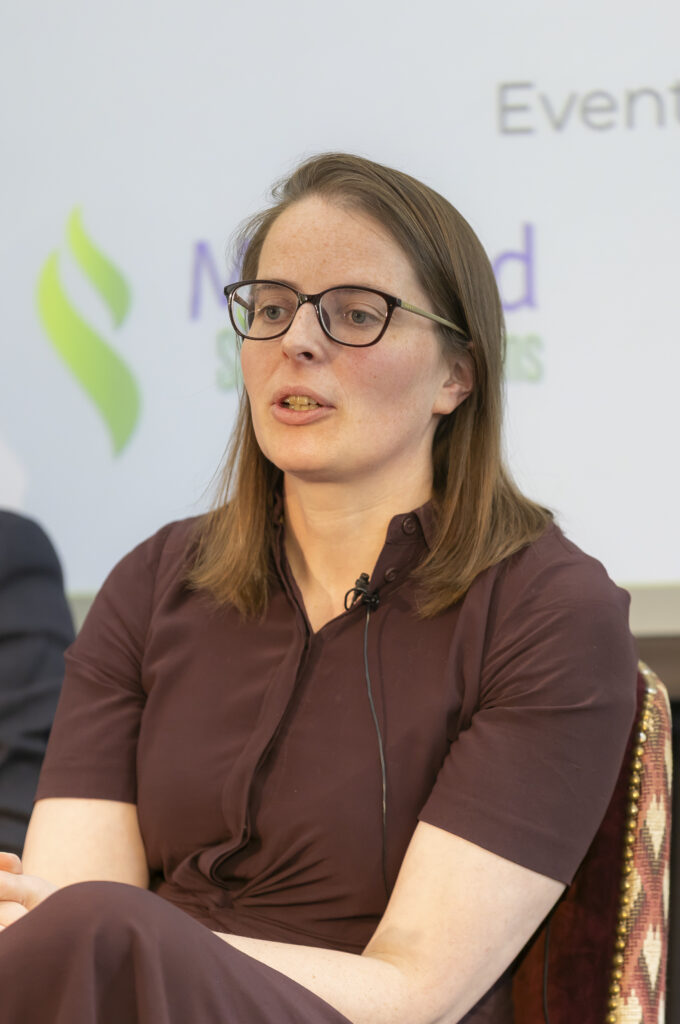
She explained that a new era of disease-modifying therapies (DMTs) for Alzheimer’s disease is finally emerging, driven by earlier intervention and biological diagnosis.
Ireland’s rapidly ageing population means this is a “looming public health crisis” and, according to Dr O’Connor, the prevalence of Alzheimer’s disease is projected to nearly triple by 2050.
Yet a five-year delay in symptom onset could halve prevalence, highlighting the urgent need for effective therapies.
She noted that, thanks to enhanced understanding of biomarkers for the disease in recent years, a “gold standard diagnostic tool” for Alzheimer’s finally exists.
“Now a simple blood test, and even more recently, a simple blood spot fingerprint test, can be used to confirm a biological diagnosis of Alzheimer’s disease, and this will allow increased accessibility and increased scalability of trials.”
She offered fresh insight on the many previous negative Alzheimer’s drugs trials: “Previously we were relying on clinical diagnostic tools, and even in expert centres we only got it right two out of three times, so probably 30 per cent of people in the old Alzheimer’s disease trials that we saw as failures didn’t even have the disease. How are the drugs going to work if people don’t even have the condition?”
Trials of new DMTs confirm that earlier intervention is best in Alzheimer’s drug therapy, and Dr O’Connor noted that those patients at a mild to moderate impairment stage or an earlier stage do better on these agents. Lecanemab showed a 27 per cent slowing of cognitive decline, while donanemab replicated these results and confirmed that earlier intervention yields greater benefit.
Yet ensuring patients have the opportunity to avail of groundbreaking therapies like these is the critical question, she said.
“We know that, with the disease-modifying therapies, only around 10 per cent of patients who will be eligible for those… are attending our services. So it’s going to be a real recruitment gap.”
While Irish participation in clinical trials needs to grow, Dr O’Connor concluded by stressing the need for Ireland to close the gap between scientific innovation and the health service.
“What we need is clinical academic centres that are delivering a new era of trials, and together that will lead to translation to meaningful impact.”
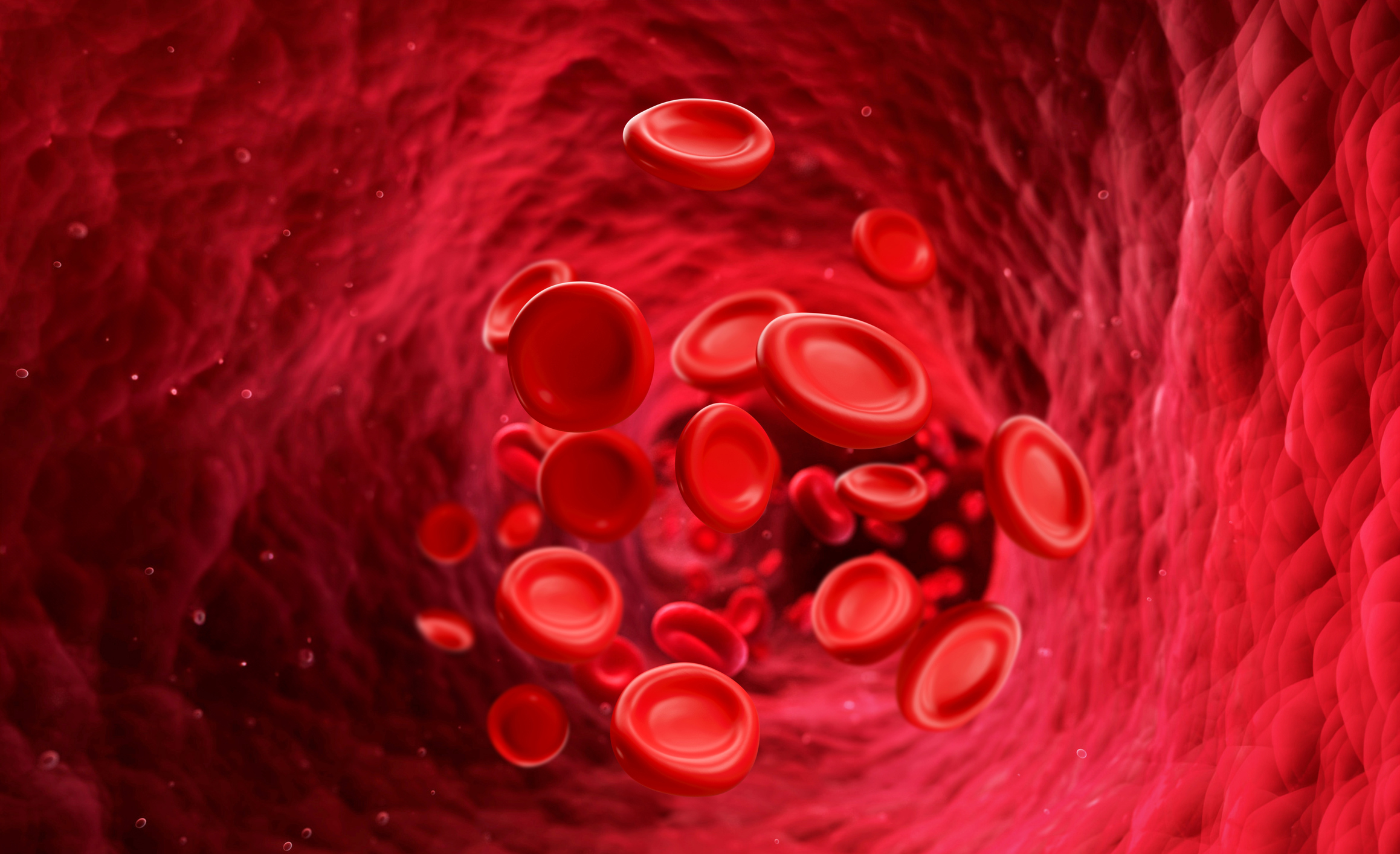
One of the final speakers was Prof Owen Patrick Smith, UCD Professor of Paediatric and Adolescent Medicine, and Consultant Paediatric Haematologist, Our Lady’s Children’s Hospital, Crumlin, Dublin. Prof Smith noted that some 60 years ago, there was no cure for childhood leukaemia in Ireland. But he explained that global partnerships have transformed paediatric oncology, raising acute lymphoblastic leukaemia (ALL) survival from zero to greater than 90 per cent by using measurable residual disease (MRD)-guided therapy to reduce toxicity and improve outcomes.
But challenges remain, said Prof Smith.
“We’ve totalled out on intensification, we can’t give any more of this, and we’re paying the price of that from long-term survivors; we’re seeing heart disease, bone disease, etc.”
The targeted therapies of the 2010s, including drugs like blinatumomab and inotuzumab ozogamicin, are now replacing toxic chemotherapy and the result is dramatic survival gains. Prof Smith namechecked the ALL Together Trial, a 14-country European partnership that has recruited more than 5,000 patients, achieving 95–96 per cent overall survival for standard and intermediate-risk patients, and also the Infant ALL Trial, a global trial involving 22 countries using blinatumomab that raised event-free survival from around 46 per cent to 85–90 per cent in just four years. He finished by thanking the families who participate in clinical trials, helping themselves and others.
“I always remember the patients but also their parents for giving us that incredible privilege of putting their children on clinical trials.”
In his presentation, Dr Seamus Browne, Head of Partnerships, RCSI, said the National Clinical Trials Oversight Group report provides a clear blueprint for Irish success in clinical trials, and its recommendations must be implemented rapidly.
“It’s an opportunity we must seize.”
He also suggested that research should be embedded in hospital key performance indicators, making it a core aspect of patient care.
“One thing that would cost nothing across the system, but would have a huge impact, is if there was a research metric set by the Department of Health, sent down to the HSE, and then implemented in the individual hospitals,” he said. “We’ve got to embed research within the healthcare system, and it can’t sit on the margins of the healthcare system, tolerated as opposed to really endorsed and supported.”
Dr Fennelly concluded by saying he felt there is much to be positive about when it comes to Irish involvement in clinical trials, despite the obvious hurdles.
“I think it’s really important we also recognise the massive improvements that we’ve made in Ireland in the past decade, so we don’t need to be negative about it. Yes, we’ve IT challenges, we’ve lots of challenges; but we’re in a very, very strong position.”








Leave a Reply
You must be logged in to post a comment.