NOTE: By submitting this form and registering with us, you are providing us with permission to store your personal data and the record of your registration. In addition, registration with the Medical Independent includes granting consent for the delivery of that additional professional content and targeted ads, and the cookies required to deliver same. View our Privacy Policy and Cookie Notice for further details.
Remote consulting: Legal, ethical, and practical considerations
By
Mr Stephen O'Leary
- 16th Jun 2026
iStock.com/Milan_Jovic
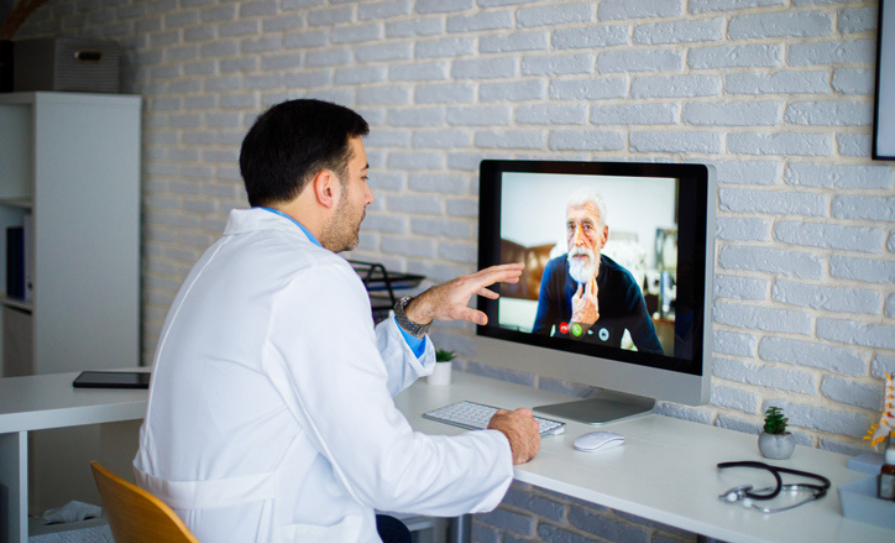
While there are advantages to telemedicine, practitioners must always remain live to its limitations, writes Mr Stephen O’Leary
Remote consulting has never been more prevalent in the Irish medical landscape. Practitioners will be aware of the increased reliance on technology to conduct remote consultations with patients across the entire spectrum of medical services.
Virtual healthcare is likely to play a greater role in the delivery of patient care in the coming years. The HSE Telehealth Roadmap 2024-2027 sets out the strategy to incorporate telemedicine as a major component of health developments over the next decade, focusing on improving the technological infrastructure, and developing staff training and awareness.
While strides in technology continue to re-imagine aspects our healthcare system, it is important to consider how remote consulting is best placed to ensure that quality patient care is delivered.
What is telemedicine?
The Medical Council’s Guide to Professional Conduct and Ethics for Registered Medical Practitioners (the ‘Guide’) defines telemedicine simply in the following terms:
“Telemedicine is the use of technology such as telephones, websites, apps, and software platforms to provide and support healthcare for patients.”
Practitioners must use their professional judgment as to whether remote consultations are appropriate on a case-by-case basis, taking into consideration the context and the needs of the individual patient.
Guidance and legal considerations
While there are many advantages to remote consultations, practitioners must always remain live to the limitations of telemedicine. Crucially, the use of remote consultations does not alter the ethical, professional or legal obligations of doctors, regardless of how the doctor-patient interaction occurs.
While there are many advantages to remote consultations, practitioners must always remain live to the limitations of telemedicine
Paragraph 37 of the Guide states clearly:
“If you provide telemedicine services to patients, you must observe the same standards of conduct and practice as would be expected if treating the patient in-person.”
How can remote consulting be integrated into healthcare delivery?
Remote consulting is perhaps most useful when it is used to enhance an existing system for providing patient care. The convenience and practical benefits afforded to patients must be weighed against the limitations of virtual patient-practitioner interactions.
Telemedicine can help maintain continuity of care and avoid the negative consequences from delayed preventive, chronic, or routine care. It can also increase participation for those who are medically or socially vulnerable or who do not have ready access to other providers. As was the case during Covid-19, the use of telemedicine helped to reduce potential infections exposure. Similarly, telemedicine can be useful when an in-person visit is not practical or feasible.
Limitations of virtual consultations
Notwithstanding the obvious advantages, there are limitations to virtual patient-doctor interactions. Communication can be more challenging and this difficulty can be made worse where there are additional barriers such as language differences or a communication impairment. Certain examinations and diagnostic tests simply cannot be performed remotely, which may in turn lead to unforeseen delays in diagnosis.
In-person consultations will always be preferable in certain situations. Typical examples would include where there is urgency and/or certain underlying health conditions, an inability to perform an appropriate physical exam or the need to address sensitive topics, especially if there is patient discomfort or concern for privacy. There can also be practical limitations such as limited access to technological devices (eg, phone, smartphone, tablet, computer) needed for a telemedicine visit, or connectivity issues.
Patient consent and remote consulting
The principle of patient consent applies equally in the context of remote consulting. It is important that a patient gives their informed consent to have any consultation or treatment conducted via remote technology.
As always, the process of obtaining informed patient consent should be viewed as an ongoing dialogue rather than a one-and-done conversation. In order to ensure that a patient is fully informed and freely consenting to a virtual mode of healthcare, doctors should draw attention to the following issues:
▶ The appropriateness and limitations of telemedicine for their care.
▶ The security and privacy risks of the telemedicine technologies being used.
▶ The measures taken to mitigate those risks.
▶ Whether the consultation will be recorded (either by video or use of an artificial intelligence scribe) and recordings maintained in the patient record.
▶ That notes of the consultation will be included in the patient record in the same way they would in a face-to-face consultation.
Patient privacy and confidentiality
Where doctors choose to conduct remote consultations, it is vital that all practical steps are taken to safeguard patient privacy and confidentiality. Practitioners should ensure they use only a secure, password-protected and encrypted internet connection, they avoid public hotspots or free Wi-Fi services, and they check for adequate bandwidth and screen resolution before any consultation. The consultation should be conducted in a quiet, private space to avoid interruptions and the potential for others to overhear. Practitioners should document in the records that the consultation took place remotely and that the patient consented to this.
Data protection
Medical practitioners have strict legal obligations in respect of the personal data of their patients.
Article 9.2(h) General Data Protection Regulation provides a lawful basis for the processing of special categories of personal data, where that processing:
“… is necessary for the purposes of… medical diagnosis, the provision of health or social care or… pursuant to contract with a health professional and subject to the conditions and safeguards referred to in paragraph 3.”
While the lawful basis for processing such data is usually clear-cut, there is a greater onus on practitioners to ensure that patients are fully informed and consenting to the way their virtual care is provided and recorded. Robust security measures including encryption and access controls are vital features of any electronic software used to conduct remote consultations.
The use of images in remote consultations
Practitioners should exercise particular attention and care to the use of clinical imagery in the context of remote consultations, particularly the way any such imagery is stored and recorded. The Guide acknowledges that the taking of audio, visual, or photographic recordings may, at times, be necessary in order to deliver safe patient care. Factors to consider when using images in remote consulting include:
▶ Whether it would be in the patient’s best interests to wait until they can attend in person. If this is not feasible and/or delaying could potentially cause further harm or delay further investigation, practitioners may decide the use of clinical imaging and a remote examination is appropriate and their records should reflect this decision-making.
▶ Decide on the most appropriate modality for the imaging. A video consultation may provide a better overview whereas a photograph typically provides better resolution.
▶ Discuss with the patient the limitations of relying on imaging and conducting examinations remotely. Explain that a physical examination may still be required. Obtain the patient’s informed consent to proceed.
▶ Consider the patient’s need for privacy and comfort with their environment and ensuring no interruptions.
The importance of record-keeping
Face-to-face consultations allow practitioners to observe subtle non-verbal cues and body language that simply is not available via remote consulting. There may be subtle clinical signs that do not present themselves via remote consultation and it is almost invariably the case that the rapport between patient and practitioner is more difficult to establish.
While keeping a good record of decisions made in the context of a patient’s care is always important, it becomes even more vital in the context of remote consulting. When it is not possible to conduct a physical examination, practitioners may have to rely more on their history and previous investigations. Keeping a good record of the consultation may help reduce any risks that this may create. Good notes are vital to help explain the context and rationale of decisions taken months or years after those decisions were made.
Conclusion
Remote consulting is a firmly established feature of Irish healthcare delivery. Telemedicine will remain an important means of improving access, continuity, and convenience for patients, particularly where in-person attendance is impractical or unnecessary. However, the convenience of remote consulting should not obscure its limitations. Practitioners must exercise clinical judgment in deciding whether a remote consultation is appropriate in each case.
Ultimately, remote consulting is best viewed not as a replacement for traditional care, but as an additional means of delivering safe, effective, and accessible healthcare when used appropriately. Its successful integration into clinical practice will depend on doctors remaining alert to its limitations, documenting their decision-making carefully, and ensuring that patient safety, privacy, and informed consent remain at the centre of every consultation.












Leave a Reply
You must be logged in to post a comment.