It won’t be long before the current National Cancer Strategy expires. The term covered by the 10-year plan (2017–2026) will come to an end in a matter of months.
When exactly a new strategy will be developed, let alone published, is uncertain.
At a recent meeting of the Oireachtas committee on health, the Department of Health said that an independent review of the current strategy would soon commence. The findings of this evaluation, which will be carried out by a panel of international experts, will inform the development of a new strategy.
As reported in this issue of the Medical Independent (MI), it is expected that the review will take at least six months.
At the meeting, officials from the Department indicated that the current strategy will be extended into next year. Last month, a letter was sent to The Irish Times calling for the Minister for Health Jennifer Carroll MacNeill to act on the issue as a matter of urgency.
The letter was signed by representatives from the United Cancer Advocates Network (UCAN) Ireland, Breakthrough Cancer Research, Cancer Trials Ireland, the Irish Society of Medical Oncology, the Irish Platform for Patient Organisations, and the Marie Keating Foundation.
It pointed out that cancer strategies take time to evolve, noting Northern Ireland began developing its current strategy years before its public consultation opened.
The letter urged the Minister to announce a cancer strategy steering group with meaningful patient involvement, publish a clear development timeline with a target publication date no later than the end of 2027, and confirm there will be no gap in strategic direction or funding.
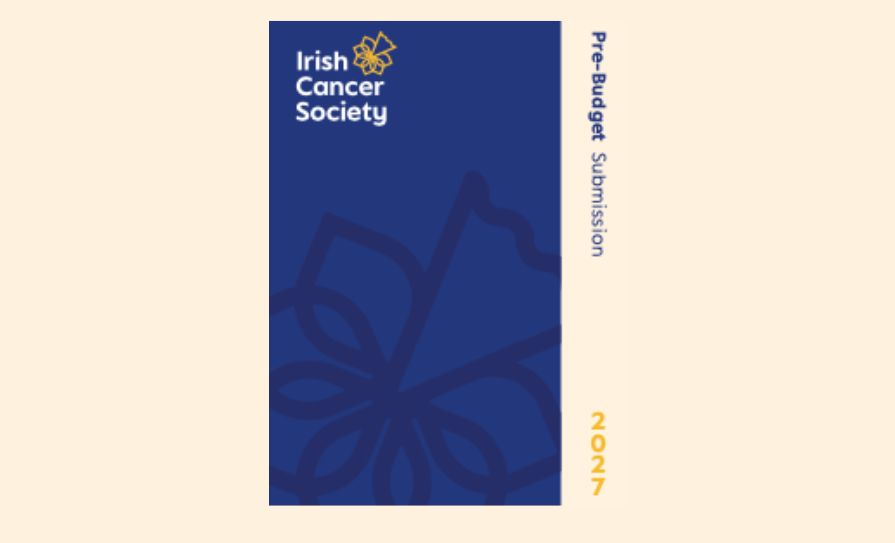
The development of the next strategy was a central theme in the pre-Budget submission of the Irish Cancer Society (ICS), which was published in July.
In the foreword to the document, the Society’s CEO Ms Nikki Gallagher wrote that the Government needed to make a new strategy a priority.
“This requires a clear role for the National Cancer Control Programme [NCCP], and sustained, multi-annual investment in cancer services, infrastructure, and prevention,” according to Ms Gallagher.
The ICS said this multi-annual funding should amount to €100 million for the first five years of implementing a new strategy.
It also called for ringfenced funding of €20 million to be provided to roll out initiatives under the current strategy next year, and to deliver a new strategy, if approved.
According to the pre-Budget submission, the gains Ireland has made in terms of cancer care and treatment are “at risk of stalling”.
“Our current National Cancer Strategy… has failed to deliver the promised outcomes due to underinvestment,” it stated.
The ICS pointed out that Ireland’s survival rate “has not continued to grow at pace” in recent years.
“Once we were on par with Denmark in cancer survival, we now lag and do not match their outcomes.”
Despite these concerns, there has been progress in cancer care. For example, earlier this month, St James’s Hospital in Dublin announced that 150 patients have now received CAR T-cell therapy at the site.
In December 2021, St James’s became the first adult hospital in Ireland to deliver the treatment, which involves collecting a patient’s own T-cells, genetically modifying them, and reinfusing them back into the patient. For people with relapsed or treatment-resistant blood cancers, CAR T-cell therapy offers hope when other treatment options have been exhausted.
While it is important to acknowledge achievements such as this, the apparent delay in developing a new cancer strategy is worrying.
The delay comes at a time when the NCCP has yet to appoint a permanent Director. As MI has reported the role has been filled on an interim basis since Prof Risteárd Ó Laoide stepped down as Director at the end of last year.
It is now imperative that the Department moves as swiftly as possible to develop a new strategy and point the way forward for cancer care in this country.












Leave a Reply
You must be logged in to post a comment.