







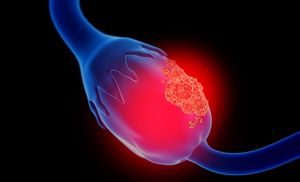
Scientists at the School of Medicine, Trinity College Dublin and the Trinity St James’s Cancer Institute (TSJCI) – working with collaborators in the UK and Australia – have demonstrated that ovarian cancer cells can be detected in the bloodstream, and that they may use platelets and immune cells as a protective cloak to help them survive and spread. The study was recently published in the British Journal of Cancer.
“By uncovering how ovarian cancer cells move and survive in the bloodstream, this research brings us closer to developing a simple blood test that could transform how we diagnose, monitor, and treat ovarian cancer – improving outcomes for women in Ireland and worldwide,” study author Dr Sharon O’Toole, Trinity College Dublin and TSJCI said.
The study focused on women newly diagnosed with high-grade serous ovarian cancer (HGSC), the most aggressive subtype of the disease. Each year, around 400 women in Ireland are diagnosed with ovarian cancer, and approximately 70 per cent of these cases are HGSC. Despite advances in surgery and chemotherapy, five-year survival rates are less than 30 per cent. Internationally, survival rates are similarly poor, largely because the disease is diagnosed late and lacks reliable tools to track its progression.
In this study, the research team used an advanced EpCAM-independent microfluidic system (Parsortix) to isolate circulating tumour cells (CTCs) from blood samples in 43 newly-diagnosed patients with HGSC taken at diagnosis. CTCs were also isolated from the ovarian vein of the patients during primary cytoreductive surgery. The approach captures a broader range of tumour cells than traditional methods and helps clarify how ovarian cancer spreads. The isolated cells were then profiled using single-cell RNA sequencing to reveal the molecular features that support their survival in circulation.
Detection of CTCs in patients with HGSC was predictive of a poorer progression free survival (P=0.0183). Patients with CTCs were found to have increased serum levels of CD73 (P=0.0311). scRNAseq of CTCs isolated from the ovarian vein identified enrichment in genes associated with immune signalling.
This study, one of the first to combine EpCAM-independent CTC capture, ovarian vein sampling, and single-cell transcriptomic analysis in ovarian cancer, provides strong evidence that blood-based detection of tumour cells could serve as a biomarker of disease progression, said the authors.
Further studies are warranted to investigate the utility of CTCs as markers of neoadjuvant chemotherapy response as well as for longitudinal monitoring. Molecular analysis of CTCs in HGSC reveals a potential role of the immune system in CTC-mediated haematogenous metastasis.
One of the most striking findings of this study was how dynamic and robust these tumour cells appeared to be in the blood circulation. Lead author Dr Mark Ward, Trinity College Dublin and TSJCI, explained that the cancer cells appear to hide in plain sight, blending in with normal blood components and even piggybacking on immune cells to move through the bloodstream.
“For decades, ovarian cancer was thought to spread mainly within the abdomen. Our findings suggest that tumour cells can also enter the bloodstream, potentially at an early stage of the disease, where they interact with platelets and immune cells to survive. Recognising this could change how we detect and monitor ovarian cancer in the future,” Dr Ward said.
Prof John O’Leary, Chair of Pathology at Trinity College Dublin and Consultant Histopathologist, said: “From a pathology and molecular diagnostics standpoint, this work deepens our understanding of the mechanisms driving tumour spread. By profiling the molecular signatures of circulating tumour cells, we can begin to identify biomarkers that reveal how these cancers evolve and how best to target them.”
Next steps
The research’s next phase will focus on understanding why certain patient’s ovarian tumours shed CTCs while others do not, and what biological features determine whether these cells survive and establish new sites of disease. By studying the molecular signatures of both the primary tumour and the CTCs it releases, the scientists aim to uncover the mechanisms driving this shedding process and its relationship to patient outcomes.
The team will also explore whether CTCs can be used to monitor treatment response in real time. Tracking how CTC numbers and characteristics change during chemotherapy could provide an early indication of how well a patient’s cancer is responding, or whether the disease is becoming resistant. This liquid biopsy could ultimately allow clinicians to adjust treatment earlier and more precisely than is currently possible through scans or tissue biopsies.
Reference
Ward MP, Lewis F, O’Gorman C, et al. Circulating tumour cells are a prognostic indicator in advanced high-grade serous ovarian cancer and are associated with platelets and immune cells following dissemination. Br J Cancer. 2025 Oct 10. The paper is available at: www.nature.com/articles/s41416-025-03227-7











Leave a Reply
You must be logged in to post a comment.