








Catherine Reilly examines key actions required to enhance access to organ transplant in Ireland
Preliminary data suggests the proportion of older organ donors has increased this year, according to the Department of Health.
Ireland has a low rate of facilitating organ donation in the 60+ age-group, with the average age of a deceased donor being in the 40s. This is lower than many countries, particularly those with the highest rates of donation and transplant. HSE Organ Donation and Transplant Ireland (ODTI) has raised this issue for several years. Only a small proportion of patients (<1 per cent) die in circumstances where organ donation may be possible.
Overall, organ donation rates are relatively low in Ireland, which ranks 24th worldwide (Global Observatory on Donation and Transplantation, 2024). Currently, 660 people are on organ transplant waiting lists, with 600 waiting for a kidney.
ICUs
The primary concern of intensive care unit (ICU) staff is to save lives. In Ireland, the majority of patients admitted to ICU survive to leave hospital. However, some patients do not recover despite full and active management. Potential organ donors have a non-survivable injury or disease – most commonly a devastating brain injury. The possibility of organ donation may be considered as part of end-of-life care planning.
Potential donors at end-of-life in ICUs should be referred to organ donation personnel for assessment of suitability for donation. The process in the Irish context also includes checking the opt-out register. If deemed suitable, an approach can be made to the family to discuss the possibility of organ donation (this is separate to discussions on prognosis and informing the family of the diagnosis of death or imminent death). Donation may proceed after death where this was consistent with the wishes of the individual and their family.
In September 2025, the national organ donation and transplant advisory group (NODTAG) discussed the importance of ICU teams being aware there was “no age cut-off for a referral to NOPS [national organ procurement service] team for consideration of transplant centres”. A meeting in November 2024 heard that addressing the matter would require “cultural change across the [healthcare] system”. The NODTAG discussions have recognised the medical complexities involved and the need for “technological infrastructure for organ care”.
Donor population
Improvements in road safety and medical practice have led to a reduction in neuro-trauma and increased survival following brain injury. These positive developments have resulted in a decline in brain death as a clinical outcome and have changed the demographics of the donor population.
This has placed a requirement on systems to facilitate more donation after circulatory death (DCD) and donation from ‘extended criteria’ donors to meet the needs of patients on transplant waiting lists. The term ‘extended criteria donor’ relates to older donor age and/or presence of comorbidities.
In many developed countries, donors have become older, the criteria for acceptance of organs have been expanded, and advances in pharmacology and medical care are allowing positive outcomes for recipients.
DCD occurs when a patient donates organs following the determination of death by cardio-respiratory criteria. Controlled DCD – the pathway in Ireland – occurs following the planned withdrawal of life-sustaining treatments that have been determined of no overall benefit to a patient. The decision to withdraw life-sustaining treatment is made independently of any consideration of organ donation. The vast majority of these patients have a devastating, non-recoverable neurological injury, but do not meet the specific criteria for a brain death diagnosis.
In healthcare systems, the biggest contribution of DCD is to kidney transplantation. In Ireland, DCD has grown significantly and accounted for 29 per cent of deceased donation in 2025 (compared with 52 per cent in the UK). Between 2016 and 2024, DCD led to 166 kidney transplants and eight lung transplants in Ireland.
However, rates of recognition of potential for DCD, referral to organ donation personnel for consideration of DCD, and actual DCD, are very low or zero in many ICUs, according to the Irish National ICU Audit 2024.
Transplant after DCD
A spokesperson for the Mater Misericordiae University Hospital in Dublin, which provides the heart and lung transplant programmes, said expanding DCD will require investment in specialist staff, retrieval services, infrastructure, and organ preservation technologies.
“In this context, we would like to thank the HSE regarding their support for new consultant appointments to help establish a quality-assured DCD cardiac and expand the DCD lung transplantation programme. Additional expertise from anaesthetic and ICU colleagues is required. But the demand on ancillary services such as transplant immunology is high,” the spokesperson told the Medical Independent (MI).
The changing profile of organ donors is a “major challenge” facing transplant programmes internationally, stated the spokesperson. Within the national lung and heart transplant programmes, donor assessment has become “increasingly individualised”, considering donor age, comorbidities, organ function, recipient urgency, and anticipated outcomes.
Recipients are advised during the consent process that organs offered for transplantation may come from donors who do not meet traditional ‘ideal donor criteria’. The decision to proceed with transplantation from extended criteria donors is determined on a case-by-case basis following “comprehensive multidisciplinary review”.
A spokesperson for St Vincent’s University Hospital, Dublin, which provides the liver and pancreas transplant programmes, said: “We are currently using organs using extended criteria, such as older age donors where clinically appropriate. To further develop this work, advanced perfusion technology is needed to assess organs before [liver] transplantation, supported by specialist resources, governance, and staff training. An XVIVO perfusion machine, funded through philanthropic support via St Vincent’s Foundation, is now on site and staff training is underway.”
At Beaumont Hospital in Dublin, the national kidney transplant centre, transplants from DCD donors accounted for almost 23 per cent of deceased donor kidney transplants in 2024. Some 15 per cent of deceased donor transplants were from donors aged 60 or older. While the outcomes for patients receiving such kidneys “remains excellent” and this evolution is “undoubtedly necessary”, it is associated with a more complicated post-operative course and increased length-of-stay, according to the National Kidney Transplant Service Annual Report 2024.
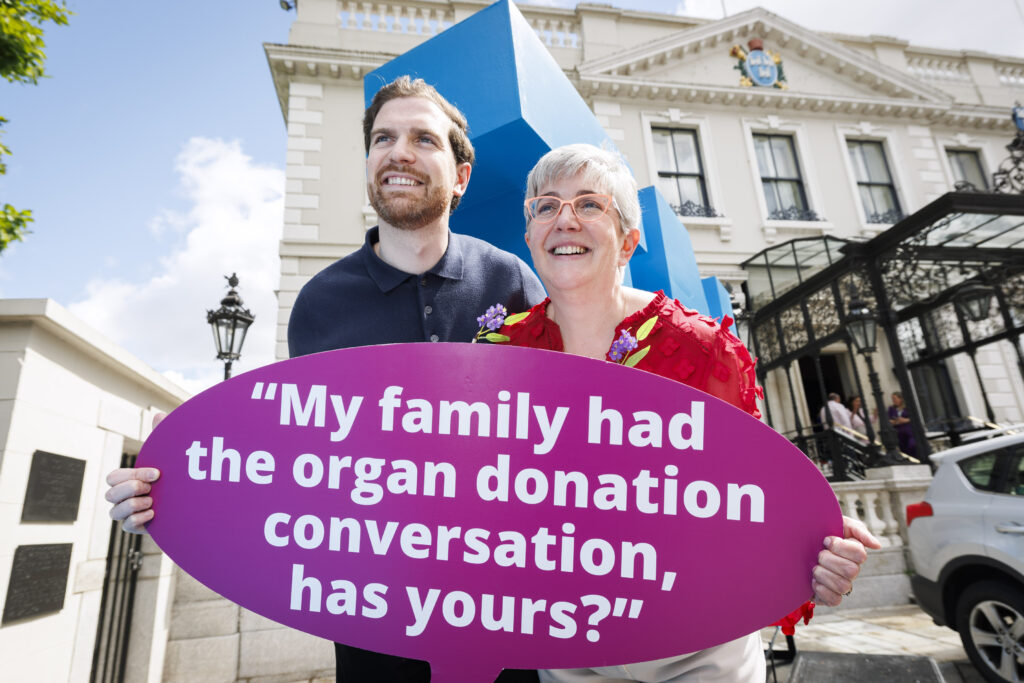
Kidney transplant recipient Mr Daire Casey and his mother Ms Emer Casey from Leixlip pictured at the Mansion House, Dublin, for the national launch of Organ Donor Awareness Week, which took place on 16–23 May. The campaign was organised by the Irish Kidney Association in collaboration with HSE Organ Donation and Transplant Ireland
Credit: Andres Poveda
Medical culture
Writing in ODTI’s 2024 annual report, the then Clinical Director Dr Brian O’Brien outlined: “The average donor age in Ireland is in the 40s. This is quite out of keeping with most peer countries and, especially, with the leading nations by activity levels.”
To see higher levels of transplantation, “we will need to offer the option of donation” more frequently at the time of death in older patients.
“This needs to be the focus of the next few years if we are to meet the needs of the hundreds of patients awaiting organs.
“It will require a change in medical culture and innovation in the preservation and handling of the relevant tissue. The courage to take these steps is something we owe to the patients and families of the future who wish to give this most precious gift.”
Speaking to MI, Dr O’Brien said Ireland’s “average” rate of deceased donation may give the impression “we are unremarkable in any way”.
“But that impression is incorrect; we are remarkable in two ways,” said Dr O’Brien, Consultant in Intensive Care Medicine at Cork University Hospital.
“We actually have very high levels of organ procurement from people under the age of 60, often being in the top 20 per cent of countries. And we have very low levels indeed of organ procurement in people over the age of 60. And so, the fact that we turn out at the end of all of this to be pretty average, masks a significant cultural obstacle, as I would see it, in terms of how we practice.”
From the ICU perspective, he said further work is required to ensure all potential donors are referred to organ donation personnel to assess suitability. He said this requires a concerted focus and an acceptance by ICU personnel that a higher proportion of referrals may be deemed unsuitable. Significantly boosting the referral rate may also require more ICU staffing.
“What an ICU team cannot see is the urgency of need for organs nationally. A patient elsewhere, in the extremes of liver failure, say, might be a match for an organ from a patient you are unable to save. That can be due to blood type, tissue compatibility, and other factors such as size. It’s best to simply notify the coordinators and let them investigate the waiting lists and urgency of need.”
Change is happening, albeit incrementally, with some organ donations occurring from people who were aged in their 70s.
“When I started my career, that just wouldn’t have happened. But we need to try and take these cases and use them as exemplars, or illustrative cases, and show that it is possible.”
Generally, organs from extended criteria donors are allocated to (consented) older recipients. This process takes account of factors such as the projected longevity of the transplanted organ and the risks of remaining on the transplant wait list.
The use of organs from extended criteria donors elevates the risk of post-transplant complications and often involves more intensive management post-operatively.
Dr O’Brien said doctors in Ireland work within a “very conservative” medical culture that views risk as “inherently undesirable”.
“In so many ways, it is,” he emphasised. “If you are having varicose veins or hernia surgery, you do not want somebody taking risks.” However, the risk-benefit calculus in organ donation and transplant demands a more flexible approach – particularly in the context of the changing donor demographic, the shortage of organs, and the benefits of transplant.
According to Dr O’Brien, it is also important to consider the strong public support for organ donation and the generally high assent rate by families. As well as the benefits to the organ recipient, the ability to offer organ donation to families can provide them with solace at a difficult time.
“The sense of loss that families experience at the time of bereavement can be at least somewhat mitigated by some consolation from organ donation,” said Dr O’Brien. “It doesn’t always happen, but it can help.”
The leading lights in the field – such as Spain – strongly resource their systems with embedded organ donation personnel and appropriate infrastructure.
“They see its value in humane terms, but also in cost-saving terms,” said Dr O’Brien. For example, ensuring someone can discontinue dialysis through kidney transplant is substantially cost-saving in terms of medical resourcing and the individual’s wasted time.
“It can be framed as a huge gain for the State as well as for the individual. And the countries that appreciate this best are willing to take some risks to get there and that is a hard thing to change.”
Dr O’Brien emphasised that Ireland is not ‘bad’ at organ donation. But the activity level is “pretty average”.
He said: “It’s not bad enough to be a national scandal, but nor is it good enough to reflect, as I would see it, the views of Irish people.”
It’s not bad enough to be a national scandal, but nor is it good enough to reflect
Governance
Ireland’s organ donation/transplant rate does “not compare well” to many European peers, said the HSE Chief Clinical Officer at the recent launch of Organ Donor Awareness Week. Dr Colm Henry said there was “enormous goodwill” towards organ donation among the Irish public, and he commended the work of healthcare staff.
Dr Henry said this public goodwill, and provisions in the Human Tissue Act 2024 (such as for altruistic non-directed living kidney donation), need to be harnessed to enhance transplant access.

He said a clinician had been appointed at Beaumont Hospital to grow the living kidney donation programme. This clinician will commence in post later this year. Dr Henry also spoke of the need to increase the number of ‘anticipatory’ transplants. He added that the Irish Potential Organ Donor Audit (IPODA) would be expanded (see panel on p6), and governance for the area would be “reviewed”.
ODTI will roll-out training and support for DCD in all model 3 and model 4 hospitals, new ODTI Clinical Director Prof Peter Conlon stated at the event. “We will use modern technology such as normothermic regional perfusion to ensure that every donor is maximised with respect to getting the greatest possible chances to help others,” he added.
“There is a clear potential for further enhanced transplantation rates and by building on existing strengths, and learning from comparable systems, we can improve access for patients awaiting transplant.”
‘Paucity’ of infrastructure
Organ donation and transplant activity fell sharply in 2025, with 202 organ transplants conducted – the lowest total in five years and well below the five-year pre-pandemic average of 282. There were 68 deceased donors compared to a pre-pandemic average of 85. There were 29 living kidney donors versus a pre-pandemic average of 40.
The Irish Kidney Association (IKA) commended the “extraordinary thoughtfulness” of donors and their families, and the commitment of healthcare staff. However, it expressed deep concern about the decline in transplant activity
The IKA advocated for the prompt extension of the IPODA, and the full publication of a 2022 HSE internal review into transplant services. This review highlighted a “paucity” of dedicated transplant infrastructure and specialist staff and described governance as “splintered”.
The Association also drew attention to the much younger age profile of deceased donors in Ireland in comparison with many European countries. This suggested that “potential donors at older ages are not being identified or referred at the rate seen elsewhere”.
It said access to transplant via the living kidney donation programme needed to be enhanced. “The Human Tissue Act 2024 opens new pathways for altruistic living donation for the first time.… The IKA calls on the HSE to resource and promote these new pathways actively, reinstating a previous target of at least 50 living kidney transplants per year – a goal which was last achieved in 2017.”
IKA CEO Ms Carol Moore said the current HSE budget overrun is a concern. She emphasised that organ transplant in Ireland “needs investment” and is ultimately cost saving. Treating a patient with end-stage kidney disease by transplantation – rather than dialysis – saves €1.62 million over a 15-year period, according to the IKA.
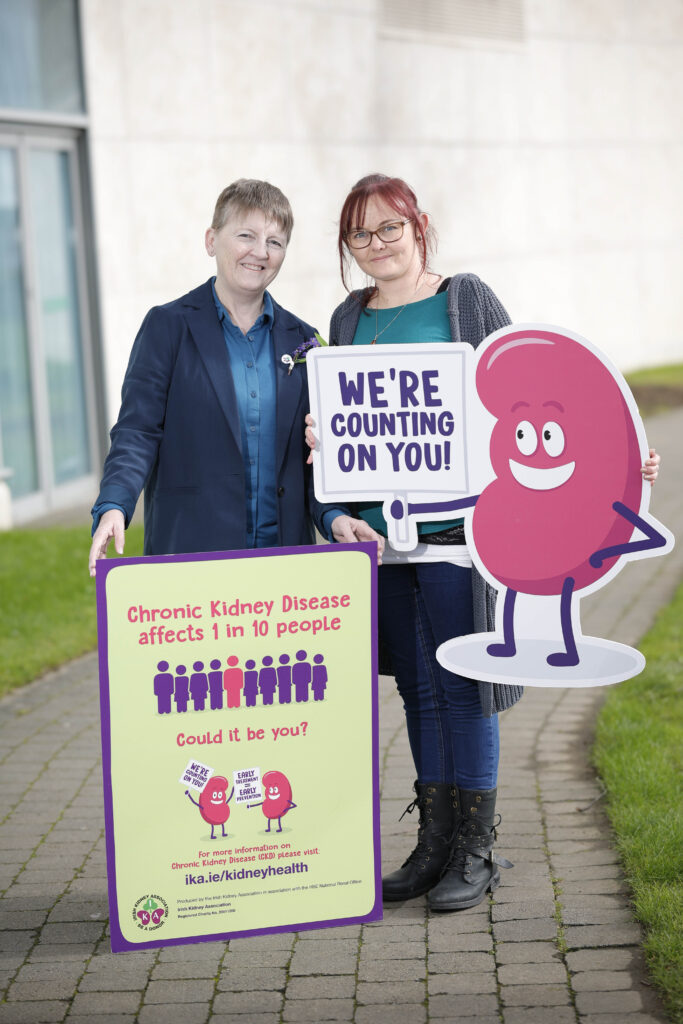
The IKA also wants to see progress on a commitment to include chronic kidney disease in the GP Chronic Disease Management Programmes.
Ms Moore told MI there should be timelier availability of data on activity and clinical audit. She also noted the low numbers of specialist nurses in organ donation nationally [currently there are only six organ donation nurse managers]. Ms Moore queried the processes in place when specialist personnel are unavailable, particularly to support other staff who are required to approach family members about organ donation.
She said it is well-established the presence of specialist-trained staff in organ donation is associated with higher family assent rates. “Families are in total distress, so you really need someone who is trained in every aspect of it.”
Ms Moore was hopeful the recent appointment at Beaumont will help to enhance the living kidney donation programme.
Minister
A Department spokesperson said Minister for Health Jennifer Carroll MacNeill is committed to “supporting and strengthening” organ donation/transplant services.
The spokesperson said ODTI has been engaging with ICUs to encourage the identification and referral of all potential donors and to ensure key staff are trained and equipped to support organ donation. ODTI is also piloting an organ preservation programme that will “make possible the increased use of DCD organs”.
ODTI continues to raise public awareness that organ donation saves and improves lives.
“At the launch of the recent Organ Donor Awareness Week, Minister Carroll MacNeill encouraged everyone to talk to their loved ones about their wishes around organ donation.”
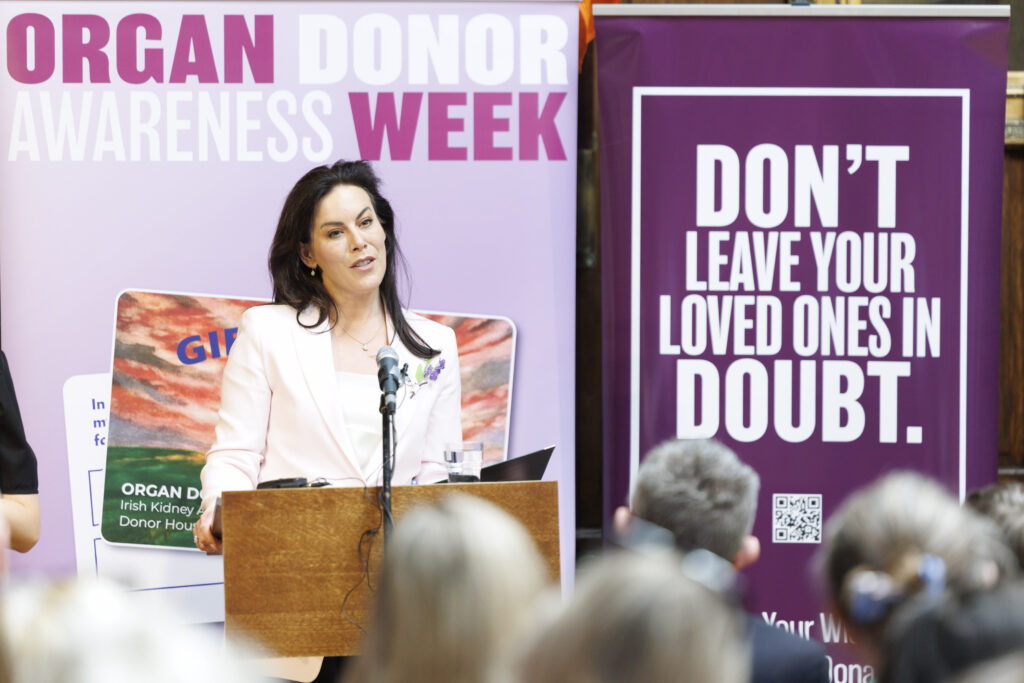
The Minister looked forward to the publication of the IPODA later this year, “which will provide valuable insights to inform further improvements.”
The HSE informed MI expansion of embedded organ donation specialists is underway to support clinical teams. ODTI has embarked on an education programme with all ICUs and clinical medical departments in hospitals to highlight the benefits of organ transplantation across all ages.
“Increasing deceased organ donation relies on coordinated infrastructure and capacity across the health system. This includes strengthening dedicated organ donation coordinator roles at a regional level and further enhancing collaboration between intensive care units and ODTI.”
Irish potential organ donor audit awaits expansion
The Irish Potential Organ Donor Audit (IPODA) is operational in intensive care units (ICUs) in only six hospitals. Its roll-out to all ICUs and emergency departments (EDs) was recommended as an urgent requirement in a 2023 pilot report. A potential donor audit is considered a critical element of improving donation rates. This newspaper understands more organ donation nurse manager posts are a key requirement for the audit’s full roll-out.
According to the HSE, it intends to expand the audit in 2027.
The IPODA, which is funded by the HSE and published by the National Office of Clinical Audit (NOCA), systematically assesses the degree to which best practice standards are met. It aims to establish any modifiable factors as to why organ donation did not occur, encouraging ongoing learning and improvement.
Dr Catherine Motherway, IPODA Interim Clinical Director, told the Medical Independent the overriding concern of ICU staff is ensuring patients’ survival and return to health. However, in circumstances where survival is not possible, “we would certainly like to offer that opportunity [of organ donation].” In Dr Motherway’s experience as an intensive care consultant, organ donation is often a source of considerable comfort for donor families.
She said audit is crucial in determining aspects such as whether the approach to families could be improved. This conversation is pivotal both in terms of potential organ donation and the wellbeing of the family concerned, irrespective of what their decision may be.
Dr Motherway said NOCA wants to see the audit’s full roll-out. It is an important tool for “collaborative” learning surrounding modifiable non-donation outcomes.
Pilot
The six pilot sites were model 4 hospitals with a long-established culture of organ donation. These hospitals account for approximately half of deceased organ donation nationally.
During the three-month pilot, 37 per cent of families of eligible organ donors were approached with specialist organ donation personnel present, and 53 per cent of families were approached at the recommended time. Of the families approached, 68 per cent assented to organ donation.
Hospital Group organ donation personnel are not a 24/7 service. By comparison, the NHS has specialist nurses in organ donation in most hospitals. The involvement of specialist staff at an early stage is associated with higher rates of family assent.
The audit also found 67 per cent of potential donors were referred to organ donation personnel to assess suitability. The most frequently occurring reason for non-referral was ‘absolute medical contraindications’.
“This approach of local ICU teams making decisions without the input of ODP [organ donation personnel] or the transplant centres risks the possibility of potential donors being missed in the future, as what counts as ‘absolute medical contraindications’ may change over time.”
The pilot identified a small number of cases where best practice organ donation processes were not followed and which may otherwise have resulted in donation episodes. A data report covering 2023 has since been published on the NOCA website.
Separately, NOCA’s Irish National ICU Audit (INICUA) 2024 included findings on organ donation relating to 29 units. The proportion of patients with brain death who became organ donors was 50 per cent compared with 59 per cent in 2023.
The rate of assent by families was 59 per cent, a decrease from 75 per cent in 2023. “Family refusal was the most common reason patients diagnosed with brain death did not become organ donors. The other common reason was that the organs were deemed unsuitable for transplantation.”
Eighty-four per cent of patients who were diagnosed with brain death were referred to organ donation personnel for consideration of suitability for organ donation (compared with 91 per cent in 2023).
The percentage of circulatory deaths deemed eligible for organ donation that were referred to organ donation personnel ranged from 80 per cent to zero in different units.
The proportion of patients diagnosed with circulatory death who became organ donors decreased from 1.3 per cent in 2023 to 0.8 per cent in 2024. In the UK, DCD occurred after 2.6 per cent of circulatory deaths.
The report recommended that the health service use data from the INICUA and the IPODA to identify the key issues limiting organ donation. “These include a falling rate of family consent to organ donation, low rates of diagnosis of brain death and of progression to organ donation after brain death in certain units, and low rates of recognition of opportunities for donation after circulatory death nationally.”










Leave a Reply
You must be logged in to post a comment.