Reference: 2026 | Issue 7 | Vol 12 | Page 26
Hypertension is a major etiological factor in chronic kidney disease (CKD) and the second leading cause of end-stage kidney disease (ESKD), surpassed only by diabetes. Sustained elevations in systemic blood pressure induce structural and functional damage to the renal microvasculature, resulting in glomerular injury, nephrosclerosis, and progressive decline in glomerular filtration rate. As a modifiable risk factor, optimal blood pressure control is fundamental to preserving renal function and delaying CKD progression. This article outlines best practice recommendations in the management of hypertension, with specific focus on the most recent European Society of Cardiology (ESC) 2024 guidelines.
Hypertension remains a significant contributor to the global burden of morbidity and mortality as a major modifiable risk factor for the development of not only CKD, but also cardiovascular disease (CVD) and dementia. Between 1990 and 2024, the number of affected adults aged 30-79 years doubled globally from 650 million to 1.4 billion. Recent data from The Irish Longitudinal Study on Ageing (TILDA) reported weighted hypertension prevalence of 64 per cent in a cohort of 5,329 adults aged 50-89 years. Amongst these, 55.5 per cent were aware that they had a diagnosis of hypertension, 70.3 per cent were on antihypertensive treatment, and 32.2 per cent of those on treatment had adequately controlled hypertension.
Diagnosing hypertension
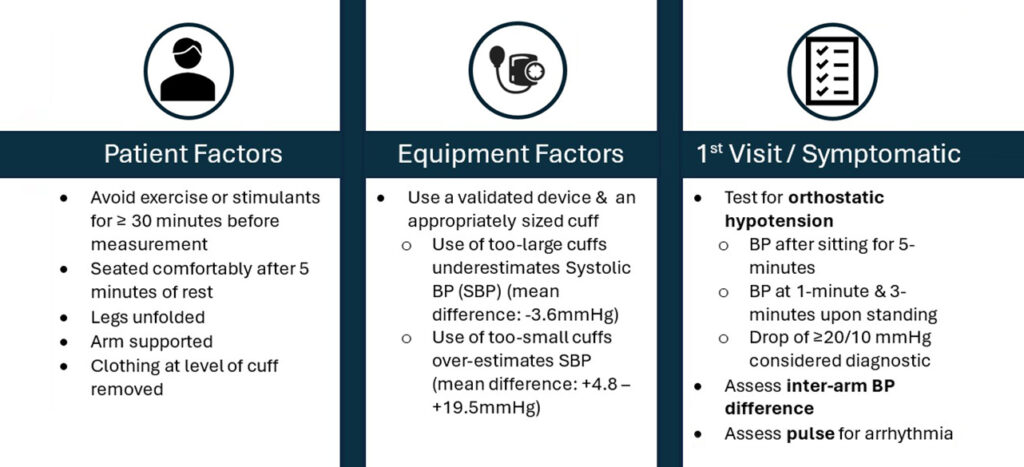
The 2024 ESC guidelines classify blood pressure (BP) as non-elevated (office BP <120/70mmHg), elevated BP (office BP 120-139/70-89mmHg), and hypertension (office BP ≥ 140/90mmHg). In making a diagnosis of hypertension, correct technique and use of clinically validated tools are important considerations, with practical advice for ensuring accuracy of in-office readings summarised in Figure 1.
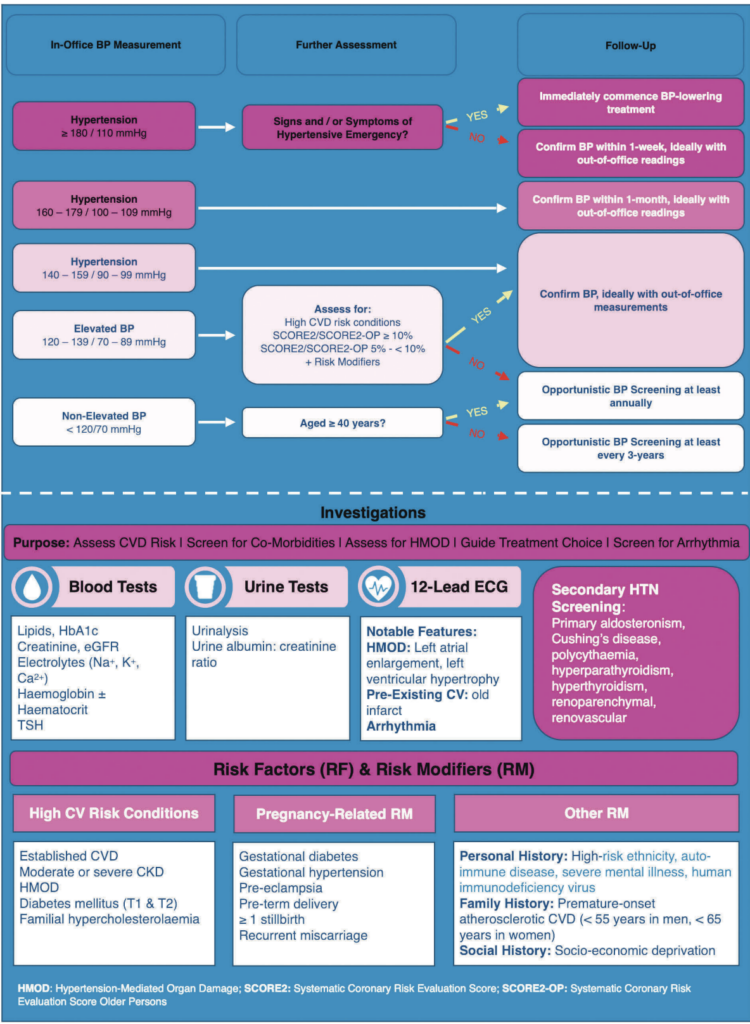
If an abnormal in-office BP measurement is detected on screening, the individual should be further investigated with home or ambulatory BP measurements (ABPM), as these better detect white-coat and masked hypertension, and empower the patient as a partner in their care. If neither are available, repeat in-office BP measurement can be considered, as delaying commencement of anti-hypertensive treatment is associated with increased rates of CV events. The ESC recommendations are summarised in Figure 2.
In the setting of hypertension with readings in excess of 180/110mmHg, hypertensive emergency must be excluded. Hypertensive emergency is defined as ‘BP ≥180/110mmHg associated with acute hypertension-mediated organ damage (HMOD), often in the presence of symptoms’. Symptoms may include headache, visual disturbances, chest pain, dyspnoea, dizziness, and other neurological deficits. Investigations should include fundoscopy, 12-lead ECG (electrocardiogram), blood tests (including full blood count and renal profile), urine tests (including urinary albumin: creatinine ratio (ACR) and microscopy), and pregnancy test, if the patient is a woman of childbearing age. Further specific tests should be considered on the basis of clinical presentation. Immediate BP-lowering therapy, often via intravenous route, is required for these individuals.
For individuals with elevated BP, ie, 120-139/70-89mmHg, further investigation with out-of-office BP readings +/- commencement of antihypertensive therapy should be considered, based on the individual’s risk factors for CVD, their 10-year risk of CVD, and the presence or absence of risk modifiers (summarised in Figure 2). In determining an individual’s 10-year CVD risk, the Systematic Coronary Risk Evaluation Score (SCORE2) can be used for those aged 40-69 years without prior CVD or diabetes, while the SCORE2-OP can be used for individuals aged ≥70 years. Treatment is recommended for those with a SCORE2 or SCORE2-OP result exceeding 10 per cent. For individuals with a borderline SCORE2 result, presence of non-traditional risk modifiers should be considered, summarised in Figure 2. For individuals with elevated BP, associated with risk modifiers and a SCORE2 result of 5 per cent to < 10 per cent, anti-hypertensive therapy is recommended.
Treatment of hypertension
The overall objectives of treating elevated BP and hypertension are to reduce CV morbidity and premature CV death, and to improve quality of life. The ESC guidelines recommend a treatment target of 120-129/70-79mmHg.
If this is not feasible, an ‘as low as reasonably achievable’ principle is advised, particularly for patients symptomatic of orthostatic hypotension, individuals with frailty, or aged ≥85 years. For example, if a patient experiences light-headedness on standing, the BP may be too tightly controlled. Broadly, when managing hypertension, non-pharmacological, pharmacological, and device-based interventions should be considered.
Non-pharmacological and lifestyle interventions
The ESC task force provide a Class I recommendation for lifestyle interventions in lowering BP, despite the absence of clinical outcome trials, given the low risk of adverse effects and the overall benefit to individual’s physical and mental health. Lifestyle interventions recommended to lower BP span diet, exercise, and weight management. The recommendations are summarised in Table 1.
Pharmacotherapy
BP-lowering pharmacotherapy is now recommended for all adults with confirmed hypertension, along with adults with persistently elevated BP (≥130/80mmHg) associated with a sufficiently high CVD risk despite three months of lifestyle measures. More aggressive BP lowering is associated with a lower relative and absolute risk of CVD events, independent of age, sex, history of CVD, diabetes or atrial fibrillation.
Initiating BP-lowering therapy
For most adults, when initiating BP-lowering therapy, a combination of two agents at low doses is recommended, ideally in the form of a single-pill combination. If escalation of therapy is required, a third agent at a low-dose should be added before up-titrating to highest-tolerated doses. There are a number of patient populations in whom initial monotherapy should be considered, specifically those aged 85 years and older – individuals with moderate or severe frailty, individuals with symptomatic orthostatic hypotension, and for individuals with elevated BP for whom treatment has been deemed appropriate due to CVD risk.
First-line therapy
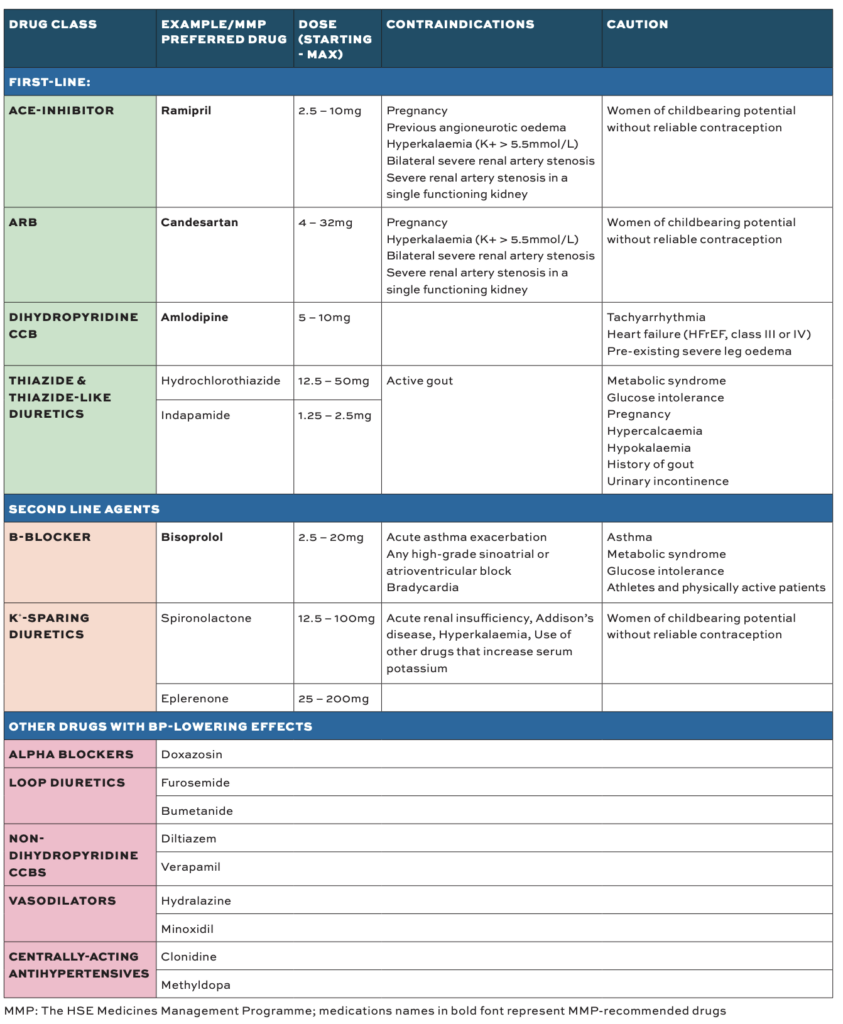
For most adult patients, there are four drug classes recommended for use as first-line therapy in treatment of hypertension, specifically angiotensin converting enzyme (ACE) inhibitors, angiotensin receptor blockers (ARBs), dihydropyridine calcium channel blockers (CCBs), and thiazide or thiazide-like diuretics. The addition of beta-blockers, specifically cardio-selective or vasodilating beta-blockers, should be considered in the setting of angina or heart failure, following myocardial infarction or for rate-control purposes. Dosage of, and adherence with, these agents should be optimised before addition of alternative classes of drugs. If a further agent is required, use of spironolactone, a mineralocorticoid receptor antagonist (MRA), is supported by clinical trials demonstrating benefit in preventing CVD events in the context of heart failure; however, no dedicated outcome trial has been conducted in patients with primary hypertension without heart failure. While use of other classes of antihypertensives may be required, eg, alpha-blockers, hydralazine, minoxidil, other potassium-sparing diuretics, and centrally acting agents (eg, clonidine or methyldopa), there is limited outcome evidence from clinical trials, and they often carry a higher risk of adverse events.
| CATEGORY | ADVICE | GUIDANCE & EVIDENCE |
|---|---|---|
| DIETARY INTERVENTIONS |
Limit dietary sodium to 2g/day | Reducing salt by 2.5g/day is associated with a 20% reduction in CVD events7 Women and older people appear to have a more marked BP response to limiting sodium intake8 A meta-analysis demonstrated a near-linear dose-response association between reducing sodium intake by 0.4-7.6g/day and reduction in BP9 |
| Aim for daily potassium (K+) intake of over 3.5g/day, particularly for individuals with hypertension and high dietary sodium (Na+)10,11,12 | The World Health Organisation recommends dietary K+ intake of over 3.5g (~90mmol) per day13 Excessive K+ intake should be avoided, and caution is recommended in those with CKD and for those utilising K+-sparing agents, eg, spironolactone, ACE-inhibitors9. Sources rich in dietary potassium include bananas, spinach, and avocadoes1 |
|
| Limit or avoid alcohol entirely14 | Frequent low-dose alcohol consumption (10g/day) increases risk of chronic hypertension by 14% in men15 | |
| Limit intake of sugar or artificially sweetened drinks | A large prospective cohort study of 88,520 women found that consuming two or more sugar-sweetened beverages/ day was associated with a 35% increase in risk of coronary artery disease16 | |
| Follow evidence-based dietary advice, eg, a Mediterranean or Dietary Approaches to Stop Hypertension (DASH) diet | Mediterranean and DASH diets reduce risk of hypertension and CVD17,18 | |
| EXERCISE | Increase daily physical activity, avoiding a sedentary lifestyle | In the setting of diagnosed hypertension, physical activity is associated with reduced CVD mortality, when compared with sedentary individuals with hypertension19 Exercise can also unveil masked hypertension, should an exaggerated BP response be elicited20 |
| Participate in regular aerobic exercise training 150-minutes/week moderate intensity 75-minutes/week vigorous intensity |
Regular aerobic exercise yields a marked reduction in BP, reducing systolic BP by 7-8mmHg and diastolic BP by 4-5mmHg21,22 | |
| Engage in resistance training Low- or moderate-intensity resistance training recommended 2-3 times/week1 |
Dynamic resistance exercise training features large muscle groups and includes squats, push-ups and sit-ups 1 session constitutes 2-3 sets of 10-15 repetitions1 Isometric resistance exercise training involves static muscle contractions and includes hand-grips, planks, and wall sits 1 session constitutes 3 sets of 1-2 minute contractions1 |
|
| WEIGHT MANAGEMENT |
Aim for a stable and healthy body mass index (BMI) (eg, 20-25kg/m2) and waist circumference (eg, < 80cm in women, < 94cm in men) | Weight loss of 5kg is associated with a reduction in BP of 4.4/3.6mmHg23 In individuals with a BMI of 40kg/m2, weight loss of 13% is associated with a 22% reduction in risk of HTN24 |
| Consider pharmacological treatment of obesity, if indicated | The Semaglutide Treatment Effect in People with Obesity (STEP-1) trial saw a 5.1mmHg reduction in systolic BP, associated with 12.4% mean weight reduction25,26 | |
TABLE 1: Advice for non-pharmacological and lifestyle interventions for management of hypertension
Timing of, and adherence to, treatment
Patients should be advised to take their antihypertensives at a time that is convenient to them, to maximise adherence. Diurnal timing of antihypertensives has not demonstrated benefit in reducing major CVD outcomes. In optimising adherence, communication of benefits, exploring side effects experienced, and reducing pill burden should be considered. Tools that may be of use in assessing adherence include prescription fill data from community pharmacies, patient self-reporting, and objective adherence testing using blood or urine samples.
Resistant hypertension
Hypertension is deemed resistant if BP targets of <140/90mmHg cannot be achieved despite appropriate lifestyle measurements, and treatment with and adherence to maximally-tolerated doses of three BP-lowering agents, specifically a renin-angiotensin system (RAS) blocker, a CCB, and a diuretic (thiazide or thiazide-like). Patients deemed to have resistant hypertension should be referred to specialised centres for review and management. Potential causes include secondary hypertension, behavioural factors such as physical inactivity, excess daily dietary sodium or habitual alcohol use, and use of drugs that may increase BP including corticosteroids, non-steroidal anti-inflammatory drugs, sympathomimetics, and some antidepressants including venlafaxine.
New therapies with BP-lowering properties
A number of agents currently licensed for other indications have demonstrated BP-lowering properties. These include the angiotensin receptor-neprilysin inhibitor (ARNI) sacubitril / valsartan indicated for heart failure with reduced ejection fraction (HFrEF); sodium-glucose cotransporter-2 (SGLT2) inhibitors licensed for use in type 2 diabetes mellitus (T2DM), heart failure, and CKD; glucagon-like peptide-1 agonists deployed in management of T2DM and obesity; and the non-steroidal MRAs indicated for use in CKD and heart failure with a moderately reduced ejection fraction.
There are a number of novel classes of drugs demonstrating benefit for management of resistant hypertension in clinical trials. Aprocitentan is an oral, dual-endothelin (ET) receptor antagonist, licensed for use by the European Medicines Agency for individuals with resistant hypertension. ET-1, through binding with ETA and ETB, mediates vasoconstriction, fibrosis, cell proliferation, and inflammation, and is implicated in the pathogenesis of hypertension. The PRECISION trial demonstrated a reduction in 24-hour ABPM of -4·2mmHg for individuals treated with 12.5mg of aprocitentan and -5·9 mmHg for those treated with the aprocitentan 25mg dose, in patients already treated with an ARB, a CCB, and a diuretic. It is well-tolerated overall, with mild to moderate oedema being the most frequently reported adverse event.
Baxdrostat is a selective aldosterone synthase inhibitor, which demonstrated a significant reduction in 24-hour ABPM in patients with resistant hypertension prescribed three or more antihypertensives, which included a diuretic in the Bax24 phase 3 placebo-controlled randomised controlled trial. Use of baxdrostat 2mg yielded an estimated placebo-controlled difference of -14.0mmHg following 12-weeks of treatment.
The RAS is targeted by direct renin inhibitors, ACE inhibitors, and ARBs, however, some patients experience uncontrolled hypertension despite treatment with same, thought to be consequent to non-adherence or RAS escape. Zilebesiran is a small interfering RNA, administered by subcutaneous injection, that targets hepatic synthesis of angiotensinogen, a key regulator of systemic BP. RAS escape could be prevented through reduction of angiotensinogen. In the KARDIA-3 trial, in which zilebesiran was used in individuals with uncontrolled hypertension despite use of 2-4 antihypertensive agents, a single dose of zilebesiran 300mg yielded a 5mmHg reduction in office systolic BP at three months; however, this did not achieve statistical significance.
Device-based BP lowering
Catheter-based renal denervation (RDN) involves selective ablation of renal efferent and afferent nerve fibres connecting the kidney to the central sympathetic circuits, yielding BP-lowering effects through mitigating sympathetic nervous system overactivity. A meta-analysis of randomised placebo-controlled trials of RDN demonstrated a statistically significant but modest reduction in ambulatory and office BP of 4/2mmHg. Complications following RDN include a rate of major bleeding and major femoral artery vascular access complications of 5-10 per cent, and a rate of renal artery stenosis or dissection requiring stenting of 0.25 – 0.5 per cent. As such, RDN should only be considered for patients with true resistant hypertension, who have expressed a preference for RDN, following evaluation by a multidisciplinary hypertension team. Patients should be advised that long-term use of BP-lowering agents will likely still be required post-RDN.
Other devices currently under investigation for use in hypertension include baroreflex activation therapy, endovascular baroreflex amplification therapy, and carotid body ablation, which target the autonomic nervous system. These are not yet recommended, given absence of safety and efficacy data.
Conclusion
Hypertension remains a leading modifiable risk factor for kidney disease, as well as CVD, dementia, and premature mortality worldwide. Despite advances in screening and treatment, the prevalence of hypertension continues to increase, while rates of awareness, treatment adherence, and blood pressure control remain suboptimal. Consequently, effective identification and management of elevated blood pressure remain key priorities for reducing the burden of renal and other diseases.
The 2024 ESC guidelines provide an updated framework for the diagnosis and management of hypertension, emphasising accurate blood pressure measurement, increased use of out-of-office monitoring, and comprehensive CV risk assessment. Treatment strategies should be individualised, incorporating both lifestyle modification and pharmacological therapy, with a focus on achieving evidence-based blood pressure targets while maintaining patient safety and quality of life. Lifestyle interventions including dietary optimisation, regular physical activity, weight management, and moderation of alcohol intake remain fundamental components of care.
Recent advances in hypertension therapeutics, including novel pharmacological agents and device-based interventions such as renal denervation, offer promising options for selected patients with resistant hypertension. As evidence continues to evolve, translating guideline recommendations into routine clinical practice, improving adherence, and adopting a patient-centred approach will be essential to reducing HMOD and improving long-term patient outcomes. From a renal perspective, maintaining BP within guideline-recommended targets will decrease the risk of CKD onset in at-risk individuals and delay disease progression in those with established disease. Overall, optimal BP management is a cornerstone of renoprotective therapy and will ultimately reduce the likelihood of progression to ESKD.
References:
- McEvoy JW, McCarthy CP, Bruno RM, et al. 2024 ESC Guidelines for the management of elevated blood pressure and hypertension: Developed by the task force on the management of elevated blood pressure and hypertension of the European Society of Cardiology (ESC) and endorsed by the European Society of Endocrinology (ESE) and the European Stroke Organisation (ESO). Eur Heart J. 2024;45(38):3912-4018. doi:10.1093/eurheartj/ehae178
- World Health Organisation. Global Report on Hypertension 2025: High Stakes: Turning Evidence into Action. Geneva: WHO; 2025. Available at: www.who.int/publications/i/item/9789240115569
- McGarvey C, Scarlett S, Briggs R, et al. Adherence to the European Society of Cardiology hypertension guidelines over 12 years of follow-up in the Irish population. Open Hear. 2025;12(2). doi:10.1136/openhrt-2025-003744.
- Xu W, Goldberg SI, Shubina M, Turchin A. Optimal systolic blood pressure target, time to intensification, and time to follow-up in treatment of hypertension: population based retrospective cohort study. BMJ. 2015;350:h158. doi:10.1136/bmj.h158.
- Ishigami J, Charleston J, Miller ER, et al. Effects of cuff size on the accuracy of blood pressure readings: The cuff(sz) randomised crossover trial. JAMA Intern Med. 2023;183(10):1061-1068. doi:10.1001/jamainternmed.2023.3264.
- Manning DM, Kuchirka C, Kaminski J. Miscuffing: inappropriate blood pressure cuff application. Circulation. 1983;68(4):763-766. doi:10.1161/01.CIR.68.4.763.
- J. HF, Monique T, Yuan M, A. MG. Salt Reduction to prevent hypertension and cardiovascular disease. JACC. 2020;75(6):632-647. doi:10.1016/j.jacc.2019.11.055.
- He J, Gu D, Chen J, et al. Gender difference in blood pressure responses to dietary sodium intervention in the GenSalt study. J Hypertens. 2009;27(1):48-54. doi:10.1097/hjh.0b013e328316bb87.
- Filippini T, Malavolti M, Whelton PK, et al. Blood pressure effects of sodium reduction. Circulation. 2021;143(16):1542-1567. doi:10.1161/CIRCULATIONAHA.120.050371.
- Neal B, Wu Y, Feng X, et al. Effect of salt substitution on cardiovascular events and death. N Engl J Med 2021;3851067–77.
- Azizi M, Vongpatanasin W, Fisher NDL, et al. Diagnosis and management of resistant hypertension: A review. Jama. 2026;335(16):1428-1439. doi:10.1001/jama.2026.1221.
- Messerli FH, O’Donnell M, Mente A YS. Settling the controversy of salt substitutes and stroke: sodium reduction or potassium increase? Eur Hear J 2022;433365–7.
- O’Donnell M, Yusuf S, Vogt L, et al. Potassium intake: the Cinderella electrolyte. Eur Heart J. 2023;44(47):4925-4934. doi:10.1093/eurheartj/ehad628.
- GBD 2016 Alcohol Collaborators. Alcohol use and burden for 195 countries and territories, 1990-2016: A systematic analysis for the Global Burden of Disease Study 2016. Lancet. 2018;392(10152):1015-1035. doi:10.1016/S0140-6736(18)31310-2.
- Liu F, Liu Y, Sun X, et al. Race- and sex-specific association between alcohol consumption and hypertension in 22 cohort studies: A systematic review and meta-analysis. Nutr Metab Cardiovasc Dis. 2020;30(8):1249-1259. doi:10.1016/j.numecd.2020.03.018.
- Fung TT, Malik V, Rexrode KM, et al. Sweetened beverage consumption and risk of coronary heart disease in women23. Am J Clin Nutr. 2009;89(4):1037-1042. doi:https://doi.org/10.3945/ajcn.2008.27140.
- Ramón E, Emilio R, Jordi S-S, et al. Primary prevention of cardiovascular disease with a mediterranean diet supplemented with extra-virgin olive oil or nuts. N Engl J Med. 2018;378(25):e34. doi:10.1056/NEJMoa1800389.
- Delgado-Lista J, Alcala-Diaz JF, Torres-Peña JD, et al. Long-term secondary prevention of cardiovascular disease with a Mediterranean diet and a low-fat diet (CORDIOPREV): a randomised controlled trial. Lancet. 2022;399(10338):1876-1885. doi:10.1016/S0140-6736(22)00122-2.
- Rossi A, Dikareva A, Bacon SL, Daskalopoulou SS. The impact of physical activity on mortality in patients with high blood pressure: a systematic review. J Hypertens. 2012;30(7):1277-1288. doi:10.1097/HJH.0b013e3283544669.
- Cuspidi C, Gherbesi E, Faggiano A, et al. Masked Hypertension and Exaggerated Blood Pressure Response to Exercise: A Review and Meta-Analysis. Diagnostics (Basel). 2023;13(6):1005. doi:10.3390/diagnostics13061005.
- Hanssen H, Boardman H, Deiseroth A, et al. Personalised exercise prescription in the prevention and treatment of arterial hypertension: a Consensus Document from the European Association of Preventive Cardiology (EAPC) and the ESC Council on Hypertension. Eur J Prev Cardiol. 2022;29(1):205-215. doi:10.1093/eurjpc/zwaa141.
- Van Hoof R, Hespel P, Fagard R, Lijnen P, Staessen J, Amery A. Effect of endurance training on blood pressure at rest, during exercise and during 24 hours in sedentary men. Am J Cardiol. 1989;63(13):945-949. doi:10.1016/0002-9149(89)90145-8.
- Neter JE, Stam BE, Kok FJ, Grobbee DE, Geleijnse JM. Influence of weight reduction on blood pressure. Hypertension. 2003;42(5):878-884. doi:10.1161/01.HYP.0000094221.86888.AE.
- Haase CL, Lopes S, Olsen AH, et al. Weight loss and risk reduction of obesity-related outcomes in 0.5 million people: Evidence from a UK primary care database. Int J Obes. 2021;45(6):1249-1258. doi:10.1038/s41366-021-00788-4.
- Kennedy C, Hayes P, Salama S, et al. The effect of semaglutide on blood pressure in patients without diabetes: a systematic review and meta-analysis. J Clin Med. 2023;12(3). doi:10.3390/jcm12030772.
- P.H. WJ, L. BR, Salvatore C, et al. Once-weekly semaglutide in adults with overweight or obesity. N Engl J Med. 2021;384(11):989-1002. doi:10.1056/NEJMoa2032183.
- McCarthy CP, Bruno RM, McEvoy JW, Touyz RM. 2024 ESC Guidelines for the management of elevated blood pressure and hypertension: What is new in pharmacotherapy? Eur Hear J – Cardiovasc Pharmacother. 2025;11(1):7-9. doi:10.1093/ehjcvp/pvae084.
- Rahimi K, Bidel Z, Nazarzadeh M, et al. Pharmacological blood pressure lowering for primary and secondary prevention of cardiovascular disease across different levels of blood pressure: An individual participant-level data meta-analysis. Lancet. 2021;397(10285):1625-1636. doi:10.1016/S0140-6736(21)00590-0.
- Bidel Z, Nazarzadeh M, Canoy D, et al. Sex-specific effects of blood pressure lowering pharmacotherapy for the prevention of cardiovascular disease: an individual participant-level data meta-analysis. Hypertension. 2023;80(11):2293-2302. doi:10.1161/HYPERTENSIONAHA.123.21496.
- Pinho-Gomes A-C, Azevedo L, Copland E, et al. Blood pressure-lowering treatment for the prevention of cardiovascular events in patients with atrial fibrillation: An individual participant data meta-analysis. PLOS Med. 2021;18(6):e1003599. doi.org/10.1371/journal.pmed.1003599.
- Nazarzadeh M, Bidel Z, Canoy D, et al. Blood pressure-lowering treatment for prevention of major cardiovascular diseases in people with and without type 2 diabetes: An individual participant-level data meta-analysis. Lancet Diabetes Endocrinol. 2022;10(9):645-654. doi:10.1016/S2213-8587(22)00172-3.
- Mackenzie IS, Rogers A, Poulter NR, et al. Cardiovascular outcomes in adults with hypertension with evening versus morning dosing of usual antihypertensives in the UK (TIME study): A prospective, randomised, open-label, blinded-endpoint clinical trial. Lancet. 2022;400(10361):1417-1425. doi:10.1016/S0140-6736(22)01786-X.
- Lane D, Lawson A, Burns A, et al. Non-adherence in hypertension: How to develop and implement chemical adherence testing. Hypertension. 2022;79(1):12-23. doi:10.1161/HYPERTENSIONAHA.121.17596
- Ruschitzka F, Borer JS, Krum H, et al. Differential blood pressure effects of ibuprofen, naproxen, and celecoxib in patients with arthritis: The PRECISION-ABPM (Prospective Randomised Evaluation of Celecoxib Integrated Safety Versus Ibuprofen or Naproxen Ambulatory Blood Pressure Measurement) Trial. Eur Heart J. 2017;38(44):3282-3292. doi:10.1093/eurheartj/ehx508
- Aw T-J, Haas SJ, Liew D, Krum H. Meta-analysis of Cyclooxygenase-2 Inhibitors and their effects on blood pressure. Arch Intern Med. 2005;165(5):490-496. doi:10.1001/archinte.165.5.ioi50013.
- Schlaich MP, Bellet M, Weber MA, et al. Dual endothelin antagonist aprocitentan for resistant hypertension (PRECISION): A multicentre, blinded, randomised, parallel-group, phase 3 trial. Lancet. 2022;400(10367):1927-1937. doi:10.1016/S0140-6736(22)02034-7.
- Azizi M, Brown JM, Dwyer JP, et al. Effect of baxdrostat on ambulatory blood pressure in patients with resistant hypertension (Bax24): a phase 3, randomised, double-blind, placebo-controlled trial. Lancet. 2026;407(10532):988-999. doi:10.1016/S0140-6736(25)02549-8.
- Cruz-López EO, Ye D, Wu C, et al. Angiotensinogen suppression: A new tool to treat cardiovascular and renal disease. Hypertension. 2022;79(10):2115-2126. doi:10.1161/HYPERTENSIONAHA.122.18731.
- Morgan ES, Tami Y, Hu K, et al. Antisense inhibition of angiotensinogen with IONIS-AGT-L(Rx): Results of Phase 1 and Phase 2 studies. JACC Basic to Transl Sci. 2021;6(6):485-496. doi:10.1016/j.jacbts.2021.04.004.
- Havasi A, Pagidipati N, Bakris G et al. KARDIA-3 study design: Zilebesiran as add-on therapy in patients with high cardiovascular risk and hypertension inadequately controlled by standard of care antihypertensives. Conf Abstr Present Eur Soc Cardiol Congr August 30, 2025.
- DiBona GF. Sympathetic nervous system and hypertension. Hypertension. 2013;61(3):556-560. doi:10.1161/HYPERTENSIONAHA.111.00633.
- Yousif A, P. FD, L. BD, P. HJ. Renal Denervation for hypertension. JACC Cardiovasc Interv. 2021;14(23):2614-2624. doi:10.1016/j.jcin.2021.09.020.
- Jolly SS, Yusuf S, Cairns J, et al. Radial versus femoral access for coronary angiography and intervention in patients with acute coronary syndromes (RIVAL): A randomised, parallel group, multicentre trial. Lancet. 2011;377(9775):1409-1420. doi:10.1016/S0140-6736(11)60404-2.
- Townsend, Raymond R. et al. Review and meta-analysis of renal artery damage following percutaneous renal denervation with radiofrequency renal artery ablation. EuroIntervention 161 89-96.
- Lauder L, Azizi M, Kirtane AJ, et al. Device-based therapies for arterial hypertension. Nat Rev Cardiol. 2020;17(10):614-628. doi:10.1038/s41569-020-0364-1.