



Reference: January 2026 | Issue 1 | Vol 12 | Page 28
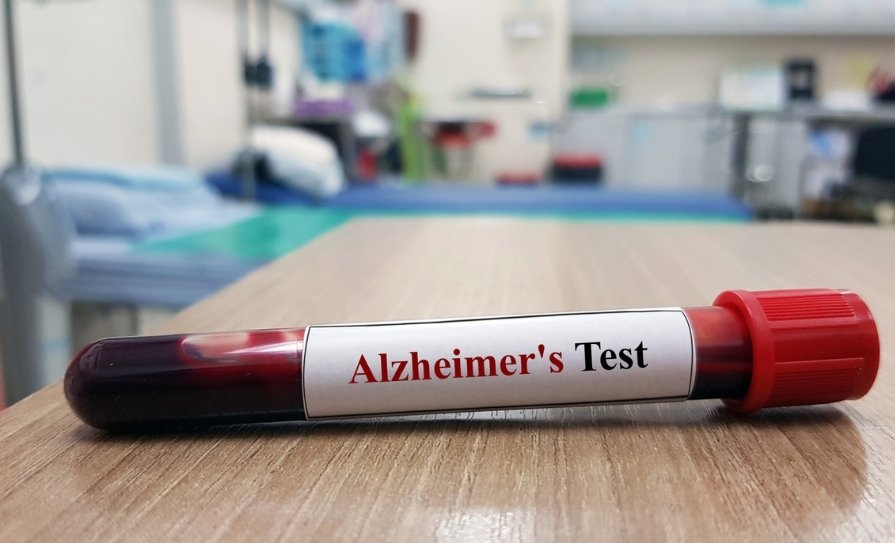
It has been a pivotal year in the area of Alzheimer’s disease (AD). In May, the US Federal Drug Administration (FDA) approved the first diagnostic blood test for AD, which was quickly followed by new guidelines from the international Alzheimer’s Association on the use of blood-based biomarkers in the diagnostic workup of suspected AD in specialised care settings.
In March, the European Medicines Agency (EMA) issued a negative opinion on donanemab, but reversed the decision in July, approving the treatment for specific populations. The drug received final authorisation from the European Commission in September, marking a major step for disease-modifying therapies in Europe. Closer to home, the Government announced the commencement of the National Dementia Registry, and increased funding for dementia care, including €1 million for new consultants in Memory Assessment Services.
Speaking to Update Neurology & Psychiatry, Prof Sean Kennelly, Consultant Physician in Geriatric and Stroke Medicine at Tallaght University Hospital (TUH), and principle investigator at the Trinity College Institute of Neuroscience, said it is an exciting time, and he predicts a “paradigm shift” in the management of AD over the coming years.
“I think we could get to a stage whereby we can manage dementia like we do HIV and lots of other conditions. I think that is a very, very realisable opportunity over the next five to 10 years for Alzheimer’s disease,” he said.
Earlier this year, the FDA authorised the first in vitro diagnostic blood test to aid in diagnosing AD. The Lumipulse G pTau217/ß-Amyloid 1-42 Plasma Ratio measures plasma levels of pTau217 and ß-amyloid 1-42, and calculates the numerical ratio of the levels of the two proteins. This ratio has been shown to correlate with the presence or absence of amyloid plaques. The FDA has approved the test for adults aged 55 years and older who are exhibiting signs and symptoms of AD.
The FDA decision was largely based on a multi-centre clinical study of 499 individual plasma samples from adults who were cognitively impaired. The samples were tested using the Lumipulse G pTau217/ß-Amyloid 1-42 Plasma Ratio and compared with amyloid PET scan or CSF test results. In this study, 91.7 per cent of individuals with blood test positive results had the presence of amyloid plaques by PET scan or CSF test result. In addition, the results suggested that 97.3 per cent of individuals with negative results had a negative amyloid PET scan or CSF test result.
“I’m working in memory services for almost 20 years now, and it would have been the stuff of science fiction to be able to talk about getting a pathology-supported diagnosis of Alzheimer’s disease from a blood test when I started working in these clinical services,” Prof Kennelly said.
“These blood tests have been signed off and approved in the US already. The application is underway for their approval in Europe, and I would expect that they will become a standard part of the work-up in most memory services over the next year or so.”
He highlighted the new Alzheimer’s Association clinical practice guideline on the use of blood-based biomarkers (BBMs) in the diagnostic workup of suspected AD. The key recommendations are that BBM tests with at least 90 per cent sensitivity and 75 per cent specificity can be used as a triaging test; and that BBM tests with greater than 90 per cent sensitivity and specificity can serve as a substitute for amyloid PET imaging or CSF AD biomarker testing in patients with cognitive impairment presenting to specialised care for memory disorders.
Prof Kennelly said, for the immediate future, these tests are unlikely to be used as screening tests. Rather, he said, they are to be a gateway to confirmatory tests or a way of ruling out AD as the cause.
“Bear in mind, it’s only Alzheimer’s disease that we have these tests for. It doesn’t test for the other possible causes of dementia. So just because your blood test is negative, doesn’t mean you won’t have one of the other things that may be causing your symptoms,” he cautioned.
He added that blood tests for AD “may be very effective at reducing the number of lumbar punctures and amyloid PET scans that we would have. But we probably would anticipate still doing those confirmatory tests, especially, let’s say, if in the future, we were considering treatment with some of these new therapies that are available.”
Technological advances are also opening up new opportunities for earlier diagnosis of dementia.
“Digital biomarkers are one of those expanding fields, not just in brain health and cognition, but throughout most of medicine. What has been established for a while is that there are measurable entities, such as how fast we walk, that are really good proxy measures of our overall cognitive wellness. And below a certain threshold, it is an indicator not just that we have dementia, if we have it, but we have different thresholds for indicating if we’re likely to develop it over the following years,” Prof Kennelly said.
The key is longitudinal assessments. “It’s not necessarily cross-sectional measurement. It’s not just measuring it one day. If we measure it over successive years as part of, let’s say, somebody’s health check from the age of 50, changes in how fast they walk could be a very good indicator as to whether or not somebody is developing cognitive problems because walking is a very complex cognitive process. It requires motor involvement.
It requires visual involvement, being able to scan the room. It involves us making decisions with regards to where we’re going to walk. Even auditory cues are part of this test, being able to follow an instruction on when to walk. So there’s loads of different thought processes and cognitive processes involved in that very simple action of just walking over a short period of time.”
“What is really rapidly transpiring is the accuracy of digital cognitive assessments and how, by doing digital cognitive assessments longitudinally, even short digital cognitive assessments will detect these very subtle changes, which indicate if somebody is going through those earlier stages or subtle stages of cognitive decline or have more advanced symptoms,” he explained.
TUH is applying this knowledge to clinical practice, using Gaitkeeper. GaitKeeper uses AI algorithms to analyse a person’s walk, using a single video recorded on a mobile phone. Using AI and augmented reality, the app captures over 20 points on a person’s body, 60 times per second as they walk. The technology, developed by Dublin City University spin-out Digital Gait Labs Ltd and clinically validated by TUH, collects longitudinal data on walking speed, support base, swing, flexion, and symmetry measures.
Prof Kennelly explained that accurate longitudinal measurements of walking are difficult in clinical practice, as the tests must be carried out in exactly the same way each time they are repeated. “What Gatekeeper does is really standardises that measurement,” he said. He added that TUH is also looking at digital speech analysis as an early indicator of cognitive decline.
These new diagnostic tools aim to diagnose AD as early as possible. In the coming era of disease-modifying therapies for AD, early diagnosis has never been more important.
As of January 2026, the European Union has authorised two disease-modifying therapies to treat the underlying pathology of AD. Both are monoclonal antibodies targeting amyloid-beta plaques in the brain. Lecanemab (Leqembi) was the first approved disease-modifying AD drug to be licensed in Europe. Donanemab (Kisunla) was authorised by the European Commission (EC) in September 2025 for early-stage AD (mild cognitive impairment [MCI]/mild dementia) with confirmed amyloid plaques, especially in ApoE4 non-carriers/heterozygotes.
Unfortunately, neither drug is yet available through the HSE. Lecanemab is currently being reviewed for reimbursement. Prof Kennelly predicted that some private facilities in Ireland will start making these treatments available this year and he stressed the need to ensure equitable access across the healthcare system.
“There are thousands of people around the globe who are receiving these medicines now. It’s given to people at the mild cognitive impairment or mild dementia stage, and what has been very clearly demonstrated is that removal of amyloid at those earlier stages is associated with cognitive benefits. That study was published in 2022 and we still don’t have it available for us to deliver it here. It is being reviewed from the point of view of its reimbursement at the moment, and there may be some private facilities offering it into 2026,” he said.
“I would say that within the next five years, there will be a treatment paradigm for Alzheimer’s disease, and our potential to get in there with a combination of brain health and these medicines. There has never been a better time to be developing one of these conditions, but we do need to develop an equitable means of getting these treatments to people.
As it stands right now, people who can afford them can get them. Ultimately it means that they are able to reduce their risk of developing advanced dementia quite significantly compared to other people who cannot afford them. We can’t allow that two tier system. This is too important a condition to allow that kind of two tier system to evolve unchecked.”
Prof Kennelly stressed that these advances will place additional demands on services that are already under significant pressure.
“We have massive progress in this area. We have massive advances. The future for Alzheimer’s disease care is going to look like oncology. We’re going to have specialist centres giving infusions that are going to mitigate the likelihood that these people are going to develop the more severe ends of this condition in the future, but we need resources to be able to deliver that,” he said.