








Dr María-Victoria Mateos tells Danielle Barron how sustained innovation
is shaping a new reality, bringing hope, and improved patient outcomes
Sustained innovation in multiple myeloma over the past 20 years has led to a different treatment landscape and improved outcomes.
Dr María-Victoria Mateos has been involved in many of these innovations that have influenced patient care. A consultant physician in the Haematology Department and Associate Professor of Medicine at the University of Salamanca, Spain, she also coordinates the clinical trials unit in Salamanca’s University Hospital Haematology Department. With over 140 publications in peer-reviewed international journals, she is one of the most widely cited authors in the field.
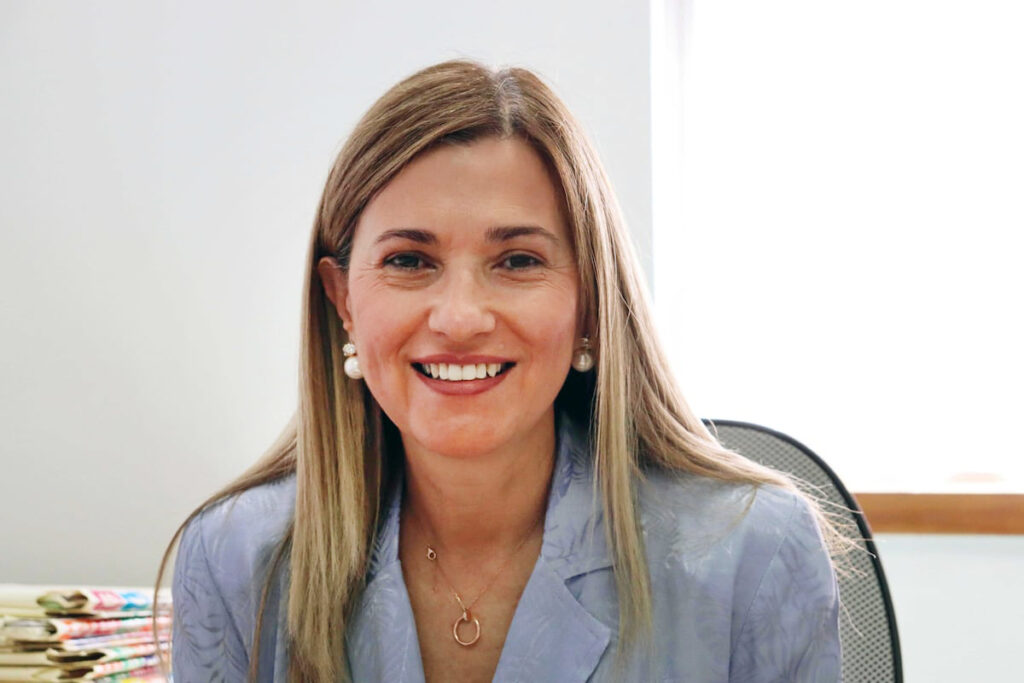
Dr María-Victoria Mateos
The haematologist simply credits “being in the right place, at the right time” when it came to specialising in the incurable blood cancer. As Dr Mateos completed her residency in haematology in the late 1990s, the treatment of multiple myeloma was about to undergo change with the introduction of the proteasome inhibitors such as bortezomib, followed by the immunomodulators thalidomide, and lenalidomide. , “I remember very well the first clinical study conducted with daratumumab in relapsed refractory myeloma patients in the US and also three centres in Spain,” she says.
“I’ve seen how daratumumab has transformed the lives of myeloma patients not only because of its efficacy as a single agent, but because of its combinability with other agents, and also because of its safety profile.”
These treatments have meant that for many newly diagnosed multiple myeloma patients, the cancer, while still incurable, is managed like a chronic disease.
The physician points to how the newer agents and their combinations have contributed to improved progression-free survival (PFS).
“In the past with the first line of therapy, patients were in remission for maybe three, four years,” she notes.
“Now we can reach median progression-free survival longer than nine years. In the future, this could be as long as 15 or 16 years.”
From initial trials with single agent daratumumab, the next step was to combine it with proteasome inhibitors and immunomodulators, and then to move to earlier lines of therapy. The two trials that heralded this move are the PERSEUS and CEPHEUS, which Dr Mateos refers to as “two of the most relevant phase III clinical trials that have changed the treatment landscape in the first-line of therapy of patients with multiple myeloma”.
The CEPHEUS trial demonstrated how the combination of daratumumab (DARA) + bortezomib, lenalidomide and dexamethasone (VRd) in transplant-ineligible newly diagnosed multiple myeloma resulted in higher rates of overall and sustained MRD negativity compared with Vrd alone. Meanwhile, the PERSEUS trial showed that this combination conferred a notable benefit in terms of PFS for newly diagnosed patients.
Bispecific monoclonal antibodies including teclistamab and talquetamab, have shown early effectiveness in heavily pretreated multiple myeloma. The pivotal Phase 1/2 MajesTEC 1 study demonstrated the efficacy and safety of teclistamab, with a 63 per cent overall response rate and a generally manageable safety profile. Both therapies are reimbursed in Ireland for patients with relapsed and refractory multiple myeloma.
“These treatments have meant that
for many newly diagnosed multiple myeloma patients, the cancer, while still incurable,
is managed like a chronic disease”
The advent of CAR-T cell therapy in Irish centres has been eagerly anticipated and Dr Mateos gained significant experience with its use in her centre
in Salamanca.
“Patients remain disease-free and treatment-free basically one or three months after the administration of the CAR-T,” she says.
“But we have learned to ask, who benefits most from this treatment? How can we deliver it safely? And how do we build a system that actually works?”
Optimal patient selection is critical for success; for example, patients with particularly aggressive disease are typically not suitable, while Dr Mateos also advises physicians to refer potential candidates “as early as possible”. Managing adverse events, such as cytokine release syndrome, requires careful education and adherence to strict protocols.
A successful CAR-T treatment pathway requires a multidisciplinary team, including intensive care, neurology, infectious disease, pharmacy, and nursing, while logistics management is “absolutely crucial”.
“It requires a strategy that involves early planning, immune fitness preservation, standardised toxicity management, and a robust system pathway,” she asserts. The current availability of CAR-T cell therapy in Ireland represents a crucial initial step in its journey towards broader integration into earlier lines of treatment.
The current state of play in multiple myeloma management is that patients are receiving highly individualised care. Options are also becoming available for various subpopulations of multiple myeloma patients who still had poor outcomes, despite new advances. For example, with patients who have been exposed to three lines of therapy and find themselves refractory to all of them, the ciltacabtagene autoleucel offers a median PFS of three years and median overall survival of five years. Ciltacabtagene autoleucel is now reimbursed in Ireland for this
patient cohort.
While the exact sequencing of BCMA and CAR-T therapies requires careful consideration, Dr Mateos notes that haematologists are more confident in the correct treatment selection as their experience with these agents grows.
Given the transformative range of available treatments and combinations, Dr Mateos conveys strong optimism for the future. She references the recent data on in vivo CAR-T therapy, where the viral vector is directly infused to the patient – eliminating the complex and delicate manufacturing process.
References available on request
CP Code: CP-567983
Date of Preparation: March 2026







Leave a Reply
You must be logged in to post a comment.