







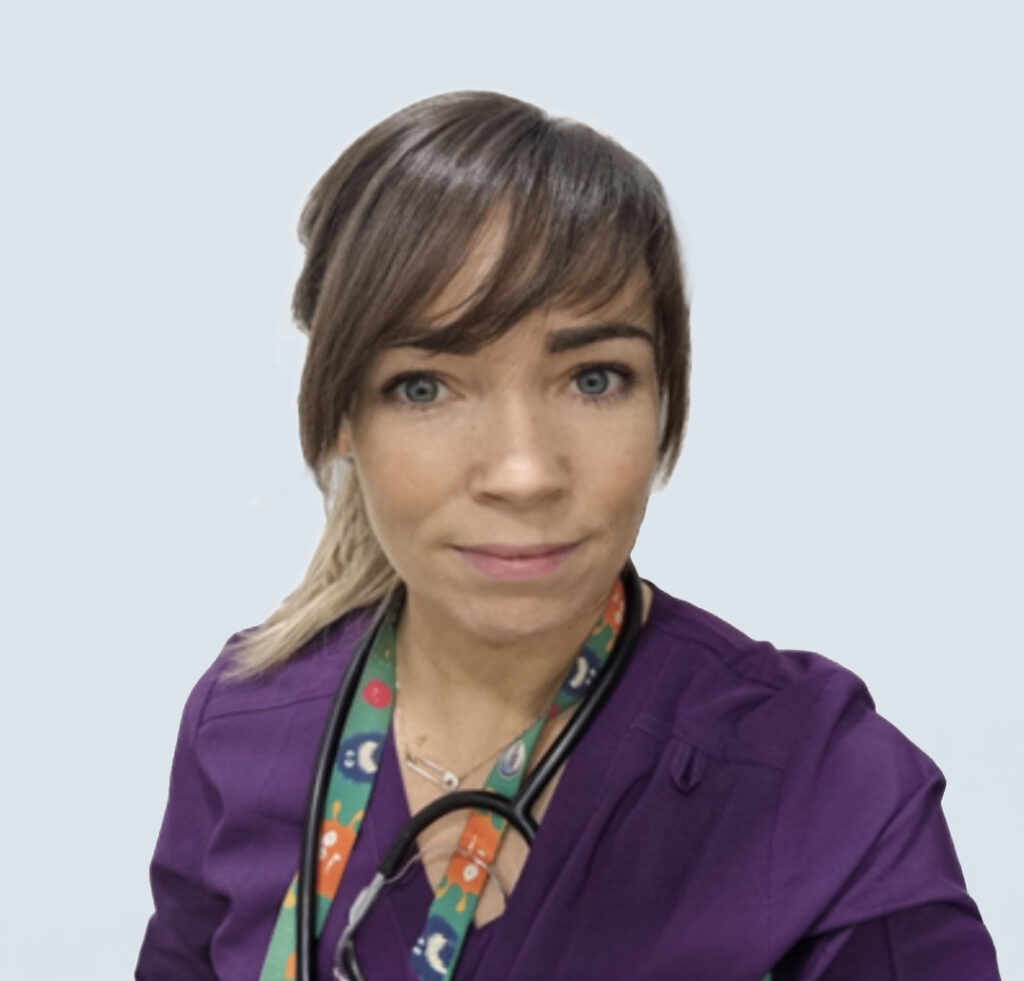
Gemma Finegan, ANP in Paediatric Emergency Medicine, Our Lady of Lourdes Hospital (OLOL), Drogheda, Co Louth
For me, working within the paediatric emergency department (ED) is a tremendous privilege. Caring for children and young people at some of their most vulnerable moments in their lives is a role that carries immense responsibility, but is also profoundly rewarding.
My journey
I qualified as a registered general nurse in 2007 but always knew my passion lay in paediatrics, gaining my children’s nursing registration in 2010. After a year of travelling in Australia, I returned to Ireland and worked between the children’s ward and ED in OLOL, Drogheda, before moving to London to join the paediatric ED at the Royal Free.
Here, I completed a postgraduate qualification in paediatric emergency nursing at King’s College. I moved from London to the UAE, where I worked again in ED, in a trauma centre in Al Ain. I returned home in 2015 and worked in Temple Street ED before taking up a permanent post in OLOL’s paediatric ED, where I have remained since.
In 2023, I was delighted to have been successful for the position of Candidate ANP (cANP) in Paediatric Medicine at OLOL. I was especially grateful to follow in the footsteps of Priya Ponnurangam, whose dedication and vision laid the foundations for what has become a growing and valued service. I formally registered as a RANP earlier this year and, between us, we now provide ANP cover six days per week, working complementary 12-hour shifts to ensure continuity and consistency of care.
Service innovations
Although still in its early stages, the ANP service is already demonstrating meaningful impact. In my role within the paediatric ED, I manage complete episodes of care within agreed inclusion criteria. These currently include children presenting with asthma, croup, upper (including tonsillitis and otitis media) and lower respiratory tract infections, urinary tract infections, and constipation.
Expansion of the role to include suspected appendicitis is under active consideration, with engagement of key stakeholders to ensure appropriate governance structures, pathways, and protocols are in place. We have established both in-person and virtual review clinics to support safe follow-up and continuity of care. While a small proportion of patients require admission under medical or surgical teams, and rarely, transfer to tertiary services, the majority are discharged.
Providing education to caregivers as well as robust safety netting are both vital steps in our episodes of care. Audit data from a six-month period in 2025 demonstrated a 96 per cent discharge rate, reflecting both appropriate patient selection and effective autonomous practice.
Research, audit, and education
As part of my recent dissertation, I undertook a primary research study exploring nurses’ knowledge and attitudes towards fever in children. The findings identified persistent gaps in understanding, particularly regarding the physiological benefits of fever, risks of febrile seizures, dehydration risk, as well as adherence to NICE (National Institute for Health and Care Excellence) guidelines.
These deficits reflect those previously identified in the Irish study by Greensmith (2012), highlighting an ongoing need for focused educational intervention. I am currently working on publishing this work and hope to use the findings to inform structured teaching initiatives aimed at improving knowledge, confidence, and evidence-based practice in fever management.
Alongside this, I completed an audit on fever management within the department. The quality improvement outcome from this work has been the development of an enhanced vital signs record for our ED, designed to better support clinical assessment and guideline adherence. This document is currently in its final draft stage and represents a practical step towards strengthening patient safety and standardising care.
Beyond my clinical responsibilities and recognising education as a vital part of my role, I am also keen to dedicate time to developing and progressing wider service improvement initiatives. I have several ideas I would like to explore, particularly around enhancing the patient and family experience within the ED.
A key starting point would be the waiting room environment, where first impressions are formed and anxiety is often heightened. I am motivated to contribute to meaningful, sustainable improvements that positively influence patient experience, flow, and overall quality of care.
Leadership and professional involvement
As an ANP, I am increasingly aware of the responsibility that comes with providing clinical leadership within the department. While I continue to learn every day, I recognise the importance of being a steady, supportive presence on shift, particularly for junior colleagues navigating complex clinical situations. Now that the academic component of my training is complete, I feel more confident in dedicating time to teaching, role modelling, and guiding others in their practice.
Closing reflections
Paediatric emergency medicine is both highly rewarding and inherently challenging. The work can be unpredictable, fast-paced, emotionally and physically demanding. It requires resilience, calm under pressure, and excellent teamwork. It also demands clear, effective communication within a uniquely dynamic environment, where no two days are ever the same.
I feel privileged to be part of this dedicated multidisciplinary team, committed to delivering safe, high-quality care. I also recognise that, given the intensity of the ED environment, self-care and regular reflection are essential, not just for nurses or doctors, but for all disciplines working in a caring environment. To care properly for others, we must first care for ourselves.




Leave a Reply
You must be logged in to post a comment.