







Point-of-care ultrasound: A nurse-led perspective
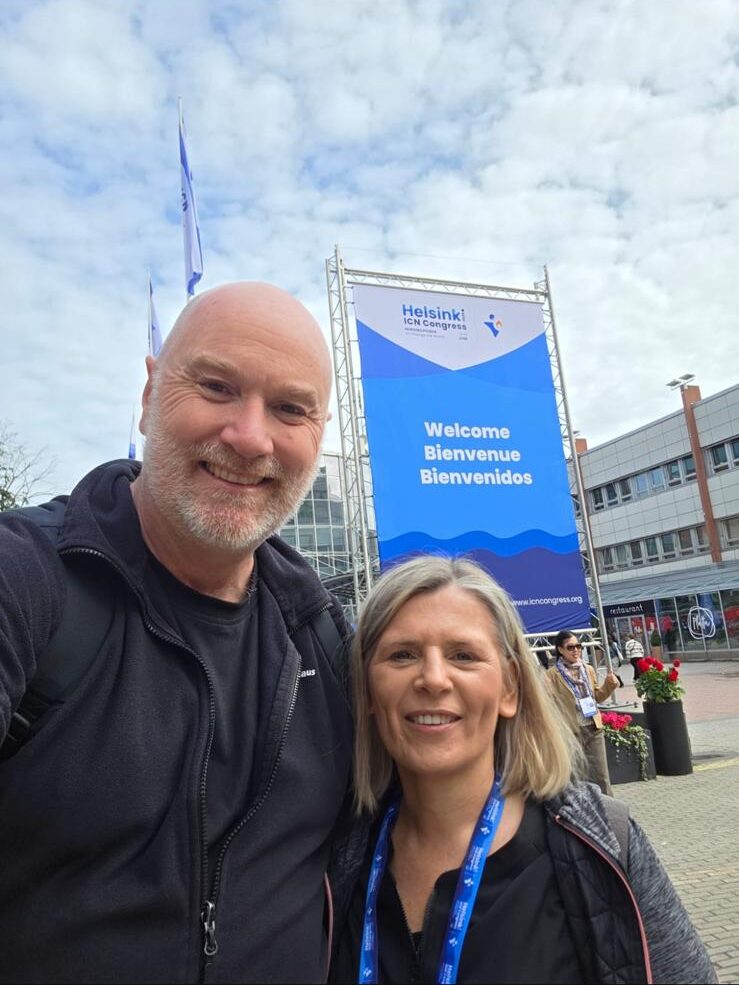
The first International Council of Nurses (ICN) Congress took place in 1901 in New York, US. Roll on 124 years, and what an honour to attend the 30th ICN Congress in Helsinki, Finland, on 9-13 June this year.

The theme of the congress was ‘Nursing Power to Change the World’, and some of the nurses we had the pleasure to meet, from all corners of the globe, were inspirational forward thinkers and true leaders. I think we may have met a few of the future presidents of the ICN.
It was an honour to be part of the Irish representatives for nurses and midwives. The sense of anticipation began at Dublin Airport as the significant number of Irish nurses travelling to the congress became apparent.
At the venue, hosting over 6,000 delegates from around the world, it was truly gratifying to see many Irish nurses presenting, leading workshops, and showcasing innovative practices on the international stage.
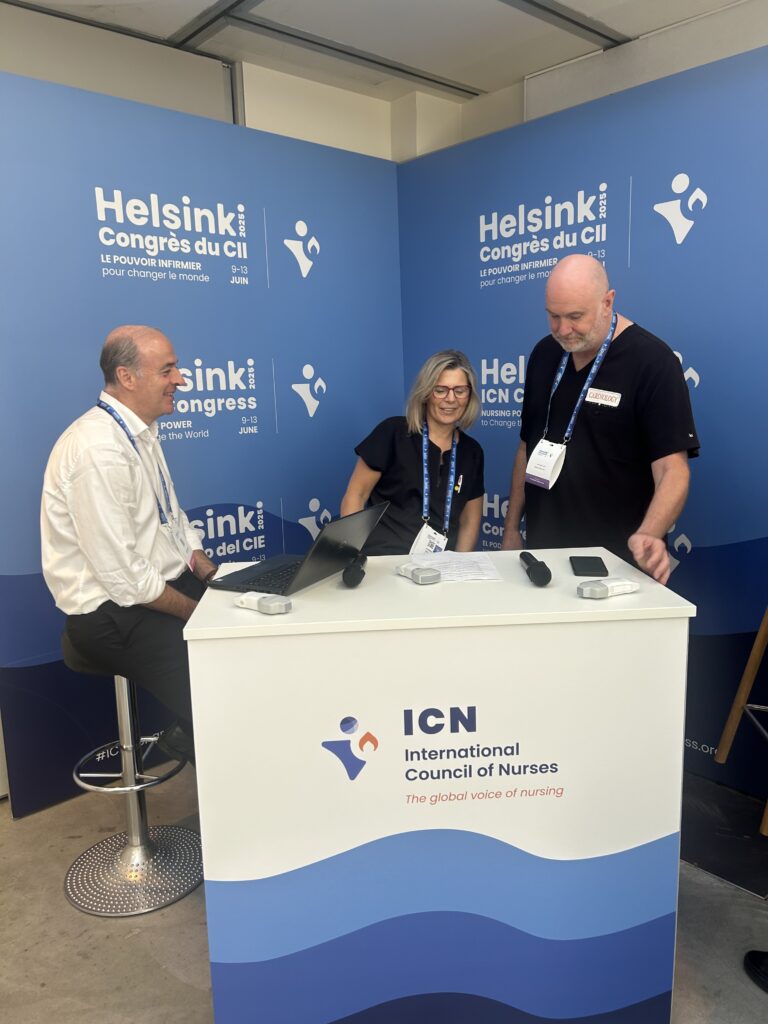
Helsinki was more than just a conference, it was a vibrant meeting place for ideas, collaboration, and professional growth. One of the highlights for us was meeting and spending time with Pam Cipriano, outgoing President of the ICN. Her enthusiasm for point-of-care ultrasound (POCUS), digital innovation, advance nurse practitioners (ANPs), and expanding the scope of nursing practice resonated deeply with our own passion for these evolving areas.
We discussed the exciting progress nurses are making in advancing digital health, as well as the relatively untapped opportunities to address non-communicable diseases through the leadership of ANPs and by shifting more resources into community care.
We also discussed the future potential for Irish nurses and universities to partner with the ICN to push forward on key priorities affecting nurse practitioners globally; from achieving full practice authority to improving access to care for the populations who need it most. ‘Where nurses rise, societies thrive’ – Pam Cipriano.
Attending as colleagues was a professional highlight, but also a personal one. Karen: “I learned something new from Paul every day. His depth of knowledge in cardiology and POCUS, and his gift for teaching, were a constant source of inspiration.” That spirit reflects Florence Nightingale’s timeless reminder: “Let us never consider ourselves finished nurses…. We must be learning all of our lives.”
The GE Healthcare stand was a constant hive of activity, and not just because of the striking male models used for POCUS demonstrations! The real excitement came from the hands-on teaching and the chance to trial the latest innovations in ultrasound technology. Of particular interest was the integration of artificial intelligence (AI) to automatically detect and estimate ejection fraction using the Vscan SL, a cardiology-specific probe.
Equally impressive was the Vscan CL’s auto bladder volume measurement feature, which demonstrated how POCUS can streamline decision-making across multiple care settings. The GE stand was one of the busiest at the conference – second only to the Taiwan Nursing Association’s stand, where the lure of prizes kept a steady crowd gathered.
The three workshops we delivered were bursting with energy, hands-on learning, and plenty of scanning. Each session began with a short introduction and a few real examples of practical case studies to set the scene, but most of the hour was dedicated to scanning at four busy stations. The atmosphere was electric, all stations were constantly in use, and some participants even returned to attend all three workshops.
Workshop titles
- POCUS: Practical management of cardiac emergencies in the ED using handheld POCUS and AI.
- Investigations of undifferentiated dyspnoea with handheld POCUS and AI.
- An introduction to handheld POCUS – The ‘Swiss Army Knife’: Multiple applications from vascular access, AI-assisted bladder scanning, to lung and cardiac ultrasound.
These sessions showcased the versatility of handheld ultrasound, from life-saving cardiac assessments to everyday clinical applications that save time and improve patient care.
POCUS: A growing role for nurses
POCUS uses portable ultrasound devices to perform focused assessments at the bedside, in clinics, or in the community. Globally, it is increasingly being used by nurses and midwives to enhance practice. In cardiology and respiratory care, some of the practical applications include:
- Assess lung congestion in heart failure patients and guide treatment (Gargani et al, 2023);
- Rapidly evaluate causes of acute breathlessness (Santus et al, 2023);
- Support earlier heart failure diagnosis in primary care and rural settings (Butterfly Network, 2024);
- Assist emergency cardiology nurses in the rapid assessment of left ventricular function, regional wall motion abnormalities, pericardial effusion, and significant valvular lesions to prioritise urgent care (REF).
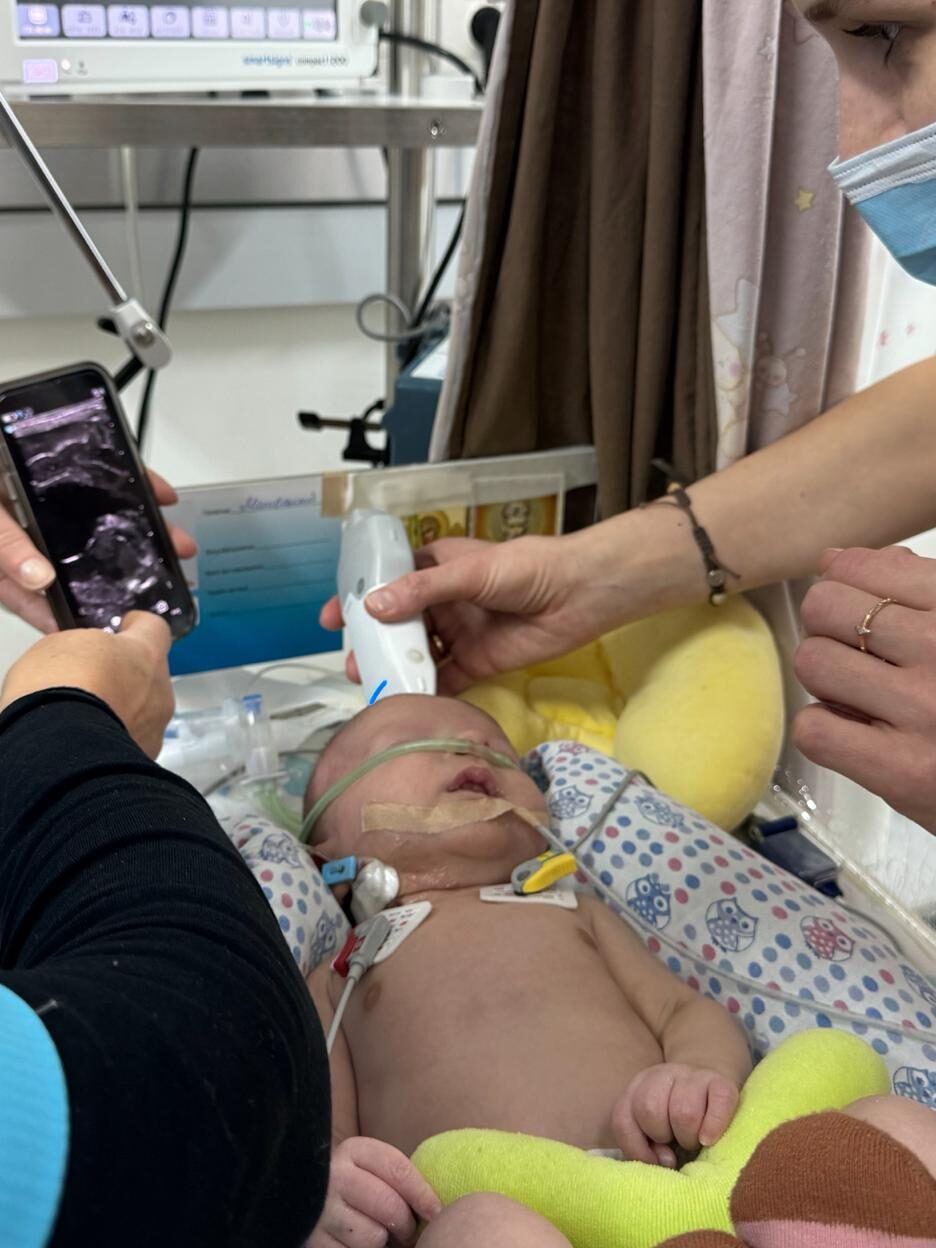
We were very fortunate to have the opportunity to introduce POCUS to nurses, with a particular focus on the GE Vscan SL and GE Vscan CL. The SL is a cardiology-focused probe with an AI tool that assists in assessing ejection fraction (EF), while the CL includes an AI bladder volume measurement feature – both examples of how AI can make image interpretation faster and more consistent.
POCUS technology now spans a wide spectrum, from compact handheld devices to more advanced portable echocardiography systems such as the GE Vivid IQ.
The GE Vscan (wireless and amazing image quality) and Butterfly iQ+ (notable for its longer battery life and great lung B-Line images) both offer the advantage of a single probe with multiple presets, covering a wide range of clinical applications. This contrasts with many other handhelds that require swapping between different probes for different scan types, a practical consideration for nurses working in busy clinical or community settings.
Why nurses should care – current uses and projects
Point-of-care ultrasound (POCUS) has moved from being a specialist-only skill to being a very useful addition that can complement nursing assessment and improve patient care in many areas across acute and chronic services. For cardiology nurse practitioners, its applications are wide-ranging, and the evidence-base for its use is growing rapidly.
In the emergency and acute cardiology setting, POCUS allows rapid, bedside assessment of cardiac function, enabling clinicians to evaluate ejection fraction (EF), detect regional wall motion abnormalities, identify pericardial effusion, and differentiate causes of shock.
In cardiac arrest, the presence or absence of cardiac activity on POCUS can guide resuscitation and prognostication, with studies showing high sensitivity for predicting survival to admission (Kedan et al, 2020). NB, POCUS should never be used in isolation, it should be used in addition to advanced nursing assessment, only used by the operators who have completed appropriate education and training programme, and who fully understand and respect its scope and limitations (Neskovic et al, 2014).
All abnormalities detected by POCUS should be referred for departmental echo/ultrasound examination as soon as appropriate. POCUS exams should be recorded, stored and reported on in accordance with clinical practice (Neskovic et al, 2014).
For heart failure and respiratory assessment, lung ultrasound can detect pleural effusion, pulmonary congestion, pneumothorax, interstitial syndrome, and even more advanced conditions such as empyema, with higher sensitivity than chest x-ray in many settings (Gargani et al, 2023; Santus et al, 2023). This is particularly valuable in heart failure management, where identifying pulmonary congestion early can guide diuretic therapy, reduce admissions, and improve patient outcomes.
In heart failure care, integrating POCUS into routine review can support early detection of decompensation, facilitate timely intervention, reduce emergency department attendance, and contribute to patient self-management education (Mhanna et al, 2022, Gargani et al, 2023).
By combining cardiac and lung views, clinicians can assess both pump and fluid status in real time. In newly diagnosed HFrEF with congestion, POCUS plays a vital role in guiding management. It can help determine whether low blood pressure is due to over-diuresis and intravascular volume depletion, rather than disease progression.
This distinction enables clinicians to safely down-titrate diuretics, restore adequate filling pressures, improve blood pressure, and optimise the up-titration of heart failure medications (Gargani et al, 2023; McDonagh et al, 2023).
With further training, such as British Society of Echocardiography (BSE) Level 1, FUSIC (Focused Ultrasound for Intensive Care), or FAMUS (Focused Acute Medicine Ultrasound), practitioners can identify additional pathologies – for example, valvular abnormalities, ventricular or atrial septal defects, structural heart disease, and complex pleural pathology (Society of Acute Medicine, nd). The primary role of nurses performing POCUS is not to replace echocardiographers or radiographers, but to quickly determine what appears normal and escalate abnormal findings for formal imaging.
Beyond hospital walls, POCUS is increasingly part of innovative outreach projects. One current initiative is exploring the combined use of AI-assisted stethoscopes and portable ultrasound to screen for heart valve and congenital heart disease in remote villages in Rwanda and the Democratic Republic of Congo. These projects show how technology can bridge care gaps in underserved populations, aligning with nursing’s global commitment to equity and access.
The FAMUS pathway, developed by the Society for Acute Medicine, provides a structured route for acute care clinicians to achieve competence in lung, pleural, abdominal, and vascular ultrasound. FUSIC, developed by the Intensive Care Society, offers a modular approach to advanced cardiac and thoracic scanning. Both represent a clear, nationally recognised standard for POCUS training that nurses can follow to ensure competence and patient safety.
POCUS is not just for acute hospital care – its impact in global health is growing rapidly. One example is a current project using a combination of AI-enabled digital stethoscopes and POCUS to detect heart valve disease and congenital heart defects in remote villages in Rwanda and the Democratic Republic of Congo, where access to traditional echocardiography is extremely limited. This demonstrates how nurse-led POCUS, supported by emerging technology, can transform diagnostics in the most resource-limited settings.
The challenges ahead
While the benefits are clear, three key issues need to be addressed in Ireland:
- Scope of practice – National clarity on nurse-led POCUS is essential.
- Training and competence – Structured education and supervised practice must be embedded into nursing pathways.
- Governance and quality assurance – POCUS should complement standard imaging, with clear referral protocols.
Looking forward
The ICN Congress reinforced for us that nursing is evolving rapidly, and technology like POCUS is a tool that empowers rather than replaces us. By embracing new skills, we can work at the top of our licence and deliver more responsive, patient-centred care.
For us, Helsinki was a reminder of the importance of collaboration, curiosity, and lifelong learning. And, just as importantly, it was a chance to bring home new ideas that can help shape the future of Irish nursing.
References available on request







Leave a Reply
You must be logged in to post a comment.