







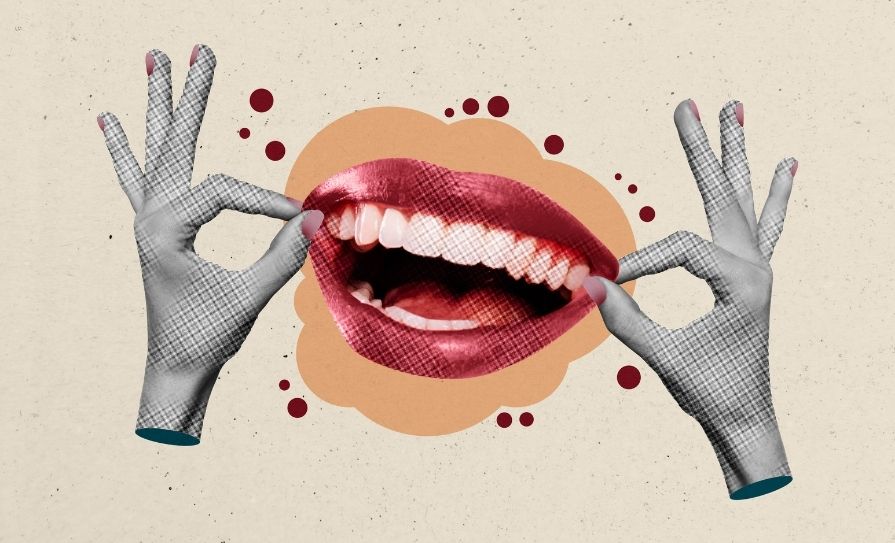
Finding humour in daily life has many positive psycho-social benefits – but what about when we are faced with serious and life-limiting illness? It raises the question: What happens to a patient’s mind when they are confronted with serious illness or disability and where does their sense of humour come into the equation?
Serious and potentially fatal illness deconstructs the ‘self’ like no other event in life. These events can challenge our identity as that sense of control over life withers away. For words of wisdom on the topic, there is a fascinating article from 2022 in Psychology Today by medical doctor Dr Daniel Miller, titled ‘Humour, Serious Illness, and End of Life’.
“And what is a life-limiting illness, if not an absurdity?” posits Dr Miller. As any physician knows, when faced with disastrous news, patients react in different ways – some blame past misdeeds, others just put it down to genetic bad luck, some adapt to the new circumstances, while others may develop a nihilistic frame of mind.
“Absurdist or surreal humour can both reveal an odd similarity to the person’s existential predicament and at the same time evoke a bit of catharsis so needed when one is solely preoccupied with their struggle,” according to Dr Miller, who is a palliative care specialist.
Naturally, engaging with humour with a seriously ill patient is delicate. Inappropriately used, it can be a disaster for the doctor-patient relationship. But used judiciously, it can serve to enhance that relationship.
In profound suffering, “our worldview shrinks tremendously,” he writes.
“It shrinks into the black hole of suffering with a mass of a thousand suns. Hope, joy, pleasantries, goodwill, connection with others, meaning in life just disappear. We become less than human. We are taken over by the suffering.
“What humour allows is the reconnection of one’s suffering with their humanity and brings just a bit of temporary joy back into view. It’s not a panacea, but it makes its mark. It’s a therapy that only we humans can share with other humans without needing any technology, pills, or procedures. All that is required is lived experience, a bit of tact, and a sense of humour.”
From the patient’s perspective, a ‘good doctor’ is one who sees the patient on time and is competent. A ‘great doctor’ is the one who is also competent, but has a warm and skilled bedside manner, he points out.
“So, why use humour?” Dr Miller asks.
“To build rapport, to form a connection, to create a less threatening space where psychological suffering can take a back seat (even temporarily) to a more positive frame of reference, to achieve catharsis with a release of negative emotion/energy, to foster resilience in a very challenging situation, to allow one to think more broadly about their predicament, and get unstuck from their all-absorbing suffering and negative affect.
“Laughter is the closest distance between two people.”
Granted, the palliative care setting is a different world to a busy oncology ward in a general hospital, but the principles of humanity through humour still apply. So too does the need to foster the doctor-patient relationship, especially for the most vulnerable.
This is a concept worth thinking about, especially now that Palliative Care Week, which ran from 7-13 September, has come to a close
Palliative Care Week 2025 was led, as ever, by the All-Ireland Institute of Hospice and Palliative Care.
It’s the 12th year of the campaign and the 2025 theme was ‘Palliative Care: Living for Today, Planning for Tomorrow’.
To conclude, here are a few quotes from some familiar names on facing ‘the final curtain’.
▶ “Always read something that will make you look good if you die in the middle of it.” PJ O’Rourke.
▶ “Dying is a very dull, dreary affair. And my advice to you is to have nothing to do with it.” W Somerset Maugham.
▶ “This wallpaper and I are fighting a duel to the death. Either it goes, or I do.” Oscar Wilde’s final words.
▶ “I am dying beyond my means.” Wilde again.
▶ “If any of you cry at my funeral, I’ll never speak to you again.” Stan Laurel.
▶ “This is no time to be making new enemies.” Voltaire after a priest asked him to renounce Satan.









Leave a Reply
You must be logged in to post a comment.