







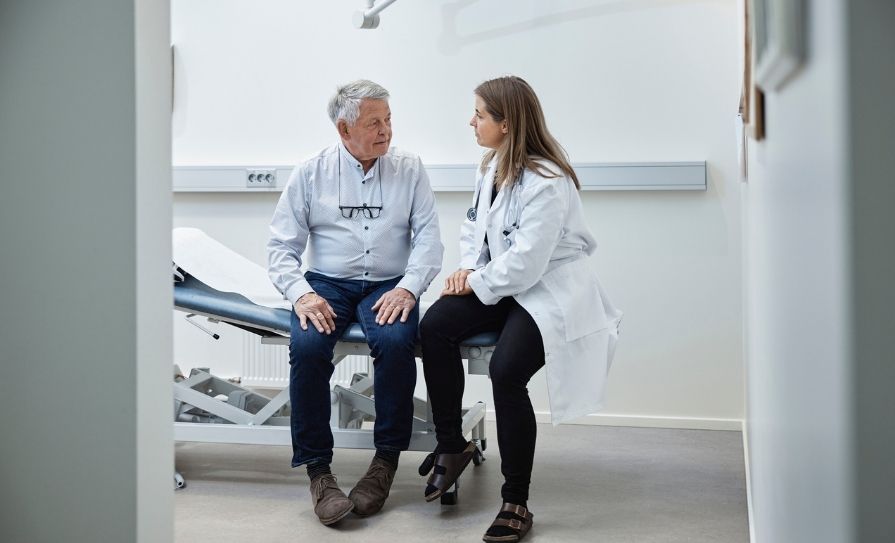
A recent article in Mayo Clinic Proceedings makes a compelling case for why doctors should listen closely to both patients and colleagues.
Lead author Dr Leonard Berry of the University of Texas, US, argues that the art of listening is a potent tool that not only helps the patient and doctor, but also has the potential to positively affect health systems in their entirety.
Effective listening, he explains, is targeted and is about asking the right questions and showing genuine compassion and empathy.
Effective listening, he explains, is targeted and is about asking the right questions and showing genuine compassion and empathy
He describes this method as ‘values-driven listening’.
There are six “listening strategies”, according to Dr Berry and colleagues.
Listening that is curious: This posits that the healthcare provider’s (HCP) curiosity is just as powerful as their medical expertise. HCPs are encouraged to ask open-ended questions of patients and pay attention to emotions, body language, and the types of words used.
Proximate listening: This is listening that occurs when the doctor and patient are in the same physical space, such as an exam room, rather than over the phone or online. It should be characterised by focused attention, and emotional openness. This type of listening is essential if the patient is to be part of the decision-making process, argues Dr Berry.
Listening aided by design: This one is quite literal. A small clinic or hospital can affect how well the patient is ‘heard’ and indeed how well a doctor is heard. But even in cramped conditions, simple strategies like making sure you sit down with the patient can make them more likely to open up. Some hospitals, the authors point out, have dedicated ‘talking rooms’ set aside exactly for this purpose.
Listening that enables trust: This is the type of listening that creates a bond between doctor and patient and makes it easier to speak more candidly. This means a conversation that is non-judgmental and treats the patient’s input as crucial.
Listening that empowers: This means translating listening into action. It calls on HCPs to identify wasteful processes and policies to modify or eliminate. Leaders can also invite individual workers or groups to “identify a process or policy that merits reconsideration, with appreciative acknowledgement of all suggestions submitted”.
Listening that fosters resilience: Sharing stories or coffee breaks with colleagues can be cathartic, say the authors. Some hospitals set aside time for ‘peer connections’, no doubt partly to allow people to let off steam. This, argue the authors, fosters resilience.
These types of listening require focus of course, and some doctors have started using artificial intelligence to take clinical notes in order for them to concentrate more on their conversation with the patient.
Dr Berry and colleagues write: “Integrating values-driven listening within health systems is not just a theoretical ideal, but a practical necessity as trust – essential in healthcare – depends on it.”
“In the case of patients, they are likely to trust a clinician’s competence, to assume it, unless their experiences with the clinician prove otherwise. Conversely, perceived kindness-influenced trust must be earned by clinicians in their interactions with patients. Our research and that of others show that trust is strengthened when competence-influenced trust and kindness-influenced trust are combined…. By listening with genuine curiosity, proximity, and compassion, clinicians and organisational leaders can build trust and improve the quality of care. Values-based listening reflects kindness and no service requires kindness more than the healthcare service.”
Ultimately, Dr Berry and his colleagues argue that listening is far more than a soft skill – it is a clinical competence and a leadership responsibility. By embedding values-driven listening into everyday practice, HCPs can strengthen trust, improve patient outcomes, and build more resilient systems. Their research is a reminder that the simple act of listening may still be one of medicine’s most powerful tools.









Leave a Reply
You must be logged in to post a comment.