







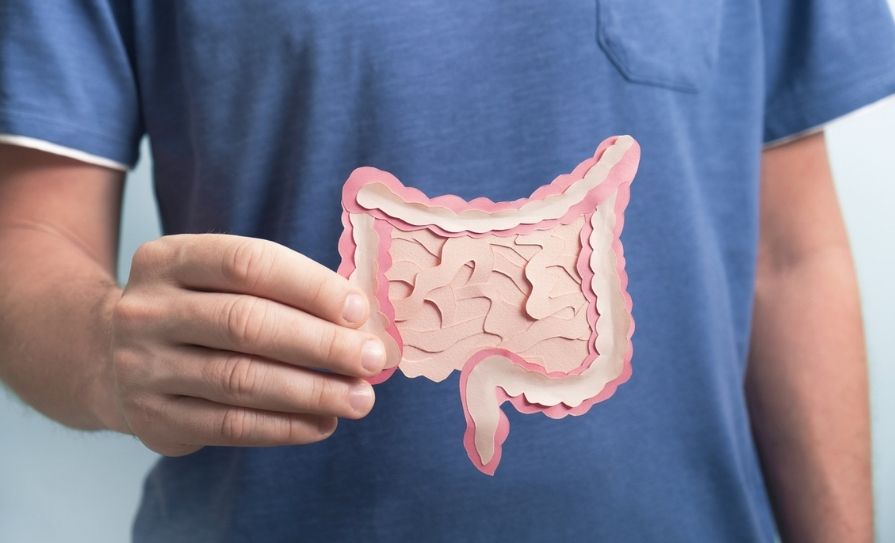
As the learning curve on the gut microbiome continues its upward trajectory, new research appears to show that beneficial gut microbes are ‘smarter’ than we thought and, in fact, may be intuitively drawn toward important nutrients.
Our understanding of the importance of the gut microbiome continues to grow and it is a research rabbit-hole, as we continue to struggle to understand this vast community of micro-organisms and the countless chemical interactions that happen every day in our guts.
Now, teams of researchers from Ohio University, US, Philipps-University Marburg, and the Max Planck Institute for Terrestrial Microbiology, both in Germany, have made the discovery that helpful gut microbes, particularly Clostridia bacteria, can ‘sense’ a huge array of chemical signals during the process of digestion.
The teams found that these microbes have sensors that draw them towards ‘good’ nutrients and are triggered by chemical signals of by-products such as proteins, fats, sugars, and, surprisingly, DNA.
“It is vital for gut bacteria to be able to detect chemical signals and associated nutrients to be able to maintain healthy gut flora, and understanding the full range of signals that attract bacterial receptors, is a new area for research into the gut microbiome,” wrote the authors.
“The gut microbiota is a complex community that relies on the extensive exchange of metabolites and signals among micro-organisms and between microbes and the host. However, it remains largely unknown which signals are recognised by the diverse extracytoplasmic sensory domains that provide inputs for signal transduction pathways in gut bacteria.
“Previous systematic efforts to identify ligands of bacterial sensors have focused on single types of sensory domains or on several individual model organisms, primarily pathogens. Here, we instead took a habitat-centric approach and evaluated ligand specificities for a library of 116 LBDs [ligand-binding domains] from the recently established dataset of ~17,000 sensory domains of human gut commensal bacteria.” The researchers focused primarily on the bacterial class of Clostridia, as it is highly prominent and important in the human gut microbiome. Furthermore, many of its members are potentially motile, and therefore possess all three major types of bacterial transmembrane sensors.
The teams managed to identify a number of previously-unknown groups of sensory domains that are specific for dicarboxylic acids, lactate, an RNA building block called uracil, and short-chain fatty acids. They combined bioinformatic analysis with lab experiments to discover multiple chemical ligands that bind to sensory receptors.
“The spectrum of nutrient metabolites identified as MCP ligands in our study shows a high diversity, including amino acids, amines, and pyrimidines,” the authors explained. “…. Finally, our results provide general insights into the chemotactic preferences of commensal bacteria in a specific environment, the human gut.
“Overall, we were able to identify or predict ligand specificities for 50 per cent of the Cache superfamily sensors in the commensal bacteria studied. While the better-studied sensors for amines and amino acids appear to be only sparsely represented, the less-studied sensors for carboxylic acids are highly abundant in these bacteria. This preference strikingly differs from the chemoattractant spectrum of known bacterial species, where the most common attractants are amino acids and peptides, benzenoids, and purines.”
Put simply, the results show that movement in these bacteria is primarily driven by the search for food. If you’re interested in learning more, the paper was published recently in PNAS [Proceedings of the National Academy of Sciences].
Elsewhere in the gut microbiome universe, a study from last year by researchers at Duke University School of Medicine, US, and published in Nature showed that there is a previously unidentified system that allows the brain to respond in real time to signals from gut microbes.
Neuropods, minuscule sensor cells that line the epithelium in the colon, have the ability to detect a common protein and send messages to the brain that are rapidly received and understood. The flagellin protein is an important factor in the process and can trigger neuropods to send an appetite-suppressing signal to the brain, representing a real-time influence by gut microbiota on the brain.
Dr Diego Bohórquez (PhD), Duke University, one of the authors, commented: “Looking ahead, I think this work will be especially helpful for the broader scientific community to explain how our behaviour is influenced by microbes. One clear next step is to investigate how specific diets change the microbial landscape in the gut. That could be a key piece of the puzzle in conditions like obesity or psychiatric disorders.”
New discoveries on the importance of the gut microbiota are now appearing with increased regularity and it’s fascinating to ruminate on what secrets of human disease and wellbeing lurk within.











Leave a Reply
You must be logged in to post a comment.