







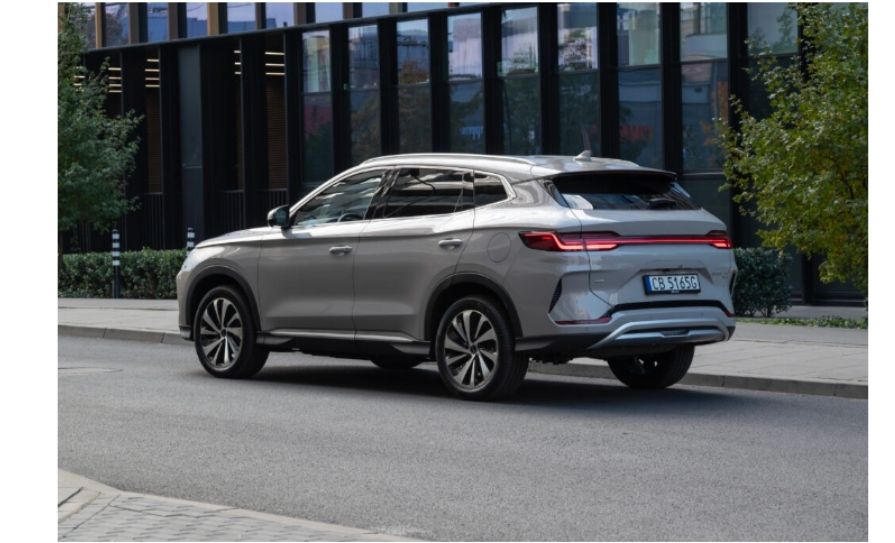
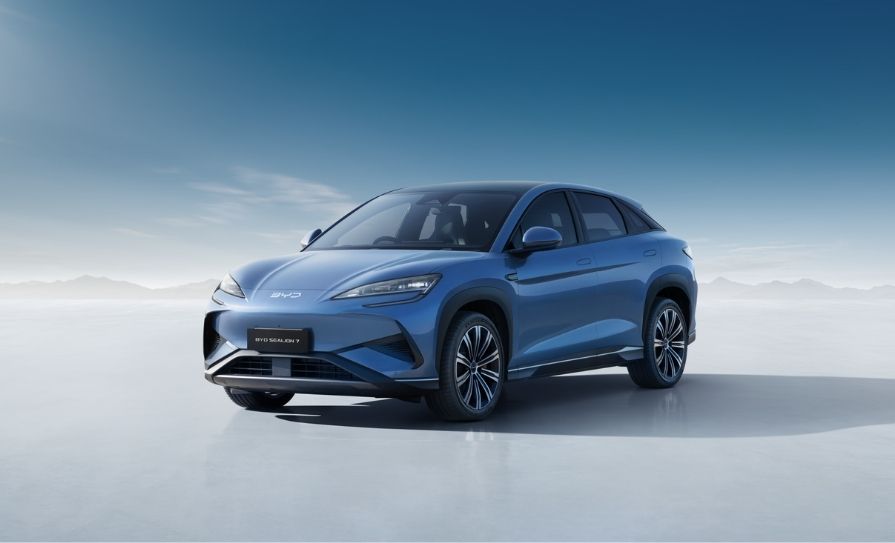
When is a petrol hybrid electric vehicle, known as PHEV, not a PHEV? When it is DMI, meaning dual motor intelligence. Chinese company BYD noted their electric vehicle sales were not up to the forecasted volumes, so they decided to do something about it – hence the Seal U Hybrid. They saw that the Seal passenger car was well received and went about making the Seal U an SUV-style passenger car based on the three-box Seal car. Anecdotally, I heard the development time was three months, which is something that the Guinness Book of Records might be interested in, if it’s true.
I’ve spoken to some people who have bought PHEVs and are disappointed with the economy. Mainly because the battery depletes quickly and you’re left driving a now useless and heavy electric motor and battery. Many of our current crop of PHEVs have a short (sometimes minimal) electric range. However, the Seal U distributors tell us that we can expect a range of 1,080km with a full battery and a full tank of petrol. Now the tank holds 60 litres of fuel and that would mean 6.0 litres per 100km or 47mpg. When I collected it the fuel displayed a range of 1,000km. Just before I returned it, it was displaying 324km travelled with 583km remaining, a new total of 907km.
I got about 6.4l/100km or 44mpg, mostly motorway driving. I think most motorists will get 800-900km per tank of fuel, which is good for a big car. Like the Prius with a similar drivetrain, you shouldn’t hear drivers complaining of poor fuel consumption. There is a selector to switch to pure electric driving and I’m sure I could have done a lot better if I’d used that more often.
Initial impressions
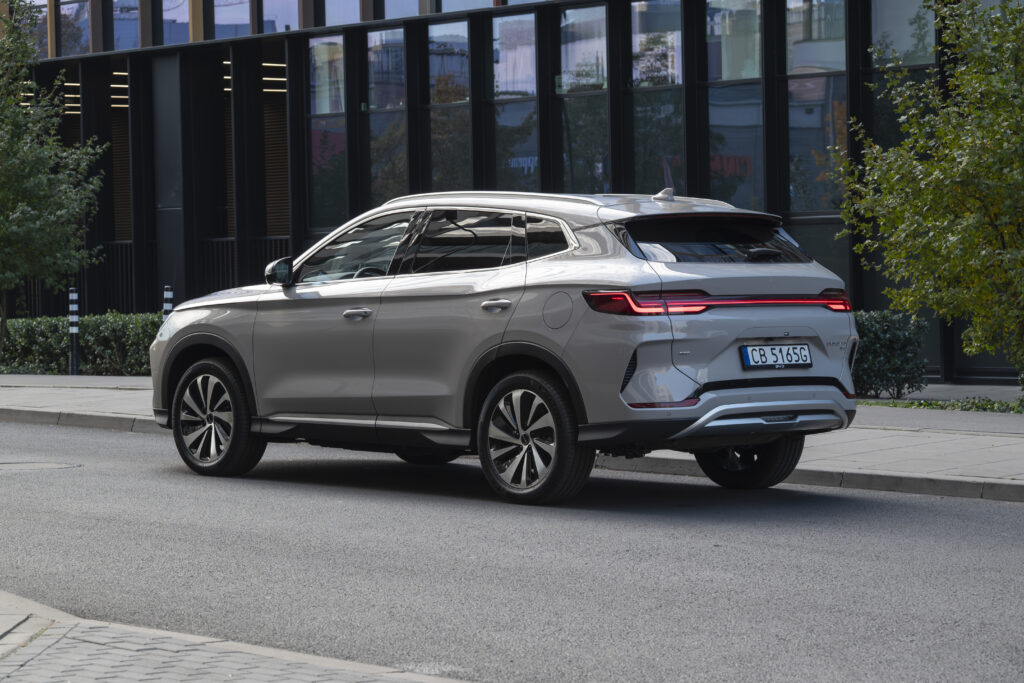
On first acquaintance, the car impresses with its size. It is taller than I am. Start-up is similar to the electric saloon and moving off is virtually silent. Most slow manoeuvres are under electric-only power. You have to listen carefully to hear the petrol engine kick in. Or you could look at the infographic on the dash. When I got in the car, I was cold. With any electric car I expect instant warmth. However, despite setting the heat to 23°C, then 25°C on the auto setting, I could not get warm. Now I wasn’t cold and the standard heated seat with a heated steering wheel was lovely. But my core temperature refused to get into the warm range.
Anyway, probably a minor glitch.
Feel
On the move, it feels like a good-sized car. It was always quiet. The engine management system is such that the job of the internal combustion engine is to keep the battery charged and the battery drives the electric motor that drives the car, working “in series”. Once the battery has sufficient charge, the petrol motor stops. When you need to accelerate, say for a gap in the traffic, then both will work together, with both electric and petrol motor driving the wheels. This is called “in parallel”. As in how we described how batteries worked when we studied physics in pre-med.
You don’t need to depend entirely on the engine for charging – as a plug-in hybrid, the Seal U can also be charged using solar energy that would otherwise be exported back to the grid at a low rate, providing up to 80km of electric driving.
The engine is a four-cylinder 1.5, engineered by BYD. It is an Atkinson cycle. I don’t fully understand it, but it was invented in 1882 in contrast to the more commonly used Otto cycle. Apparently, it has higher thermal efficiency, but less power output. And it is also more economical.
Combining the power units means the acceleration to the benchmark of 62mph is 8.9 seconds.
Features
Before I criticise anything, I have to think how it is designed and the Seal U is designed for comfort, not for speed. For me, I found the steering a bit overly light and not great with feedback. The car wears Continental tyres, which are quiet and give good grip, so it hangs on well in corners. It just doesn’t let you know what it’s doing. And this is a tall car, with a high centre of gravity. The suspension was soft, but I thought it was a little overly so. It is not designed for driving down a twisty country road. But it is stacked to the brim with safety features. These include adaptive cruise, rear cross-traffic alert and braking, and lane departure warning. In terms of luxurious extras, there is the panoramic sunroof, dual-zone air conditioning, adaptive LED headlights, and 360-degree camera.
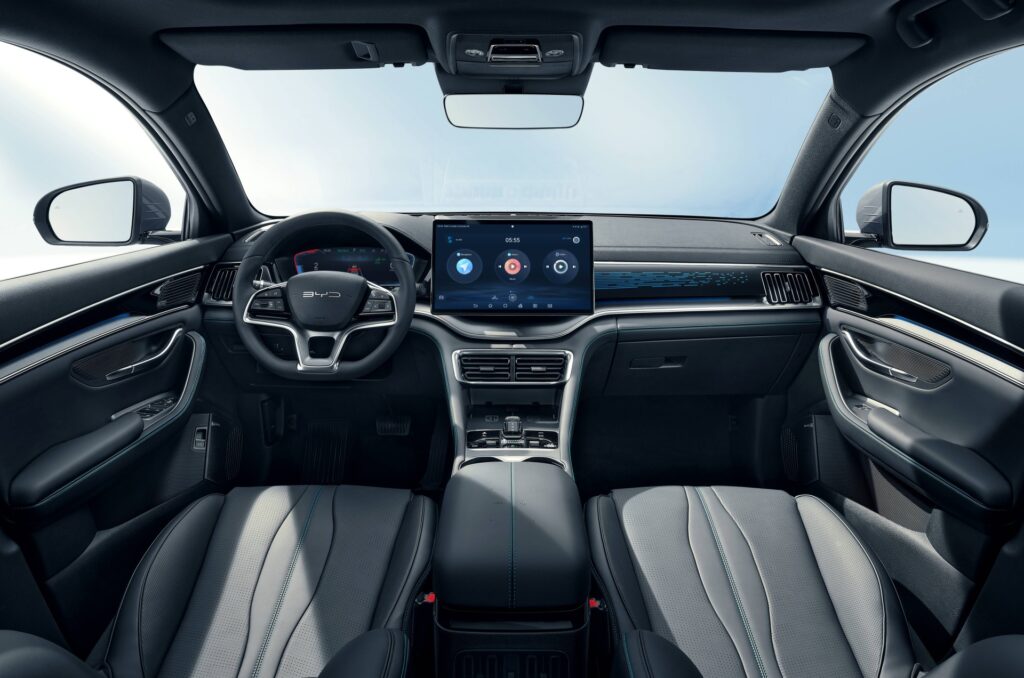
Also, it has a comfortable feel from the vegan leather heated, and cooled, seats. The instrument displays are informative and sometimes I’ll delegate the controls of, say, air conditioning, to my passenger or to ‘Hey BYD’, the voice assistant, which usually works well.
One thing I love about the Seal U is the heads-up display, with information on traffic, cruise control, lane departure warning, and speed limits all very clear. And clear enough for someone who needs spectacles for reading. The large central screen with its rotational feature is still part of the Seal U, but I found myself pressing the ‘off’ button to turn off the display more often than using the rotation. All the better to spare the ‘rhodopsin’ in the eyes for night vision.
Another distinctive feature is the ‘vehicle-to-load’ function. At the launch of the Seal U, the baristas were running their coffee machine from the Seal U battery, which was impressive. This means you can run electric equipment off the electricity in the car, such as a kettle, electric cooker, whatever.
The boot is big with a high sill. Very few others in the class have a bigger boot. As an example, my bike will fit in with the wheels still attached. Priced from €42,150, I can think of no other hybrid car of this type that will compete at this price point, with such a high level of equipment.




Leave a Reply
You must be logged in to post a comment.