







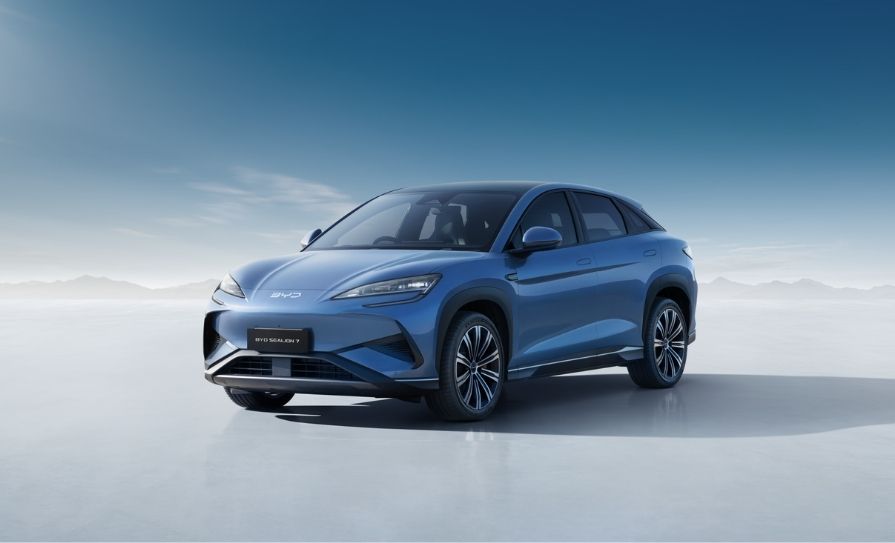
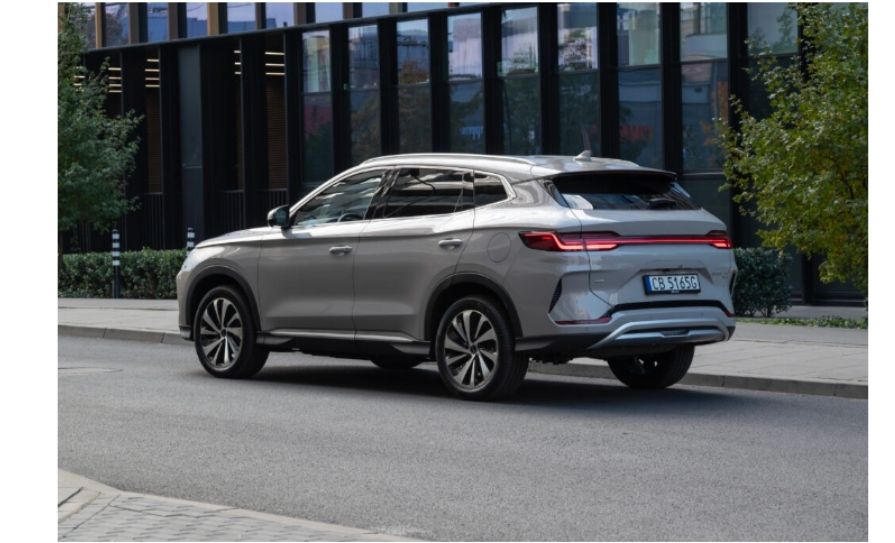
If you consider ‘new energy’ vehicles, which include hybrids, BYD is the fastest growing manufacturer by far in this class. The growth of the company has been simply exponential, and soon they will have to scrap their famous tagline – the biggest car company you’ve never heard of.
Another thing you will not have heard of is their 1,000-volt charger, which can recharge their vehicles at 2km per second. That’s 120km per minute – for all practical purposes, the same as an internal-combustion car. Expect a charger to be coming to a station near you, just don’t try holding your breath at the same time. And speaking of charging and range anxiety, one lady I spoke to who drove a BYD full-time told me her way of reducing “charging station anxiety” or “will it/won’t it charge my car” is to have four apps on her phone for different companies. Whatever works.
The growth of the company has been simply exponential, and soon they will have to scrap their famous tagline – the biggest car company you’ve never heard of
Torsion resistance
Another concept introduced to us was the torsion resistance of the car. Basically, it is the resistance to twisting. We were given the value of 40,000Nm for the Sealion 7. A Bugatti Veyron, an exceptional piece of engineering with its chassis made from carbon fibre, would have a value of about 60,000Nm. The Tesla model Y, its closest rival, has a value of 21,000Nm. By the way, cutting the roof from a car, such as Porsche’s Boxster, can halve the value compared to the equivalent tin-top (Cayman). In older convertible sports cars this was evident when parking with one wheel on a footpath, which would make a door difficult to open.
Anyway, the relevance today is that the higher the value, the more rigid the shell of the car, enhancing crash safety, and improving suspension isolation to allow it to do its work independently of the flex of the body. Hence, higher is better.
On the road
And this translated into how the Sealion drives. Although we had a dry week for the test, cornering felt like it was on rails. One characteristic of all electric vehicles is they will find grip wherever it is available. I got the feeling the Sealion didn’t have to search too hard, despite being a tall SUV. I also judged the suspension as firm, but felt it was a little fussy. However, recently, in Drogheda we have come to have some of the worst road surfaces in Co Louth. Other car companies have years of experience in developing suspensions, but as a new company, and certainly new to Ireland, I will give BYD leeway on this.
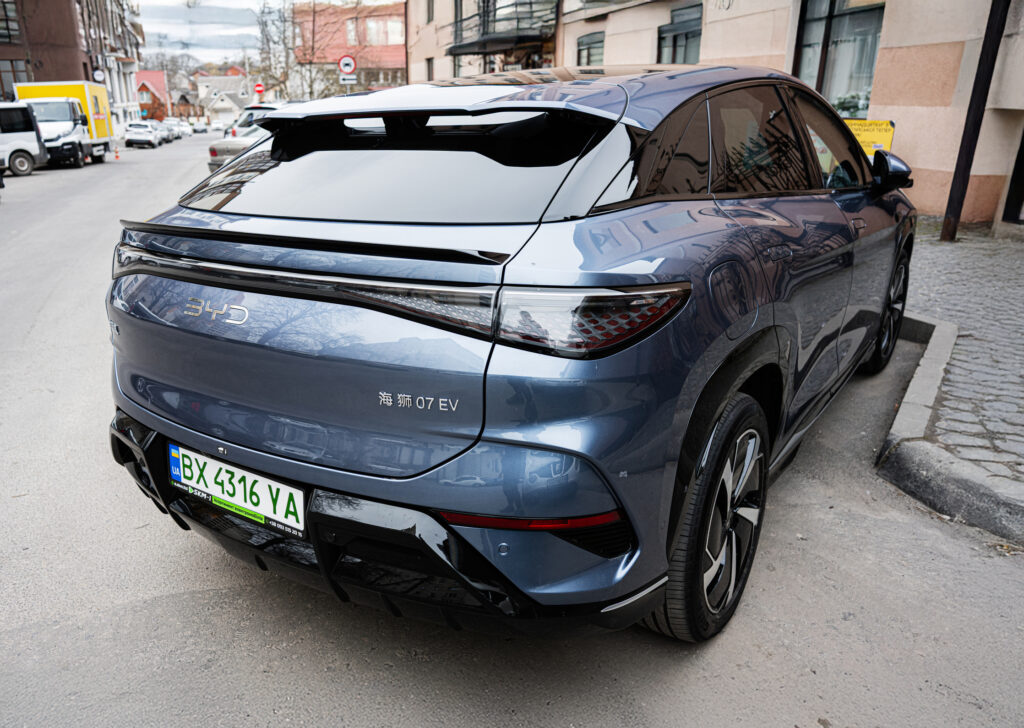
One common trait of electric SUVs is a high boot floor. But in view of its height, you will sit higher (160mm taller than the BYD Seal) and this gives more footroom in the already spacious rear. Boot size is 520 litres with the seats up. Lowering them yields 1,789 litres. In practical terms, I could get the bike in lengthways and only had to remove the bike’s front wheel. There is also a 58-litre front boot.
We were given the decibel rating for the Sealion and its nearest rival, and at about 100km/h there were only a few decibels between them, with both just under 70dB.
Now I know it is a log scale, but I don’t believe I would be able to detect a difference at that level. Take it from me, it is quiet inside. However, the radio is not great, which is odd because the sound system is otherwise excellent. I know I have said this before about BYD, but maybe if I keep saying it they will fix it.
Previously, I found the BYD driver-alerts a little overwhelming, but the volume appears to have been dialled well down and they are no longer as intrusive as before. A new addition is the camera facing the driver on the A-pillar. Spend a few seconds too long looking at the dash and an alert immediately appears telling you to get your eyes back on the road. Yawn once and you’re told to have a break.
Equipment
The Sealion 7 is generous with its standard equipment, including: 360-degree cameras; adaptive cruise control (the only one to have); traffic sign recognition; intelligent speed limit control; front and rear collision warnings; and cross-traffic alerts; high beam control; blind spot detection; automatic emergency braking; amongst many other items.
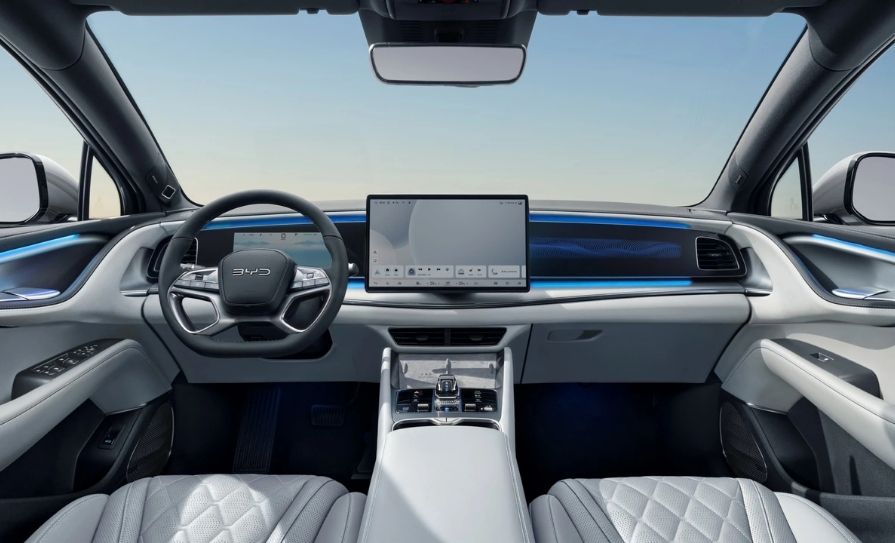
The basic model is called Comfort, with a single rear motor producing 230kW, or 308bhp. Engine torque is 380Nm, allowing it to reach 0–100km/h in 6.7 seconds with top speed of 215km/h. I was privileged to have the AWD version, which has another 160kW (215bhp), giving a combined figure of 390kW (522bhp) and 690Nm of torque and a 0–100km/h time of 4.5 seconds.
Two batteries are offered (82.5kWh and 91.3kWh), with two powertrain options giving range options from 456km (WLTP combined figure), up to 502km. Comfort and Design packages can be recharged at up to 150kW, (10–80 per cent in 32 minutes) with the Excellence model offering 230kW speeds (10–80 per cent in 24 minutes).
Priced at €49,125, the BYD Sealion 7 feels more luxurious and roomier than its US rival – and that was before they foolishly removed their indicator stalks.





Leave a Reply
You must be logged in to post a comment.