







It has been a decade now since Hyundai coined its ‘Ioniq’ model name. The first iteration was a five-door hatchback, offering hybrid, plug-in-hybrid and fully electric versions to allow buyers to choose how much electrification they were ready for in their lives.
Today, reflecting the continued push towards a zero-emissions future, the Ioniq badge is only used on pure electric vehicles (EVs), though the range is wider than ever, including the new Ioniq 3, the stylish Ioniq 6 saloon, and the big, family-friendly Ioniq 9 SUV. Before all those arrived, however, Hyundai introduced the Ioniq 5 and it has been gently updated ever since its launch in 2021. It remains a compelling option, competing in a busy sector of the marketplace.
Exterior design and image
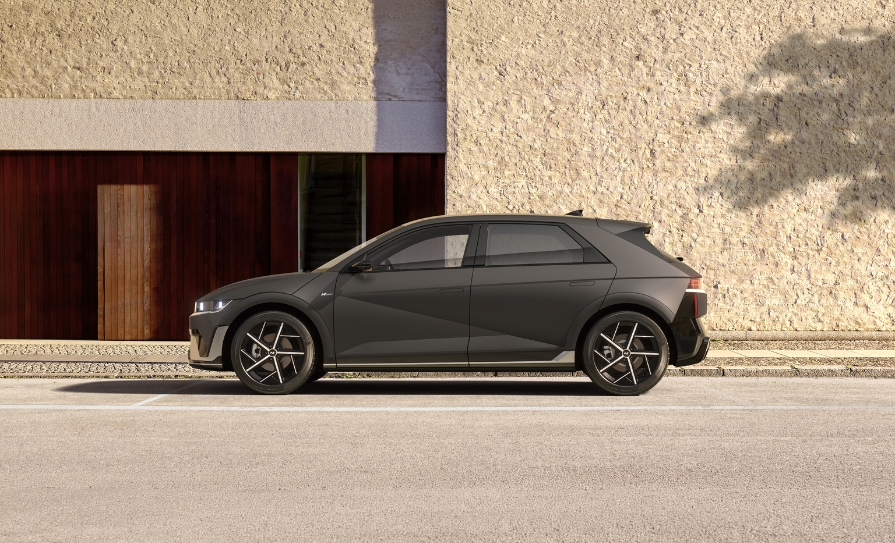
While the Ioniq 5’s size, interior space, and market positioning put it up against the bestselling EVs in the country, it’s not an easy body shape to pigeonhole. A glance at a photograph of the car on its own reveals it’s a five-door hatchback. But seen in person you’ll realise it’s a ‘super-sized’ hatchback with decent ground clearance and large wheels.
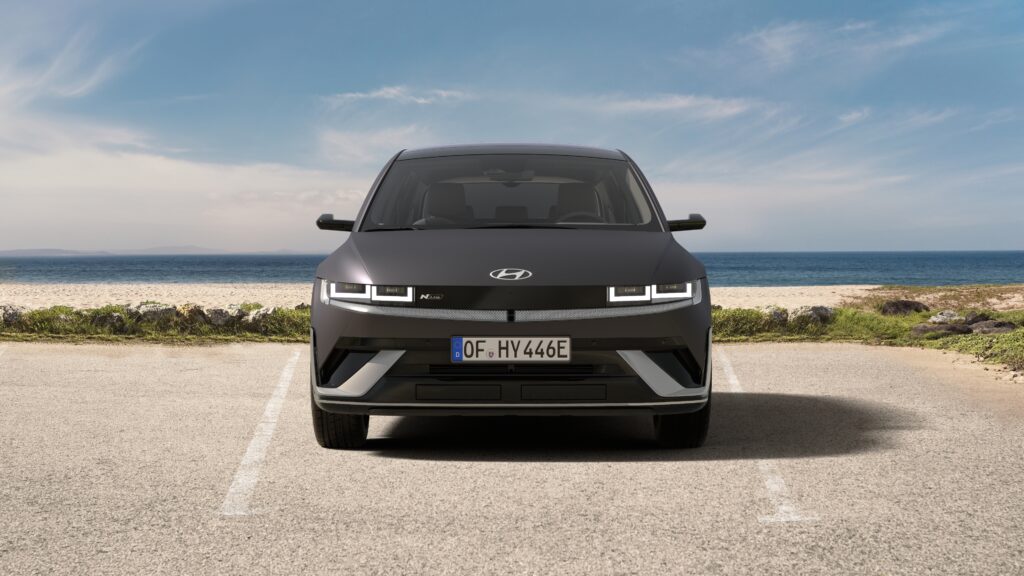
While some refer to the Ioniq 5 as an SUV, it has few rugged details and no pretence at off-road ability. We like to think of it as a crossover of sorts. It matters little what you refer to it as, but there’s no doubt it remains one of the most distinctive EVs on the road with a vaguely retro approach to its profile, mixed with high-tech ‘pixel’ LED lights front and rear that give it a unique appearance. Part of the evolution of the model was the introduction of a sportier-looking N Line variant, including bigger wheels and other detailing inspired by the high-performance Ioniq 5 N.
Interior and practicality
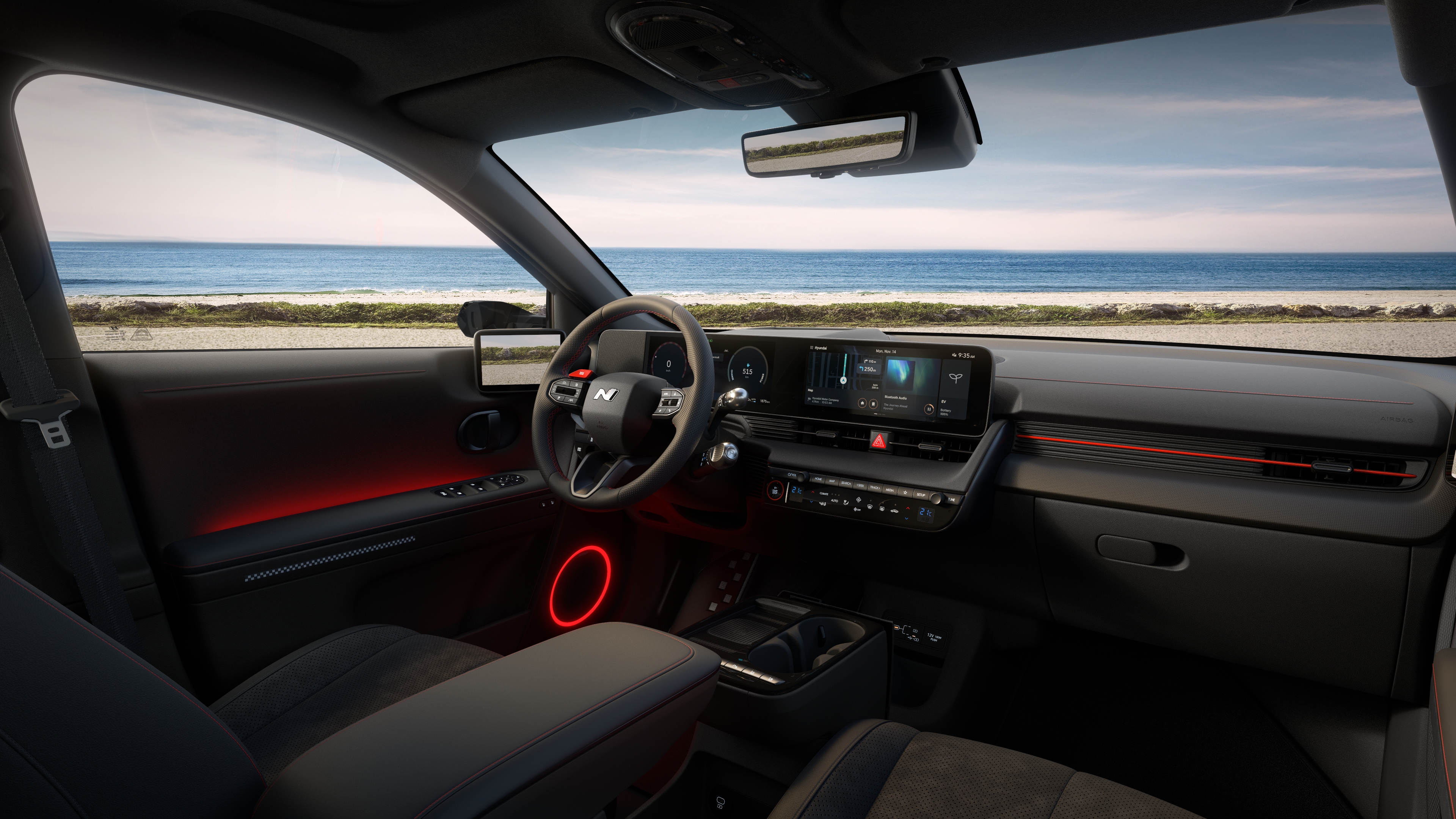
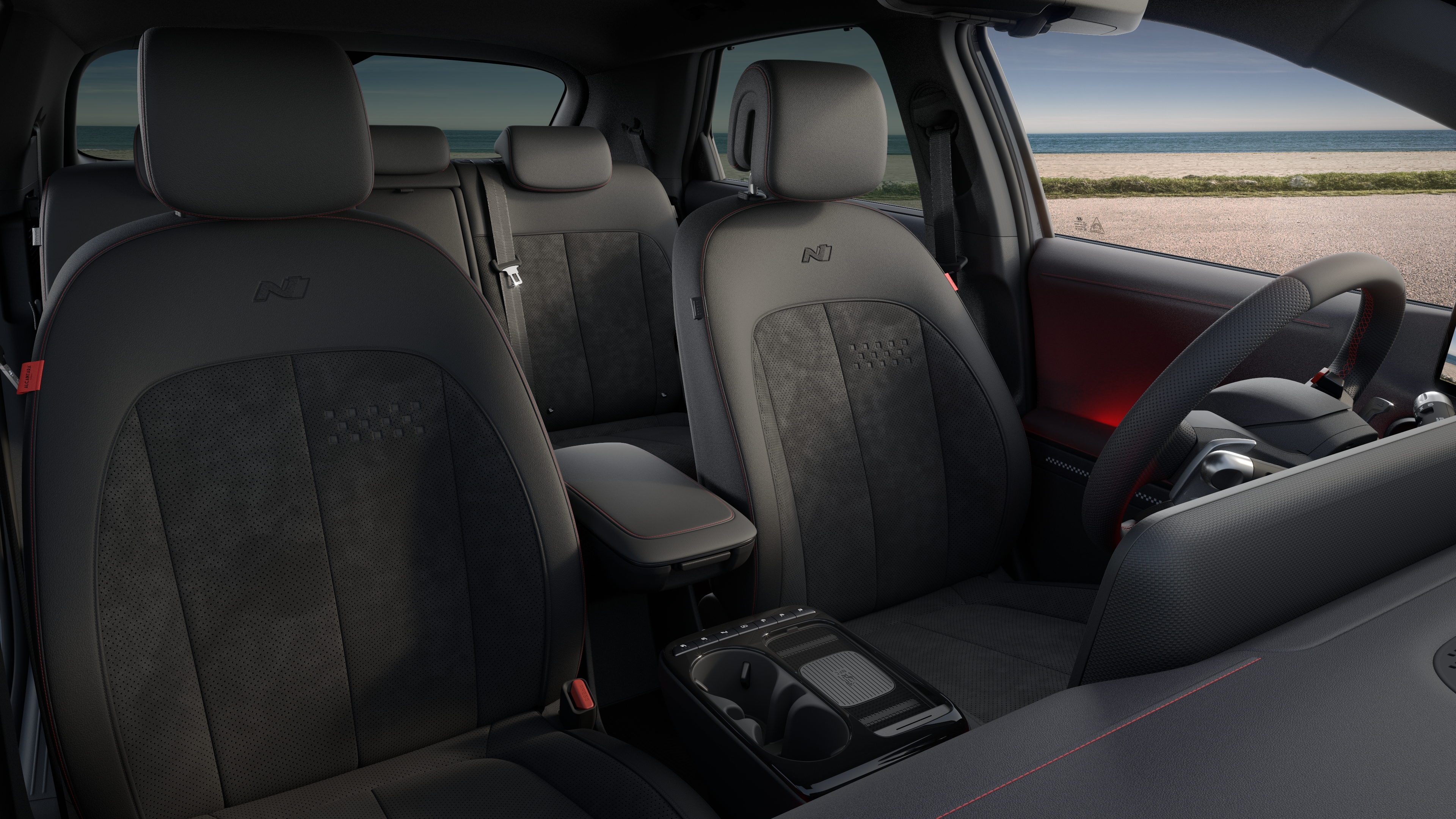
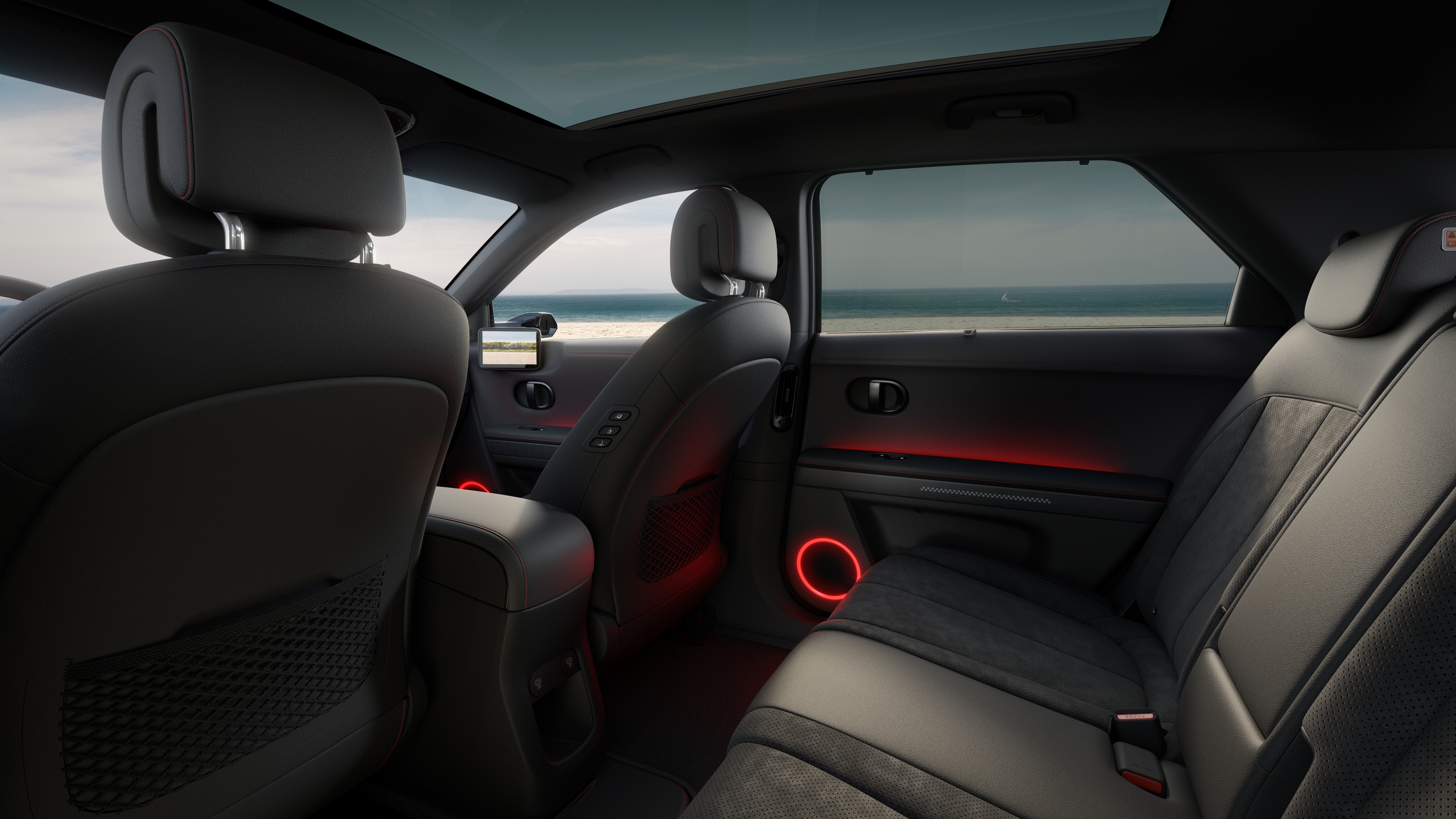
The cabin of the N Line model receives sporty seats, some red pinstriping, and a new steering wheel that is particularly good to hold. None of these items detracts from the core interior spaciousness and quality, however, as the Ioniq 5 remains a large and roomy car, no matter where you’re sitting.
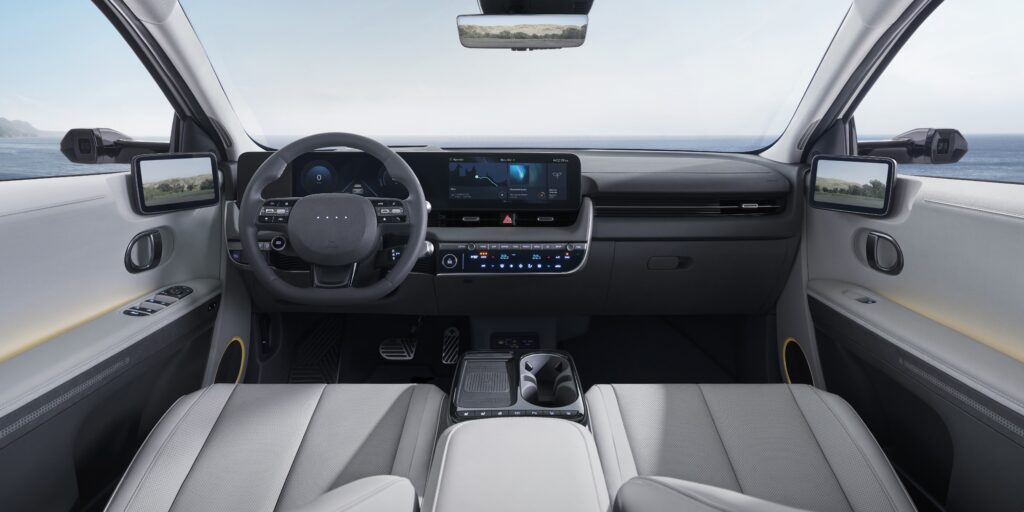
The materials used are of high quality, the switchgear is notably tactile and there’s loads of oddments space dotted around as well. We like how Hyundai has retained physical switchgear to complement the feature-packed touchscreen infotainment system – rather than relying on it – while there are many neat touches owners of the car will no doubt appreciate – such as the sliding centre console and the rubberised wireless charging pad for phones that stops the devices moving around.
Rear-seat accommodation is generous. While the sloping hatch limits how bulky an item you can get in the boot without folding down the back seats, at 520 litres with rear passengers in the car, it’s still a sufficiently sized space.
Driving experience
Just a single electric powertrain is available for the Ioniq 5 in Ireland, but don’t let that put you off. It uses an 84kWh battery pack and an 800-volt electrical architecture to enable rapid DC charging on suitably powerful public chargers. At its quickest, a 10 to 80 per cent charge can take as little as 18 minutes. That’s useful, of course, if you’re a high-mileage driver that relies on motorway charging. However, the majority of EV owners do most of their charging up at home on cheap night-time electricity tariffs, significantly cutting their motoring costs. Anyway, charging up won’t be too frequent as the big battery allows for an official range of up to 570 kilometres. That depends on which model you go for, as larger wheels reduce the range. The N Line car’s corresponding figure is 515km, for example. That’s still more than ample for most drivers.
And while the Ioniq 5’s electric motor makes modest outputs of up to 229hp and 350Nm of torque, it’s a subtly good car to drive. The motor is mounted on the rear axle, so the steering is uncorrupted for a start. That works with the low centre of gravity, inherent balance, and smoothness of the electric powertrain to make it quietly satisfying from behind the wheel. It’s refined and quiet as well, of course, yet it’s also a car that its owners will enjoy driving. There are various driving modes to explore, plus the option to vary the level of brake energy regeneration to your liking. We found it’s perfectly good left in its default settings.
What else could you spend your money on?
Priced from €42,295, the Ioniq 5 is really good value for money. It ostensibly goes up against the likes of the VW ID.4 and Skoda Enyaq, not to mention the curvy Nissan Ariya and Renault’s electric Scenic. And that’s before you consider a wealth of new entrants from MG, BYD, and more. Undoubtedly, competition is fierce at this price point, though the Ioniq 5 makes a good case for itself by mixing a decent range with fast charging, a generous specification and the polished driving experience with a high-quality feel. This shouldn’t be a surprise given how long Hyundai has been working on the Ioniq formula.
While some refer to the Ioniq 5 as an SUV, it has few rugged details and no pretence at off-road ability
SPECS FOR HYUNDAI IONIQ 5 N LINE
| Specs for Hyundai Ioniq 5 N Line | |
|---|---|
| Engine | Rear-wheel drive. Electric |
| Power | 229hp |
| Torque | 350Nm |
| 0-100km/h | 7.5 seconds |
| Range | Up to 570km, real world estimate 420km |
| Battery | 84kWh |
| Luggage capacity | 520 litres, 1.6MT braked towing |
| Price | Entry from €42,295 |








Leave a Reply
You must be logged in to post a comment.