NOTE: By submitting this form and registering with us, you are providing us with permission to store your personal data and the record of your registration. In addition, registration with the Medical Independent includes granting consent for the delivery of that additional professional content and targeted ads, and the cookies required to deliver same. View our Privacy Policy and Cookie Notice for further details.
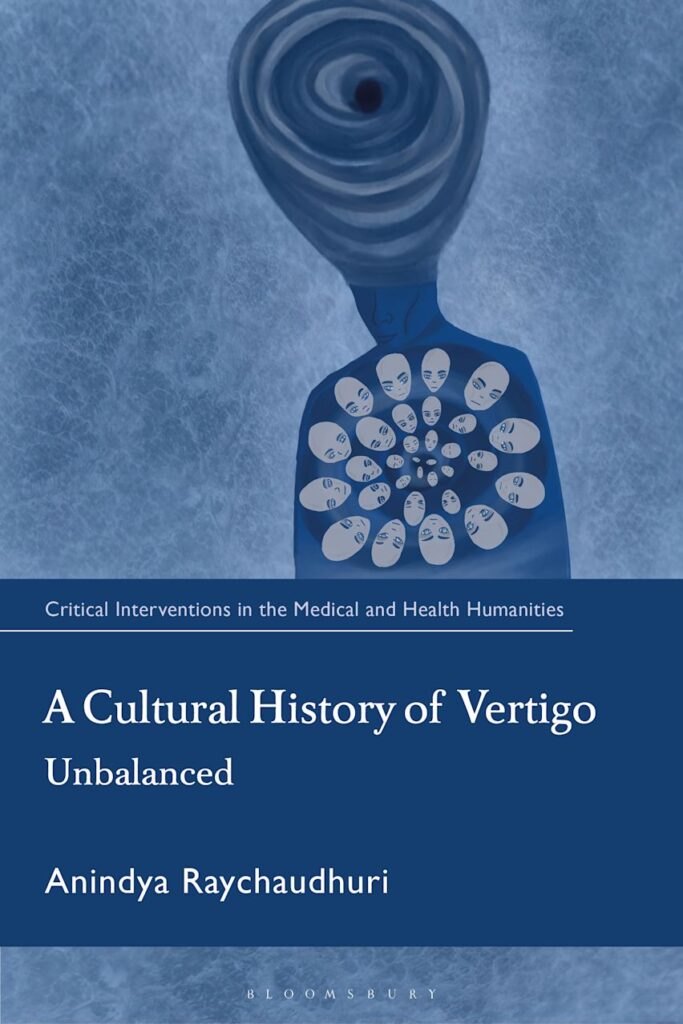
It is understandable that the busy clinical schedule of medics might disincline some from setting aside time for contemplation of the life-enhancing interface between medicine and the arts, but it can be worth the effort. Virginia Woolf’s dad Sir Leslie Stephen (1832–1904) wrote that genius is “a capacity for taking trouble”. So congratulations to Bloomsbury Academic “for taking trouble” to publish a series on Critical Interventions in the Medical and Health Humanities, to which A Cultural History of Vertigo is the latest welcome addition.
Vertigo
Author Dr Anindya Raychaudhuri (PhD) is Senior Lecturer in English at the University of St Andrews, Scotland, and he speaks with authority on the topic because during 2020 “I would experience multiple episodes of acute vertigo and be diagnosed with Ménière’s disease, a condition of the inner ear that manifests itself in tinnitus, hearing loss, and episodic vertigo”. Despite having a wealth of personal experience to draw on, Raychaudhuri mines his own medical history sparingly, possibly mindful of Robert Louis Stevenson’s advice that: “There is but one art – to omit.” The result is a finely wrought – dare one say “balanced”? – well-edited work of compression, focus, and learning. Spanning some 210 pages, seven chapters separate an informative introduction and a thought-provoking conclusion, followed by 15 pages of references.
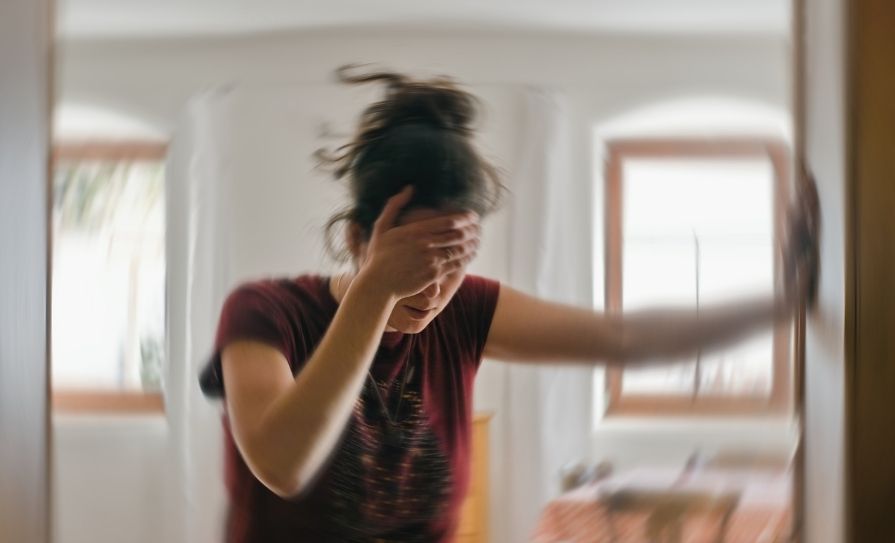
Citing the UK’s National Health Service’s definition of vertigo as “the feeling that you or everything around you is spinning”, Raychaudhuri reports that “the initial feeling is not dissimilar to seasickness”. As for prevalence, he cites evidence showing “the lifetime prevalence of ‘dizziness’ (comprising both vertigo and non-vestibular dizziness)… to be 23 per cent in a large population-based survey”, and while acknowledging that most contemporary accounts distinguish between dizziness and vertigo, “the line between dizziness and vertigo is blurred for those who live with both symptoms.”
Raychaudhuri asks what it is like to live a life without balance; how medical science has interpreted balance and its impairment over the years; and how literature and culture evoke and contest the tropes of being unbalanced. All the answers enrich our understanding.
Structure
Three distinct but connected strands provide the framework for his exploration. First, the evolution of medical opinions of vertigo, from antiquity to the present; thus, Theophrastus of Eresus, writing in the third Century BC discussing “the complicated and contradictory origins of vertigo”, to contemporary medical scholarship where “there is a distinct lack of clarity when it comes to definitively diagnosing the various conditions that could give rise to vertigo.” Second, 31 detailed interviews focus on people’s disparate experiences, with, for example, one interviewee Nasim Jafry – author of an acclaimed fictionalised account of her life with myalgic encephalomyelitis (ME) The State of Me (2008) – observing: “My dizziness is in terms of ME, it’s known as orthostatic intolerance… it’s to do with a fall in blood pressure and blood volume. It’s very complicated and some people have it so severely they can’t sit up.” Third, Raychaudhuri considers how literature and culture have represented, constructed, and evoked vertigo. He delves into prose, poetry, cinema, visual art, and video games to try and “understand the polysemic [the fact of having more than one meaning] nature of vertigo, and the ways in which these meanings are transformed through the process of metaphorisation”.
Raychaudhuri combines apparently disparate fragments of vertigo-related narratives into a uniform edifice. But its unity has not been imposed by the author; the unity is already there, and the author’s skill is in allowing readers to discover it for themselves. And despite what some might consider to be esoteric excursions into hermeneutics, vertiginous geographies, and vertigo-as-metaphor, Raychaudhuri inserts grounding reminders that his condition is so challenging that it can, quite literally, bring him down to earth. For example, while Christmas shopping for his young son in 2021, by the time Raychaudhuri reaches the toyshop checkout an overstimulating combination of noise, bright lights, and repeating box patterns makes him unsteady and disorientated. On reaching the car park, he realises that he is unfit to drive and a few minutes later “I am on my hands and knees next to the bin, violently sick, and clinging on as the world spins round and round”. Reassuringly, he is rescued by obliging friends.
Dense with nuggets of information, knowledge, and wisdom, and with philosophical insights scattered throughout, this book rewards diligent reading, with chapter titles like ‘We can’t just go to McDonald’s: Ingestion, expulsion, and abject vertigo’ pulling one in. A Cultural History of Vertigo is an invaluable contribution to the medical humanities and a fine work of scholarship.
Dense with nuggets of information, knowledge, and wisdom, and with philosophical insights scattered throughout, this book rewards diligent reading












Leave a Reply
You must be logged in to post a comment.