








New guidelines and fresh insights from the RCSI Millin Meeting reveal a specialty undergoing rapid innovation and significant change. David Lynch reports
Surgery in Ireland is facing major infrastructural changes with the development of elective hospitals and surgical hubs, while also grappling with the need for a larger workforce. Globally, the specialty is in an intense period of flux, driven by innovations in robotics, artificial intelligence (AI), and the evolving role of the surgeon-scientist in modern practice.
This particular role was discussed at the recent annual Millin Meeting in the RCSI, held on 14 November. The theme of the meeting was on shaping future surgical research and training. Speakers emphasised the importance of integrating research discovery with clinical practice as part of educating the next generation of surgeons.
Supporting surgeons
To this end, the RCSI launched a new report, Supporting Surgeons in Ireland, at the event. The document examines the College’s existing support structures and sets out recommendations designed to strengthen and “future-proof these supports” for surgeons throughout their careers.
“I suppose we know we have been offering a lot of different supports for surgeons over time,” RCSI President Prof Deborah McNamara told the Medical Independent (MI) following her opening address. “[But] we haven’t ever gathered all of that information in one place.”
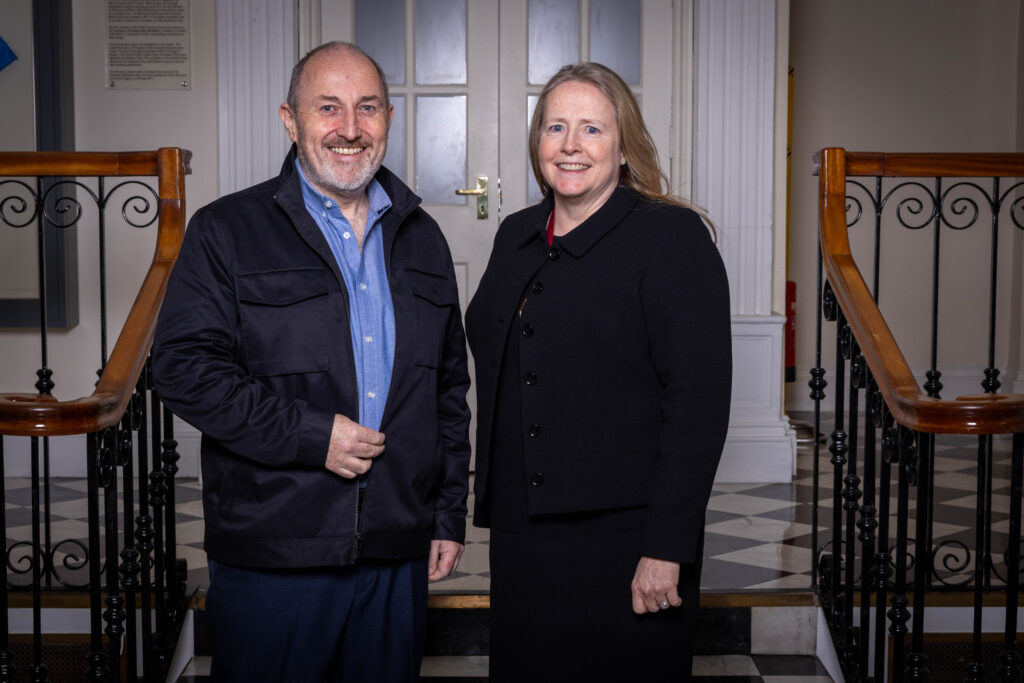
“Often, what can happen for a surgeon in practice is that they might need some sort of support, but not understand that it is already available. Or where they can access it. So, I think the most important thing is that individual surgeons can access this document and see the whole range of services that are available right across all their career stages.”
Key among the report’s recommendations is the importance of having a structured, accessible and sustainable mentorship framework in place, as well as appropriate leadership training at different stages of the training pathway. A further recommendation is to maintain and evolve the delivery of high-quality continuing professional development activities that enable NCHDs to achieve competence in various procedures and examinations, and support practising surgeons in maintaining and enhancing their skills.
“I was very keen to make sure that the wellbeing services that RCSI offers… are widely known in the surgical community,” said Prof McNamara. “Because people are sometimes reluctant to seek help when they need it. So, I felt that was a very important part of this journey and make certain that among all the stakeholders that we consulted that we were responding to the needs they had.”
I was very keen to make sure that the wellbeing services that RCSI offers…
are widely known in the surgical community
The new RCSI document looks at supports across a surgeon’s entire career, including in the later years of their working life.
A year ago, HSE National Doctors Training and Planning (NDTP) published its Surgery Medical Workforce in Ireland 2024–2038. Among the issues it highlighted were the large number of surgeons due for retirement and the particular challenges faced by surgeons late in their career if they want to remain in the profession (see panel p6).
Regarding ‘older surgeons’, the NDTP noted the importance of retention in the face of an ageing workforce and the possible loss of valuable clinical and educational expertise. It recommended that less onerous on-call commitments for those consultants approaching retirement age should be made to encourage them to remain in the workforce. Implementing the recommendation, according to the NDTP, would ensure that valuable clinical and training expertise is maintained within the workforce for longer. This is something that will be required as the training numbers increase.
“Yes, I think that is a very important point,” Prof McNamara told MI when asked about the NDTP document. “The NDTP report, as far as I recall, showed the average age of retirement of a consultant is around 62 years. So, when you look particularly in surgery, this is a discipline that requires a long [period of] training.
“That means the active and productive working life [of a surgeon] in the public health service is probably in the region of 20 to 25 years. We make a huge investment in the training of those doctors, so I think it is really important that we actually try to ensure that those doctors are actually retained in the service.”
In looking at these supports for surgeons, the document Supporting Surgeons in Ireland is organised around the different stages of a surgical career.
“I think it would be valuable for the HSE to see this document, and, hopefully, it will support their ambition to retain surgeons, and show how we can retain their skills, particularly in areas of training to help facilitate the next generation,” she added.
Prof McNamara said such engagement is important to allow older surgeons “bring that kind of generational experience” to younger doctors. She highlighted the situation in the UK where pension regulations have led to consultants across all specialties retiring early. She said she would not like to see a similar situation in Ireland.
“We would be losing a huge resource in our public health service, of some of our most experienced doctors.”
Prof McNamara added that the HSE could “consider alternative [working practices] for consultants in the later stages of their career to ensure that Irish patients can benefit from their expertise, but also make the careers sustainable for a surgeon in their sixties and seventies”.
The Millin Meeting – named in honour of former RCSI President Mr Terence Millin – brought together surgeons from all specialties to share expertise and innovation.
Innovation
The opening keynote address was on innovations in surgical trials methodology, and was delivered by Prof Declan Devane, Professor of Health Research Methodology and Deputy Dean of the College of Medicine, Nursing and Health Sciences, University of Galway.
“I think for me, surgical trials are the bedrock of how we take decisions about what treatments we offer patients, or what treatments patients may wish to choose,” Prof Devane told MI following his address.
“They tell us what treatments work and what doesn’t work and what might be safe and what might be harmful. Without good trials we won’t have that information to make good decisions.”
He said that it is important to ensure “we do those trials really well”.
“That they are planned really well, conducted really well, analysed really well, and reported really well.”
He added that the healthcare community needed to “look at the things we do in clinical care that we take for granted and step back and ask ourselves the question ‘what is the evidence base underpinning the things that we do?’”.
“There are many areas where additional trials are needed.”
AI
On the future impact that AI may have on surgical trials in Ireland, Prof Devane struck a note that was both optimistic and cautious.
“I think AI has absolutely amazing potential to increase the efficiency in which we do lots of things,” he said.
This ranges from the “daily productivity” of surgeons to the design, conducting, and reporting of clinical trials.
Prof Devane said the source of his “caution” is that “there are many examples in healthcare where we implemented things into practice and care interventions for patients, which we assumed would improve patient outcomes”.
“But fast forward twenty or thirty years we found out, through randomised trials, that has not been the case,” he said.
“I would urge us to ensure that we have adequate governance around AI, that we make sure that we have a human in the loop and, critically, that we implement AI into clinical practice within the context of robust evaluations, before we mainstream it.”
The 48th Millin Lecture, titled ‘Personalised oesophageal cancer care: From micro, to macro, to reality’, was delivered by Prof Jarlath Bolger, Consultant Upper GI Surgeon and Associate Professor of Surgery, Beaumont Hospital, Dublin. Prof Bolger’s lecture explored recent advances in the treatment of oesophageal cancer care, outlined developments from the molecular level through to surgical interventions, and examined how surgeons can embrace the move towards personalised care.
In her keynote address, Prof Shirley Potter, RCSI National Training Programme Director for Plastic and Reconstructive Surgery, provided practical insights and guidance about how to balance the management of high-quality research with the clinical commitments of an early career consultant. Prof Jennifer Cleland, Lee Kong Chian School of Medicine, Singapore, and Royal College of Surgeons of Edinburgh, Scotland, presented her research on different perspectives in the development of surgical training.
In the final keynote of the day, Prof Mary Dixon-Woods, Director of the Healthcare Improvement Studies Institute, University of Cambridge, UK, explored an evidence-based approach to improvement and innovation in surgery.
“The Millin Meeting is a celebration of surgical scholarship, leadership, and collaboration,” said Prof McNamara. “It provides a unique opportunity for our community to reflect on how research, training, and clinical excellence intersect in shaping the future of surgical care.”
An exclusively elective future
The future of surgery in Ireland will be greatly impacted by the new surgical hubs and elective hospitals.
RCSI President Prof Deborah McNamara told the Medical Independent (MI) the College welcomed the elective surgical programme, including the roll-out of surgical hubs and elective hospitals.
Prof McNamara congratulated the previous Minister for Health Stephen Donnelly and the current Minister Jennifer Carroll MacNeill for “pushing [these initiatives] through”.
“One of the biggest frustrations for surgeons is that we can’t deliver the care that we need for patients and we know that there are many conditions where patients actively deteriorate if they remain on waiting lists for long periods of time,” she told MI. “That happens all the way across life from paediatric populations right through to later life. In Ireland, at present, we have inadequate supply of access to elective surgery.”
She added that many patients require surgery that can be easily performed in an ambulatory setting. However, emergency department pressures mean that most ambulatory settings in bigger hospitals are no longer operational.
The introduction of the elective hospitals will create “a very planned way [in] how surgeons can deliver care”.
But Prof McNamara did warn that there remained “a huge need” for the health service to focus on patients who require a longer stay in hospital.
“The patient who needs all of the resources of a bigger hospital in order to get the surgical care that they need,” she said. “And we have major concern about that, I’ll be honest.”
“Because we find that patients are being cancelled frequently, they’re not having a good experience. And we are wasting the time and investment that the State is making into scheduled surgical care.
“The elective surgical hubs and elective hospitals will go a long way to address the challenges in elective surgery. But for some of the most complex, elective operations, they won’t address the totality of what we need. They need to be taken into consideration alongside interventions to protect surgical beds and theatre capacity in our [existing] bigger hospitals that have emergency departments.”
As part of Sláintecare, the Government committed to establishing new standalone national elective hospitals (also referred to as elective treatment centres) in Cork, Dublin, and Galway.
At the site selection stage, four locations were selected: Merlin Park Hospital, Galway, St Stephen’s Hospital, Cork, Connolly Hospital, Dublin, and the current Children’s Health Ireland at Crumlin site.
According to a HSE spokesperson, the hospitals in Cork and Galway are being progressed first. The design team are actively working on the design for these hospitals, including carrying out necessary surveys and site investigations to inform the design as it develops toward planning permission applications.
“A key issue emerging for the Cork site is the road access and the HSE continues to actively engage with Cork City Council to find a solution,” the spokesperson told MI.
In relation to the two Dublin sites, the demand modelling and validation are underway, along with the assessment of current and planned infrastructure for ambulatory care in the catchment area to underpin the scope and scale required.
But while planning is underway, “a timeline is yet to be confirmed,” the spokesperson added.
Planning permission applications are the next significant milestone and the HSE is working to lodge applications for Cork and Galway elective hospitals in 2026. “This is subject to a positive resolution of the road access issue at the St Stephen’s Hospital site in Cork and subject on continued positive engagement with Galway City Council.”
The spokesperson added that the HSE cannot confirm the estimated construction costs while planning is still underway.
In order to accelerate the elective care programme, the HSE is addressing day case waiting lists through the development of the new surgical hubs in each health region across the country.
A total of nine HSE surgical hubs are at various stages of development nationally, two of which are operational: Reeves Day Surgery Centre, Tallaght University Hospital, Dublin, opened in late 2020, and HSE Surgical Hub South Dublin, opened at Mount Carmel in February 2025. Construction of the hubs in north Dublin, Galway, Cork, Limerick and Waterford “is well advanced and each of these hubs are due to open on a phased basis in 2026”.
On 28 July 2025, the Minister for Health announced that two further hubs would be developed in Sligo and Letterkenny. The HSE is proceeding with the planning of both sites.
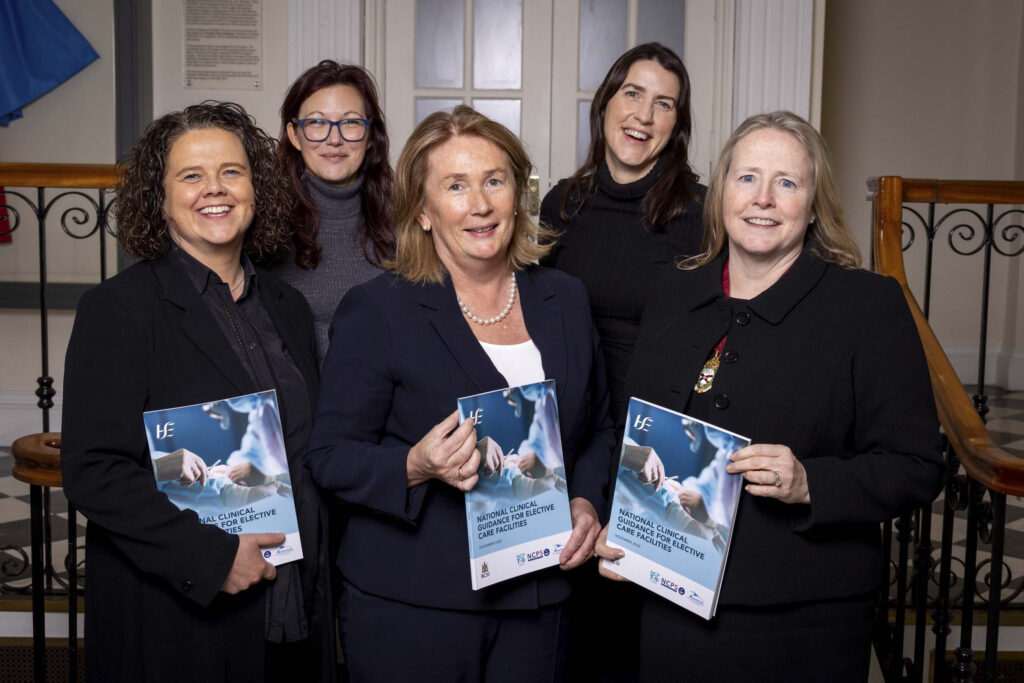
Reflecting the current focus on developments in elective care, the new National Clinical Guidance for Elective Care Facilities document was also launched at the RCSI Millin meeting.
The College welcomed this publication, which it described as a comprehensive resource designed to support healthcare professionals in delivering safe, high-quality, and efficient elective surgical care.
Developed by the RCSI for the HSE, the guidance provides evidence-based guidance covering all stages of the surgical journey, from pre-operative assessment and patient optimisation, to discharge planning and follow-up.
“It reflects the latest best practice in governance, patient safety, and multidisciplinary coordination, promoting a consistent, high standard of care across surgical specialties and hospital settings.”
According to the RCSI, elective surgery is a “cornerstone of modern healthcare”. The move by the Department of Health to separate scheduled from unscheduled care by building elective care facilities “will increase surgical capacity and support specific procedures to be planned in advance, reducing the risk of cancellation”.
Dr Colm Henry, Chief Clinical Officer, HSE, said: “Elective surgery is essential in ensuring patients receive timely, planned treatment that restores health and quality-of-life.”
“The clinical guidance provides a practical and comprehensive framework for delivering this care safely and efficiently. It reflects the shared commitment of the HSE and the RCSI to improving patient experience, enhancing capacity, and ensuring that clinical excellence and sustainability remain at the heart of our health service.”
Prof McNamara said the clinical guidance represents another important step in our collective effort to enhance the quality and consistency of surgical care in Ireland.
“Elective surgery is vital to patient wellbeing and to the sustainability of our health services,” she added, “by supporting evidence-based practice, multidisciplinary teamwork, and continuous improvement, this guidance will empower surgical teams to deliver the best possible outcomes for patients undergoing elective surgical procedures.”
The National Clinical Guidance for Elective Care Facilities provides guidance on patient and procedure suitability, in addition to clinical governance and safe elective care pathways.
It also contains advice on areas such as: Screening; patient-initiated reviews; criteria-led discharge; evidence-based standards for pre-operative optimisation; intra-operative safety, and post-operative recovery and safe discharge.
How many surgeons are needed?
As reported in the Medical Independent this time last year, a “very sizeable increase” in the number of surgeons working in Ireland is required by 2038 to keep pace with demographic changes and patient needs.
That was according to the National Clinical Lead of the HSE National Clinical Programme for Surgery.
Mr Ken Mealy, a Consultant General Surgeon, was speaking at the HSE National Doctors Training and Planning (NDTP) workforce conference in November 2024. Mr Mealy launched the HSE National Doctors Training and Planning report Surgery Medical Workforce in Ireland 2024–2038.
The NDTP said that the number of consultant surgeons working in the public and private sectors would have to increase from approximately 673 in 2024, to 1,107 by 2038.
The NDTP document noted that a significant increase in recruitment to postgraduate training programmes and in consultant numbers will be required in the coming years. This expansion is needed to deliver levels of care “appropriate to the future population of Ireland”.
The report stated this increase should occur in conjunction with a reduction in the number of non-training scheme doctor (NTSD) posts in the healthcare system.
“Currently, the NDTP is working with a number of training bodies and clinical sites across medicine/surgery to identify NTSD posts that can be converted to training posts,” according to the report.
The report projected that if the recommendations were implemented, the ratio of consultant surgeons per 100,000 population would increase from around 13.2 in 2023 to 16 by 2030, and 19.5 by 2038.
In his foreword to the report, Mr Mealy also noted that there were many uncertainties in predicting workforce projections. These included the uncertainty in future predictions for private practice; the projected role expansion within nursing and possible development of physician associate and other healthcare roles; the persistent challenge in improving the consultant-to-NCHD ratio; and addressing changes in rostering and shift patterns, and less than full-time working.
The report noted that it is Government policy to increase flexible working arrangements for doctors. It recommended that more focus be given to the development of flexible work practices in surgery in order to promote work-life balance, wellbeing, and retention in the surgery workforce.










Leave a Reply
You must be logged in to post a comment.