







2025 was a catastrophic year for healthcare professionals in global conflicts and saw the emergence of a new term to describe the calculated targeting of medical workers. Bette Browne reports
The chilling term ‘healthocide’ was coined by health researchers in 2025 to describe what they view as a new strategy in war – the systematic and intentional targeting of medical workers and facilities and the removal of people’s access to healthcare.
The term has been defined as a coordinated military strategy involving the killing of clinicians, bombing hospitals, blocking ambulances, and disrupting medical supply chains, aimed at eliminating the delivery of healthcare to people. The word aims to draw parallels with genocide, by framing deliberate attacks on healthcare workers as crimes against humanity, which demand stronger legal protections under international humanitarian law.
It was coined by researchers at the American University of Beirut in a commentary in the journal BMJ [British Medical Journal] Global Health on 5 August 2025. They believed the traditional phrase “attacks on healthcare” failed to describe the intentional and systematic nature of the attacks on medical professionals. The authors proposed the adoption of the word ‘healthocide’ to highlight the urgent need to address what they see as flagrant violations of international law.
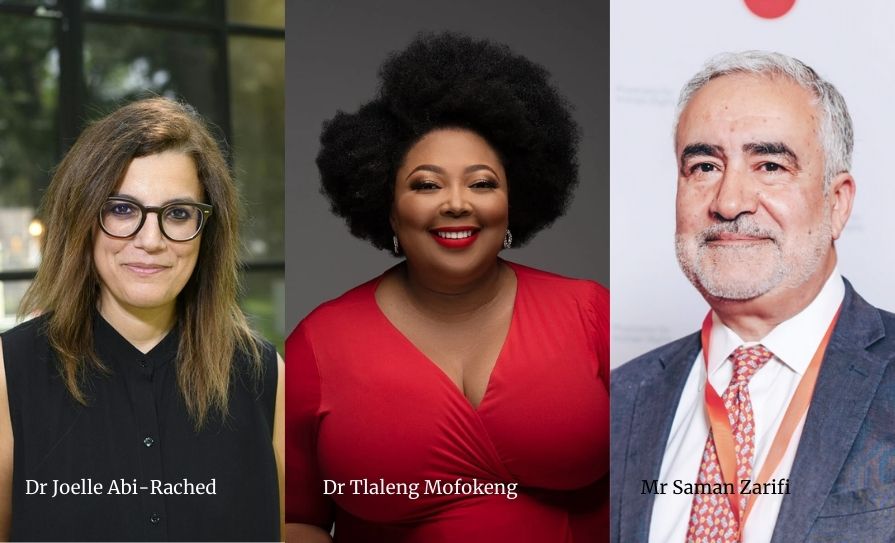
“What we are witnessing today is more pernicious than mere normalisation of such attacks, something that could be described as ‘healthocide,’ the deliberate killing and destruction of health services and systems for ideological purposes,” wrote Dr Joelle Abi-Rached, Professor of Medicine, American University of Beirut, Lebanon, along with researchers Ala I Sharara and Mona P Nasrallah of the Department of Internal Medicine and Firass Abiad of the Department of Surgery at the University.
What we are witnessing today is more pernicious than mere normalisation of such attacks, something that could be described as ‘healthocide,’ the deliberate killing and destruction of health services and systems for ideological purposes
“War has devastating consequences on healthcare, with attacks becoming normalised and health weaponised,” they wrote, emphasising the need for accountability and the reaffirmation of medical neutrality to protect lives.
“While the concept (of medical neutrality) can be politically fraught, the fundamental principle that healthcare facilities must never be targeted in conflict is non-negotiable and cannot be forsaken.”
Some suggest that the term ‘healthocide’ may be overly dramatic, while others believe it serves to highlight the horrific scale and intentional nature of the attacks, which require the same level of global condemnation and legal accountability as other war crimes. The researchers argue that these attacks on healthcare workers and healthcare infrastructure go far beyond isolated incidents and are part of a militarised strategy to dismantle a society’s ability to survive and recover.
Gaza
“By ‘healthocide’ we also mean the fragmentation or destruction of [healthcare] through the deliberate dismantling or devastation of a population’s health and wellbeing in its entirety,” according to the article. Dr Abi-Rached wrote that “Gaza is the paragon of ‘healthocide’”.
While the researchers refer to other conflicts in Ukraine, Sudan, and Syria, they focus mainly on the impact of armed conflict on healthcare in Lebanon and Gaza.
“Both in Gaza and Lebanon, healthcare facilities have not only been directly targeted, but access to care has also been obstructed, including incidents where ambulances have been prevented from reaching the injured, or deliberately attacked. The most shocking such incident was the systematic killing and mass burial of 15 paramedics in Gaza on 23 March 2025,” they wrote.
“The UN accused Israel of deliberately killing the humanitarian workers and demanded answers and accountability. What is becoming clear is that healthcare workers and facilities are no longer afforded the protection guaranteed by international humanitarian law.”
According to the UN Office for the Coordination of Humanitarian Affairs, more than 1,500 medical workers have been killed in Gaza since 7 October 2023, when Israel launched an attack on Hamas after they killed about 1,200 people in Israel and took 251 hostages. Since then, an estimated 60,000 Palestinians have been killed in Gaza, among them some 20,000 children. A ceasefire came into effect in October 2025.
However, killings are still being recorded and, according to humanitarian agencies, the majority of the population continues to live in dire conditions amid a decimated healthcare infrastructure.
Israel has sought to justify attacks on health infrastructure by citing the presence of Hamas combatants, weapons, or military command centres within or beneath hospitals.
But it has rarely provided compelling evidence, and has refused to allow foreign journalists into Gaza to report on the situation.
The World Health Organisation (WHO) determined that in the 22 months after 7 October 2023, roughly half of all attacks worldwide on healthcare occurred within the Palestinian territories, which include Gaza.
Silence in the face of such attacks implies complicity and approval, and undermines international humanitarian law as well as medical and professional ethics, according to Dr Abi-Rached and her colleagues.
Normalising or excusing ‘healthocide’ sets a dangerous precedent, they argue, as it emboldens future violations and erodes the principle of medical neutrality, which is essential for ensuring impartial and humane care during conflicts.
“Medical neutrality is not apolitical. For us it means standing with humanity, social justice, and health-enabling policies.” The actions medical practitioners must take include advocating for enforcement of justice and international humanitarian law, and documenting and exposing abuses to medical neutrality by both state and non-state actors.
What has become particularly clear in recent years, especially in Gaza, is that violence targeted against healthcare facilities and workers has become an increasingly reported tactic in modern warfare, according to human rights groups. Healthcare workers and facilities are no longer guaranteed protection under international humanitarian law and people are intentionally left without access to medical care.
UN
Indeed, back in August, a UN group of experts used the term ‘medicide’ when describing the destruction of Gaza’s healthcare system by the Israel Defence Forces, which they accused of deliberately attacking and starving healthcare workers, paramedics, and those in hospitals in order to wipe out medical care in the besieged enclave.
“As human beings and UN experts, we cannot remain silent about the war crimes committed before our eyes in Gaza,” said Dr Tlaleng Mofokeng, UN Special Rapporteur on the right to health, and Ms Francesca Albanese, UN Special Rapporteur on the situation of human rights in the Palestinian territory.
“In addition to bearing witness to an ongoing genocide we are also bearing witness to a ‘medicide’, a sinister component of the intentional creation of conditions calculated to destroy Palestinians in Gaza which constitutes an act of genocide,” they declared.
“Health and care workers have been continuously targeted, detained, tortured and are now, like the rest of the population, being starved,” the experts said. “Deliberate attacks on health and care workers, and health facilities, which are gross violations of international humanitarian law, must stop now.”
Safeguarding Health in Conflict Coalition
But such attacks on healthcare are also increasing in other global conflicts. Worldwide, at least 12,944 incidents of conflict-related violence and obstruction of healthcare facilities were recorded from early 2021 to late October 2025, according to Insecurity Insight, which collects data for a group of over 30 international non-governmental organisations called the Safeguarding Health in Conflict Coalition (SHCC).
The latest SHCC report, Epidemic of Violence in May 2025, found that attacks peaked at 3,891 in 2024. This was up from 3,217 in 2023, a total of 2,315 in 2022 and 1,602 in 2021. The number of attacks in 2024 marked a staggering 62 per cent rise from 2022.
“On average, in 2024, healthcare came under attack 10 times a day across the world’s war zones. Each of these assaults brings terror, trauma, and in too many cases, injury, destruction, and death,” the Chair of the SHCC Mr Leonard Rubenstein said on the release of the report.
“Attacks on healthcare undermine the ability to care for people when it is needed most, in war.” Conflicts in Gaza, Myanmar, Sudan and Ukraine were among the most lethal for healthcare workers.
Such assaults are not new, “but they were once viewed as collateral damage or accidental, something that was cause for condemnation and immediate apologies or denials by the fighting forces,” Mr Saman Zarifi, the Executive Director of the US group Physicians for Human Rights, said in response to the SHCC report.
There has been a lethal shift, however, he said. “Attacks on healthcare are now seemingly part of the strategy of the conflict. That is new and it’s very, very worrisome.”
The International Council of Nurses, a founding member of the SHCC, described how many nurses are finding their work environment suddenly transformed into a deadly battlefield from which there is no escape, with healthcare staff and facilities increasingly being shot at, bombed, blasted, and destroyed. It deplored what it called the absence of accountability.
“It is difficult not to conclude that this deeply troubling escalation in violence against healthcare workers is a consequence of the failure to investigate attacks, and respect and enforce international humanitarian law,” said the organisation’s CEO Mr Howard Catton.
“The absence of accountability serves only to legitimise and normalise attacks on healthcare workers. If we do not put an end to this, we are on a road that is leading to the erosion of the very foundations of our collective humanity and the right to access healthcare and the protection of health workers simply ceasing to exist,” the CEO said.
“Gaza, Ukraine, and Sudan have put a spotlight on attacks on healthcare facilities and staff in conflict zones, which seem to show a new strategy of war: Removing civilians’ access to care,” according to an article in the BMJ – entitled ‘How attacking healthcare has become a strategy of war’ – which analysed the SHCC data.
“The number of military and other hostile attacks on healthcare infrastructure and staff in many of the world’s major conflict zones has risen markedly in the past five years.”
Such deliberate and strategic assaults have now become tactics of war, compounding the impact of war exponentially by disabling essential lifelines and leaving populations vulnerable to both violence and disease.
In her article defining ‘healthocide’, Dr Abi-Rached wrote: “This weaponisation of health has drastic consequences. It’s used to sow fear, cripple care and magnify the human toll.”
This weaponisation of health has drastic consequences
“These attacks have been met with astounding silence or, at best, terse and often belated statements from American, European, or Israeli medical associations, professional groups, and journals,” she wrote, declaring that such silence raised disturbing questions about medical neutrality.
“Are medical doctors ready to forsake the principle of medical neutrality, first forged amidst the carnage of 19th Century wars and profoundly reshaped following the liberation of Nazi death camps in 1945? And if so, at what cost? As difficult as this question is, it is one that physicians must address as they grapple with the normalisation of healthcare’s weaponisation in a world where warfare has changed dramatically, marked by the use of artificial intelligence for mass killing, the reliance on drones and killing robots, the deployment of internationally banned weapons, which carry devastating public health and ecological consequences, and of course the looming threat of nuclear weapons.”
Medical neutrality
Medical neutrality centres on the principles and laws that protect healthcare workers and facilities from attack during armed conflict and civil unrest. Even if it cannot always be fully upheld, the researchers believe that it has served as the foundation of medical humanitarianism throughout the latter half of the 20th Century.
“While neutrality is not absolute – and healthcare professionals, including humanitarians, often operate within complex political landscapes – medical neutrality has emerged as both a concept and an ethic of care in times of war and crisis. It evolved alongside growing recognition of fundamental human rights, such as the rights to care, dignity, health, and life. Medical neutrality is understood not only as a legal and ethical framework protecting medical personnel, but also as a critical mechanism for ensuring that care reaches those most in need during conflict. Crucially, it also safeguards healthcare workers as they deliver care – wherever it is needed – and serves as a bulwark against targeted violence.”
Ukraine
But in recent years that bulwark has been crumbling dangerously. Since the Russian invasion of Ukraine in February 2022, there have been an increasing number of attacks on the hospitals and health centres in the country. Ukrainian authorities say Russia has deliberately targeted hospitals, ambulances, medics and rescue workers. According to the government in Kyiv, more than 2,500 medical institutions have been damaged or destroyed, and more than 500 civilian doctors, nurses and other medical workers have been killed.
While Moscow has rejected Kyiv’s charges, the WHO said at the end of last year it had recorded 2,763 attacks on Ukraine’s healthcare system since the start of Russia’s full-scale invasion, and it said that in 2025 there had been a 12 per cent increase in attacks from the previous year.
As recently as 4 December, a maternity ward in Kherson, in southern Ukraine, was attacked, damaging walls, windows, doors, equipment, and water and gas supplies. Although healthcare workers, mothers, and newborns took shelter without injuries, the attack further disrupted access to medical care in one of the country’s hardest-hit regions, where health services are already severely overstretched.
According to reports, more than 40,000 people in Kherson were without heating and electricity following the attacks, the WHO said on 5 December. “These attacks continue to disrupt essential and life-saving services as well as putting the lives and health of patients and healthcare workers at serious risk across the country,” the Organisation stated.
“Over three-quarters of attacks on healthcare verified by WHO have targeted health facilities, while nearly one-quarter have impacted medical transport, including ambulances. This pattern has persisted throughout the last three years of full-scale war, systematically impacting the country’s capacity to respond to medical emergencies.”
“Attacks on healthcare are clear violations of international humanitarian law,” said Dr Hans Henri P Kluge, WHO Regional Director for Europe. “WHO continues to advocate for the protection of all health facilities, health workers and patients, and calls for safe access to healthcare services free from violence, threat or fear.”
Medical Council
The Irish Medical Council has also condemned the deliberate targeting and killing of humanitarian healthcare workers in conflict zones around the world. A statement by the Council on 6 November highlighted the fact that healthcare workers in Ireland have also faced attacks or intimidation in the form of racial abuse.
“Here in Ireland, we have also seen an increase in reports of racial abuse towards our healthcare workers,” said Dr Maria O’Kane, CEO of the Medical Council. “Our health service would collapse overnight if it wasn’t for our internationally trained colleagues and friends. It is vitally important that there is a zero-tolerance approach to racial abuse, especially in healthcare settings. I strongly encourage employers to ensure that supports are available and promoted for healthcare professionals who are victims of racial abuse and for those from countries engulfed in conflict.”
Globally, Dr O’Kane said, “we have recently seen blatant breaches of international law in Sudan, Gaza, Lebanon, and Ukraine, amongst other countries, with the targeting of healthcare workers and health facilities.” She cited in particular the WHO’s condemnation of the massacre in Sudan in October of 460 patients and their companions, and the abduction of six healthcare workers, in the Saudi Maternity Hospital, in El Fasher, North Darfur.
According to the Medical Council, there are 1,240 doctors clinically active in Ireland with a primary qualification from Sudan. “We must be cognisant of doctors from these conflict zones working here in Ireland,” Dr O’Kane said. “[They are] caring for us and our families while worrying about their loved ones and families still living in areas impacted by war and aggression, or who have been displaced.”
Dr Amal Elamin (PhD), a global health expert at the University of Greenwich in London who has written widely about the collapse of the healthcare system in Sudan’s devastating civil war, said the emergence in 2025 of the term ‘healthocide’ was timely.
“Currently, what we see is often just condemning the attack without any further action,” she said in an interview with US National Public Radio. “But when we have such a term, it requires the same urgency that we see in other forms of genocide. That’s why such a term is very timely.”
Mr Zarifi of Physicians for Human Rights also believed that coining the term had come at a critical moment.
He pointed out, however, that ‘healthocide’ does not actually define a new wrong, he told NPR.
“Rather, it describes behaviour and activities that are already criminalised with the highest level of protection that international law has to offer.” He explained that Physicians for Human Rights tended to adhere to international legal language when describing these acts. “We view attacks on healthcare as war crimes in the context of a conflict,” he said.







Leave a Reply
You must be logged in to post a comment.