







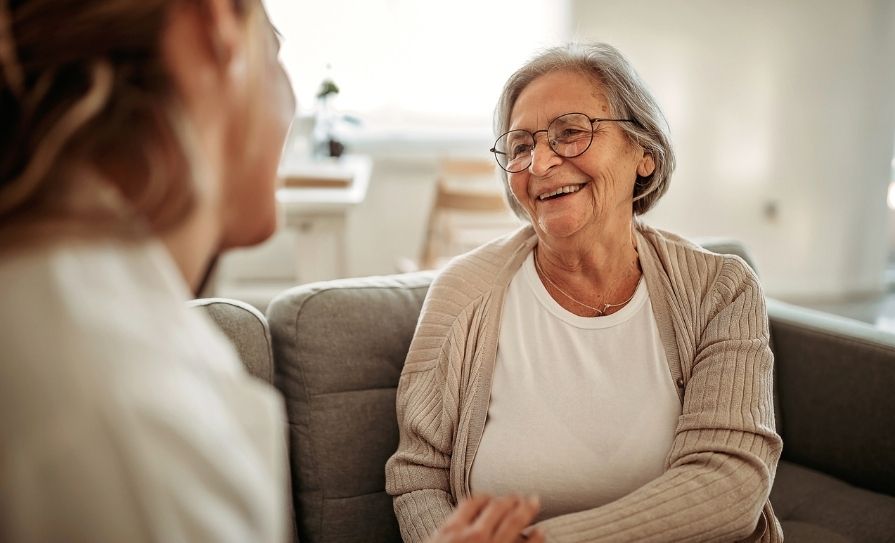
Despite repeated reports and recommendations, progress on improving GP support for nursing home residents remains slow. Niamh Cahill reports
The ageing of Ireland’s population is accelerating, with major implications for health and social care delivery. By 2040, one in five people in Ireland will be aged 65 years or older, according to new projections from the Economic and Social Research Institute (ESRI).
To meet the care demands of the ageing population, the ESRI estimates that long-term residential care (LTRC) capacity and home support hours will need to expand by at least 60 per cent. The fastest population growth will be among the over-85s – the cohort most likely to need complex long-term care – whose numbers are set to more than double by 2040. The median age of nursing home residents is also projected to increase from 85 years in 2022 to 88 years in 2040, further intensifying requirements for specialist staffing
and care.
For GPs, these demographic shifts signal a sharp rise in the workload associated with nursing home care. Yet despite repeated reviews and recommendations, there remains no agreed framework – or formal policy – on how GP services should be delivered in nursing homes.
Many in the profession argue that meaningful reform will require renegotiation of the GMS contract, which was designed around acute episodic care rather than the ongoing, resource-intensive needs of frail, older residents.
Under the Health Act 2007 (Care and Welfare of Residents in Designated Centres for Older People) Regulations 2013, nursing homes must meet specific requirements regarding GP care. These include carrying out a comprehensive medical assessment on admission to identify care needs, developing a care plan, and ensuring residents have access to a medical practitioner and any ongoing treatment recommended, according to the Department of Health.
The Covid-19 Nursing Homes Expert Panel: Final Report, published in 2020, made a number of recommendations around nursing home care, including GP care.
It contained 86 recommendations aimed at safeguarding nursing home residents.
A 2024 implementation progress update noted little progress had been made in strengthening GP supports for nursing home residents since the original report was published.
A recommendation that a GP be included as a key member of community support teams had yet to be realised.
GP lead
Another proposal, to appoint one of the GPs already caring for nursing home patients as a designated ‘Nursing home GP lead’, with responsibility for clinical oversight and governance in collaboration with staff, has also not been implemented.
According to the update, progress on this recommendation depends on GP capacity, contract negotiations, and funding.
The GP lead post would be a “sessional commitment and remuneration for the post will be specified in a contract between the nursing home and GP lead”, according to the update report.
“Functions would include promoting the use of instruments like the InterRAI Single Assessment Tool and the Clinical Frailty Score and optimising medication management, ensuring full compliance with eg, influenza vaccine uptake for residents and staff in the nursing home, and close liaison with community services and outreach services of acute Hospital Groups.”
The update report also stated: “A national framework describing the role and responsibilities of the GP lead, including the elements outlined above, should be developed as a matter of urgency, so that providers can operate within a consistent and clear set of requirements”. This element is another “work in progress”.
A spokesperson for the IMO told the Medical Independent (MI), however, that “there have been no discussions with the Department of Health or HSE on this matter to date”.
“GP care for patients in nursing homes is governed by the GMS contract which is the same contract which underpins general care in the community. The GMS is an acute care and diagnosis contract. The scope of services provided for in the contract is limited and in many cases not suitable for nursing home care,” the spokesperson stated.
“Moreover, nursing homes often have HIQA requirements which they must meet, and seek to have the GP provide these requirements. Clearly such requirements are not a feature of the GMS contract and, so, in many cases nursing homes seek additional items of work/care beyond that which is set out in the GMS contract. The IMO view is that negotiations are required on a fit-for-purpose contract that would set out the care that is required in nursing homes.”
The IMO view is that negotiations are required on a fit-for-purpose contract that would set out the care that is required in nursing homes
A spokesperson for the Department of Health told MI that “the placement of one GP per nursing home is currently under consideration by the Department of Health”.
“A focused piece of research has been commissioned from the European Observatory on Health Systems and Policies to explore how health services are provided to nursing homes across Europe. Part of this analysis will explore the role of the GP in nursing homes within the selected countries. This research is expected to be concluded by the end of 2025 and will inform considerations,” the spokesperson added.
Complexity
GPs face a number of unique challenges in providing care to nursing home residents – challenges not typically encountered in mainstream general practice.
Some GPs have called for national guidelines to assist them in caring for nursing home residents due to the sensitive and specialised nature of the area.
CEO of Nursing Homes Ireland (NHI), Mr Tadhg Daly, told MI that the increasingly complex nature of medical care was one of the “biggest issues” for GPs and nursing home residents.

Mr Daly said that there are now more people than ever before registered with the Nursing Home Support Scheme. As of July 2025, there were 24,150 residents, the highest ever number since the Scheme began in 2009. According to NHI figures, private and voluntary providers deliver nursing home care to 27,000 residents around the country.
“The age profile, the complexity, and care requirements of those in nursing homes is much higher than it ever has been. Nursing homes are effectively a nurse-led service but there is also a requirement for GP care,” he said.
“The regulations state that the obligation is on the provider to provide GP care but ultimately the relationship is between the resident and the GP. The vast majority, if not all, would have medical cards in nursing homes and would be entitled to a GMS service.
“The issue we’ve raised is that residents in nursing homes are discriminated on the basis of their address almost. It’s not just GPs, it’s access to OTs [occupational therapists], physios, speech and language services, and so on.”
In 2021, the Irish College of GPs and NHI issued a joint position paper on nursing home care. They proposed the creation of a GP lead role in residential care facilities, a similar proposal to that put forward in the final report of the Covid-19 Nursing Homes Expert Panel, where a single GP assigned to a nursing home rather than individual patients was recommended.
NHI has also made a submission to the Strategic Review of General Practice, currently being undertaken by the Department and supported by the HSE.
The review, which is examining issues across general practice, is expected to inform developments in nursing homes in the future.
A Department spokesperson said: “Significant progress has been made, and the review is expected to be completed this year. Following its completion, a final report will be presented to the Minister for Health outlining the findings and setting out recommended actions for a more sustainable general practice. The report will be published subsequently.”
Chronic disease management
Mr Daly agreed that GPs required resources and payment to provide appropriate care to nursing homes residents. He particularly took issue with the fact that nursing home residents are excluded from the chronic disease management programme in general practice. Mr Daly said this exclusion “makes no sense whatsoever”.
A Department spokesperson said that the programme was “not designed for individuals requiring higher levels of care or residential-based support”.
However, Monaghan GP Dr Illona Duffy said it was “ridiculous” that nursing home patients were being excluded from the programme. “These are patients that are already at high risk,” Dr Duffy maintained.

“Are these not the patients we should be trying to maintain at the level that they’re at and optimising the care of their diabetes, COPD, and so on, and ensuring they are not being transferred from nursing homes in ambulances into hospitals? That’s what we should be aiming for. They deserve the same care.”
She pointed out that the standards of care in nursing homes are rising.
Dr Duffy also argued that the requirements placed on nursing homes by HIQA and in turn GPs, such as regular medication reviews for residents, go beyond the scope of the current GMS contract.
HIQA inspects and monitors services delivered to residents in nursing homes to ensure they conform with standards and regulations.
Dr Duffy highlighted the inequalities that exist in the provision of services for private and public nursing home patients, even in cases where a resident in a private nursing home has a medical card.
“That’s the awful thing about this. We’ve always seen this discrepancy between patients in public and private nursing homes. If you’re in a private nursing home, you can’t be referred to lots of the services we would [do] if someone was in a public nursing home. We can’t get a HSE dietitian to come and see a patient in a private nursing home, but dietetic services are available through public nursing homes. There are huge discrepancies…some people presume if you’re in a nursing home you have more services, but in some cases you actually have less.”
Slow pace of reform
Mr Daly is frustrated with the pace of developments in nursing homes around the healthcare of residents.
With regard to GPs, he argued that the starting point must be renegotiation of the GMS contract, as this would “recognise the more complex profile of nursing home residents” and the need for extra visits, time, and team support. On the ground, some nursing homes have a GP lead in place, as envisioned in the expert panel report, but he said this needed to be implemented nationally.
“This [GP lead in nursing homes] happens organically in some nursing homes already but to make it a more formal arrangement is something we would encourage and request,” Mr Daly said.
Chair of the IMO GP committee Dr Tadhg Crowley reiterated that the GMS contract is an “acute care” contract.

He said there is a “disconnect” between the care expected in nursing homes and the requirements in legislation, which state that nursing homes must provide residents with access to appropriate healthcare.
Ireland has one of the lowest numbers of GPs per capita in the EU and the GP shortage is negatively impacting nursing home residents, according to Dr Crowley.
“The level of work involved in caring for nursing home patients and the complexity of care has increased as the ageing population has gone up,” Dr Crowley told MI.
The much-anticipated publication of the strategic review would hopefully help to inform future policy in this area, he added.
A spokesperson for the Department said: “The Department of Health is not currently in discussions with the IMO in relation to GP remuneration under the GMS contract for eligible nursing home residents. However, it is anticipated that implementation of the Strategic Review of General Practice will require substantive engagement with the IMO across the full range of issues.”
The spokesperson added that GPs contracted by the HSE under the GMS scheme are obliged to provide services to their medical card and GP visit card patients, including residents in nursing homes.
“GPs are remunerated for these services primarily on a capitation basis, with a range of additional practice support payments and fees for specific items of service provided. Capitation rates, including those for patients over 70 years of age residing in a private nursing home, were increased by 48.5 per cent over the lifetime of the 2019 GP agreement (from 2019 to 2022).”
Positive steps
However, despite these ongoing challenges, Mr Daly said there have been positive developments in nursing home healthcare.
He welcomed the introduction of e-prescribing and the development of mobile x-ray diagnostic services in nursing homes in 2024, enabling patients to undergo x-rays within nursing homes.
“That’s an example to us of how innovative you can be to help keep patients out of hospital,” he said.
According to the Department, it is also engaged in discussions with GPs through the national general practice information technology project within the Irish College of GPs to determine what e-health solutions may be best suited to improve GP and medical care in nursing homes and residential settings.
“A number of GPs have identified the challenges that are unique in providing care in nursing homes, and this helps inform these discussions. A number of vendors offer solutions for nursing homes that support telemedicine, generation of medical prescriptions, and recording of patient data, but these are not widely adopted by GPs. There is no single approach to the use of e-health by GPs in nursing homes,” the Department spokesperson stated.
Latest TILDA research
Findings from the latest wave of research from TILDA – The Irish Longitudinal Study on Ageing – revealed that the care of older people in the community is often sub-par.
Data from the sixth wave of the study, published recently, found that 36 per cent of older adults had undiagnosed hypertension and 45 per cent had undiagnosed high cholesterol.
The study reported a substantial burden of undiagnosed and untreated osteoporosis and highlighted the need for improved management and treatment of several conditions affecting older adults.
The research illustrates that developments are required in healthcare services for people in nursing homes and those living at home.
Regius Prof Rose Anne Kenny, Principal Investigator of TILDA, said: “This is the most comprehensive and wide-ranging report TILDA has produced to date. It’s the first time we’ve brought together such an extensive, longitudinal view of the key issues shaping the lives of adults in Ireland. From loneliness and emotional wellbeing to healthcare access and the realities of caregiving, these are topics that matter deeply to the individual, but also to health and social care.
“What makes the wave six findings so compelling is that the majority of the issues we’ve identified, like untreated hypertension, high cholesterol, chronic pain, and depression, are largely modifiable,” Prof Kenny continued.
“These are not inevitable aspects of ageing – they are challenges we can address with the right health and social care systems in place. This study shines a light on where immediate, evidence-based action can transform outcomes for older adults in Ireland.”










Leave a Reply
You must be logged in to post a comment.