







Consultant Breast Surgeon Prof Mark Corrigan talks to Niamh Cahill about the launch of Ireland’s first cancer prevention centre in Cork
Cancer is one of the leading causes of death in Ireland, with approximately 10,000 deaths recorded here annually. Last year alone, there were about 45,000 cancer diagnoses in Ireland.
But what if we could prevent many of these cases? If effective prevention measures were in place, hundreds of people each year could avoid developing cancer altogether.
This is the aim of the new cancer prevention centre in Cork city, which opened in September.
As the first centre of its kind in this country, and one of only a handful on the continent, Prof Mark Corrigan described the development as a “major step forward for cancer prevention in Ireland and Europe”.
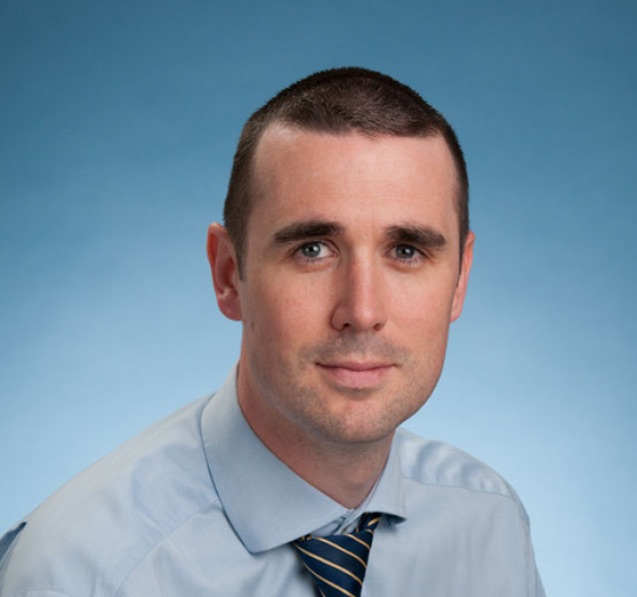
Based at Cork University Hospital (CUH), Prof Corrigan is a Consultant Breast Surgeon with a special interest in preventative surgical oncology.
The University College Cork graduate is also Clinical Lead with the HSE Transforming Theatre Programme and Director of Core Surgical Training in Cork.
The centre’s development marks a turning point in the region’s longstanding efforts in the area of cancer prevention, Prof Corrigan told the Medical Independent (MI).
These efforts stretch back more than a decade, when clinicians were already working with individuals at elevated risk of developing cancer, particularly breast and ovarian cancers.
“About 10 years ago we set up a service to try to identify women in the community at high risk of breast cancer,” he explained.
More recent years have seen the establishment of a genetics service offering diagnostic testing in Cork. Predictive testing for family members of patients commenced last year and has been a significant boost to the service.
“With a predictive programme you need a pathway for patients, as you need to be able to offer solutions if a potential problem is found,” Prof Corrigan said.
Prevention
With an ageing and increasing population, he argued that prevention must be prioritised in order to help reduce future demand.
“For example, if you look at cancer, we diagnosed 45,000 cancers in Ireland last year. A lot of the figures and modelling suggest that by 2045 we’re looking at diagnosing up to 90,000 cancers a year. That means if we were to continue to deliver as good a service as what we’re doing now, we would have to double our footprint in terms of infrastructure and staffing in the next 20 years. If we were going to do that, [the Government] would have had to have started by now,” he said.
“It means that in 20 years’ time, if we don’t start looking at how we decrease demand for health services now rather than just chasing capacity all the time, then we’re going to have a real problem. This is something we’re seeing across the world.”
However, according to Prof Corrigan, prevention is not an area that receives much attention or investment in healthcare.
“In Ireland, we spend around two to four per cent of our health budget on prevention and that’s the same across the developed world – it’s very small,” he told MI.
According to the HSE, up to four in 10 cancers are preventable and one in two people living in Ireland will receive a cancer diagnosis in their lifetime.
Prof Corrigan emphasised that a shift is needed to place greater focus on prevention and to raise public awareness of how cancers can be avoided.
He highlighted individual lifestyle habits, such as not smoking, that can help reduce a person’s risk of developing cancer.
Engaging in screening and vaccination programmes can also help to reduce a person’s risk of getting cancer.
Another significant but less well-known risk factor is radon, a naturally occurring radioactive gas that can accumulate in homes and buildings. Long-term exposure to high radon levels is a major cause of lung cancer in this country.
“In Ireland, we have the highest levels of radon in Europe,” he added.
“In Cork and Kerry, we have the highest levels in Ireland.”
Radon is responsible for about 350 lung cancers in Ireland every year. An Environmental Protection Agency testing kit costing €50 can tell a person the levels of radon in their home, he said.
“All of these issues are things we should be investing heavily in and we’re not yet,” Prof Corrigan argued.
But lifestyle and environmental factors are not the only causes of cancer. There are people within our community that have a high risk of developing the disease due to their genetics.
“Cancer is not exclusively inherited, only a small percentage of it is,” Prof Corrigan explained.
“About 10 per cent of all cancers are inherited and less than 5 per cent are linked to a specific gene. These are not huge numbers, but they all play a role. All the lifestyle issues, like smoking and alcohol use, they work in concert with a person’s family history.”
Centre
The new facility is among only a few such established centres in Europe, with others located in the UK, France, and the Netherlands.
The surgical theatre is based at the South Infirmary Victoria University Hospital (SIVUH) and operates in partnership with colleagues at CUH. Supported by the National Cancer Control Programme and the CUH Charity, Prof Corrigan said the centre is “networked across the region”.
Genetic assessments, counselling with surgical oncologists and psychological support services are coordinated from CUH, while the SIVUH theatre is currently available once every two weeks for extended surgical sessions.
“That means we can get one to two cases done per day, depending on the type of surgery being performed,” he explained.
But over the next 12 months the plan is to centralise surgical, consultations, psychology, and genetics services and move to a standalone building in a primary care centre in Cork, Prof Corrigan added. Theatre work will remain at SIVUH.
Prof Corrigan outlined that modelling undertaken suggests that “if we were to operate on 450 people, we could statistically prevent about 313 cancers from happening and the cost saving from that to the Exchequer is about €69 million. It’s huge.”
The initial annual target is to offer surgery to 45 women per year, taking into account that some of the operations could last 10 hours, involve reconstruction, and are highly complex, Prof Corrigan said.
To date, the centre has primarily concentrated on breast and ovarian cancers, but colorectal cancers are now becoming an area of focus.
Prof Corrigan explained the process around genetic testing for women with a high risk of developing breast or ovarian cancers.
“If we have women coming into our clinic that we think are gene carriers, we are now in a position where we can offer them gene testing. In a matter of six to eight weeks we can get test results back. If they are positive, we then offer them information to give to their family, allowing family members to self-refer to us for testing, which means we put them in touch then with our genetic counsellor.
Support from a plastic surgery team, who can counsel women on reconstructive options, is also provided.
The opening of the protected, ringfenced theatre completes the surgical pathway, allowing patients to be given a confirmed date for their procedures. Theatre time is often highly competitive within hospitals, making this dedicated facility particularly important.
“Most of the women we see are young and have young families so they have to prepare and organise work and childcare. It’s a significant operation.”
Prof Corrigan said regional leadership and collaboration had helped to establish the centre, which brings together a whole host of clinicians and allied healthcare professionals.
“It’s the first attempt nationally to do this surgically and to put this together as a surgical pathway [with] all the supports that will be needed. We have a bit of work to do to grow … but it’s great to see it started.”
We have a bit of work to do to grow … but it’s great to see it started




Leave a Reply
You must be logged in to post a comment.