







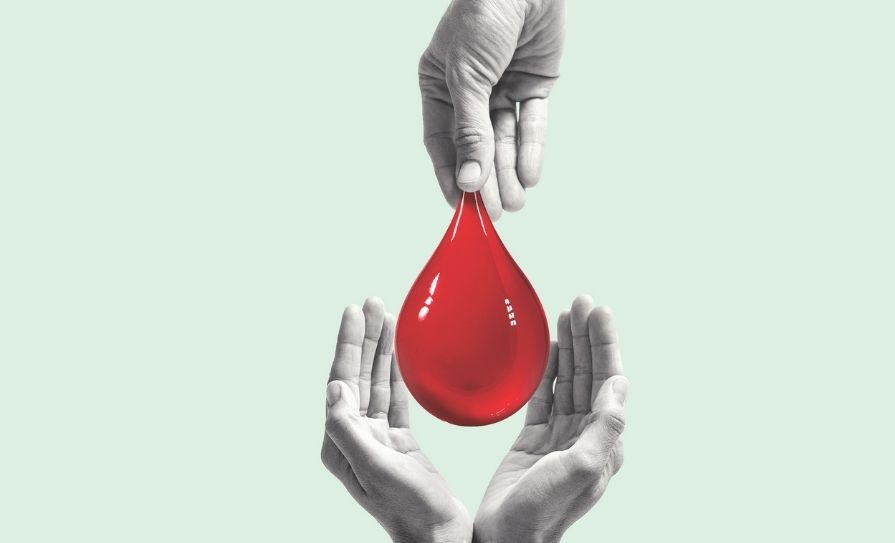
Internal records from the Irish Blood Transfusion Service reveal the challenges in managing the national blood supply. Catherine Reilly reports
“Unexpected and unprecedented.”
This was how the Medical and Scientific Director of the Irish Blood Transfusion Service (IBTS) described a multi-faceted challenge to blood stock levels in late 2024.
In his report to the IBTS board in November, Dr Andrew Godfrey stated: “The next six months will be a critical period to assess our long-term approach to ensuring a robust strategy.”
A combination of factors outside of the IBTS’s control had significantly impacted the blood supply in the previous two months, according to Dr Godfrey. This had resulted in a pre-amber alert in late September 2024, a donor appeal, and importation of blood in October.
One factor was the rising demand for RhD negative units for red cell exchange transfusions – a matter recognised within the IBTS for several years. Another was “donor fatigue”, especially among O RhD negative donors. O RhD negative blood regularly accounts for over 16 per cent of the blood issued weekly, whereas only 8 per cent of the population have this blood type.
In addition, while there had been an “excellent response” to the previous donor appeal, this meant many donors were not yet eligible to donate again.
A further reason cited by Dr Godfrey was an increase in donor haemoglobin (Hb) deferral levels due to a change in applicable international standards impacting the Hb testing device and its consumables. This had led to a doubling in the number of people deferred from donating by Hb criteria.
Despite ongoing efforts, he advised that these issues could not be resolved quickly.
It was decided to import blood rather than escalate to an amber or red alert status under the national blood shortage plan, as this would have resulted in patient procedures being cancelled and delayed. Dr Godfrey anticipated a need to import blood again to ensure an adequate supply for the Christmas period.
Long-term supplementary supply from other blood services may need to be considered, stated the report obtained under Freedom of Information law.
Importation
The overall blood supply “remains stable”, but meeting the demand for RhD negative blood groups has proven “challenging”, an IBTS spokesperson informed the Medical Independent (MI) in early September.
“Ireland has seen an increase in demand for RhD negative red cells from 2019 to 2024, which has not been mirrored across Europe and issues are now at their highest for 10 years.
“The increased patient demand is driven mainly by the expansion of haemato-oncology and haemoglobinopathy services. The monthly requirement for RhD negative units has increased by 22 per cent in 2024 compared to 2023, with a similar percentage increase from 2022 to 2023.”
The monthly requirement for RhD negative units has increased by 22 per cent in 2024 compared to 2023
O RhD negative, the universal blood type, is a particularly critical resource. Through recruitment efforts, the IBTS has been increasing the proportion of these donors, who accounted for 14.2 per cent of donors in 2022 and 14.86 per cent in 2024.
In 2015, the IBTS signed a contract with NHS Blood and Transplant (NHSBT) for the contingency provision of blood/blood components. Since 2020, this arrangement has been activated “on numerous occasions” following recommendations from the IBTS emergency blood management group and business continuity planning group.
“This approach has been carefully risk-assessed to ensure compliance with relevant EU and Irish blood establishment standards.”
Blood was imported from NHSBT twice in both 2021 and 2022, but not in 2023. The Covid-19 pandemic and Storm Barra were among the factors impacting on supply.
From July 2024 to August 2025, blood was imported from NHSBT on six occasions (the first batch in October 2024). This included partial support in June and August of 2025. All of the units were of RhD negative blood (O-, A-, B-). The provisions ranged from 380 units (250 O-, 90 A-, and 40 B-) in March 2025, to 90 units (50 O- and 40 A-) in June 2025.
NHSBT offered full or partial support for all IBTS requests during this period.
This support was provided during NHSBT’s amber alert (July 2024-July 2025), which was triggered by a cyberattack on the pathology service provider for several major London hospitals. This status is instigated to avoid a national blood shortage that could impact patients and is a signal to donors that stocks are at risk of running low.
“Blood support from NHSBT depends on their blood stock capacity at the time of request, and blood stocks in the NHSBT are reviewed daily as part of internal IBTS business continuity planning,” said the IBTS spokesperson.
“As part of normal processes, blood services engage and collaborate on a range of issues, including blood stock levels. A request for blood support naturally involves discussion and agreeing levels appropriate for the situation of both blood services on a particular day.”
Such discussions are “a normal part of the day-to-day operational activities in busy acute health services”.
According to the IBTS, its blood shortage mitigations include (but are not limited to) communications to hospitals restricting blood use and stock holding where possible; optimising attendance at IBTS clinics; increased use of media and social media; additional targeted text messaging of donors; running multiple additional clinics; and longer opening hours.
If these steps do not reclaim the national blood stocks sufficiently, further mitigation steps are considered, including a national donor appeal and importation when required. Protecting patient services is “the main priority” when managing the blood supply.
“Measures up to and including importation is considered within the range of normal measures and mitigations taken by all blood services in order to meet demand and the principle of collaborating across blood services is reinforced in the new substances of human origin regulations.”
On the matter of an additional contingency provider, the IBTS spokesperson said: “Optimising blood utilisation across jurisdictions is now routine practice and the European Blood Association, of which the IBTS is a founding member, has recommended blood services are encouraged to have collaborative and contingency arrangements in place.”
The new EU regulation on substances of human origin, which will apply from August 2027, also involves “harmonisation” with other member states through the sharing of resources. “Preventing an adverse impact on patient care is always the priority, instead of restricting supply and services to patients.”
Any blood collected within Europe which meets the standards outlined in the European Directorate for the Quality of Medicines and Healthcare (EDQM) Blood Guide and EU Directive 2002/98/EC “would be suitable for importation and use in Ireland, subject to appropriate risk assessment and arrangement”.
“We have initiated contact with and commenced a risk assessment for importation from several other blood services in Europe; however, no formal agreements are currently in place.”
Meanwhile, the change that led to increased donor deferral rates under Hb criteria was felt internationally, not just in Ireland, according to the IBTS.
Between July 2024 and February 2025, it is estimated around 1,500 donors in Ireland were deferred from donating (who could have donated if the change to the device and international standard had not occurred).
“Following substantial audit and validation work, a change on clinic was implemented on 15 February this year, which reduces the current level of donor haemoglobin deferrals yet maintains donor protection measures as required.”
AH donors
Since the 2000s, the number of patients in Ireland with haemoglobinopathies has increased significantly. Sickle cell disease (SCD), the most common haemoglobinopathy, is a serious genetic blood disorder that disproportionately affects people of African heritage (AH).
The Ro blood subtype, which is much more common in people of African background, is urgently needed for transfusion treatments for SCD patients. Having the best matched blood reduces the risk of transfusion reactions. However, there are an insufficient number of these donors in Ireland and a relatively low number of people from which to recruit.
On 17 February 2025, the IBTS board heard that increased demand for red cells was “heavily skewed towards RhD negative units (O-, A-, B-), driven mainly by the expansion of haemoglobinopathy services and their red cell exchange treatment programmes”.
In recent years, the IBTS has taken steps to facilitate the recruitment of more AH donors. In May 2023, it introduced malaria antibody testing. Prior to this, people who had lived for at least three months within the first five years of life in a malaria risk country were not permitted to donate blood in Ireland.
The IBTS was also involved in RCSI-led research identifying motivators and barriers to blood donation among potential donors of African and Caucasian ethnicity. The paper, published in Blood Transfusion in 2022, found that ‘lack of information’ was the most commonly cited barrier. African respondents were more likely to report lack of information, malaria-related barriers, and religious motivators.
“Increasing the diversity of the donor base has been a key goal for the last 12 months and will form a key pillar of our donor strategy,” stated the IBTS spokesperson. “Recruiting donors of diverse ethnic origin will ease the pressure for RhD negative blood, but will not in isolation solve the challenge due to the high deferral rate for this group of individuals and the relatively low number of individuals to recruit.”
The IBTS has engaged with SCD patient representative groups; religious groups; and colleges with diverse student populations. The Service has had a presence at Africa Day events; and utilised social media and website content to communicate to different communities.
“In May 2023, the IBTS introduced malaria testing and since then, following numerous recruitment initiatives, over 1,600 donors of non-Irish ethnicity have been recruited, with over 300 AH donors attending our clinics.
“However, due to high donor deferral rates and strict risk-based criteria within the HLQ [health and lifestyle questionnaire], we are achieving limited success in obtaining meaningful volumes of blood from donors of non-Irish heritage.”
This year, funding has been allocated to AH donor research projects, which will focus on donor recruitment barriers and motivation strategies.
“A marketing budget has been allocated to target specifically the recruitment of donors of African heritage, which will be informed by research and epidemiology studies to maximise return.”
The spokesperson added: “We have seconded a biomedical scientist into our research department to undertake a review of the possible strategies at both the donor and laboratory levels which IBTS may employ to improve both our acceptance rate and our blood donation rates within this group.”
Further steps
According to Dr Godfrey’s report to the board, dated 22 April 2025, the blood supply had remained “stable” overall since his report in February. However, the demand for RhD negative units had been managed with further importation from NHSBT.
The IBTS had seen stock levels fall towards Easter. On 28 April 2025, the board meeting heard NHSBT was “not in a position to provide support before Easter” (an IBTS spokesperson clarified that NHSBT was able to provide support for A- only and the IBTS decided not to import any units on this occasion).
The possibility of additional contingency providers was discussed at this board meeting. According to the minutes, Dr Godfrey pointed out that the IBTS did not have contingency agreements with other blood services on the continent, principally because of the differences in donor selection and testing criteria. “Managing demand on the RhD negative groups at the moment is the preferred option,” outlined the minutes.
Dr Godfrey’s report to the board in April 2025 referenced several of the steps taken to manage supply. These included targeted communication to RhD negative donors and “placing limits on the issue of blood, particularly blood for red cell exchange”.
“We have worked with our clinical colleagues and agreed a 25 per cent reduction in the blood being issued for [red cell] exchange for a four-week period. This approach has been discussed by the consultant team at IBTS as being likely to be effective at maintaining our RhD negative stocks at a challenging time, but having minimal clinical impact.”
The IBTS has also discussed potential changes to national transfusion practice to reduce dependence on O RhD negative blood. According to minutes of the IBTS board meeting on 16 December 2024, some of the proposed changes needed to be reviewed by the national transfusion advisory group (NTAG) to ultimately become national policy.
In his report to the board dated 11 February 2025, however, Dr Godfrey noted that the NTAG had “not met in two years”. It was “critical” to reconvene this group and the IBTS was engaging with the HSE (which had led the group) to ensure this occurred.
The NTAG has reconvened this year, according to the IBTS. The NTAG is now chaired through the National Clinical Programme for Pathology.
The IBTS’s proposed changes to national transfusion guidance include promoting the expanded use of O RhD positive blood for patients with major haemorrhage (any severity) with unknown ABO-RhD group (males >18 years old and females >50 years old). This measure would reflect international best practice and EDQM guidance, according to the IBTS. The definition of childbearing age remains under review by an NTAG subcommittee. The NTAG has discussed the overall proposals and a formal document is anticipated in the coming months.
Regarding the reduction in blood issued for red cell exchange treatments earlier this year, the IBTS spokesperson said: “The managed reduction in blood use was co-ordinated and agreed between the IBTS Medical and Scientific Director and the hospital treating clinicians. The patients selected for reduced volume exchange transfusions were selected by the clinical teams in the hospitals, following a risk-based approach.
“The plan was reviewed regularly in follow-up discussions between the medical team at IBTS and within the local hospitals to ensure there was minimal clinical impact on this patient group. Full treatment plans were maintained for patients deemed high risk. The reduction in volume of blood used for exchange transfusions took place from mid-April to mid-May 2025.
“A subsequent short-term restriction was in place in August 2025 for four days when Group O RhD negative stocks became low, again with the agreement and consent of the treating red cell clinicians.”
Wider measures
More broadly, the IBTS is working on several initiatives to support and increase the donor population into the future.
In 2024, it undertook an extensive review of its donor services and collection model. This report has been presented to the board and includes 20 areas for service development. The current focus is on planning, with implementation to commence in 2026.
A project is also underway to implement new technology to replace the existing paper HLQ with an electronic questionnaire known as the self-assessment health history. This will streamline the donor assessment process in clinics. In addition, the donor web portal, which is currently utilised by regular donors, is being developed to facilitate first-time donor bookings. These are designated as priority projects for 2025.
Figures show that first-time donor recruitment is growing. In 2023, with increased recruitment drives, 11,291 first-time donors were recruited, and this number rose to 11,351 in 2024. In 2025 the IBTS is on target to recruit approximately 12,000 first-time donors. In 2024, 1.4 per cent more blood donations were collected than in 2019.
According to the Department of Health, it is engaging with the IBTS on several policy-related measures “enabling them to continue delivering a safe and reliable blood service to the Irish health service”.









Leave a Reply
You must be logged in to post a comment.