







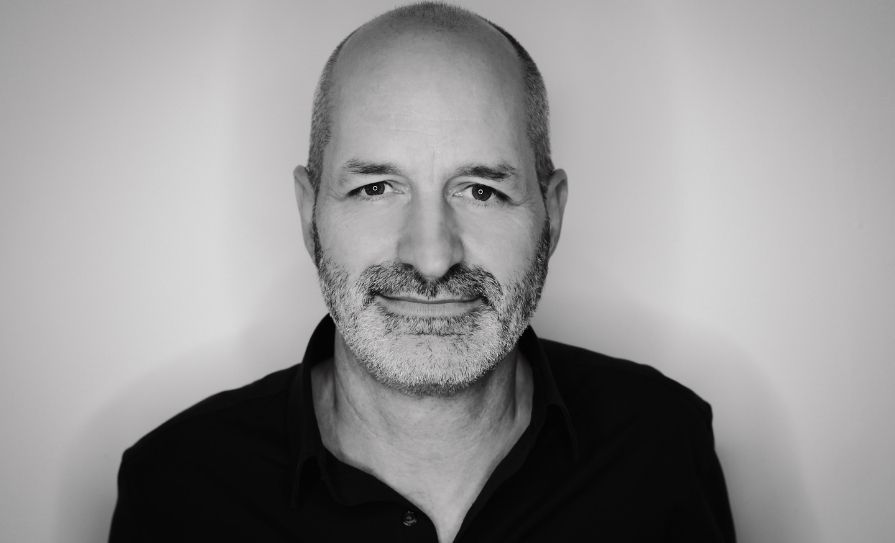
Novelist and Consultant Medical Oncologist Dr Austin Duffy talks to David Lynch about the border, his writing routine, and the feedback he has received from young doctors
“He’d know who was back in town before anyone had seen them hanging around The Square. He knew who was on the up or who was lying low and thinking of going on the run down the South.”
Cross
Last summer, Dr Austin Duffy, Consultant Medical Oncologist in the Mater Misericordiae University Hospital, Dublin, published his fourth novel, Cross.
An entangled tale of violence and betrayal within the republican movement, it is set in the years prior to the Good Friday Agreement.
Although Dr Duffy’s home town of Dundalk is not explicitly named in its pages, the novel’s social and geographical landscape seem very much influenced by the north-Louth border area.
“Yes, definitely,” Dr Duffy told the Medical Independent (MI). “Because that is where I grew up.”
The idea came when Dr Duffy was working in the US in the late 2000s. “Writing, it was kind of a way of just hanging out in the [Dundalk] area: The language, the humour.”
At that time, he said he was also reading extensively about the history of The Troubles.
Dr Duffy said Cross was in “gestation” for a “number of years” before it took final shape and was published in 2024.
Medical focus
His first novel, This Living and Immortal Thing, which was shortlisted for the Kerry Group Irish Novel of the Year, had a medical focus, as did his third book in 2022, The Night Interns (see panel). With Ten Days, his second novel, and Cross, his most recent, Dr Duffy shifted focus away from medicine to tell different kinds of stories.
Is this a predetermined pattern?
“No, it is just the way it happened,” he said.
“I’m working on a book at the moment which is kind of a sequel to Ten Days actually and I also have another more medical book out in the ether somewhere.”
In his writing, Dr Duffy tends to work on something for an extended period of time. “Then I might put it aside and work on something else,” he said.
“That could be anywhere from six months to two years or whatever. You work every day and then after a few years something is publishable. There is no great strategy… I wish there was.”
There is also no specific timeframe for his next publication.
“I’ve got a full-time job, so I cover the mortgage,” he said.
“I’m not under pressure [to write and publish books]. It’s just an internal self-imposed pressure, really.”
Last time he talked to MI about his novels in 2021, Dr Duffy’s writing routine was about “snatching” whatever time he could.
This might be on his laptop sitting on the DART, before a morning work meeting, or waiting in a car park.
“It’s still the same – I write while I’m on the move, generally in the morning,” he said. “The key for me is the daily nature of it.”
Inspiration
Growing up in the border region pre-peace process provided much inspiration for Cross.
“Totally, just even going across the border for cheaper petrol, or shopping at Christmas, to visit family and friends…. It was a vivid experience, with soldiers in camouflage in the ditches and passing through a very militarised zone,” he told MI.
It was a vivid experience, with soldiers in camouflage in the ditches and passing through a very militarised zone
“And it [The Troubles] would seep into various stories you hear locally. The Ulster [TV] news would always lead with an attack or death. That was a drumbeat throughout those years.”
Regarding the plot and themes of Cross, Dr Duffy said while it might be “stating the obvious”, he is “very anti-terrorism”.
He noted that, over the years, Dundalk had developed a reputation for supporting physical-force republicanism.
“But I always thought that was very unfair…. I never saw any evidence of that. What I saw was disgust [with violence] from my family and friends.”
He was always “suspicious” of why some people were drawn towards political violence.
“It was not just the stated nobility of ‘the cause’. They would be doing it for power or self-interest, to move up the hierarchy, or through lack of opportunity or their upbringing for whatever it is… so I wanted to get at that.
“I’m inherently suspicious of these big ideologies no matter if they are from the left or right… I have the same distrust for all of them…. It just so happens that was the one that was in the area I grew up in… I wanted to try and critique it. There was a lot of hypocrisy back then and moral confusion, bullying, and a lot of it served as an excuse for violence.”
The novel’s narrative style, with its first-person plural technique, helps draw out the claustrophobia and suspicion within the republican movement of the era with all the paranoid talk of looming ceasefires and potential ‘touts’.
Dr Duffy said this technique was also used to display the dark humour, “as well as the faux jocularism” of some of the characters.
“It’s an Irish thing, but also particularly around the border. I generally like that [type of humour], I find it funny. But there can be a sinister aspect to it too.”
Cross is published by Granta: https://granta.com/products/cross/
The intern year: Living with uncertainty
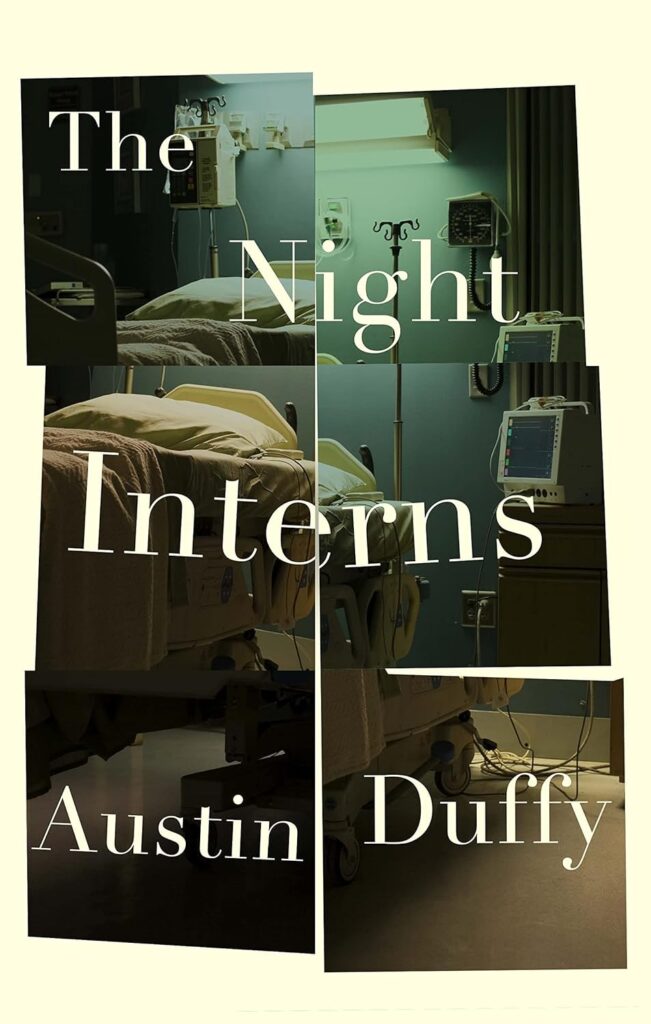
In Dr Austin Duffy’s 2022 novel, The Night Interns, the reader is dropped into an intensive short period in the life of three, very tired and pressured surgical interns, who face life and death situations in a large Irish public hospital.
The Guardian review noted that the book “could have made for grim reading, but Duffy’s vivid portrait is immersive”. Despite the interns’ exhaustion, “their determination to succeed against all odds is poignant.”
Given the plot, have any doctors provided feedback on the novel?
“Well, people are kind,” said Dr Duffy, laughing.
“So yes, I have had people come up and say they enjoyed it, or text me. Some people say, ‘oh God, you brought me back’…. I’m sure there are some [doctors] who felt negatively [about the book], but they’re decent, so they didn’t tell me.”
The book is not a memoir, but Dr Duffy can “still vividly remember” his own intern year more than 25 years ago.
For most doctors, it proves to be “definitely an intense experience, for sure”.
“It’s an important moment. It’s a moment where you have got a foot in the civilian camp and a foot in the medical profession. It’s a moment of initiation and you are at the very start of this career.”
He thinks the culture for young doctors has changed in recent years “for the better”.
“I think people are much nicer to each other [now]. Some of the behaviour that is in that book, bits and pieces still may go on here and there,” he said.
“But you wouldn’t really get far now, I don’t think, behaving like some of the people do in that book.
“That’s the positive development. Junior doctors are much more supported; I don’t think they work as long hours as we did back then.”
But today’s young doctors can still very much empathise with The Night Interns’ characters, as Dr Duffy found out directly.
After it was published, he was contacted by interns in Beaumont Hospital, Dublin, who read the novel as part of their own book club. They noted that some details were different now.
“But fundamentally the issues faced by covering a big hospital at night and the loneliness and the fear that goes along with that are kind of universal. Even if you have the biggest support.”
Ultimately, he said, a lot of medicine is practised in uncertainty.
“That is tough to deal with at every stage in your career no matter how well supported you are. I think I was trying to get at that.”
The Night Interns is published by Granta: https://granta.com/products/the-night-interns/











Leave a Reply
You must be logged in to post a comment.