








Niamh Cahill reports on the disturbing rise of racist abuse towards staff in the health service
“This is something that is new to Ireland, that people weren’t anticipating. But it is here and I’ve a feeling that it’s going to get worse before it gets better.”
These are the words of Dr Mustafa Mehmood. He is speaking about the rise in incidents of racist abuse levelled at healthcare staff by patients in Ireland.

Dr Mehmood is General Secretary of the Irish Pakistani Professionals Association (IPPA), a body with up to 1,600 members representing healthcare, technology, and other sectors.
Episodes of racist abuse directed at healthcare workers are increasing, according to Dr Mehmood. Both anecdotal and evidence-based reports confirm this to be the case.
Change
Dr Mehmood is a Consultant in Emergency Medicine at St James’s Hospital, Dublin. He came to Ireland in 2014.
“[Ireland] was a lovely place to work in up until two or three years ago,” Dr Mehmood told the Medical Independent (MI).
“You were respected. Nobody would be hassling you. Now it is not uncommon to be racially abused at work by a patient, or on your way to work or coming back from work. Most of it is verbal abuse.”
Now it is not uncommon to be racially abused at work by a patient, or on your way to work or coming back from work
There have also been incidents where doctors have suffered racist physical assaults, Dr Mehmood explained.
“There was an incident in Limerick where a doctor was physically assaulted in the car park of a hospital and racially abused.”
He referenced a number of other incidents. One involved a GP trainee in Letterkenny who was abused and intimidated on her way home from work. In another case, a doctor was racially abused in a shop in Mullingar. More recently, he said, a doctor experienced racist abuse in St James’s Hospital.
Dr Mehmood added that the IPPA is receiving more reports of racism than it has in the past. Data obtained by MI also reveals a concerning number of incidents of racist abuse in the health service (see panel).
“These incidents have definitely escalated. There is a huge right-wing sentiment to it. There is a lot of online trolling,” said Dr Mehmood.
Fear
An international medical graduate, who wished to remain anonymous due to fears he may be targeted for speaking out, spoke to MI about his experiences of racism in Ireland.
The doctor, who works in the Dublin region, first came to this country almost seven years ago.
“The first five years in Ireland, I absolutely loved it. In the last two years, there has been a change. I could even pinpoint it to when the stabbing in Dublin occurred and the riot later that day [23 November 2023]. Since then, there has been a huge uptick in racist attacks and racist rhetoric that we face,” he explained.
The doctor said he often experiences racist abuse from patients, with verbal abuse the most common form.
“Very often, you call the guards because someone either spat at you or you have to call the security of the hospital because they [the patient] have assaulted a staff member physically,” he stated.
He also faces racist abuse in society more generally, he said. The frequency of the abuse is notable, particularly at work.
At work, “the verbal abuse would be once every couple of days and the physical abuse might be once every couple of weeks,” he said.
“The impact is horrible. At the end of the day, we work in a very intense environment with a lot of responsibility and a lot of risk and [then] face racist abuse and being told that you don’t belong, or you’re not good enough. It honestly feels terrible. Especially when you live in Ireland by yourself and you don’t have a family and family support. It can make you isolated. You do your work, you come back home, and you can’t go outside the house because you’re still terrified.”
It honestly feels terrible. Especially when you live in Ireland by yourself and you don’t have a family and family support
The abuse has become so commonplace that it now impacts the doctor’s decision on whether he will leave his home.
“I don’t go out of the house very often now unless I need to…. Not that when I go out I face that every time, I don’t.”
Complexity
The doctor stated the department at his hospital – where most of the staff come from different parts of the world – has a strict zero-tolerance policy toward racism.
However, due to the complex nature of healthcare, this policy cannot always be applied in a ‘one-size-fits-all’ manner, the doctor explained.
“Unless someone has a life-threatening [medical] issue, if someone physically and verbally assaulted a member of staff, they would be escorted by security or the guards out of the hospital,” he said.
“But if someone is behaving rudely, we have to make sure it’s not from a medical issue, that they’re not delirious and they don’t have an infection.
“We do tolerate a lot of straightforward racism, given that the patient might be drunk, have taken drugs, or they may have dementia, or are very sick. So on a daily basis, we tolerate some of that, giving the patient the benefit of the doubt.”
The doctor also highlighted how racism can take many forms. Sometimes it is subtle, he said.
For example, some patients ask for a doctor who speaks ‘better English’, or sometimes patients demand to see an Irish doctor.
“You get a lot of these subtle demands that are not very straightforward [to respond to],” he stated.
“I was on a night shift two weeks ago. Someone was demanding to see a white Irish doctor and the four of us were all foreigners there at the time. We are so busy with the winter surge, we don’t have the time to tolerate that nonsense.”
The racist abuse has formed part of his decision to leave Ireland, which he plans to do later this year.
“Me and my fiancée are originally from East Africa and I don’t see us raising small kids here. I don’t want my kids to face racism. Our plan is to move back home,” he said.
Despite the recent negativity, the doctor stressed that his first five years in Ireland had been very happy.
“I worked two years in Galway before Covid, and it was the best time of my life. I loved the people, especially the people from the west of Ireland. They were hands down the best people.
“I’ve lived in seven different countries in my life and they’re probably my favourite in terms of how approachable they were and how nice they were. The old farmer who would invite you to go fishing with him at the weekend, or invite you for pints.”
Before the recent surge in racism, the doctor said he had considered settling in the west of Ireland, but that is no longer the case.
“The last few years haven’t made much sense to me. The scale of the racism and the rhetoric have completely changed everything.”
Challenges
At the end of last year, the Medical Council released a statement saying the racist abuse of healthcare workers must end.
In the statement, Council CEO Dr Maria O’Kane noted there had been an increase in reports of such abuse towards staff in the health service.
According to a spokesperson for the Medical Council, without international doctors working in Ireland, “our health service would collapse overnight.”
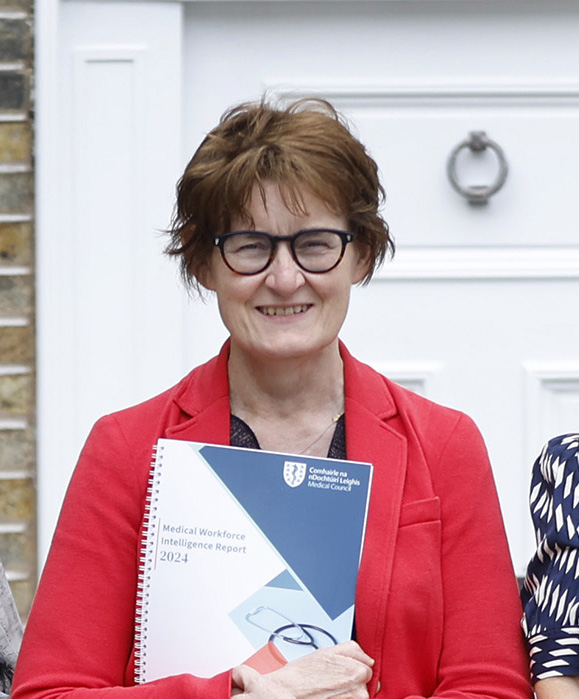
“In 2024 alone, nearly 42 per cent of doctors clinically active in Ireland received their primary medical qualification outside of an Irish medical school. International medical graduates play a vital role in ensuring a working health service,” a spokesperson told MI.
“Internationally, there is a global shortage of doctors and other healthcare workers. It is important that Ireland remains an attractive location where doctors are supported, to support the retention of both Irish and internationally trained doctors.”
A HSE spokesperson told this newspaper that international workers make up over 15 per cent of its entire workforce.
“The HSE is proud of the organisation’s diverse workforce, all of whom are critical for the provision of services for patients across Ireland. We are deeply grateful to international workers who have chosen to move their lives and families to Ireland to work with the HSE and to help provide essential care and support for patients.
“Ensuring the safety of all employees and service users is a priority for the HSE. We are committed to creating a safe environment within which to work or to be treated.”
A spokesperson for the Department of Health said that any instances of discrimination, prejudice, or racial abuse impacting healthcare staff are unacceptable.
The spokesperson also said there is a “comprehensive” range of supports for staff experiencing or witnessing racist behaviours.
These include guidance, information resources, and training for line managers. The HSE’s Diversity Equality and Inclusion Team provides an enquiry and support service and connects staff with the Cultural Diversity Network. There are also staff across the HSE trained to provide support and signposting on Dignity at Work matters, including helping employees affected by racist behaviours.
The spokesperson said human resources teams are also available to offer advice and information and to point staff to other supports, while occupational health and safety services can advise on workplace safety. Finally, they said the Employee Assistance Programme provides counselling for staff who need it.
Campaign
Despite the support he feels from friends and colleagues, the doctor who spoke on condition of anonymity maintained that a national campaign is needed to help stop racism in healthcare.
“The Government and the HSE could do more. More education and teaching to the public would help…. I feel like the racist, right-wing rhetoric is winning currently rather than common sense,” he said.
Dr Mehmood agreed, criticising the Government and HSE for not doing more to reduce racism.
He said that an awareness campaign could focus on “how much we are dependent on people of colour… not just in medicine, but in general”.
“The Government stance on this has been poor…. Issues like housing and healthcare, they existed for years and years. They are not something that has worsened because of an influx of immigrants,” according to Dr Mehmood.
“The health service is very much dependent on international healthcare staff and most of them are people of colour. Should there be a widespread campaign, as in zero-tolerance to racism? Should the HSE bring out a proper policy? Should there be an awareness campaign? Absolutely.”
Dr Mehmood believes that over the past 12-to-18 months racism has become “almost normalised” in Irish society.
Following physical assaults on doctors last year, the IPPA approached HSE Chief Clinical Officer Dr Colm Henry and HSE National Doctors Training and Planning.
Dr Mehmood said following the approach, affected doctors were contacted by hospital CEOs and staff, and available supports including leave were offered.
“I think there is more awareness among our white colleagues at this point – that this is something that happens and that it is not a one-off event [but] something ingrained in our society. But do we need to do more support? Probably, yes.”
Last year, the IMO and other healthcare unions wrote to the HSE seeking increased support for international healthcare workers following reports of serious racist attacks on staff.
In the letter, the Health Sector Staff Panel of Trade Unions expressed concern at the increase in racially motivated attacks.
It noted that “some Embassies, and particularly the Indian Embassy, are advising their citizens to take reasonable precautions for their personal security when in Ireland”.
The letter also stated: “This is an extremely challenging time for international workers in Ireland today, both psychologically and emotionally.
“We urge the HSE to publicly support all international healthcare workers within your service as a sign of solidarity. Additionally, we request that the HSE increase wellbeing supports for these workers to ensure there are adequate protections in place within the health service to support them,” stated the letter, which was released by the HSE through Freedom of Information law.

HSE Chief People Officer Ms Anne Marie Hoey replied to the unions on 13 August 2025 unequivocally condemning racist attacks.
The letter from Ms Hoey, seen by MI, outlined that the HSE was proud to have a diverse workforce, “all of whom are critical to the delivery of our services.”
“We will continue to ensure that all existing supports continue to be available to our colleagues when such incidents occur and will work collectively with all other organs of the State in addressing such incidents and seek to educate and influence to ensure that such incidents do not occur in the future.”
Zero tolerance
Dr Mehmood believes what is happening in Ireland is similar to what occurred in the UK around 30 years ago when, he said, there was a rapid influx of immigrants not just in healthcare, but in all sectors.
“I think the rapid influx of immigrants here, or people of colour, over the last three, four, five years has changed the way people look at immigrants,” Dr Mehmood stated.
“Healthcare was in a crisis here in 2014 when I came and healthcare is still in a crisis. Things haven’t improved. Immigrants have been scapegoated because they are an easy target and they don’t want to speak up. They keep quiet and mind their own business.
“We [the IPPA] also represent people from technology and other sectors, not just doctors. Children are being harassed at school. Children are being… told to ‘go back to your country’ in playgrounds. A young girl with special needs was racially abused and assaulted by teenagers in [west Dublin] not too long ago. It’s gotten out of hand. The prime targets are women and children.”
A spokesperson for the IHCA said there needs to be a zero-tolerance policy towards violence, aggression, or any form of abuse, racial or otherwise, directed at healthcare workers.
“With around 40 per cent of all doctors working in the Irish health service having qualified outside of Ireland, our hospitals and community service would grind to a halt if we no longer had these dedicated and hard-working medical and health staff providing care and treatment to patients,” the Association’s spokesperson told MI.
“While frustration at long waiting times and staff shortages are often cited as factors that have contributed to an increase in hostility, abuse, or aggression toward hospital workers, this remains wholly unacceptable and the above pressures should never be used as an excuse for such unacceptable behaviour.
“Every consultant and health worker has the right to work in an environment free from abuse or harassment of any kind, be that due to their race, religion, gender or sexual orientation, and to feel safe while providing invaluable care to the citizens of this country.”
The HSE National Policy on the Prevention and Management of Work-Related Aggression and Violence 2025 states that it is the policy of the Executive to reduce the risks associated with work-related aggression and violence.
“Work-related aggression and violence towards staff from service users or their family members is a serious challenge within healthcare, which diminishes the quality of working life for employees, compromises organisational effectiveness, and impacts negatively on the provision of services. Hence, the prevention and management of occupational aggression and violence requires a multifaceted organisational response.”
Concerning data on racist abuse in the health service
HSE records show that more than 300 incidents of racist abuse of staff were recorded on the National Incident Management System (NIMS) over a three-year period from 2023 to 2025.
The data were released to the Medical Independent through Freedom of Information (FoI) law.
In 2023, 73 incidents of racist abuse of HSE employees were reported on the NIMS.
The number of racist episodes rose to 133 in 2024. In 2025, up to 17 December, 126 reports of racist abuse of staff were recorded.
These reports of racist abuse refer to publicly funded HSE hospitals and facilities, and exclude voluntary hospitals. In its FoI response, the HSE stated the data supplied “may contain anomalies and is subject to further change following ongoing analysis”.
The Executive stated that when considering the figures in the report, it should be noted that “staff are encouraged to report all ‘near misses’ and incidents – even those that do not result in harm”.
“Hence, the number of incident reports should not be considered as indicative of a level of harm. There may also be multiple reports relating to the same incident,” the HSE outlined in its response.
The wording used by the HSE concerning harm is noteworthy, given that any form of racism can and should be viewed as causing ‘harm’.
Categories
The HSE categorises incidents under five headings – ‘negligible’, ‘minor’, ‘moderate’, ‘major’ and ‘extreme’.
‘Negligible’ events are defined as an adverse event leading to minor injury not requiring first aid, with no impaired psychosocial functioning.
‘Minor’ incidents are defined as minor injury or illness, where first aid treatment is required.
They may also involve an extended hospital stay of three days or less, with impaired psychosocial functioning lasting more than three days but less than one month.
‘Moderate’ is categorised as significant injury requiring medical treatment, such as a fracture and/or counselling.
‘Moderate’ incidents are reported to the gardaí and Health and Safety Authority and result in a hospital stay of between three to eight days. Such incidents may result in impaired psychosocial functioning greater than one month and less than six months.
‘Major’ is defined as “injuries/long-term incapacity or disability (loss of limb) requiring medical treatment and/or counselling” and impaired psychosocial functioning greater than six months.
‘Extreme’ is defined as an incident leading to death or major permanent incapacity.
Of the total 332 racist incidents recorded in 2023, 2024, and up to 17 December 2025, 311 were labelled as ‘negligible’; 19 were described as ‘minor’; and two were described as ‘moderate’. There were no ‘major’ or ‘extreme’ incidents recorded.
A breakdown of incidents by HSE location shows that over the three-year period, the highest number of incidents (52) occurred in the Dublin and Midlands Community area.
The second largest number (47) occurred in the Dublin North East Community area. A total of three incidents recorded concerned staff in the National Ambulance Service.
In its FoI response, the HSE said that its National Policy on the Prevention and Management of Work-Related Aggression and Violence 2025 had been reviewed and revised.
The Executive said that ensuring the safety of employees and service users is “a priority concern”.
“The HSE does not tolerate verbal or physical aggression in any form by employees, service users, and members of the public or others. While it is accepted that the provision of health services can involve situational conflicts, this recognition should not be equated with considering any form of aggression and/or violence as being inherent, inevitable or acceptable.
“Behaviours that challenge are understood to occur on a spectrum from unintentional (clinical) to intentional (non-clinical), even criminal. The appropriate response will vary accordingly from understanding and compassionate management to non-tolerance.”
The HSE said it will continue to focus on risk assessment, supporting the implementation of recommendations made in recent security audits and on learning from incident reviews, through the revision of the HSE’s Incident Management Framework.







Leave a Reply
You must be logged in to post a comment.