







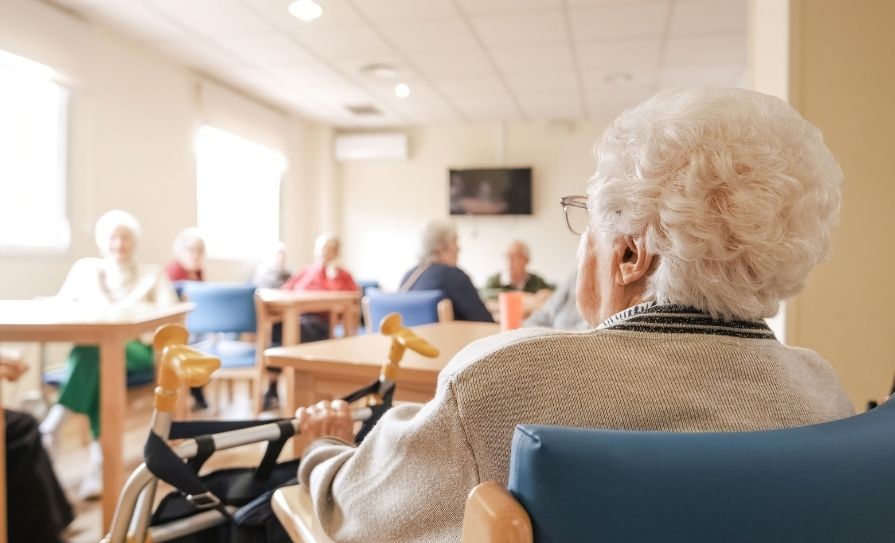
Bette Browne speaks to Prof James Bernard Walsh about how nursing homes should prioritise medical care – and why Ireland needs to introduce the long-delayed statutory home support scheme
Nursing home care in Ireland should return to a medical model from today’s emphasis on social care, according to a leading expert in medical gerontology.

Prof James Bernard Walsh, Clinical Professor, Department of Medical Gerontology, Trinity College Dublin and St James’s Hospital, Dublin, also wants to see proposed legislation urgently introduced to provide a statutory home support scheme that would help to keep the elderly out of nursing homes and enable them to live at home.
“While we have legislation entitling older people to live in nursing homes, we have none enabling them to live at home with home care supports. This should be addressed immediately,” Prof Walsh told the Medical Independent (MI).
“Without a legal entitlement to home care, people face long waiting lists, unequal access to home care, and the prospect of entering nursing homes prematurely, simply because it’s easier to enter a nursing home than it is to access a comprehensive home care package,” Prof Walsh said. “We must focus on keeping people out of nursing homes and on investing in acute and rehabilitation medicine for the elderly.”
Without a legal entitlement to home care, people face long waiting lists, unequal access to home care and the prospect of entering nursing homes prematurely
2017 proposal
A statutory home support scheme was first proposed back in 2017 and was examined by the Oireachtas joint committee on health on 15 November that year. Mr Joseph Musgrave, CEO of Home and Community Care Ireland, which advocates for home and community care providers, said in a radio interview on 3 July 2025 that it was “mind-boggling” that eight years after it had been first proposed, the Government had still not introduced the statutory scheme.
Recent figures provided in the Dáil show that nearly 5,000 people are waiting for a home support carer to be assigned to them so that they can remain living independently. The Minister of State at the Department of Health with special responsibility for Older People Kieran O’Donnell said in the Dáil on 26 June that the Department of Health is “progressing the development of a regulatory framework for providers”.
Asked by MI about when this scheme was expected to be established, given that it had been first proposed in 2017, a spokesperson for the Department replied: “The first step in legislating for a statutory home care scheme is to ensure that the home support sector is regulated. The Department is finalising the Health (Amendment) (Licensing of Professional Home Support Providers) Bill 2024, which will establish a licensing framework for professional home support services, with a view to presenting the Bill to Cabinet as soon as possible after the summer recess.”
Prof Walsh estimated that only about a small percentage of the elderly population actually require long-term care and the rest should be able to remain at home with care assistance.
“You’re always going to have people who will need long-term 24/7 care, but that shouldn’t be more than about 4 per cent of the elderly population at any one time,” he said.
“Most of the elderly population will be at home and this means there should be far more investment in this area of elder care. We need greater investment in keeping people in their home.
“We need more home help and more care assistance going into people’s homes when they require it. There needs to be more flexible rostering of hours around the family’s work outside the home. The older person may need the support only for two days and not the whole week. So there should be more [work] on expanding home care support needs.”
ESRI report
This was a point highlighted by the Economic and Social Research Institute (ESRI) in a report published on 30 June. The report projected that home support hour requirements would increase from 28.7 million hours annually in 2022 to between 44.9 million and 54.9 million hours by 2040.
It also projected that a substantial increase in nursing home care would be required to meet future demands. “By 2040, one in five people in Ireland will be aged 65 plus. The population aged 85 years and over, who use a substantial amount of long-term residential care and home support, is projected to more than double.”
The report, which was funded by the Department of Health, said it was important to note, however, that “the largest increases in beds under the projected scenario for both short stay and long stay beds are estimated for the later years across the horizon period.”
Positive, healthy ageing could also reduce demand somewhat, it said, and Ireland was better placed than many other European countries to improve and expand its elderly care models. “Despite projected increases in the older population, Ireland is expected to remain among the ‘youngest’ population in Europe in the future [which] puts Ireland in a potentially more advantageous position from a demographic viewpoint when planning services for older people.”
In this context, the ESRI highlighted the importance of establishing a statutory home support scheme for the elderly, as advocated by Prof Walsh.
“The most recent Programme for Government includes details on the establishment of a statutory home support scheme. However, such a scheme has not yet been established,” the report noted.
International perspective
The case for such a statutory scheme has been well documented over many years. The Global Coalition for Ageing, with which Ireland works closely, aims to promote healthy ageing through investments and policy reforms.
It released an extensive report – entitled A Sustainable Solution For Europe’s Elder Care Crisis – back in 2018, calling for a home care model of elderly care to be established across Europe.
The report said such a care model should be organised around the needs of the elderly person and their family.
“We urge policymakers and others to anticipate the growing demand for high-quality care from Europe’s rapidly ageing population and to take steps now to raise the standards for home care and build a much larger pool of professional carers. Home care from trained professionals offers a sustainable option for providing the high quality of care European seniors need, want, and deserve.”
It had mixed views on the Irish home care model.
“Despite choice, some provider types are not available in certain locales, especially in rural areas, largely due to lack of payment for carer travel costs. Home care packages are primarily short shifts and task-based care, contributing to the undesirability of home care as a career.”
Such care can also make sound economic sense, the report emphasised.
“The benefits on seniors’ health outcomes, as well as the broader economic benefits of creating new jobs in the long-term care sector, would make relationship-based elder care programmes more cost-effective in the long-term.”
But for such programmes to be effective, it warned that “Europe will need a 20 to 50 per cent increase in the number of family caregivers by 2050 to maintain the current ratio of caregivers to elderly patients”.
Four years later, in February 2022, the Harvard International Review, published by the Harvard International Relations Council, warned in an analysis that European countries’ models of elder care still had “insufficient social infrastructure to address the growing demands of the elderly”.
Unlike the elder care crisis in the US, it said the primary problem in Europe was not a lack of funding.
“Rather, even when European countries are spending more on elder care than ever before, these schemes are still failing to provide the type and quality of care that EU seniors need.”
But no matter how quickly and how effectively home support schemes are developed or expanded, they will never be suitable for every older person. For those who face major healthcare issues, a nursing home may have to be considered. This is why an emphasis on medical care will be especially important in such cases, Prof Walsh said.
“Those who need nursing home care should be regarded not just as residents, but as patients,” he told MI.
“They’re residents but they’re patients too – one doesn’t take away from the other. But the medical component needs to be emphasised a lot more. No one is denying their residency, but when they can no longer live at home because of their nursing and medical needs they should be classified as patients.”
Nursing Homes Support Scheme
Prof Walsh believes the emphasis from being patients to being residents changed when the Nursing Homes Support Scheme (NHSS), or ‘Fair Deal’, was introduced in 2009 to provide financial support towards the cost of long-term nursing home care for people unable to afford to personally pay for it.
“It was introduced at a time when the country was running short of money. They insisted on the term ‘residents’ because they wanted to focus on a social service term only, not a medical term. They converted the long-term care hospitals into residential facilities under the Fair Deal. It became all about social care and means testing, not medical care. Care of the elderly should go back to a medical model from a social care model.
“I don’t mind the private aspect in nursing homes as long as the elderly are seen as patients and treated as patients. They can be residents as well, with activities and so on. But more than anything else the nursing homes need to remember that these people are long-term patients because their medical and nursing needs are too great and prevent them from living at home.”
He calls the term ‘Fair Deal’ inaccurate.
“The Government wanted to move it to social care, so that they would not be legally obliged to fully pay for it under the Health Act. That’s what the Fair Deal is all about. It’s a total misnomer. If you’re taking away the right of people to long-term care and call it a Fair Deal, you’re taking away what they got almost for nothing and you’re deciding that you will assess their needs.
“It was an unfair deal because previously, apart from a nominal charge, people had free long-term care. By bringing in the Fair Deal they transferred the responsibility. They were looking at what was happening in England where they’d moved to social care and everyone paid for it. So we took away what was the right of the elderly. If someone got a stroke or were immobile for whatever reason, or they suffered from dementia, it was not their fault that they were going to need more care. Nevertheless, we moved to a social care model and everyone paid for it.”
The 2025 Programme for Government pledged to strengthen the nursing home sector by increasing funding for the NHSS.
In reply to a question in the Dáil on 7 May 2025, Minister O’Donnell said that approximately €14 billion had been spent on the NHSS since it was introduced. The figure increased from €968 million in 2019 to €1.221 billion for 2025.
The NHSS is also part-funded by residents’ contributions, which amount to approximately €300 million each year, although it is not clear if this figure includes the 15 per cent contribution that the State receives back on the sale of the person’s property after their death.
Nursing home care can be expensive, especially in Dublin where, under the NHSS, it is estimated to cost from about €1,080 to €1,395 per week, or privately from about €1,200 to €2,000 per week. A HIQA profile of the ownership of nursing homes to 31 December 2024 shows there are 548 such homes across Ireland. Of these, 415 are private and 133 are run by the HSE or HSE-funded bodies. Of the 32,370 beds, private nursing homes provide 26,016 beds (80.4 per cent), while the HSE and HSE-funded bodies provide 6,354 (19.6 per cent).
RTÉ investigation
On 5 June this year, RTÉ broadcast an investigation into the standards of care in nursing homes, specifically those operated by provider Emeis.
“In terms of future regulatory reform, the move towards the complex corporate structures for the ownership of nursing homes has implications for how the Chief Inspector can execute its regulatory powers directly with the parent companies,” HIQA said in a report sent to Minister O’Donnell in June, following the airing of the documentary.
“HIQA has no legal remit at present with respect to umbrella or parent companies such as Emeis Ireland,” it said. Within the Emeis Ireland group, which has 25 nursing homes in Ireland, there are 19 separate registered provider companies, which are the legal entities responsible for operating the nursing homes.
Speaking subsequently to the Oireachtas public accounts committee on 17 July, HIQA CEO Ms Angela Fitzgerald said what the RTÉ documentary showed was “shocking and should never have happened”.
She added that HIQA was working closely with the Department of Health in areas where the regulatory and policy framework for nursing homes could be strengthened.
Prof Walsh believes there is a lot that HIQA can do to ensure high nursing home standards. He suggested the agency would be strengthened by having a doctor who is actively involved in clinical practice, for example a geriatrician, and also a nurse on its board.
“Likewise, no member of HIQA’s executive management team has a medical or nursing qualification. That in itself could be seen to highlight a massive gap.”
MI asked the Department of Health to respond to Prof Walsh’s suggestion.
“The board of HIQA will have a number of vacancies arising in the next 12 months,” according to a spokesperson.
“There will be robust engagement between the Department of Health, HIQA and the Chairperson of the Board to ensure high quality, experienced and qualified individuals are appointed. Officials in the Department liaise closely with HIQA to agree the qualifications and experience required when each board vacancy arises. The skills mix is also considered as part of the board effectiveness review which is conducted on an annual basis by the Chairperson of the board – from a governance, legal, financial, and health expertise perspective, among other criteria.”
A HIQA spokesperson told MI that the Authority’s executive management team brings experience from a range of areas, including clinical pharmacy and frontline social care services. The spokesperson also pointed out that, in its report to the Minister, HIQA has committed to establishing a clinical advisory panel to guide the development of clinical governance standards in nursing homes and to support the implementation of new powers for investigating prescribed complaints.
Staffing
Prof Walsh described the nursing home sector in Ireland as “inadequate and under-funded”. A number of homes fail to meet the needs of the elderly, he said.
“Some do, but others are really challenged. We need to look at more adequate staffing in nursing homes, we need more staff training, a better payment structure. We need to pay staff better in nursing homes and when it comes to community care, the same approach should apply.”
HIQA has said the Department of Health is at an advanced stage of developing proposals setting out the minimum safe staffing levels in nursing homes. “Once progressed, this will significantly strengthen the regulator’s ability to take clear action in relation to minimum staffing levels across nursing homes,” the agency said in its report to Minister O’Donnell.
The ALONE charity, which advocates for older people to be able to stay in their homes as long as possible and reduce dependence on institutional care, said in a statement after the RTÉ documentary that “to continue with our present system is not desirable or sustainable” in caring for the needs of older people.
“Whether by accident or design we have ended up in a situation where our model is over-reliant on nursing homes as part of the continuum of care,” CEO Mr Sean Moynihan said. “The fact that most of these nursing homes are privately owned means care is being delivered with a profit motive and not solely based on the care a person needs.”
The fact that most of these nursing homes are privately owned means care is being delivered with a profit motive and not solely based on the care a person needs
The organisation wants the Government to deliver “a statutory home care scheme that gives access to all” and also incentivise the development of small, non-profit nursing homes “to break the hold of larger international operators in the sector, to increase choice and competition. We must fundamentally change the way we age in our community by implementing and investing in better policies.”
Despite all these challenges, however, Prof Walsh believes elderly care in Ireland compares favourably with international models. He cited the establishment of the Mercer Institute for Successful Ageing (MISA) at St James’s Hospital, Dublin, in 2016 as an example of progressive thinking around elder care needs.
The Institute was the brainchild of the late Prof Davis Coakley with whom Prof Walsh worked closely. “MISA is a very important model,” Prof Walsh said. “The focus is on acute assessment, rehabilitation, and on domiciliary assessment, keeping the person in their home, and on prevention by assessing them for fracture risk and so on.
“Most people have treatable conditions and comprehensive assessment can identify an issue and make all the difference in keeping people at home, where they can then get support from community and home care packages.”








Leave a Reply
You must be logged in to post a comment.