







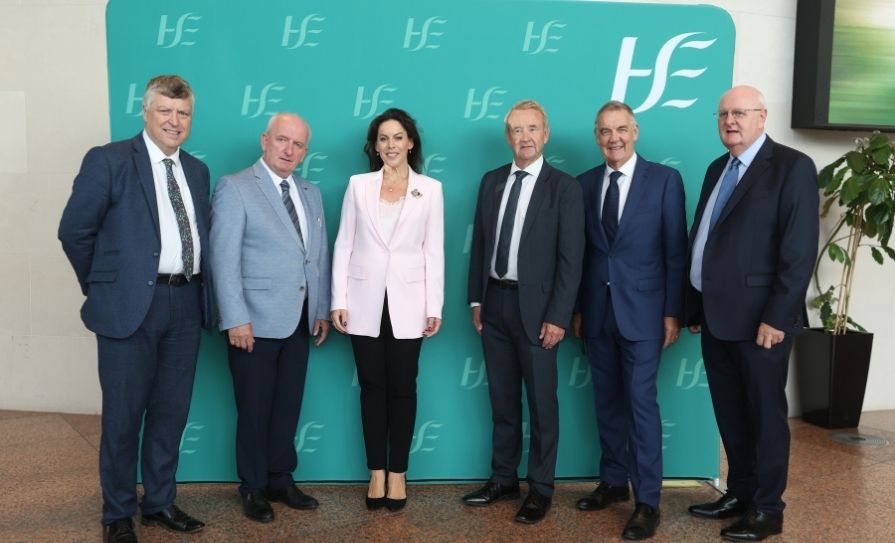
A recent HSE conference focused on integrated care, in light of the health service’s new regionalised structure. David Lynch reports
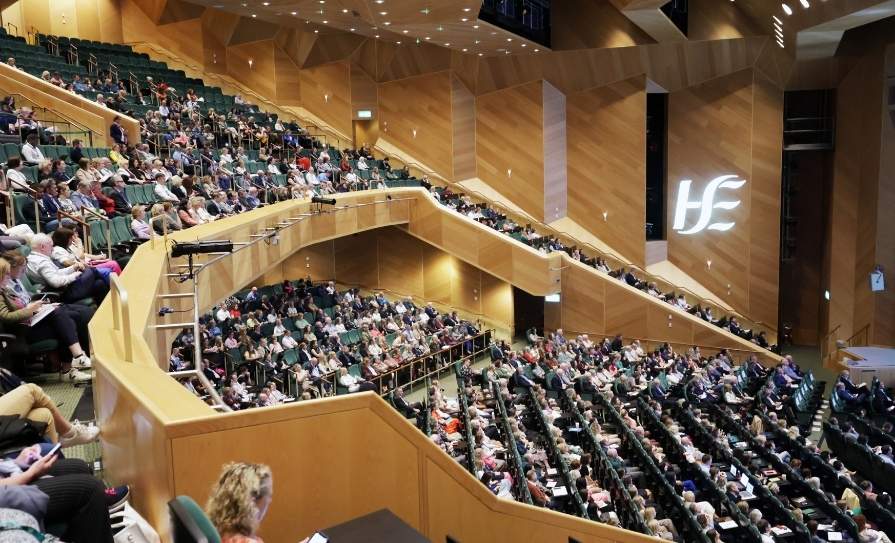
Over 1,800 staff from across all six health regions attended the HSE Integrated Care Conference 2025, which was held on 4 September in the Convention Centre, Dublin.
The meeting occurred in the context of the creation of six health regions, which have replaced Hospital Groups and Community Healthcare Organisations.
This process began in March 2024, with each region now having its own budget, leadership team, and responsibility for local decision-making.
Speakers highlighted some positive developments since the onset of the structural changes; however, the conference also discussed the various challenges.
During his address, Mr Tony Canavan, Regional Executive Officer (REO) for HSE West and North-West, stressed the progress that has been achieved since the regions were established.
Mr Canavan pointed out regional management teams were not in existence 12 months ago and that close integration has developed between the six REOs and the HSE senior management and board.
However, he said that the relationship between the REOs and the HSE board is still “developing”.
“It is not sorted and there is still a lot of work to be done.”
Mr Canavan outlined developments in access to services, including emergency departments, and improvement to cancer services, particularly in the west and north-west, since the regions were created.
“Critically, I think we have continued to see an improvement in the quality of care we provide. That’s very hard to describe, to tie down and put numbers on… but I am absolutely confident that the quality of care that we are providing in our region is better than it was 12 months ago.”
However, Mr Canavan issued a strong warning about the slowing pace of progress in establishing the integrated healthcare areas (IHAs) (see panel).
Improvement
“I do think the quality of care, generally within our system, has improved across the whole country,” Mr Canavan told the Medical Independent (MI) following his address.
“I would say it has improved in the hospital services, but also in the community as well. We have good structures around clinical quality improvement, and that is what I would be basing it upon, as well as particular initiatives.”
For example, he said, in his own region, a focus on maternity care is leading to better clinical outcomes.
Mr Canavan admitted that many doctors remain relatively unaware of the existence and impact of the new regions on their work.
“But I do think integrated care is something that has landed well with doctors, and they understand how that can make a real difference to patients. And of course, some of them are actively driving that forward and participating in it themselves.
With regard to communicating the benefits of the regional structure, he said the focus has been on “explaining to doctors that this is about bringing decision-making back closer to where they are delivering care and hopefully that will help them deliver better care as well”.
HSE board Chair Mr Ciarán Devane spoke to the conference about the impact of integrated care across the health service.
“I think the biggest advantage of [regionalisation] is that there are more people looking at the same problem,” Mr Devane told MI following his address.
“You have more of the left-hand talking to the right-hand… at a lower level, not just in Dr Steevens [HSE headquarters]. Breaking down the silos is probably the best way of saying it.”
He noted that this was still “very early days” for the new regional structure.
“The real key is with the integrated health areas, backed by population data. I think once we get to that, that will be when the real benefit will be felt.”
Anxiety
However, the challenges created by the significant scale of organisational reform were also highlighted.
Dr Richard Lewanczuk, Senior Medical Director of Alberta Health Services in Canada, was the international keynote speaker at the conference.
His talk focused on integrated care models, patient-centred approaches, and the innovative use of technology in healthcare.
Reflecting on his experience in policy development and crisis management in Canada, Dr Lewanczuk spoke about how measures can be taken to enhance the patient experience and achieve sustainable improvements in health outcomes.
On the structure of integrated care, Dr Lewanczuk said “every health system has to figure it out themselves, because context is so important”.
“What works in Ireland, may not work in Alberta, and what works in Alberta may not work in Ireland… it is not a science, it is more an art or a craft; you just have to start and get your hands dirty.”
He reflected on the “good progress” made in Ireland but warned there is “no playbook”.
“There are no frameworks – it’s doing the best that we can.”
Nevertheless, Dr Lewanczuk expressed confidence in Ireland’s direction, citing a “common vision” across both health and political spheres regarding the future trajectory of the health service.
If there is “common vision, the rest is just details”, he stated.
However, Dr Lewanczuk told conference attendees that during his time visiting Ireland, he had also “detected” some “angst around regionalisation”.
“What I say to this is that healthcare is best delivered locally, in the local context… Ireland is following the ‘hub and spoke’ model, which is great. You need some national services and you need some national standards and national guidance as well.”
“So, my advice would be the following – do nationally what makes sense to do nationally and centrally. Do regionally that which makes sense to do regionally.”
This newspaper has previously highlighted concerns raised by bodies regarding aspects of the new HSE regionalisation structure.
In June, MI reported that officials from the Department of Public Expenditure, Infrastructure, Public Service Reform and Digitalisation expressed concerns over the “complexity” of the HSE’s governance structure.
The discussion arose at the health budget oversight group (HBOG) meeting in December last year. The HSE, the Department of Health, and the Department of Public Expenditure are members of the HBOG.
According to meeting minutes, a presentation was delivered by the Department of Public Expenditure on the area of governance. Following the presentation, a discussion took place on what the Department referred to as the “complexity of the governance structure” within the HSE.
Department officials noted that the existing structure has several layers. “This could negatively affect the communication of targets to hospital managers as well as the escalation processes in the HSE.”
In August, MI published a story that HIQA had encountered challenges in implementing escalation measures due to the health service’s new regional structure. The Authority’s CEO Ms Angela Fitzgerald made the observation in a letter to HSE CEO Mr Bernard Gloster on 29 May 2025.
In her letter, Ms Fitzgerald acknowledged Mr Gloster’s “prompt response” to her correspondence in terms of facilitating constructive engagement between HIQA and the HSE on recent changes to health service structures and reporting lines.
“Notwithstanding the constructive engagements, as you know, we have experienced some challenges in a small number of circumstances where escalation measures were required, particularly in relation to the use of the provisions of Section 64 of the Act,” stated the HIQA CEO.
‘Early days’
In response to such concerns regarding the new structures, the HSE board Chair told MI that it was important to stress that it was still relatively “early days” for the regions, which were established last year.
Mr Devane said there were some issues regarding “unfamiliarity” with the new structure; however, he said he was confident these would pass over time.
“We have to remember it’s only really a year old,” he said.
“So people have to get used to it and work out how to make it work.”
Mr Devane added that one of the key advantages of the regional model is its flexibility – allowing each region to act as a “laboratory” where successful ideas can be tested and then shared across the country.
He said the six regions had the potential to act as locations to “incubate” new work processes and ideas.
“As long as we have good crossover [between the regions], this will be a good thing.”
Clinical
The HSE has noted the importance of clinical leadership and expertise within the integrated model of delivery across the regions. Last year, the HSE announced the formation of the six executive management teams for the regions. Each of these teams includes regional clinical directors.
Currently, hospital consultants believe that the health service has yet to fully utilise the clinical director model.
In the current issue of MI, IHCA President Prof Gabrielle Colleran writes that while Ireland has officially adopted the clinical director model, “its full potential has yet to be realised” (see conference preview).
“Internationally, the best-performing systems are those where clinical leadership is embedded in decision-making and service design,” according to Prof Colleran.
“If clinicians are expected to be accountable, they must also be empowered with the authority to make decisions.”
She said that her Association is committed to working constructively with stakeholders to strengthen leadership roles so that they “can deliver meaningful” improvements for patients and for hospitals.
More generally on the new structure, a spokesperson for the IHCA told MI that the Association welcomed the six regions, stating they hold “great potential to improve the timely access for patients to high-quality care”.
The spokesperson said the Association looks forward to working with the regions, the REOs and regional clinical directors “in a collaborative and practical fashion as the new operational management structures are fully established”.
“However, there is also a danger that if structures are not established appropriately, the health service could continue to be poorly integrated and burdened with additional layers of bureaucracy, diverting resources away from frontline patient care.”
The spokesperson concluded that “it is too early to make any determination in that regard”.
However, the Department of Health has made plans to determine how the structures are faring.
As reported in MI in April, the implementation of the health regions is being externally evaluated to establish a “continuous learning feedback loop”, according to the Department.
Data collection for process evaluation commenced in October 2024. This includes interviews and focus groups with key stakeholders as well as document reviews and observations. The Department will receive regular process evaluation reports to inform continued implementation.
The Department said a quantitative impact evaluation of this reform will be conducted in 2029 with an interim evaluation in 2027.
Has roll-out of integrated healthcare areas lost ‘momentum’?
Progress on the integrated healthcare areas (IHAs) has “stalled”, according to Mr Tony Canavan, Regional Executive Officer (REO) for HSE West and North-West.
Speaking at the HSE’s Integrated Care Conference last month, Mr Canavan highlighted the positive developments within the regional structures.
However, he added that “in some respects that progress has now stalled”.
“Specifically, I am referring to the management structures at IHA level,” he told conference attendees.
“We have got the regional management structure in place, but we don’t have the IHA structure in place. That’s a pity – we’ve lost time and I think we have lost momentum. That is where services are delivered, that is where patients experience the care. That’s our hospices, that’s our community care services, that’s our mental health services.”
Mr Canavan said this was “an area that we have to get focused on”.
“We need absolute clarity in the structure and services.”
IHAs are described by the HSE as the substructures within each of the six health regions. There are 20 IHAs in total. They serve a population of between 150,000 and 450,000 and take account of local geographies, population size, needs and services.
IHAs bring together both hospital and community services as well as other non-HSE providers. They are regarded as crucial to supporting and enabling integrated health and social care.
“Across the country we are trying to arrive at an agreement on what the management structure will look like [for the IHAs],” Mr Canavan told the Medical Independent.
“And how the people who are working with us currently, how would they fit into that…. Arriving at that agreement has taken longer than we hoped.”
The IHA management structure will require changes to current managers’ roles, moving from a service-based to a geographically focused model, Mr Canavan acknowledged.
“So, it is change to be fair to managers, but it is a necessary [change] in order to achieve integration, and that is the hurdle we are trying to overcome at the moment.”
A HSE spokesperson told this newspaper that the IHAs have been defined geographically, and services have been broadly aligned to their boundaries. Since October 2024, interim integrated service delivery (ISD) arrangements have been in place.
Hospital Groups and Community Healthcare Organisations were dissolved and responsibility and accountability were transferred to the REOs and regional management teams.
“All six regions have IHAs established and phased implementation is ongoing. IHAs will be formally stood up and aligned with the future… structures as of November 2025.”
The process for reassignment and/or recruitment of staff reporting to IHA managers is taking place in line with the agreed ISD structures.
“IHA management teams will be established in November 2025,” the spokesperson added.








Leave a Reply
You must be logged in to post a comment.