








Two new documents highlight the importance of physical activity and ‘active travel’ to the nation’s health and wellbeing. David Lynch reports
Ireland’s “car-dependent” transport system is helping fuel a “slow-motion health and climate emergency”, the Climate and Health Alliance has warned.
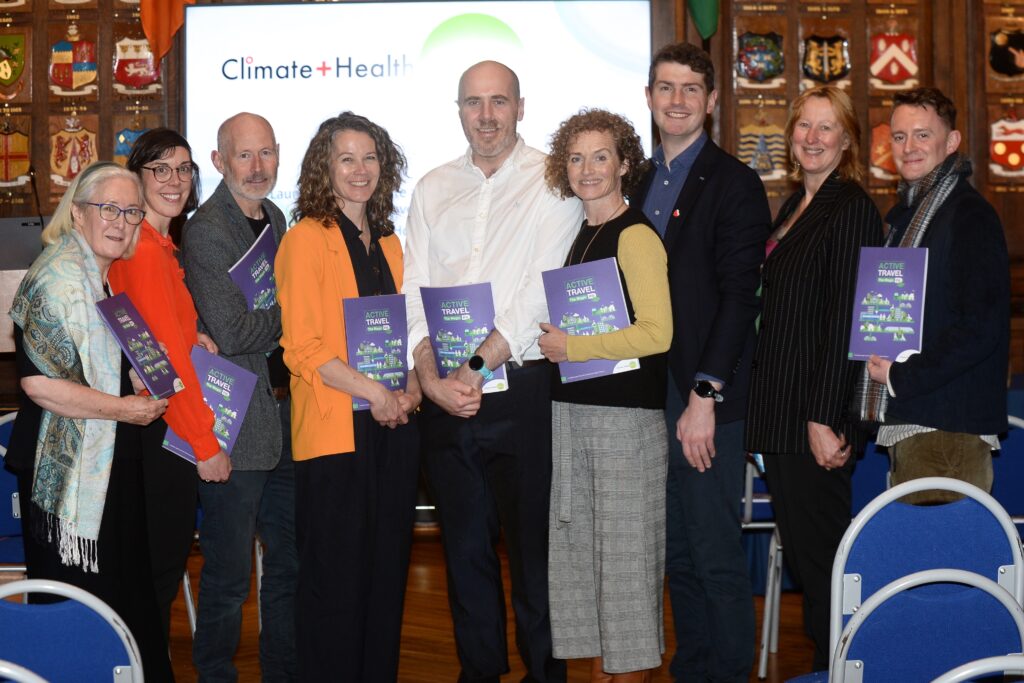
The Alliance, which comprises more than 30 medical, health, and social care organisations, launched its new report, Active Travel: The Magic Pill, in the Mansion House, Dublin, at the end of last month.
The document, which is almost 80 pages long, warns that this health and climate emergency is driven by physical inactivity, chronic illness, and
environmental degradation.
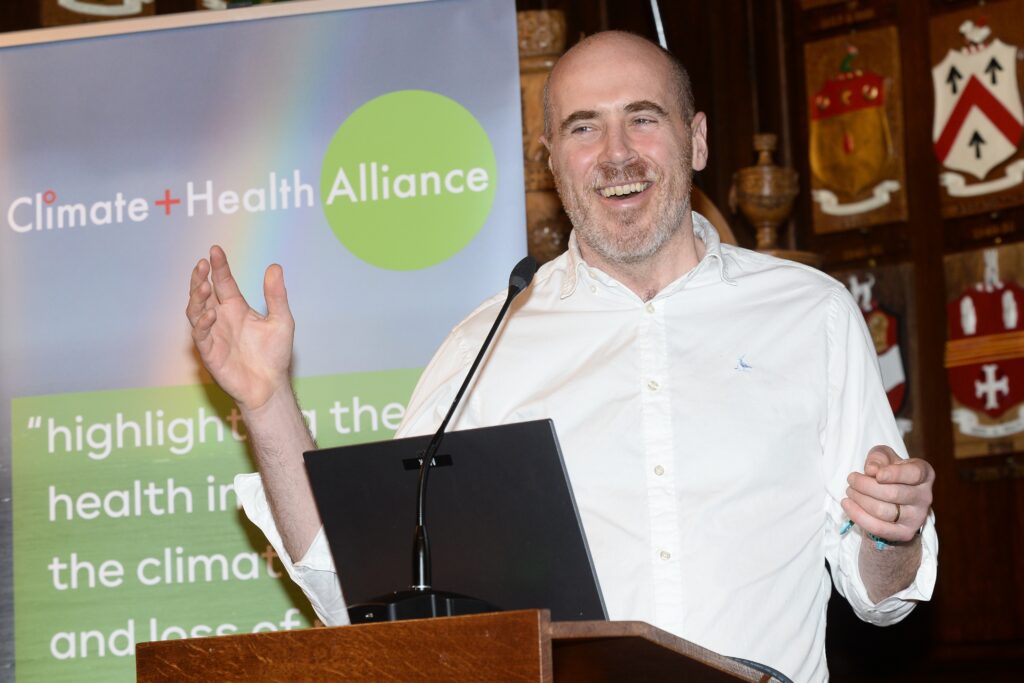
“Transport policy is a health policy,” Dr Sean Owens, GP and Chair of the Alliance, said during the report’s launch.
Dr Owens added that when transport policy formation takes place, there are “significant health opportunities”.
The new report comes just weeks after the Government launched its own National Physical Activity Framework 2024–2040 (see panel below). According to the Minister for Health Jennifer Carroll MacNeill, the Government’s new plan recognises that “we all have a shared responsibility across sectors to create environments and communities that support people” to engage in regular physical activity.
According to the Department of Health, physical inactivity is a major public health challenge, identified by the World Health Organisation (WHO) as the fourth leading cause of mortality globally. This puts it on a par with smoking. It contributes to increased risks for cardiovascular disease, diabetes, depression, and certain cancers.
The Alliance’s The Magic Pill report estimates that physical inactivity costs Ireland €1.13 billion per year, warning that six in 10 adults are insufficiently active. Only a minority of children meet recommendations contained in physical activity guidelines and only four out of 10 primary schoolchildren walk or cycle to school. Private cars are still used for a majority of trips made by people in Ireland, even when many of these trips are relatively short (2km or less).
Embedding ‘active travel’ into our daily lives, the Alliance says, would deliver a range of health and environmental benefits for everyone in the country.
Active travel is generally defined as a purposeful journey that relies on a person’s own energy.
The report attempts to set out how Ireland can transition to a society “where healthy, sustainable, and safe modes of active transport such as walking, wheeling, cycling, and public transport” are affordable and accessible to all.
However, at a national and regional level, are policymakers sufficiently open to the message that transport decisions are vital to individual and societal health?
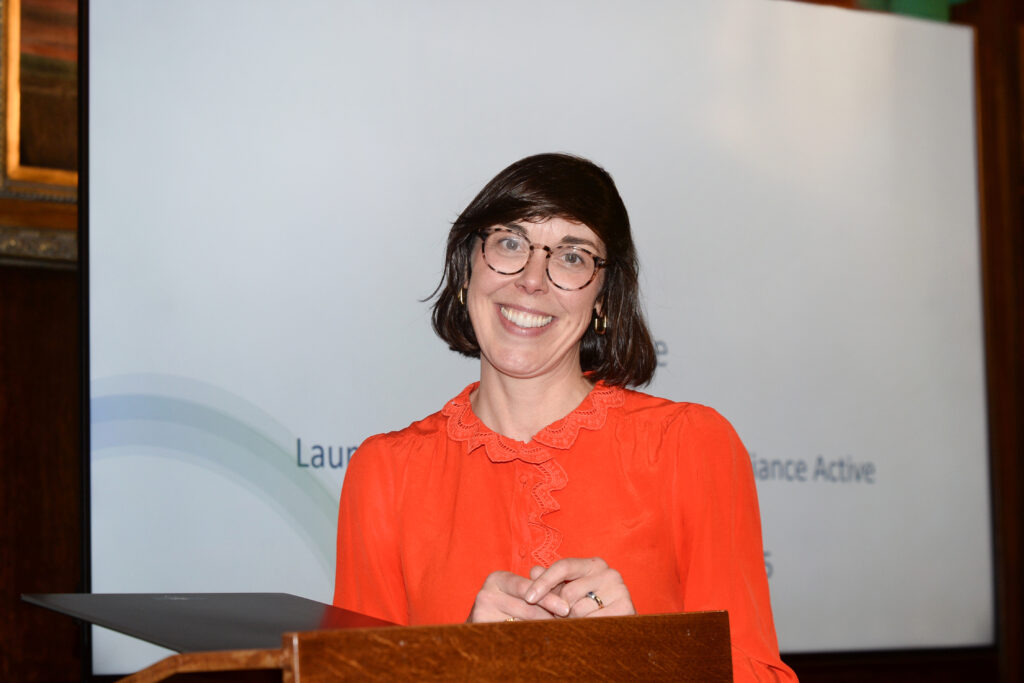
Dr Caoimhe Clarke, Consultant Psychiatrist in Psychiatry of Old Age, St Vincent’s University Hospital, Dublin, and member of Irish Doctors for the Environment (IDE), told the Medical Independent (MI) that this remains a “challenge”.
Dr Clarke outlined the details of The Magic Pill report at the Mansion House launch. Speaking to MI after her presentation, she said that while there is still much work to do to raise awareness within public-policy circles of the issue, she was more “hopeful now”.
This hope arises from her own experience representing the IDE on the Dublin City Council mobility and public realm strategic policy committee.
“[The committee] have been incredibly receptive,” she said.
“Very receptive when I go in and describe the health benefits associated with public transport and active travel, in general. I kind of feel that’s our foot in the door for showing them that transport policy is health policy.”
Dr Clarke said the aim of The Magic Pill report is to “galvanise action” and help build positive momentum on the issue.
She added that it appears politicians at Government level, in recent years, seem “more receptive” to hearing these ideas and recommendations.
“I suppose I’m hopeful with this report that this is something that they will take on board and act on that.”
While the Alliance document is full of facts, case studies, and detailed recommendations, Dr Clarke said that the central, overarching “take-home message to Government is that transport policy is a health policy”.
Increasing the weight given to health considerations in shaping transport policy is vital.
“If you think of transport policy covering active travel, but also rural and urban spaces and transport, you are covering all the bases there when it comes to benefits to health across the country.”
This is where doctors come in, according to the Alliance. In recent years there has been a marked increase in policy engagement and activism by medical professionals in Ireland.
Regarding the environment and health, their efforts have focused on broad challenges such as climate change, as well as specific issues like active travel.
“I think it’s really important that [doctors] provide a compelling argument about the health benefits of active travel whilst doing our job for patients,” continued Dr Clarke.
I think it’s really important that [doctors] provide a compelling argument about the health benefits of active travel whilst doing our job for patients
“That’s what we are used to doing in our work. So, we should be good at communicating how people can stay well.”
She added there is also an onus on Government, and society in general, to make travel options “easy and accessible
for people”.
Dr Clarke noted that active travel does not have to mean long journeys on foot or by bike – even the movement involved in getting to and from a bus stop counts, and is
very “important”.
She said medical professionals were in a particularly strong position to make these connections as “I think we are seen as respected individuals, and the public still do trust us”.
“We focus on the evidence base, facts, and we just need to sell it in a way so that people will take it on board.”
The Magic Pill shines a light on the need for systemic, rather than individual, changes, to improve societal health and wellbeing. But in their daily work, most doctors deal with patients on a one-to-one basis.
Can it be difficult then for doctors to connect with systemic issues?
“It’s true… I agree with that,” said Dr Clarke. “When you are a doctor, you specialise in your field, you’re kind of a little bit blinkered. So, I think, as doctors we do need to think about a wider, broader, system.”
She noted that her colleagues working in the public health specialty are experts on these issues.
“But I do think we need to draw on that [public health skillset] ourselves, in whatever practice as specialists that we are working in.
“Myself, as an old age psychiatrist, I only focus, I suppose, on people over the age of 65…. But that’s a big population when you think about it…. I think it’s really important that we all think nationally, on a wider-systems, societal level rather than just on the individual patient – which is obviously really important as well for us in our daily practice.”
Positive impact
The launch of the report was also addressed by RCPI President Dr Diarmuid O’Shea. Dr O’Shea praised the work of the report’s authors, particularly Dr Owens, who he noted was recovering from a road traffic accident earlier this year, while the report was being put together.
Recounting his own experience with active travel, Dr O’Shea outlined that he had returned to cycling some eight years ago, referring to the positive impact this had on his physical and mental wellbeing.
“It’s an extraordinary gift to be able to cycle safely and exercise safely in your own city and in your own country. But, in order to do this, it requires people, policy, and practice. And by practice, I mean implementation,” he said.
The WHO has adopted a “health in all policies approach”, according to Dr O’Shea.
He said there could not be a better example of this than active travel measures, such as supporting cycling, walking, and public transport usage.
“The truth is, if exercise was a drug, it would be regularly prescribed and taken by people.”
He noted that clinicians are trained to look for interventions that are safe, effective, and scalable.
“And active travel is exactly that – it’s low cost, it’s high impact… and it does transform lives.”
The issue extends beyond transport, according to the RCPI President.
He argued it is also about embedding physical activity into daily life, reducing chronic disease, improving mental wellbeing, and then the resulting positive impact it has on climate change and emissions.
Dr O’Shea, who is a Consultant Physician in Geriatric Medicine, said that the type of active travel a person engages in may change over their lifetime.
But this report “rightly challenges us to go beyond individual behaviour… and asks us to start shaping an environment that supports healthy choices”.
That, he said, is the policy focus of the report. He added that Ireland’s transport infrastructure still prioritises cars over people.
Dr O’Shea also distinguished between “sick care” and healthcare.
“We will always need sick care, we will always need acute hospitals. But healthcare is so important and health promotion is such an important part of that. …We (the RCPI) also train the next generation of health professionals. So we must instil in them an understanding that healthcare is created far beyond the walls of a hospital. It is created in our schools, in our parks, in our streets, and in
our communities.”
He warned that while Ireland is generally good at formulating policy, follow through has often been a difficulty.
“Where we can be better and do more is on implementation and I hope that this document is the launch pad for the success [of] that.”
Speaking prior to the publication of the report last month, Dr Owens said that our current societal structure “means we sit for the vast majority of the day”.
“We sit at desks, in cars, on couches – and it’s taking a toll.”
But he added that there was “good news”. Even 30 minutes of walking or cycling a day can reduce the risk of heart disease, stroke, diabetes, and some cancers.
“It boosts mental health, improves sleep, and helps us feel more energised. If we can embed active travel into our daily lives, it would be hugely beneficial for our physical and mental health.”
Dr Owens said integrating active travel into our daily lives “would be transformative” for his patients.
“When I’ve recommended to my patients that they should walk or cycle more, they invariably say that it’s too dangerous or not practical. Delivering safe active travel networks would increase physical activity, improve public health, benefit mental health, lower healthcare costs, support reduced traffic congestion, improve cost savings for households and the State, and provide quieter streets with more space for walking, play, and nature.’’
He added that if Ireland gets these measures right, it could provide safer, more accessible options for walking, cycling, and public transport, while still accommodating cars where necessary.
“It’s a win for our health, our communities, and the environment.”
In October, MI also attended the 10th Environment, Health, and Wellbeing Conference 2025 in the RCPI, jointly organised by the HSE, Environmental Protection Agency (EPA) and Economic and Social Research Institute.
The focus of the conference was on creating healthier and more resilient people and places through changing perspectives on environment, health, and wellbeing.
Addressing the conference, EPA Director-General Ms Laura Burke reflected on the many challenges facing the environment and health, but also a decade of positive changes. She noted that “there is much better understanding and awareness of the key role that environmental factors play in determining health outcomes”, compared to when the first conference was held.
The need to “put health” at the centre of climate action is also better recognised.
A decade on, there is a deeper understanding of the unequal exposure to environmental and climate-related health hazards across the population, as well as the growing recognition of their impact on mental health.
“Better awareness of the health benefits of a good environment to health and wellbeing” exists now in Ireland and globally, said Ms Burke.
Dr Gregory Martin, Public Health Consultant with the HSE, addressed the conference on the “history of tackling CO2”, while looking at the role of public health as a specialty, both in the past and present. He also discussed other public health issues over the years, such as smoking, and the positive impact medical research and public health professionals have played.
On the issue of climate change, Dr Martin said he believed it may be time to promote larger, international proposals. These could include the introduction of climate damage liability, climate emergency constitutions, and a fossil fuel non-proliferation treaty between nations.
When asked by MI about public health doctors’ involvement in climate action and environmental issues, Dr Martin stressed how advocacy can influence political and policy decisions.
Data collected on “health outcomes can translate into political change”, he added.
Some major data were released in recent weeks with the publication of the 2025 Lancet Countdown on Health and Climate Change report, produced in collaboration with the WHO. The report finds that 12 of 20 key indicators tracking health threats have reached record levels, highlighting how climate inaction is costing lives, straining health systems, and undermining economies.
“The climate crisis is a health crisis. Every fraction of a degree of warming costs lives and livelihoods,” according to Dr Jeremy Farrar, Assistant Director-General for Health Promotion and Disease Prevention and Care at the WHO.
“This report, produced with WHO as a strategic partner, makes clear that climate inaction is killing people now in all countries. However, climate action is also the greatest health opportunity of our time. Cleaner air, healthier diets, and resilient health systems can save millions of lives now and protect current and future generations.”
Ireland’s aim to have ‘the most physically active population in Europe by 2040’
The Government launched the National Physical Activity Framework 2024–2040, as well as the accompanying National Physical Activity Action Plan 2024–2029, last month.
Describing its “ambitious vision”, the document sets out the noteworthy aim for Ireland to have the most physically active population in Europe by 2040.
According to the document, it will do this by creating “enabling environments”.
The framework’s objectives will be driven by three action plans, the first of which was published last month.
In “line with international best practice”, the plan sets out actions for improvement across various areas including: Active travel; active urban design; healthcare; public education; and workplace and community-wide programmes.
Speaking at the launch, Minister for Health Jennifer Carroll MacNeill said that since the publication of Ireland’s first physical activity plan in 2016, the nation had “made huge progress” across a range of sectors in supporting people to live more physically active lives. She said that with the new framework and action plan, targets are now being set at a higher level.
“The new strategy will enhance national efforts to promote regular movement for people of all ages,” said the Minister. “It recognises that we all have a shared responsibility across sectors to create environments and communities that support people to engage in regular physical activity.”
The framework and associated action plan have been developed by the Department of Health, in conjunction with the Department of Culture, Communications, and Sport. The development process involved “extensive engagement with multiple government departments”, as well as NGOs, researchers, and stakeholders from a variety of sectors.
The Minister of State with special responsibility for Public Health, Wellbeing, and the National Drugs Strategy, Jennifer Murnane O’Connor, said physical activity provides a range of benefits to our physical and mental health in both the short- and long-term.
“By supporting more people to be physically active, we are not just improving quality of life for the individual, but also improving overall population health.”
The Government described Ireland’s performance on physical activity since 2016 as “encouraging”. Eurobarometer data from 2022 shows that 14 per cent of Irish adults engage in physical activity at least five times a week. This was significantly ahead of the European average of 6 per cent.
The Department said work on implementation of the action plan has commenced, including the formation of a strategic communications group to align messaging and outreach efforts across physical activity programmes.
There is a section of the action plan focused on ‘active travel’.
“Given the relatively large proportion of people’s time taken up by travel, integrating more active travel modes, particularly for shorter journeys, is a practical and sustainable way to increase daily physical activity,” according to the plan.
Some of the active travel actions highlighted in the Government’s plan include:
- Building on the Climate Action Plan target of 1,000km of active travel infrastructure, which will be rolled out by 2025, over the period to 2029.
- Exploring avenues to make cycling a form of transport or exercise more financially accessible to those who cannot avail of current incentives.
- Supporting a variety of infrastructures to facilitate safe walking and/or cycling and/or wheeling, including measures to decrease speed, reduce vehicle traffic, and enhance active mobility.
- Exploring the development of initiatives to support a behavioural and modal shift towards active travel to increase the number of people choosing these modes as their primary travel mode.
Full framework document can be read here: https://assets.gov.ie/static/documents/a66f6b61/National_Physical_Activity_Framework_2024-2040_English.pdf
Is it time to swallow the magic pill?
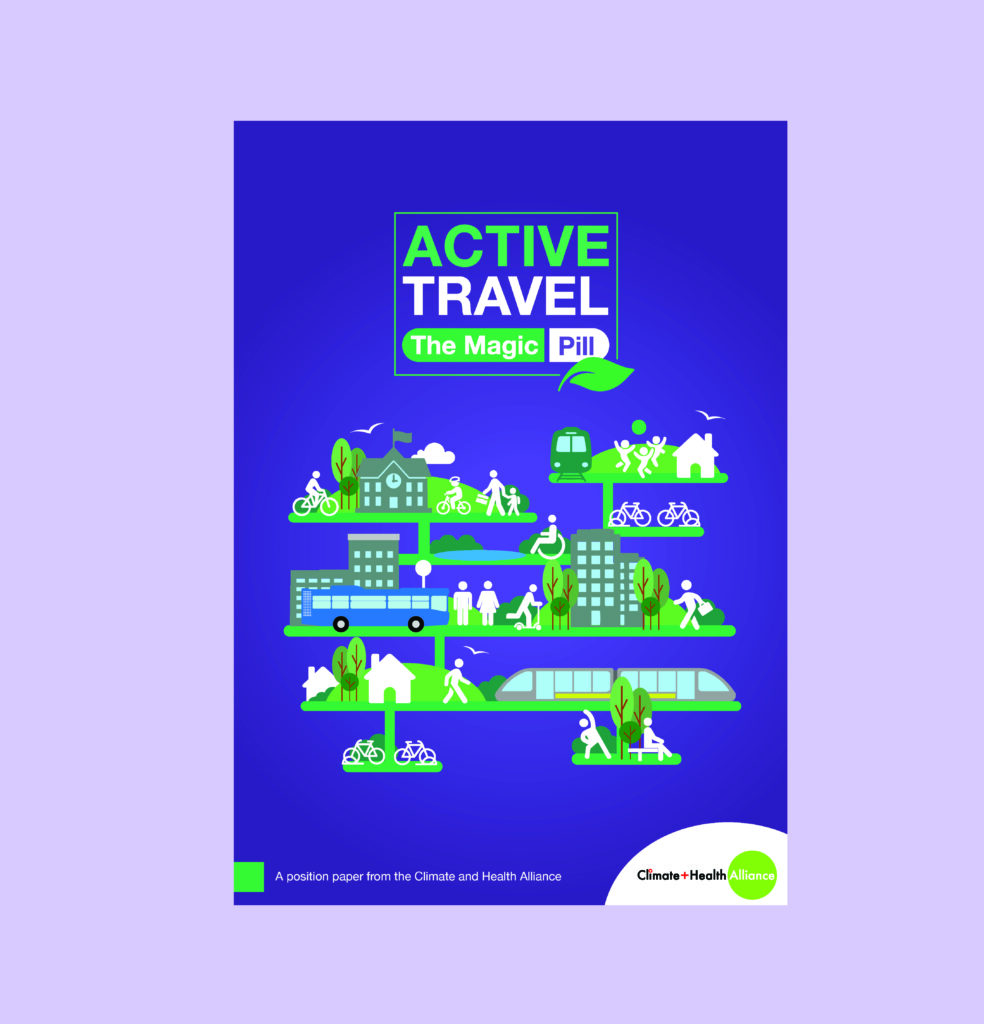
The Climate and Health Alliance’s document, Active Travel: The Magic Pill, asks people to “imagine a single medication that could reduce the risk of heart disease, stroke, diabetes, and some cancers”.
This ‘magic pill’ would also improve mental health, boosting sleep, and cutting carbon emissions.
They describe it as a breakthrough intervention that would be championed by governments and healthcare professionals without the slightest hesitation.
This pill, according to the Alliance, is ‘active travel’.
“Our Alliance is calling for bold and urgent action to tackle Ireland’s growing problem with physical inactivity,” said Dr Caoimhe Clarke, member of Irish Doctors for the Environment.
“We know what needs to be done, and the benefits are huge. We need to make transport plans work better together; shift funding away from car use and towards walking, cycling, and public transport; make sure town planning supports active travel; and help people understand how good it is for their health and wellbeing.”
The Alliance warns that simply telling people to move more is not enough when the design of our towns, cities, and transport infrastructure actively discourages activity.
“Ireland has no shortage of policies and plans to support sustainable mobility and active travel,” said Dr Clarke.
“But progress has been slow and fragmented. To unlock the immense health, economic, and environmental benefits of a more physically active society, we need faster, fairer, and better coordinated implementation.”
The Alliance’s report concludes that Ireland needs a transport system that promotes health, equity, and climate goals – an inclusive, accessible network that makes active travel the easy choice.
“This means better public transport integrated with walking, wheeling, cycling and, when needed, car use. Such a system promotes physical activity in daily life while reducing emissions and congestion.”
The report notes that Ireland already has policies like the Government’s climate action plan and its sustainable mobility plan.
“But these have been undermined by inconsistent implementation and planning decisions that favour car-centric sprawl.”
Modifications to current policies may be required, “but above all we need the political courage to fully and consistently implement the strategies we already have.”
The report also has a direct message for healthcare professionals, encouraging them to “champion change”.
It calls on healthcare institutions and professionals to support national policy and bring climate action and active travel measures to fruition.
“We need the public to know of the health benefits that arise from a shift from car use to active and public transport. We are asking healthcare professionals to walk, cycle, or take public transport to their place of work if possible.”
As leading, trusted members of the community, the report says that healthcare professionals need to be the advocates and the role models, “who help realise these measures as de facto health policies.”
Full report can be read here – https://climateandhealthalliance.wordpress.com/resources/








Leave a Reply
You must be logged in to post a comment.