








Public health has been in flux since the Covid-19 pandemic – a new strategy now sets the agenda through to 2030. David Lynch reports
Developments within public health in Ireland continue apace, with the publication of the new national strategy. This document comes at the end of a period of significant change for public health doctors and other healthcare workers.
Speaking on the launch of the HSE Public Health Strategy (2025–30) last month, Prof Mary Horgan, Chief Medical Officer, Department of Health, called it a “bold and timely vision” (see panel p4). Dr Colm Henry, HSE Chief Clinical Officer, said the strategy “provides clear direction and empowers” the public health workforce to deliver real and sustainable improvements in population health and resilience.
According to the HSE, the document provides a “cohesive direction” for public health and is “engineered to drive through and realise the full potential” of the recent reform process for the specialty.
That process has been front and centre of the working lives of those in public health in recent years.
In February 2025, the Medical Independent (MI) reported that a 2021 agreement between the IMO and the Department of Health to establish 84 public health consultant posts had “essentially” been implemented, according to the HSE. At the time, the Executive told this newspaper that it was moving to consideration of future workforce planning for the public health consultant grade, including succession planning for future retirements and implications for the training scheme.
A year on, such planning will form an important part of the new strategy. As reported in MI last month, work has begun on developing a public health strategic workforce plan and a competency framework, according to the project lead of the new strategy.
Dr Louise Hendrick, Consultant in Public Health Medicine, was speaking during an online webinar at the end of last year to launch the strategy (see panel p4).
The competency framework and workforce plan will support workforce development and optimise the skill mix of consultant-led multidisciplinary teams, said Dr Hendrick. A new steering group has been established to oversee the development of a strategic action plan and strategy implementation.
Writing in this newspaper in May last year, IMO President, and Consultant in Public Health Medicine, Dr Anne Dee, said while there had been “significant success” in recent years in establishing the grade of consultant in public health medicine, there remained challenges around recruitment within multidisciplinary teams.
“Many programmes of work are underway,” a HSE spokesperson confirmed to MI. “The development of a strategic action plan is a key step in driving implementation of the strategy and supporting our integrated public health function.”
Regarding the development of a strategic workforce plan, the spokesperson said this would be developed through the national office of public health, “with engagement with key stakeholders” including National Doctors Training and Planning.
“This work will consider the full multidisciplinary public health workforce, including, but not exclusively, our consultants. A timeline for this work is currently being developed.”
Sustainable
One of the goals contained within the strategy document is to develop a “sustainable and resilient” multidisciplinary HSE public health workforce.
The strategy directly poses the question – what would success in this area look like in five years?
“A strong, integrated public health function with effective governance, a high-performing service delivery model, system-wide collaboration, emergency preparedness, resilience, and demonstrable improvements in population health,” according to the document.
This vision will be supported by a “skilled and engaged” workforce and a positive work environment “with excellent recruitment and retention, robust workforce planning, career progression and development, strong staff engagement, and effective communication”.
The publication of the new strategy has been positively received.
The Irish Society of Specialists in Public Health Medicine (ISSPHM) said it “strongly” welcomed the development and recent publication of the plan.
“This is a key milestone in the journey of public health reform and provides an essential foundation for the work public health consultants need to do across Ireland,” Dr Fiona Cianci, ISSPHM member and Consultant in Public Health Medicine, told MI.
“The strategy is critically important in giving consultants the mandate to advance public health initiatives within the HSE, as demonstrating strategic alignment is fundamental to progressing work in the organisation, and this framework now provides that clarity and direction.”
She said that the Society believes that the implementation of the strategy will deliver better health outcomes for the nation’s population.
Active travel
The Climate and Health Alliance (CHA) also “strongly supports” the new public health strategy, Dr Caoimhe Clarke, Consultant Psychiatrist in Psychiatry of Old Age, St Vincent’s University Hospital, Dublin, told MI.
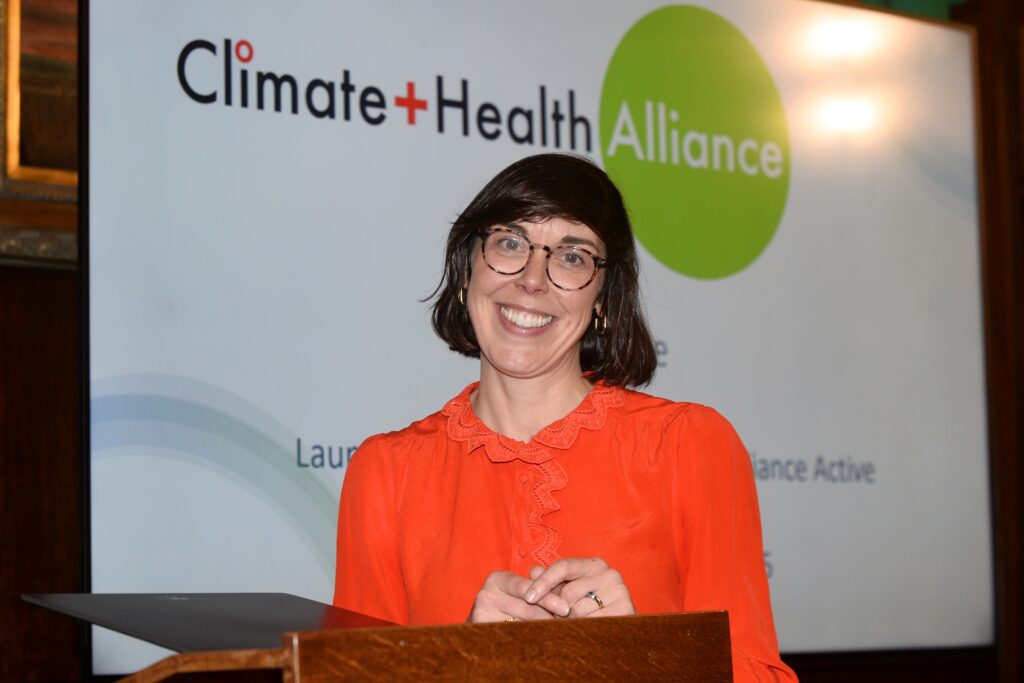
The Alliance comprises more than 30 medical, health, and social care organisations and regards the new document “as a significant opportunity” for the Government to recognise that “transport policy is health policy”.
As reported in MI in November, the Alliance recently published a new report, Active Travel: The Magic Pill, which highlighted that people in Ireland today lack safe areas to be physically active.
Dr Clarke, who is also a member of Irish Doctors for the Environment, said the CHA believed health policy embedded in transport policy represents highly cost-effective and high impact public health interventions, helping to prevent chronic disease while creating healthier, more liveable communities.
“It is welcome that section 3 [of the new strategy] acknowledges the novel concept of commercial determinants of health, ie, we are only as healthy as our commercial environment allows us,” said Dr Clarke. “Healthcare needs to find a much stronger voice here; that is, we cannot continue to heavily advertise cars, whilst allowing inadequate public transport and dangerous active transport.”
For too long, she said, transport and public health have been addressed in separate silos to the detriment of population wellbeing, environmental sustainability, and health system resilience.
Dr Clarke said that members of the CHA active travel group thought the front cover of the new strategy (see panel p5) was “noteworthy”. The cover features people of all backgrounds “interacting” and “no cars” are visible. “This is telling and this is what health looks like in Ireland in 2026. It is not controversial to say that from a health perspective, driving is not conducive to health,” she added.
She noted the CHA’s Magic Pill report highlighted that people in Ireland today lack safe areas to be physically active.
“This is not due to an awareness issue of the public or indeed healthcare, rather a planning and governance issue,” said Dr Clarke. “People live in a car-dependent environment and act accordingly. For a viable healthcare now and in the future, we urgently need to change this. Blaming people for being unhealthy is part of the blame culture which is undermining our collective health.”
Workforce
While all aspects of the new strategy “are important”, according to the ISSPHM, the Society regards the development of an integrated, well-trained public health workforce as the “most vital” priority.
“Effective collaboration both within the HSE, across regions and centres, and with external partners including, but not limited to, Government departments, local government, academia, and community organisations, is essential to delivering effective public health activities,” Dr Cianci told MI.
“An integrated workforce approach is the foundation that enables all other strategic priorities, ensuring we effectively harness the collective expertise and efforts of our workforce.”
She added that addressing this challenge, while ensuring existing public health teams have access to high-quality training and ongoing professional development, will be essential to realising the strategy’s vision, and fostering the collaborative culture necessary to deliver better health outcomes for all communities across Ireland.
On the issue of active transport and public health, Dr Clarke said the CHA’s Magic Pill document recommended greater coordination of the governance of our transport system.
“At present, there are too many plans and policies, but who is in charge?” she asked. “We strongly advocate for a rebalancing of resources away from car use, to allow people to engage in active travel such as walking, wheeling, cycling, and public transport wherever possible.”
The Alliance notes that public bodies will pay mileage for cars, but does not recognise any benefits for those who cycle or get public transport to work.
“We would like to see Government restore the 2:1 public transport to roads spending ratio, whereby €2 is invested in public transport for every €1 spent on roads.”
The CHA has identified the need to address the interconnections between land use and transport planning. Dr Clarke observed that low-density, dispersed housing inevitably increases car dependency, underscoring the importance of integrated planning strategies.
“It is also of note that the references of this [new public health] strategy are mainly Government reports or already passed plans and policies. This is also true for The Magic Pill report. This report did not ask for anything to be enacted that was not already approved.”
Sustained investment in public transport, walking, and cycling delivers immediate and long-term benefits for physical and mental health, reduces health inequalities, reduces air pollution, and lowers carbon emissions.
“Aligning transport investment with public health objectives is essential in achieving a healthy population, healthy communities, and a more resilient health system. Finally, our report has found an urgent need for healthcare to communicate the positives of active travel.”
Implementation prioritised at strategy launch
At last month’s online launch, the project lead for the HSE’s new Public Health Strategy 2025–2030 stressed that the plan must not “just sit on a shelf”.
Dr Louise Hendrick, Consultant in Public Health Medicine, said: “This [strategy] absolutely has to be implemented. Not just for us in public health, but also for the people we work for, which is the population.”
She added that the HSE would be launching a dashboard of key performance indicators of population health outcome measures. This “will ensure that we are answerable to our population and the monitoring of the strategy can be open to all and is very transparent”.
The Executive had started work on developing a public health strategic workforce plan, according to Dr Hendrick.
“We’ve been given an opportunity in public health with the investment and the reform that we have seen in the last number of years,” she said.
“We now need to make the most of it – the way we will do that is by supporting our workforce to enable them to be the best they can be, to give them clear career pathways in terms of development and to ensure that we optimise the skills mix we have out there for the future of the workforce.”
The HSE is also developing an action plan to implement the new strategy, she said.
The HSE said the document sets out a roadmap to improve health outcomes, reduce inequalities, and strengthen Ireland’s public health system over the next five years.
The strategy was developed in consultation with a diverse range of stakeholders, local government, and community partners. Its stated aim is to “deliver a high-quality, integrated public health service, and foster a culture of collaboration, innovation, and evidence-informed practice”.
Prof Mary Horgan, Chief Medical Officer, Department of Health, said the new document “can deliver lasting positive change for individuals, families, and communities”.
“The Department of Health is proud to support a strategy that listens to patients, values evidence, and empowers public health professionals to build a healthier future for everyone.”
Dr Colm Henry, HSE Chief Clinical Officer, said the strategy will ensure that public health will play a “strengthened and pivotal role” in the transformation of healthcare as envisaged by Sláintecare.
Dr John Cuddihy, HSE National Director of Public Health, described the document as “ambitious”.
“By listening to the voice of patients and communities and working closely with partners from across society, we are laying the foundation for a public health function that is prepared for the future and driven by measurable impact.”
Highlights from the five-year plan
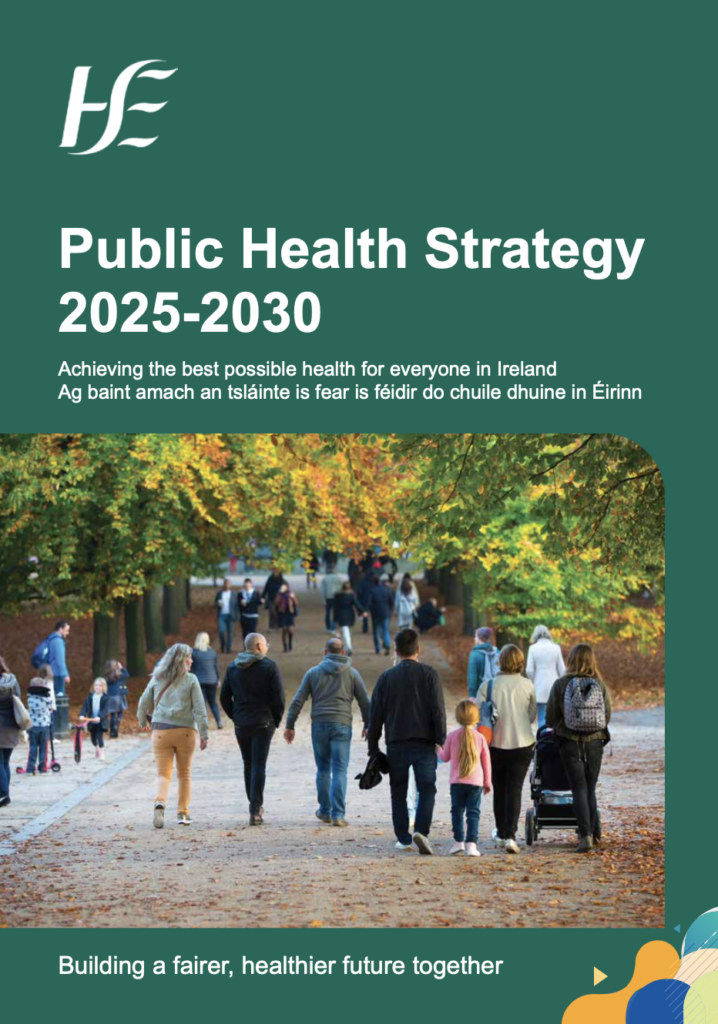
The new public health strategy aims to increase physical, mental and social wellbeing across the life course; protect health; prevent disease; build healthy communities; address health inequalities and achieve health equity; drive and harness innovation; and provide a high-quality public health service.
The six priorities of the strategy are listed as:
1. Deliver a high-quality and integrated public health function.
2. Protect the population from all health threats.
3. Strengthen action on the wider determinants of health.
4. Reduce health inequalities across all stages of life.
5. Strengthen health services to address population needs, emphasising prevention and early intervention.
6. Leverage health information, evidence, research and innovation for better health.
Regarding e-health, the strategy states the need to have “strong health information systems” to help rapidly detect and respond to public health issues and emergencies, including new health threats.
The HSE will also consider “how evolving technologies, including artificial intelligence, may influence public health practice” in the areas of infectious and environmental diseases, disease surveillance, contact tracing activities, and active case finding or screening. This includes the development and deployment of new testing technologies, such as near-patient testing.
The strategy is available at: www.hse.ie/eng/services/list/5/publichealth/publichealthdepts/hse-public-health-strategy-2025-2030-.html










Leave a Reply
You must be logged in to post a comment.