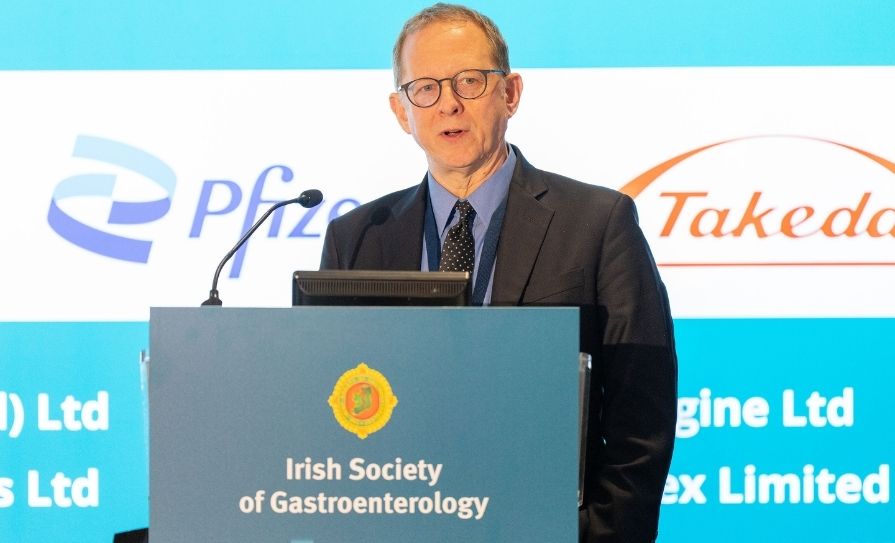
Prof William Bernal
Survival in chronic liver disease (CLD) failure remains poor, but outcomes are improving and further gains are possible through targeted interventions, the 2025 Irish Society of Gastroenterology Winter Meeting heard.
Prof William Bernal, Professor of Liver Critical Care Medicine, King’s College London, UK, discussed improving outcomes in acute-on-chronic liver failure (ACLF). King’s College is one of the busiest liver centres in the UK, carrying out over 200 adult and child transplant operations every year, and Prof Bernal is a leading researcher, clinician and advocate in the field. Among the key innovations Prof Bernal pioneered are the use of high-volume haemofiltration to control hyperammonaemia in critically-ill patients, and the development of the UK’s national criteria for emergency liver transplantation in ACLF. He also initiated and led the UK’s prioritised liver transplantation programme for ACLF, shaping clinical practice and policy in this challenging area of hepatology.
Despite recent improvements in outcomes, ACLF is still associated with high mortality rates, he said.
Prof Bernal highlighted a 38 per cent increase in alcoholic liver disease hospital discharges and a 29 per cent increase in deaths from ACLF in Ireland over a 10-year period (2006–2016).
Patients with CLD are often first diagnosed during an emergency hospital admission, when their disease is advanced and cirrhosis is present, often with decompensation and/or portal hypertension.
Acute kidney injury is another risk, Prof Bernal noted.
Outcomes for these patients are very poor: A quarter will die within 60 days of their first emergency admission and nearly 70 per cent of those who survive their admission will die within five years.
Only 30 per cent will survive a year without transplant after intensive care unit admission. As a result, these patients need to be assessed immediately for transplantation.
Early recognition is key to improving survival in CLD patients with ACLF – each hour of delay in diagnosis increases mortality by 3 per cent, he said.
Prof Bernal stressed the need to have a low threshold for intervention in those with acute decompensation at risk of rapid deterioration to ACLF and sepsis: “We’ve got to act very quickly.”
Key red flags for developing ACLF in these patients include ascites, organ dysfunction/failure, systemic inflammation, and if their severity scores are very high.
Using a care bundle to provide a structured approach for the management of patients with decompensated cirrhosis in the early hours of admission is a key early practical step, Prof Bernal said. Usage of the British Society of Gastroenterology/British Association for the Study of the Liver decompensated cirrhosis care bundle has been shown to improve care and outcomes of these patients. However, despite this, overall usage in these admissions across the UK was less than 10 per cent in a national audit (TORCH collaborative), he noted. “So there is tremendous opportunity to improve care in these patients.”
Antibiotics are key to improving ICU survival rates in ACLF, he stressed, advising that antibiotics should be given without delay when infection is detected, “and not just for sepsis.”
Stigma and fatalistic attitudes to admitting decompensated CLD patients to critical care is another key issue that needs to be addressed, the professor told the meeting. “There is a perception often that this illness is self-inflicted and somehow these patients are less worthy… of being admitted to ICU,” Prof Bernal said, citing UK data that showed that care was often not escalated in these patients.
However, data has shown that carefully selected ACLF patients can do well with liver transplantation and appropriate care, he added.












Leave a Reply
You must be logged in to post a comment.