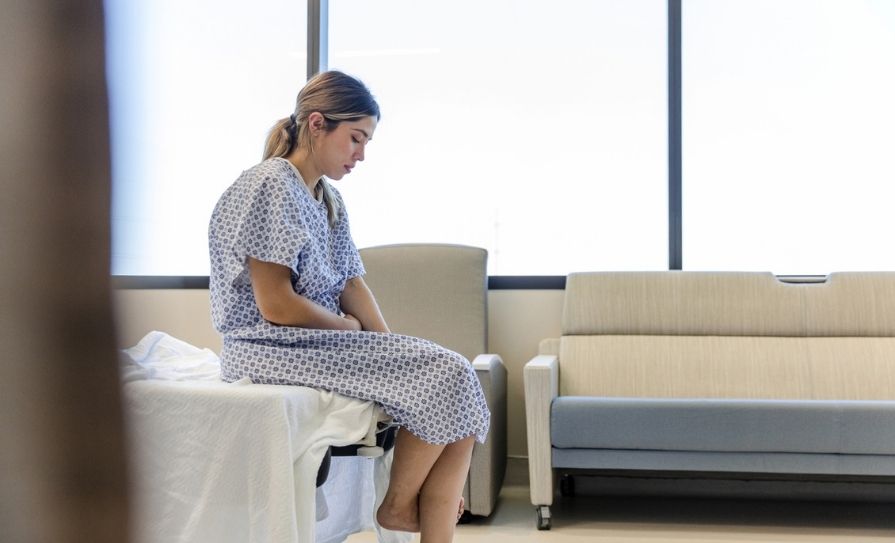
iStock.com/SDI Productions
I’ve seen patients suffer not from a lack of skill or care, but from a system too slow to adapt
For longer than I can remember, I’ve walked hospital corridors and wondered at the fact that interventional radiologists operate with such clinical precision while inserting a drain, a needle, or a stent under MRI guidance, while the staff booking the procedures for patients still rely on pen and paper, informal relationships with colleagues, and manual phone calls.
I’ve seen patients dealing with protracted waiting times not because of a lack of staff or capabilities, but because of a broken printer or missing charts.
We can transplant hearts, replace hips, and sequence genomes, yet we still lose countless hours to legacy systems that would not survive a day in any other major industry.
I observe an odd duality: Medicine is scientifically advanced, yet the technological processes that support care delivery are far behind. While it is tempting to ascribe that to leadership stubbornness or institutional inertia, the reasons are more complex and multifaceted, and, I think, more human.
Change in the healthcare sector is always underpinned by a high degree of caution because it deals with something sacred: Human lives. Mistakes do not just result in lost profits; they can result in harm. This caution is not inherently bad; it is part of what makes the system trustworthy. However, increasingly, I wonder: When does it become an excuse for inaction?
The best medical practitioners are always those who balance risk against benefit. When does caution stop protecting patients and start hurting them? There comes a point when an abundance of caution begins to fossilise creativity and patients start to suffer.
Over the past decade, I’ve seen digital tools that could ease the burden on clinicians, tools that streamline triage, coordinate care, or track risk in real time, be sidelined, scrapped, or delayed, not because they don’t work. It happens because the system doesn’t know how to let them in. Innovators are often regarded as threatening.
The consequence of this is a vacuum in which we carry on as we always have. We read headlines about hospital crowding, burned-out nurses doubling as data clerks, NCHDs spending half their shift searching for results already printed somewhere else or repeating radiological tests because previous images are not readily available. Patients fall through cracks that no algorithm is allowed to close.
I have seen digital tools piloted, proven, and embraced locally, but never adopted more widely. There are many examples where good processes never went beyond local deployment. For example:
▶ The Wexford Telehealth pilot was a remote monitoring system for older adults that achieved a 98 per cent patient engagement rate. Staff reported that the alert and triage workflows and referral features were robust, intuitive, and clinically effective. Yet integration stalled due to concerns over privacy, data integration, long-term storage, workflow redesign costs, clinician training needs, and procurement delays.
▶ The electronic patient management system, developed over 20 years by consultants at University Hospital Limerick, proved highly successful in managing inpatients and generating discharge summaries. It has never been extended beyond a handful of consultants. This was again due to a lack of confidence and fear within the broader healthcare environment about wider deployment.
We in healthcare like to think of ourselves as evidence-based and in many ways we are. But sometimes, I worry we are more tradition-based than we admit. We resist not just bad ideas, but new ones. We build or block policies to avoid embarrassment and hassle more than we design systems to empower care.
To be clear, I am not calling for a revolution. I do not want Silicon Valley in scrubs, where lightning speed is the norm and failures are worn like badges of honour. Instead, I want healthcare to remain careful, but not paralysed. We can build steadily, rigorously, and ethically. We can pilot before scaling. We can bring clinicians into the design room, not just hand them tools built in boardrooms.
The irony is that many of us already know what needs to change and there are clinicians with the technical competence to create meaningful solutions. But in the trenches of daily practice, between handovers and ward rounds, there is little space to push those changes forward. So, we adapt, we work around, we cope, and we tell ourselves it is enough. But it really is not.
If we truly believe in ‘do no harm’, then we must see pointless delay and correctable inefficiencies as a form of harm too. The latter is the harm of missed opportunity, of a system that collapses under the weight of its own stasis, of patients left waiting not for treatment, but for us to catch up.
It is time we stopped calling that safety.
Dr Azrin Muslim is a Medical Registrar and Research Fellow with the HSE Research Directorate, Mid West












Leave a Reply
You must be logged in to post a comment.