NOTE: By submitting this form and registering with us, you are providing us with permission to store your personal data and the record of your registration. In addition, registration with the Medical Independent includes granting consent for the delivery of that additional professional content and targeted ads, and the cookies required to deliver same. View our Privacy Policy and Cookie Notice for further details.
Medicine for NCHDs has been reconfigured as a production line and this needs to change
In Irish hospitals today, increasing service pressures and operational demands have shaped how care is delivered, with clinical work often structured around discrete tasks. Nowhere is this more apparent than in the working lives of NCHDs, whose roles have become dominated by service provision at the expense of education, continuity, and professional development.
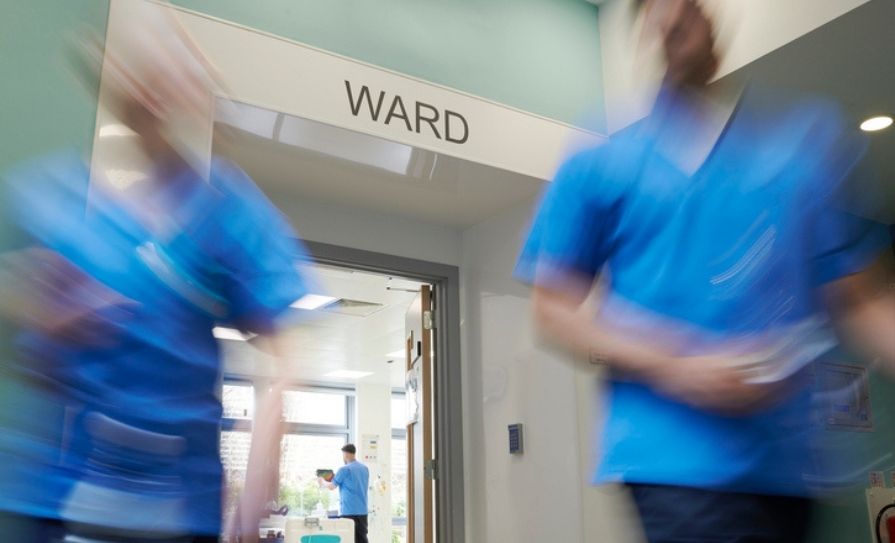
Traditional ward rounds, once the cornerstone of clinical learning and multidisciplinary discussion, have steadily eroded. In their place stands a fragmented model of training, driven by relentless operational demands. NCHDs spend much of their day responding to bleeps, ordering investigations, or completing discharge summaries. Clinical reasoning, reflective practice, and structured teaching are increasingly rare.
Frequent rotations through short-term posts further undermine continuity. Many NCHDs work under consultants who scarcely know their names, let alone their competencies or educational needs. Without consistent supervisory relationships, feedback becomes perfunctory, assessments lose validity, and motivation to grow and learn fades.
Policy shifts have amplified these trends. The 2017 Sláintecare report advocated for consultant-delivered services to improve population health outcomes, proposing greater consultant involvement in diagnosis and patient management. While this model improves oversight, it risks relegating NCHDs to the role of task executors: Consultants making nearly all the decisions, leaving NCHDs to implement plans, complete documentation, and coordinate logistics.
This transformation reflects a deeper cultural shift: Medicine for NCHDs has been reconfigured as a production line. Success is measured in discharges, completed forms, and cleared waiting lists, rather than in clinical mastery, or thoughtful patient care. NCHDs are valued for their ability to keep the system functioning, not for their ability to reason through complex clinical problems. The joy of learning and mastering the art of clinical assessment, once integral to medical work, is being stripped away.
The consequences are clear. Burnout, emigration, and career dissatisfaction among Irish NCHDs are already well documented. Task-based medicine accelerates these trends by hollowing out the intrinsic joy of medical work. Professional identity erodes, morale collapses, and retention becomes increasingly difficult. Patients, too, suffer. This disjointed care weakens continuity, leaving patients to navigate a carousel of exhausted doctors with restricted time and supervision.
None of this need be inevitable. Protected ward rounds, structured teaching, and meaningful supervision are not luxuries; they are core components of safe, effective healthcare systems that are essential to develop the next generation of consultants. Reclaiming these elements requires institutional courage: Prioritising education alongside service, staffing wards appropriately, and acknowledging that training and patient care should be integrated at every opportunity.
Medicine is not an assembly line. NCHDs deserve better than a system that asks everything of them while stripping the joy of learning, which was once integral to the job. We cannot expect doctors to emerge as confident clinical decision-makers when their formative years as NCHDs are spent executing plans rather than formulating them.
NCHDs deserve better than a system that asks everything of them while stripping the joy of learning that which was once integral to the job
One response to “Task-based medicine and the NCHD experience”
Well done on the article. It’s saying things out loud what we as NCHDs have been seeing especially post COVID. The progressive absence of structured ward round, especially post take is a genuine loss to the development of clinical reasoning and mastery












Well done on the article. It’s saying things out loud what we as NCHDs have been seeing especially post COVID. The progressive absence of structured ward round, especially post take is a genuine loss to the development of clinical reasoning and mastery