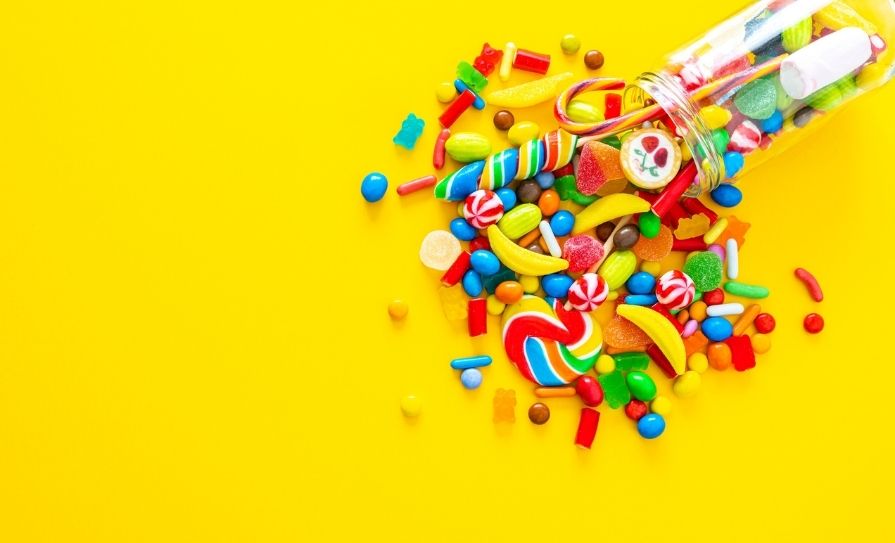
iStock.com/fcafotodigital
Hospitals are selling the very products linked to the conditions they go on to treat
“I recognise the public health physician across the hotel lobby. I’d observed him at the airport, demolishing a tub of Pringles four at a time before boarding his flight. Our flight. Three hours later we’re at a wind-blown Convention Centre. The occasion is a conference on sugar addiction and I’m frantic for glucose in a venue that’s banned farinaceous-derived provender. I sidle over. “Great lecture Dr Duke. Howsabout some confectionery?” Duke blinks. “Whaddaya mean?” I recount the Pringles episode. Duke blanches, he rummages in his jacket and with the practiced ease of a drug dealer palms me a fun-sized Snickers bar. “Sod off,” he commands. I slink towards the exit, cramming the confection in my mouth, but alarm bells erupt from a bank of wall-mounted continuous glucose monitors. Delegates nail me with thousand-yard stares and I sprint into a swamp
of decaying muffins.…”
That’s the last time I’ll re-read Hunter S Thompson’s Fear and Loathing in Las Vegas (1971) before going asleep.
But the irony of the novel’s narrator Raoul Duke’s “dangerous lunacy” whereby “a drug-addled fraud-fugitive who just ripped off a downtown hotel” attends a National District Attorneys’ Drug Conference cannot have been lost on certain UK NHS professionals. There are health professionals who organise conferences on food addiction, type 2 diabetes, and obesity, trying to do good and make a difference; and there are hospital sites who fuel those very same health conditions by promoting and potentially profiting from the sale of edible and drinkable rubbish.
For example, on 4-5 September this year in London, the Royal College of General Practitioners will be the venue for the International Food Addiction and Comorbidities Conference. Food addiction (FA) was first described in 1956. Unwin et al, writing in Frontiers in Psychiatry (2022, 13: 1005523), explain “[l]ow carbohydrate and psychoeducational programmes show promise for the treatment of ultra processed food (UPF) addiction”, citing evidence that pizza, chocolate, crisps, biscuits, and ice cream are the five most problematic foods for those with FA symptoms.
And in the same journal (published 1 May 2025) Unwin et al describe “the Delphi method to form an international expert consensus statement on UPF addiction”, aiming for “official recognition of addiction-like symptoms related to certain foods as a substance use disorder, with an emphasis on UPFs as the ‘substance’”. The authors warn that ignoring the impact of the addictive properties of foods on certain susceptible individuals risks “the worsening of obesity, problematic patterns of overeating behaviour, and chronic metabolic disease, affecting increasingly younger populations globally”.
Yet despite the noble aims of such initiatives we also have – to borrow former UK Labour Party leader Neil Kinnock’s 1985 phrase wielded in a political context – “the grotesque chaos” emanating from some NHS health boards whose managements appear to have more money than sense.
Thus, in May this year I submitted Freedom of Information (FoI) requests to 101 NHS England Trusts asking how much they spent on confectionery (eg, chocolate, crisps, biscuits, etc) and sugar-sweetened beverages (SSBs) for 2023/24 and 2024/25; how much of a markup they placed on those items; and what their profit was. Of the 31 or so replies I’ve received so far, the two front runners are Nottinghamshire Healthcare NHS Foundation Trust and Royal Devon University Healthcare NHS Foundation. Nottinghamshire Healthcare spent £383,000 and £402,000 in 2023/24 and 2024/25, respectively; the percentage markup was 20 per cent; and the profit was zero since the “Trust calculates it makes a loss after staff and running costs”. Royal Devon University Healthcare had no data for 2023/24, but for the period 1 April 2024 to 31 March 2025 it spent £406,952.40. Markup data were withheld for commercial reasons; and as for profit, the Royal Devon was “[u]nable to give a reply as procurement does not hold the granular level of information requested”.
One might reflect on the extent to which an annual expenditure approaching half a million quid on junk food from a single NHS Trust could have been more sensibly spent… even by Raoul Duke. And in Scotland, NHS Borders’ report Full to the Brim states: “Our surroundings can make us gain weight because they encourage unhealthy habits, such as easy access to high calorie processed foods…” and observes that using planning laws “to restrict junk food sales helps improve public health by reducing access to unhealthy options, particularly in areas with high obesity rates”. But undermining all this glossily presented flannel is the fact that FoI data show that in 2022/23 and 2023/24 NHS Borders spent £21,933.70 and £19,202.33, respectively, on confectionery and SSBs for resale to patients, staff, and the public.
In 2013, the British Medical Association called for a ban on junk food and SSBs on hospital premises. Twelve years on, some health managers have demonstrated their inability to manage.
Not even Hunter S Thompson could have made up such a sorry tale.












Leave a Reply
You must be logged in to post a comment.