iStock.com/chokchaipoomichaiya
Each year, the Ig Nobels celebrate science that makes us laugh before it makes us think – and 2025 was no exception
Does alcohol enhance your foreign language fluency? Does painting cows with zebra stripes help repel biting flies? With bizarre subjects such as these, it has to be time for the annual Ig Nobel Prizes. And the 2025 recipients didn’t disappoint, yet again honouring “achievements that first make people laugh, and then make them think”.
The awards ceremony is also a fun-filled affair. It features miniature operas and 24/7 lectures whereby scientists must explain their work twice: Once in 24 seconds and then in just seven words. And acceptance speeches are limited to a challenging 60 seconds.
This year’s biology prize went to Japanese researchers who set out to tackle the scourge that flies pose for cattle herds. It turns out there is an economic cost to the restlessness flies induce in cows as they try to shake off the biting insects. They cause cattle to graze less and to start bunching together, which increases heat stress and risks injury to the animals. This results in less milk yield for dairy cows and lower beef yields from dry stock.
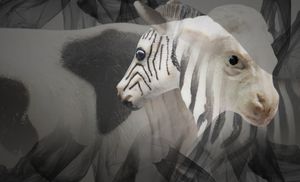
However, zebras aren’t much bothered by biting flies. Scientists have long debated the function of the zebra’s distinctive black-and-white striped pattern. Is it for camouflage? Or could it be to repel annoying flies? Tomoki Kojima and his colleagues from the Aichi Agricultural Research Centre in Japan decided to put the latter hypothesis to the test. They painted zebra stripes on six pregnant Japanese black cows using water-based paint that washed away after a few days.
Amazingly, the zebra stripes decreased both the number of biting flies on the cattle and the cows’ agitated fly-repelling behaviours compared to those with no stripes. As to why zebra stripes help, well that’s now the subject of further research.
Food featured heavily in the 2025 awards. A study into the impact of diet on breast milk flavour won the paediatric prize for showing that babies suckled for longer after their mothers ate garlic. And an Italian team won the physics prize for figuring out why the pasta dish cacio e pepe can be ruined by unpleasant clumping.
Then there were chemistry prize winners Rotem Naftalovich and his brother Daniel who hit on the idea of Teflon as an ideal zero-calorie food filler. Teflon is a form of plastic with the chemical name polytetrafluoroethylene (PTFE) that seems an unlikely dietary additive.
However, the Rutgers University researchers explained how PTFE could make up a quarter of our food by volume, while being excreted, unmetabolised, by our bodies. Emphasising Teflon’s qualities as inert, heat-resistant, impervious to stomach acid, tasteless, and cost-effective, the researchers noted that it is also available in a handy powder format. They recommend a ratio of three parts food to one part Teflon powder. Apparently, the US Food and Drug Administration wasn’t very keen on the proposal, which isn’t a great surprise. Meanwhile, my standout Ig Nobel Prize for 2025 was the peace prize winner. The award went to a German, Dutch, and British team who showed that a shot of vodka improved people’s foreign language skills. There is a belief among bilingual people that a little bit of alcohol actually improves one’s fluency in a foreign language. To test this hypothesis, researchers recruited 50 native German-speaking undergrad psychology students at Maastricht University in the Netherlands who were also fluent in Dutch. Randomly divided into two groups, one group received an alcoholic drink (enough to be slightly intoxicating), and the other received water. Each participant then engaged in a discussion in Dutch with a native speaker. Afterwards, native speakers offered independent observer ratings of the participants’ Dutch language skills.
The researchers were surprised to find that intoxication improved the participants’ Dutch fluency, based on the independent observer reports. A case of ‘Dutch courage’, perhaps? No, the authors suggest that intoxication lowers language anxiety, thereby increasing one’s foreign language proficiency.
The Ig Nobel awards have been presented every year since 1991 by the US science humour magazine the Annals of Improbable Research. Long may they continue.












Leave a Reply
You must be logged in to post a comment.