NOTE: By submitting this form and registering with us, you are providing us with permission to store your personal data and the record of your registration. In addition, registration with the Medical Independent includes granting consent for the delivery of that additional professional content and targeted ads, and the cookies required to deliver same. View our Privacy Policy and Cookie Notice for further details.
By
Mr Barry McKenna, Sustainability Manager, St James’s Hospital, Dublin
- 01st Sep 2025
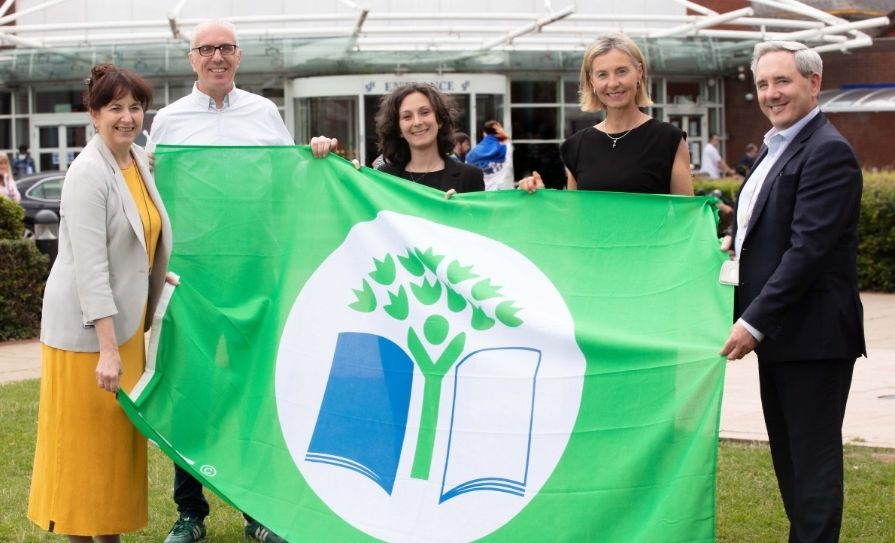
Pictured L-to-R: Prof Mary Day, CEO, St James’s Hospital, Dublin; Mr Barry McKenna, Sustainability Manager, St James’s Hospital; Ms Valentina Stampa, An Taisce; Ms Aideen Cardiff, St James’s Hospital board member; and Mr Aidan Turley, Director of Facilities Management, St James’s Hospital
Our hospital recently received a ‘Green Flag’ award for leadership in sustainable healthcare. Here is how it was achieved
Healthcare accounts for an estimated 5 per cent of global greenhouse gas emissions. If it were a country, it would be the fifth largest emitter on the planet. At St James’s Hospital, Dublin, our foremost commitment is the provision of high-quality patient care. As Ireland’s largest acute academic teaching hospital, we are cognisant of the environmental impact of our day-to-day operations in providing such care.
St James’s has a unique opportunity to drive the transition to a more sustainable, low-carbon healthcare model. By embedding sustainability into our operations and fostering a culture of responsibility, we aim to balance environmental stewardship while maintaining the highest standards of patient care.
The hospital is committed to, and is actively developing, implementing, and monitoring, programmes and initiatives to drive environmental performance in several key areas. To date, the focus has been on waste, water, energy, and transport and travel.
Waste
Waste is a key issue for the hospital from a legislative, environmental and cost perspective. Environmental services are responsible for the collection of waste and its removal to the hospital’s waste compound. Post-Covid, they have been actively working to improve waste management practices across the hospital.
Our ‘green teams’ in theatre and our intensive care unit have been actively implementing and championing greener measures to reduce the volume of waste, increase the segregation of recyclables, and minimise the disposal of non-risk waste content in risk waste bins. This has involved a range of measures including: The introduction of more recycling bins, staff training, and signage emphasising good waste management practices.
To measure the impact, waste surveys were conducted, firstly to establish a baseline, then to monitor progress. The survey results showed the effectiveness of a ‘getting the basics right’ approach to waste management, with a decline across clinical and general waste of 68 per cent and 104 per cent respectively, while recycling increased by 70 per cent.
Water
A large acute hospital such as St James’s consumes and discharges a large volume of water on a daily basis. Previously, there had been little regular monitoring of water usage, or its cost implications.
The monitoring and analysis of water usage, and developing water-efficiency benchmarks, will allow the hospital to measure how well it is managing its water, and reduce its water consumption and associated costs.
To date, the hospital has installed 35 water meters/data loggers across the campus and has introduced a comprehensive desktop IoT solution for monitoring and managing water consumption. We have seen a reduction in water consumption of 42 per cent, with the submetering of the site being an important milestone on this conservation journey.
Energy
A safe and secure energy supply is crucial in a large acute hospital due to its role in providing lifesaving care, and maintaining the health and safety of staff, patients, and visitors. In St James’s, energy is not just a utility, it’s a lifesaving resource. A reliable energy supply ensures the continued safe operation of the hospital.
In December 2020, St James’s signed an energy performance contract (EPC) with Veolia in partnership with the Carbon and Energy Fund Ireland. Under the EPC agreement, Veolia install and operate energy-efficient equipment in the hospital. The 20-year contract to operate and maintain the equipment was awarded to Veolia after a competitive public tendering process and the EPC implementation is the largest of its kind in Irish healthcare to date.
The EPC included the replacement of fluorescent lights with energy-efficient LED lighting throughout the hospital and the installation of a 2MW combined heat and power system in the hospital’s energy centre, as well as the installation of high efficiency pumps, and new energy efficient chillers.
To date, energy efficiency has improved by 34 per cent and there has been a 34 per cent reduction in the energy-related carbon emissions. In addition, we are currently pursuing ISO 50001 energy management accreditation.
Transport and travel
In light of current and future development on the campus, the hospital has adopted a strategic approach to addressing travel demand. A mobility management plan (MMP) is being implemented to reduce car usage, traffic congestion and the demand for parking.
The successful implementation of the MMP has resulted in a 45 per cent decrease in staff commuting by car; an increase of public transport usage by 140 per cent; an increase in cycling by 50 per cent; the introduction of healthcare’s first ‘bike library’; and a significant increase in the provision of bike parking on site. Last year, the hospital was awarded a Smarter Travel Mark – Gold Medal by the National Transport Authority.
The successful implementation of the MMP has resulted in a 45 per cent decrease in staff commuting by car
Future environmental management plans for the hospital will continue to focus on reducing carbon emissions, improving waste management, and reducing water consumption.
‘Green Flag’
The hospital’s recent ‘Green Flag’ award is recognition of our progress to date. The award is part of the Green Campus Programme that is operated in Ireland by An Taisce. The programme aims to support hospitals, universities, and other institutions in embedding sustainability across their operations.
The essence of any environmental management strategy is continuous improvement. We will continue to strive to manage and reduce our environmental impacts through various initiatives and regular assessment to monitor progress.
Campus developments offer a chance to create environmentally sound, resource-efficient buildings. This can be achieved through a holistic approach to design, planning, and construction. Sustainable building practices create a healthy and comfortable building environment, reduce operating costs, and reduce the consumption of resources. We aim to align capital projects with the hospital’s long-term sustainability objectives.
Future plans will seek to incorporate sustainability principles into procurement processes, actively engaging with suppliers to reduce environmental impacts across the supply chain, and prioritise goods, services, and works, with a reduced environmental impact.
St James’s is committed to playing a leading role in transitioning to a greener, low-carbon healthcare model. By integrating campus-level actions with our overarching sustainability and climate strategy, we aim to set a benchmark for sustainable healthcare in Ireland, while ensuring that environmental performance supports, rather than compromises, the delivery of exceptional patient care.












Leave a Reply
You must be logged in to post a comment.