iStock.com/Vladimir Vladimirov
Our last editorial focused on the consultant innovation fund and its potential to foster projects that can help improve the health service.
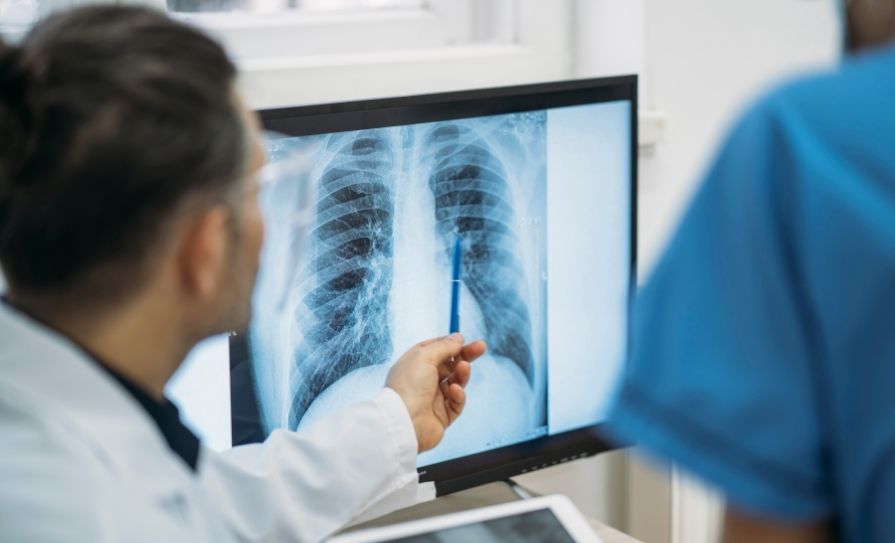
In this editorial we continue the positive theme with a look at the lung health check pilot programme.
The first curative lung cancer surgeries linked to the programme have taken place in recent months, marking an early milestone for the initiative.
Lung health check is a pilot programme led by the Beaumont RCSI Cancer Centre, Dublin, and funded by the Irish Cancer Society. Launched last year, it works with GP practices in north Dublin and the north-east to invite people at high-risk of lung cancer to attend mobile scanning units in their communities for CT lung scans.
Lung cancer is often diagnosed late, with around six in 10 cases detected at an advanced stage when treatment options are more limited. The aim of the pilot, which has received €4.9 million in financial support, is to find lung cancer earlier, before symptoms develop.
Several patients identified through the programme have already undergone surgery. Thoracic Surgeon at St James’s Hospital, Dublin, Mr Gary Fitzmaurice, operated on a number of these patients and said the initiative is already making a difference by detecting cancer at a much earlier stage.
“We’re identifying people who have very early lung cancer who have absolutely no symptoms and without a CT scan would not have been detected. That gives them the big advantage of having all the potential options for curative intent treatment and the best chance of long-term cure.”
He explained that cancers which would normally be found later are instead being picked up early through the pilot. This also means patients are more likely to be suitable for minimally invasive surgery.
“It’s much more likely they’ll be able to have a keyhole or minimally invasive operation, with reduced risks and complications, a short hospital stay, and faster recovery. It turns out to be a bump in the road, rather than a completely life-changing event.”
In addition to the surgeries that have already taken place, a number of others are planned. Those diagnosed to date are mainly men and women in their early 60s who had no symptoms and no reason to undergo imaging outside of the programme.
The pilot has already scanned around 1,700 people, with early modelling suggesting a cancer pickup rate of between 1-1.5 per cent. This is in line with international screening data and other established programmes. In total, seven people have had curative lung cancer surgery, with a further seven expected to undergo surgery in the coming month.
By bringing lung health checks directly into local communities through mobile scanning units, the programme aims to remove barriers to early detection and improve outcomes for people at risk of lung cancer. These are still very early days for the pilot, but they offer encouragement for the future.












Leave a Reply
You must be logged in to post a comment.