Chronic plaque psoriasis in adults
By
Dr Laoise Griffin, Dr Trevor Markham -
18th May 2026
Reference: May 2026 | Issue 5 | Vol 12 | Page 4
Start this Module to earn CPD Points today
Click the "Start Module" button below
Module Title
Chronic plaque psoriasis in adults
Module Author
Dr Laoise Griffin, Dr Trevor Markham
CPD points
2
Module Type
Case Study
Psoriasis is a chronic, immune-mediated disorder with cutaneous and systemic manifestations. It causes erythematous patches and plaques of thickened skin with silver scale. Approximately 2-3 per cent of people worldwide are affected, with a similar incidence in males and females.
It is estimated that there are approximately 73,000 patients with psoriasis in Ireland.1 Psoriasis can start at any age – most cases occur before the age of 45 years, with a bimodal distribution peaking in the second and fifth decades.2 The severity of psoriasis varies greatly, but irrespective of severity, it has been shown to have a negative impact on quality of life comparable to other chronic conditions such as diabetes mellitus and some forms of cancer.3
The pathogenesis of psoriasis is complex, with a strong genetic, albeit polygenic, component.4 It is characterised by abnormal keratinocyte proliferation and immune cell infiltration in the dermis and epidermis, involving both innate and adaptive immune systems, with important roles for dendritic cells and T cells.
Inflammatory cascades involve high levels of interleukins (ILs) (eg, IL-23, which stimulates IL-17) and other cytokines (eg, tumour necrosis factor alpha (TNF-α)),5 (see Figure 6). These ILs and cytokines provide therapeutic targets for newer small molecule drugs and biologic therapies.4
The initial trigger for psoriasis has yet to be defined, but certain environmental stimuli appear to drive inflammatory responses in those with genetic susceptibility to this chronic relapsing and remitting skin condition. It is not unusual to find a positive family history, as in the case of our patient, in a first-degree family member.
Environmental factors that have been shown to be associated with disease flares include infections (especially ß-haemolytic streptococcus), obesity, alcohol, skin trauma, surgery, stress, and certain drugs (eg, lithium and ß blockers).
Clinical features and diagnosis
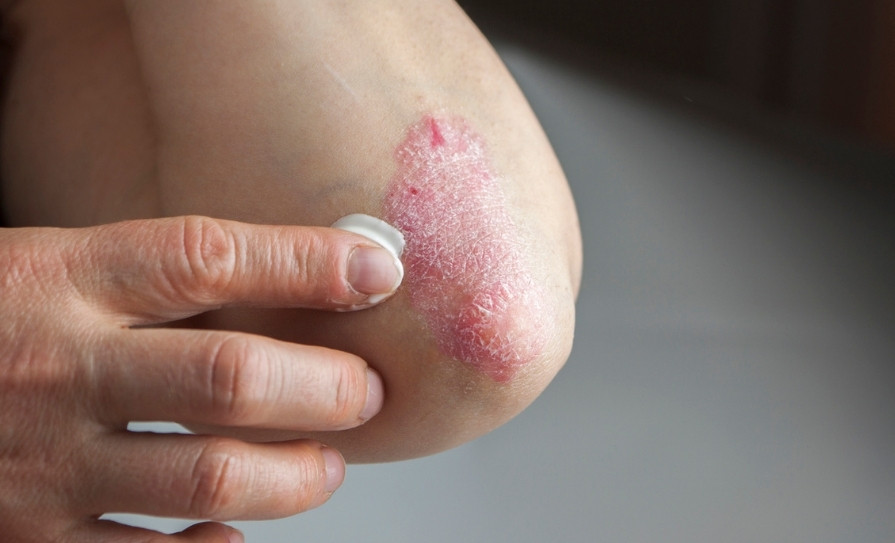
Chronic plaque psoriasis (CPP) is a clinical diagnosis based on the appearance of well-demarcated erythematous plaques with non-adherent scale, primarily on extensor surfaces, scalp, umbilicus, and lower back. CPP is the most common form of psoriasis, accounting for >90 per cent of all cases.
Other types of psoriasis (not discussed here) include guttate (raindrop) psoriasis, palmoplantar pustular psoriasis, and generalised pustular psoriasis. Nail changes can be seen in up to 50 per cent of all those affected with psoriasis and are more common in people with psoriatic arthritis – they include pits, onycholysis, subungual hyperkeratosis, and discolouration (eg, oil spots and salmon patches).
Although psoriatic plaques are usually found on extensor surfaces, they may also occur in flexural sites (axillae, sub-mammary area, gluteal cleft, and groin) where they lack the typical silver scale. Flexural sites can be difficult to treat and are considered a ‘high impact’ site when assessing severity.
Studies have shown that genital psoriasis is under-reported in patients and can lead to impairment in quality of life including sexual dysfunction.6 Indeed, our patient had not mentioned his genital psoriasis to his primary care physician. When treating this area topically, different preparations are required (Table 1).
Diagnosis depends on typical skin lesions in commonly affected sites, aided by a positive family history, pruritus in the genital area, and a history of arthralgia or early morning stiffness.
There are no specific diagnostic blood tests for psoriasis.
Assessment of severity
Several rating scales help assess severity of disease and monitor response to therapy. These include a five-point physician global rating scale (clear, almost clear, mild, moderate, severe) and an estimation of the percentage of body surface area (BSA) affected, eg, <5 per cent BSA involvement = mild; 5-10 per cent = moderate; >10 per cent = severe,2 but lack detail on appearance of the individual plaques.
PASI considers the affected body surface area, the thickness, and erythema of plaques (scale from 0-72, score >10 considered to be severe).7
DLQI is a questionnaire to assess impact on the patient’s life.
Current European guidance also recommends that additional factors such as involvement of high-impact sites (genitals, scalp, nails) may upgrade disease classified as mild by BSA and PASI alone to moderate to severe, warranting more intensive treatment.20
Our patient had a BSA of 5-10 per cent, a PASI of 12, and he had significant impact on his quality of life with a DLQI of 21. A score of 21-30 equates to ‘extremely large effect on patient’s life’.
Psoriatic arthritis screening
At diagnosis, patients should be screened for psoriatic arthritis (PsA) using a validated tool such as the PEST. A score of three or more indicates that referral to rheumatology should be considered, and it is recommended that patients without a diagnosis of PsA complete the PEST annually.8
PsA is a destructive arthropathy presenting heterogeneously with no reliable biomarkers. The estimated prevalence of PsA among people with psoriasis is 6-11 per cent,9 though it has been shown that PsA can co-exist in up to 30 per cent of certain psoriasis populations, such as those hospitalised for their psoriasis.10,11
PEST lacks sensitivity for axial spinal disease; therefore, patients with persistent back pain and early morning stiffness should be referred to rheumatology regardless of their score.11
Comorbidities
| DRUG |
MECHANISM OF ACTION |
NOTES FOR CLINICAL USES |
| Emollients |
Hydration and softening of skin; antipruritic |
Used for stable psoriasis and may help reduce irritation in acute inflammatory disease |
| Vitamin D analogues calcipotriol/calcitriol |
Reduce proliferation of keratinocytes |
Suitable for limbs and body
Avoid face, genitals, and flexures (irritation)
Use of >max recommended dose may lead to hypercalcaemia
Can be used by patients in combination preparations with moderate potency TCS, where use should be limited due to tachyphylaxis from steroid component |
Corticosteroids [TCS]
Mild: eg, hydrocortisone 1%
Moderate: eg, clobetasone butyrate 0.05% (Eumovate)
Potent: eg, betamethasone 0.1% (Betnovate)
Very potent: eg, clobetasol propionate 0.05% (Dermovate) |
Reduce proliferation of keratinocytes |
Useful for localised psoriasis in certain locations: Face, neck, flexures, genitalia (mild-moderate TCS); scalp, palms, or soles (potent TCS). Should be limited to these areas
Risk of rebound on abrupt withdrawal
Risk of skin atrophy, plaque instability, and systemic absorption – especially with usage of >10% BSA13 |
| Coal tar (coal tar extract (LPC)/lotion/shampoo) |
Anti-inflammatory, immunosuppressive, and anti-proliferative properties |
Applied directly to skin (lotion) daily
May cause irritation. Avoid face and flexural sites
Can be used in combination with emollient and diluted TCS and is less irritating
Some consider tar messy, with an odour and can stain clothing |
| Topical calcineurin inhibitor (tacrolimus) |
Keratolytic and anti-inflammatory properties |
An alternative to TCS for treating flexural and facial psoriasis13 (unlicensed indication in Ireland) |
TABLE 1: Topical therapy for CPP
| Psoriatic arthritis |
Metabolic syndrome |
| Depression and anxiety |
Nonalcoholic fatty liver disease (NASH) |
| Cardiovascular disease |
Obesity |
| Inflammatory bowel disease |
Type 2 diabetes |
TABLE 2: Comorbidities of psoriasis
While most psoriasis is mild and can be treated successfully with topical therapy (Table 1) in a community setting, other patients require phototherapy or systemic therapy. Treatment decisions depend not only on severity but also on the patient’s wishes and comorbidities.. Psoriasis is associated with a range of comorbidities including PsA, obesity, hypertension, diabetes, hyperlipidaemia, and fatty liver (see Table 2). Evidence supporting the hypothesis that psoriasis is independently associated with cardiovascular events such as stroke and myocardial infarction is mounting.12
Other important factors when deciding therapy include patients’ age, past medical history, their views, plans for conception, and alcohol use.13 Our patient had a history of IBD so we avoided fumaric acid esterase (dimethyl fumarate) as diarrhoea can be a side effect of this medication.
Methotrexate was also avoided due to liver transaminitis and his diagnosis of non-alcoholic fatty liver disease (NASH) [now called metabolic dysfunction-associated steatotic liver disease (MASLD)], which was subsequently made on ultrasound. Other systemic medication options include ciclosporin and acitretin (vitamin A analogue).
All classes of oral medication require specialist supervision, monitoring, and have their own potential side effects.
Systemic (non-biologic) therapy
Patients with moderate to severe psoriasis, or those with high-impact site involvement not responding to topical therapy, require systemic treatment.13 All classes of oral medication require specialist supervision, monitoring, and carry their own potential side effects.
Key options include:
- Methotrexate: Widely used; requires folic acid supplementation; avoid in significant hepatic disease or heavy alcohol use.
- Apremilast (phosphodiesterase-4 inhibitors): Oral option with a favourable safety profile; gastrointestinal side effects are common initially; exercise caution in patients with IBD.
- Ciclosporin: Effective for rapid disease control; limited to short courses due to nephrotoxicity.
- Acitretin (vitamin A analogue): Useful in certain subtypes; teratogenic; strict contraception required.
- Dimethyl fumarate (fumaric acid esters): Effective; diarrhoea can be a limiting side effect, particularly in patients with IBD.
- Deucravacitinib (tyrosine kinase 2 inhibitor): A newer oral agent licensed in Europe (2023) for moderate to severe plaque psoriasis in adults who are candidates for systemic therapy. It has demonstrated superiority over apremilast in clinical trials and represents an additional oral option.
Biologic therapy
Biologic therapy is indicated when disease is severe and phototherapy and/or systemic treatment is either not tolerated or ineffective. The British Association of Dermatologists (BAD) published updated guidelines for biologic therapy for psoriasis in 2023/2024.17 Biologic therapy should be initiated and supervised only by specialist physicians experienced in the diagnosis and treatment of psoriasis.
The currently licensed biologic classes and agents include:
- Anti-TNF agents: Adalimumab, etanercept, infliximab, certolizumab pegol, golimumab, and licensed biosimilars. Generally considered less effective than newer agents for skin clearance.
- IL-12/23 inhibitor: Ustekinumab; well established with a convenient dosing schedule.
- IL-17A inhibitors: Secukinumab, ixekizumab; highly effective for skin and joints.
- IL-17A/F inhibitor: Bimekizumab; a newer agent demonstrating high efficacy (PASI 90/100 rates) for plaque psoriasis.
- IL-17RA inhibitor: Brodalumab; effective but use with caution in IBD.
- IL-23 inhibitors (anti-p19): Guselkumab, risankizumab, tildrakizumab; all fully licensed and recommended.
Risankizumab and bimekizumab rank among the most effective agents for skin clearance based on current evidence.
According to the most recent Cochrane network meta-analysis, for achieving PASI 90 the most effective agents (high-certainty evidence) are infliximab, bimekizumab, ixekizumab, and risankizumab.19
The IL-17 and IL-23 classes demonstrate superior skin clearance compared to anti-TNF agents and ustekinumab. These findings are also reflected in the EuroGuiDerm 2025 guidelines.20
Choice of biologic depends on:
- Presence or absence of PsA (some agents are licensed for both skin and joints, ie, anti-TNF agents).
- Concomitant comorbidities (eg, IBD; avoid IL-17 inhibitors; cardiovascular disease; demyelinating disease; heart failure).
- Speed of onset required.
- Patient preference regarding route
and frequency of administration.
- Pregnancy or conception plans.
Response to biologic therapy should be assessed at 10-20 weeks (as per the SmPC for each agent).17 If no response (primary failure), switch to a different biologic. If initial response is followed by relapse (secondary failure), switch or optimise adjunctive therapy. If no response to a second biologic, check for modifiable factors (eg, obesity, adherence) and consider other approaches.
Apart from infliximab, which is an intravenous infusion, most biologics are administered subcutaneously and dosing intervals vary. (Full discussion on individual biologics is beyond the scope of this module.) It was decided to initiate adalimumab in this article’s case report patient as he was showing signs of PsA.
Biopsychosocial aspects
The biopsychosocial aspects of psoriasis are significant, often independent of disease severity. People with psoriasis have higher rates of depression and anxiety.14 In a US study, 32 per cent of adults with psoriasis screened positive for depression, with a graded relationship between depressive symptoms and quality of life scores.15
Studies have shown that the majority of those affected feel embarrassed by their psoriasis – with 58 per cent admitting their psoriasis has stopped them from doing activities they enjoy. A majority, 73 per cent, also agreed that their psoriasis has negatively affected their social life, increasing their social isolation. Our patient was embarrassed due to the appearance of his skin, especially at work.
In a cohort of Irish psoriasis patients with moderate to severe psoriasis, between 17 and 30 per cent of patients were classified as having difficulties with alcohol, and the same study also found an association between increased alcohol intake and psoriasis severity.13
Our patient reported using alcohol as an aid in social settings. Alcohol can have other detrimental effects on health, such as worsening of psoriasis, weight gain, elevation of blood pressure, and reduction of mood.
Non-pharmacological management of psoriasis includes reducing alcohol, stopping smoking, reducing weight if elevated, and increasing levels of activity. Patients should also address any other modifiable independent risk factors for heart disease (eg, blood pressure, blood glucose, and cholesterol, as in our patient).
Patients who are initiating systemic or biologic therapies should be encouraged to have the yearly influenza vaccine, five-yearly pneumococcal vaccine, and attend routine age-appropriate cancer screening.
************************************************************
Case report
A 40-year-old man was referred to the dermatology outpatient clinic with a 20-year history of psoriasis that was gradually worsening and affecting his daily life. He had tried topical therapy in the community. He found plain tar preparations irritating and ‘too messy’.
He initially obtained some relief from topical steroid/vitamin D analogue combinations (eg, betamethasone/calcipotriol) but noted his skin worsened when he attempted to reduce use of the topical therapy in recent times. His scalp was particularly irritating and embarrassing as it caused skin scales on his suit at work. He found himself scratching his scalp constantly in the evenings.
On further questioning, he admitted to irritation in the genital area and persistent perianal itch. He had not tried any topical therapy for this as he was embarrassed to mention it to his general practitioner (GP). In the last year, his psoriasis spread to the dorsum of his hands and forearms and he was now embarrassed to wear short-sleeve shirts at work. His sleep had been disturbed by itch.
The patient had a history of quiescent inflammatory bowel disease (IBD) and mentioned that his GP had noted raised blood pressure at his last appointment. He had gained weight in recent years since stopping team sports, and his psoriasis had led to avoidance of the gym and swimming pool.
His father suffered with psoriasis controlled with topical therapy and his mother had ischaemic heart disease. He worked in an office and found it increasingly difficult to meet clients due to the rash on his hands and thickened fingernails. He was an ex-smoker and consumed 15-20 units of alcohol per week, noting that alcohol helped with the social anxiety caused by the appearance of his skin.
He was unmarried but in a relationship. Systems review revealed an intermittently painful and swollen right knee, especially in the mornings, but no other joint pains.
On examination, he had extensive scattered large erythematous plaques with silver scale on his arms, lower limbs, and trunk (similar to those illustrated in Figures 1 and 2).
While plaques were predominantly on extensor surfaces, the patient also had inflamed non-scaly plaques in flexural sites (perineal area, gluteal cleft, and axilla) (Figure 3). His scalp was covered in a diffuse scale (Figure 4), some of which extended to his forehead and ears. He had pitting, onycholysis, and subungual hyperkeratosis of his fingernails (Figure 5).
Joint examination was normal. Blood pressure was elevated (150/95mmHg), as was body mass index at 31kg/m². Dermatology Life Quality Index (DLQI*) was 19 out of 30 (scale 0-30, 0 is minimum and 30 is maximum), and the Psoriasis Area and Severity Index (PASI**) score was 12. Psoriasis Epidemiology Screening Tool (PEST***) score was one out of a maximum of five.
The patient was diagnosed with moderate to severe psoriasis with 5-10 per cent of his body surface area affected, including high-impact sites (flexural sites and nails).
He was offered narrowband ultraviolet B phototherapy, which he declined due to inability to travel for appointments. He was given written information for oral systemic medication options (methotrexate and apremilast) and baseline blood investigations were performed (full blood count, urea and electrolytes, liver function tests (LFTs)).
A pre-biologic workup was arranged (serology: Human immunodeficiency virus, hepatitis B, hepatitis C, varicella-zoster virus immunoglobulin G, QuantiFERON assay, and a chest x-ray). He was given advice regarding topical therapy:
- For scalp: Olive oil initially to soften plaques, followed by tar pomade (Cocois) at night, and topical steroid by day.
- For limbs and trunk: Dilute tar/steroid/emollient mix once daily (5% coal tar LPC in 5% betamethasone in white soft paraffin).
- For flexural sites and face: Dilute topical steroids (hydrocortisone 1%) were recommended.
The patient was advised to stop betamethasone/calcipotriol, to use liberal emollients for itch, and to use Silcock’s base as a soap substitute for washing. He was given advice about reducing alcohol and was asked to have his GP address his blood pressure.
At his next outpatient visit, his psoriasis remained extensive. Blood tests revealed mild elevation of LFTs. Following discussion, he was commenced on apremilast (a selective inhibitor of the enzyme phosphodiesterase 4). He continued topical therapy and was advised to reduce his alcohol intake.
An ultrasound arranged for his liver showed fatty infiltration. His PEST score was now three out of five and his knee was swollen with restriction of movement. Inflammatory markers and an x-ray of the knee were performed, and he was referred to rheumatology. His weight was noted to be increasing. The patient was given information on biologic therapies (adalimumab and ustekinumab).
At follow-up, the gentleman failed to gain significant improvement with apremilast. Once his pre-biologic screening investigations were normal, he was commenced on adalimumab (loading dose of 80mg, followed by 40mg subcutaneously every two weeks).
He had a good response at 16 weeks. His scalp was much improved; faint plaques persisted on his dorsum hands and body, but were fading. Flexural sites and face were clear. He was much happier with a DLQI of four and PASI score of two.
The patient was continued on adalimumab 40mg fortnightly and encouraged to lose weight. Fasting lipids and HbA1c (glycated haemoglobin) were arranged by his GP and a 24-hour blood pressure monitor was planned. He is due to see the rheumatology team.
*****************************************************************************************
References
- Irish Skin Foundation. The burden of psoriasis: Epidemiology, quality of life, co-morbidities and treatment goals [Internet]. April 2015. Available at: https://irishskin.ie/wp-content/uploads/2023/04/Burden_of_Psoriasis_Report_final.pdf.
- Griffiths CEM, Armstrong AW, Gudjonsson JE, Barker JNWN. Psoriasis. Lancet. 2021;397(10281):1301-1315. doi:10.1016/S0140-6736(20)32549-6.
- Ryan C, Korman NJ, Gelfand JM, et al. Research gaps in psoriasis: Opportunities for future studies. J Am Acad Dermatol. 2014;70(1):146-167. doi:10.1016/j.jaad.2013.08.042.
- Greb JE, Goldminz AM, Elder JT, et al. Psoriasis. Nat Rev Dis Primers. 2016;2:16082. doi:10.1038/nrdp.2016.82.
- Yang J. Th17 cells. In: Tan S-L, editor. Translational immunology. Boston: Academic Press; 2016. p. 133–163.
- Ryan C, Sadlier M, De Vol E, et al. Genital psoriasis is associated with significant impairment in quality of life and sexual functioning. J Am Acad Dermatol. 2015;72(6):978-983. doi:10.1016/j.jaad.2015.02.1127.
- British Association of Dermatologists. Psoriasis Area and Severity Index [Internet]. Available at: https://pasi.corti.li/.
- British Association of Dermatologists. Psoriasis Epidemiology Screening Tool [Internet]. Available at: www.pcds.org.uk/files/gallery/The_PEST_screening_questionnaire_updated_aug_2013_v5_1.pdf.
- Ogdie A, Langan S, Love T, et al. Prevalence and treatment patterns of psoriatic arthritis in the UK. Rheumatology (Oxford). 2013;52(3):568-575. doi:10.1093/rheumatology/kes324.
- Chandran V, Raychaudhuri SP. Geoepidemiology and environmental factors of psoriasis and psoriatic arthritis. J Autoimmun. 2010;34(3):J314-J321. doi:10.1016/j.jaut.2009.12.001.
- Haroon M, Kirby B, FitzGerald O. High prevalence of psoriatic arthritis in patients with severe psoriasis with suboptimal performance of screening questionnaires. Ann Rheum Dis. 2013;72(5):736-740. doi:10.1136/annrheumdis-2012-201706.
- Coumbe AG, Pritzker MR, Duprez DA. Cardiovascular risk and psoriasis: Beyond the traditional risk factors. Am J Med. 2014;127(1):12-18. doi:10.1016/j.amjmed.2013.08.013.
- National Institute for Health and Care Excellence. Psoriasis: Assessment and management (CG153) [Internet]. 2012. Available at: www.nice.org.uk/guidance/cg153.
- Kurd SK, Troxel AB, Crits-Christoph P, Gelfand JM. The risk of depression, anxiety, and suicidality in patients with psoriasis: A population-based cohort study. Arch Dermatol. 2010;146(8):891-895. doi:10.1001/archdermatol.2010.186.
- Schmitt J, Ford DE. Psoriasis is independently associated with psychiatric morbidity and adverse cardiovascular risk factors, but not with cardiovascular events in a population-based sample. J Eur Acad Dermatol Venereol. 2010;24(8):885-892. doi:10.1111/j.1468-3083.2009.03537.x.
- Kirby B, Richards HL, Mason DL, et al. Alcohol consumption and psychological distress in patients with psoriasis. Br J Dermatol. 2008;158(1):138-140. doi:10.1111/j.1365-2133.2007.08299.x.
- Smith CH, Yiu ZZN, Bale T, et al. British Association of Dermatologists guidelines for biologic therapy for psoriasis 2023: A pragmatic update. Br J Dermatol. 2024;190(2):270-272. doi:10.1093/bjd/ljad347.
- British Association of Dermatologists. Dermatology Life Quality Index [Internet]. Available at: www.cardiff.ac.uk/medicine/resources/quality-of-life-questionnaires/dermatology-life-quality-index.
- Sbidian E, Chaimani A, Guelimi R, et al. Systemic pharmacological treatments for chronic plaque psoriasis: A network meta-analysis. Cochrane Database Syst Rev. 2023;7(7):CD011535. doi:10.1002/14651858.CD011535.pub6.
- EuroGuiDerm. Guideline on the systemic treatment of psoriasis vulgaris [Internet]. February 2025. Available at: www.guidelines.edf.one/guidelines/psoriasis-guideline.
Start this Module to earn CPD Points today
Click the "Start Module" button below
Module Title
Chronic plaque psoriasis in adults
Module Author
Dr Laoise Griffin, Dr Trevor Markham
CPD points
2
Module Type
Case Study
Author Bios
Dr Laoise Griffin, Dermatology SpR; and Dr Trevor Markham, Consultant Dermatologist, Blackrock Health and University Hospital Galway
Credit: iStock.com/Suze777








