







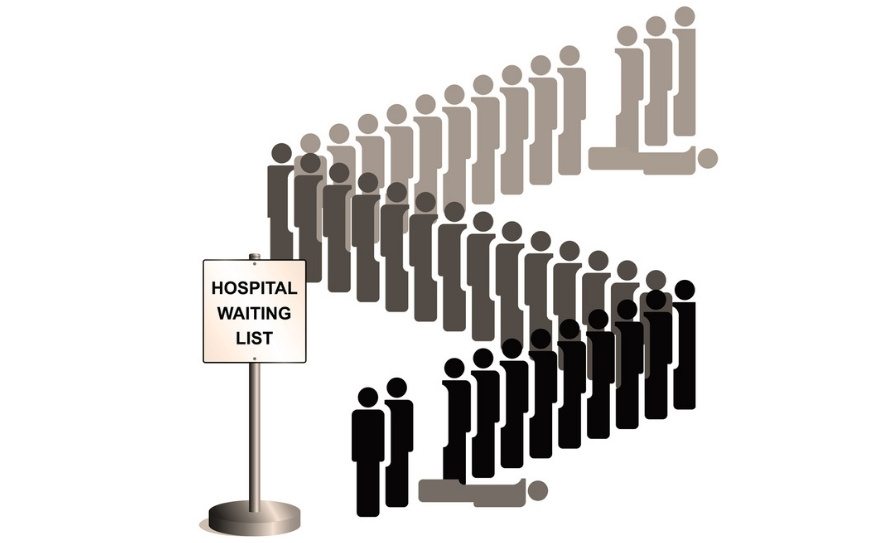
The IHCA has expressed its “extreme concern” at the number of people waiting for an appointment to be treated or assessed in public hospitals.
The Association was responding to new figures published by the National Treatment Purchase Fund (NTPF) on Friday 12 June.
According to the figures, 1,008,600 people were on some form of hospital waiting list at the end of May – an increase of almost 10,000 in a single month.
The total includes 669,500 people on outpatient waiting lists, close to 115,500 patients awaiting inpatient or day case treatment, and almost 41,000 waiting for a gastrointestinal (GI) scope.
There was also a further 182,600 on numerous less publicised planned procedure and suspension lists.
The IHCA said the policy of “controlling the trolley numbers in emergency departments by cancelling elective procedures and appointments” has directly contributed to these record waiting lists, alongside higher demand and increased referrals.
“However, these cancellations are causing severe knock-on consequences for patient health outcomes,” according to the Association.
The three main active waiting lists for outpatients, inpatient and day cases, and GI scopes have increased by 10 per cent (72,180) so far in 2026.
The Association pointed out in January alone, almost 24,500 hospital appointments and operations were cancelled across the country, 7,400 (30 per cent) of which were in the HSE Dublin and Midland Region.
Last year saw more than 286,500 elective surgeries, endoscopies, day case treatments and outpatient appointments cancelled.
This marked an increase of more than 7 per cent on the 267,400 reported in 2024.
The IHCA said the cancellation of elective, essential hospital appointments and operations cannot be the “go-to solution to our trolley crisis”, as it will lead to severe “adverse consequences for patient health outcomes, and do nothing to address the extreme lack of capacity and overcrowding at our hospitals”.
It added that since the Sláintecare report was published in May 2017, hospital waiting lists have grown by 425,000.
IHCA President Prof Gabrielle Colleran said: “No hospital consultant wants to tell a patient waiting for essential surgery that their critical treatment has been cancelled and, worse still, that they do not know when it will be rescheduled. Alongside hampering diagnosis, treatment and delivery of care, this also has a severe impact on already excessive waiting lists, as we see in today’s NTPF data.”
“We cannot allow scheduled care to be seen as an ‘optional extra’ in the delivery of healthcare. The persistent trolley crisis in our hospitals is a direct result of chronic bed shortages and limited step-down capacity, and responding to these deficits by simply cancelling life enhancing surgery is completely unacceptable and poorly thought-out.
“We urge the Department of Health and HSE to reverse this negative policy and come to the table with long term and sustainable solutions that our patients deserve. That includes ensuring that the productivity of our limited consultant capacity is maximised by having them working alongside their multi-disciplinary teams.
“The IHCA remains ready to collaborate constructively with the HSE and Department of Health to address the growing waiting list and will continue to offer solutions rooted in the daily realities of clinical care.”
According to a statement from the Department of Health on the figures, the health service has seen “significant progress” in reducing the length of time patients are waiting under the multi-annual action plan approach.
There has been a reduction of around 51 per cent or 144,000 fewer patients waiting over 12 months since September 2021.
In the same period, there was an improvement of around 44 per cent or 5.3 months in the weighted average wait time (WAWT) that patients across lists have been waiting.
“Notwithstanding these longer-term improvements, waiting lists more recently have been impacted by the ongoing trend of higher demand and increased referrals, which has offset the significantly increased levels of activity that are being delivered in acute hospitals,” according to the Department’s statement.
“Waiting list performance in 2026 to-date has also been impacted by the anticipated multi-annual trend arising from the winter surge in demand for unscheduled and emergency care.
The Department noted the figures indicate there has been some reductions in the number of patients on the inpatient and day case, and the GI scope waiting lists since the end of the previous month, “showing what can be achieved even with increased levels of demand.”






Leave a Reply
You must be logged in to post a comment.