Related Sites

Related Sites

medical news ireland medical news ireland medical news ireland

NOTE: By submitting this form and registering with us, you are providing us with permission to store your personal data and the record of your registration. In addition, registration with the Medical Independent includes granting consent for the delivery of that additional professional content and targeted ads, and the cookies required to deliver same. View our Privacy Policy and Cookie Notice for further details.


Don't have an account? Register

ADVERTISEMENT

ADVERTISEMENT

NCCP approves Beaumont RCSI Cancer Centre for delivery of cellular therapies for haematological malignancies

By Reporter - 23rd Mar 2026

iStock.com/Sean Anthony Eddy

Beaumont Hospital in Dublin has been approved by the National Cancer Control Programme (NCCP) as a centre for the delivery of cellular therapies for the management of haematological malignancies in adult patients, marking an important step in expanding specialised cancer treatment services.

Cellular therapies, such as CAR T-cells, have the ability to direct immune cells to kill tumour cells. These therapies have produced unprecedented increases in survival and cures in various cancers, particularly for lymphoma and multiple myeloma. New cellular therapies are also in development for solid tumours, brain tumours and non-cancerous conditions, therefore the development of this expertise within the north-east region is a hugely positive development for all patients.

The initiative is led by Consultant Haematologists at Beaumont RCSI Cancer Centre, Prof Siobhan Glavey and Prof John Quinn.

Prof Glavey said: “The development of a cellular therapy programme at Beaumont RCSI Cancer Centre is positive news for our cancer patients who will benefit from the most advanced forms of cancer treatment. This new programme builds on our current expertise in cancer and will lead to the development of innovative research in this space.”

Beaumont RCSI Cancer Centre is comprised of Beaumont Hospital, the RCSI, and St Luke’s Radiation Oncology Network. Its mission is to provide equitable, individualised quality care to patients with cancer in north Dublin, the north-east, and nationally.

ADVERTISEMENT

Latest cancer

ADVERTISEMENT

First curative lung cancer surgeries undertaken in pilot programme

By Reporter - 19th Jan 2026

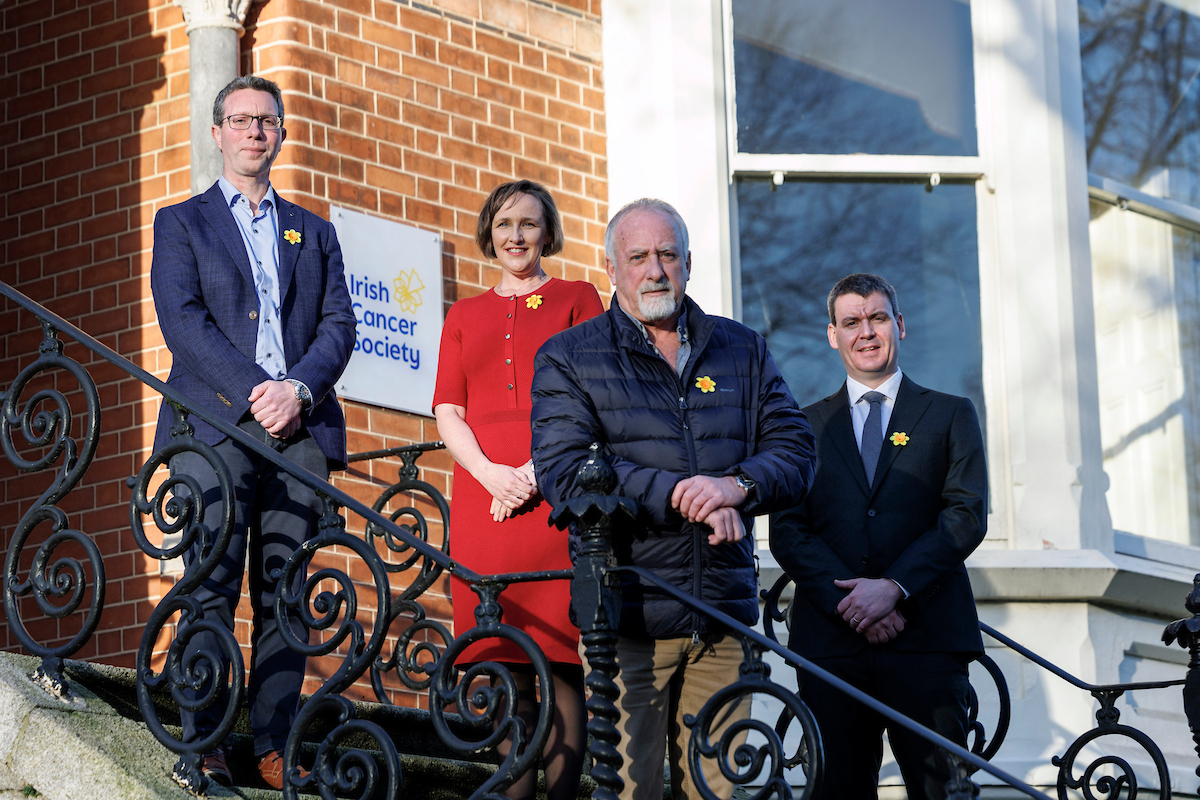
Mr Gary Fitzmaurice, thoracic surgeon at St James's; Amy Nolan, Director of Clinical Affairs, Irish Cancer Society; Paul Guinee, patient; Prof Daniel Ryan, Clinical Lead of Lung Health Check

The first curative lung cancer surgeries connected to the Lung Health Check pilot programme have taken place in recent months, according to the Irish Cancer Society.

The €4.9 million lung cancer pilot programme is funded by the Society.

The Lung Health Check is an initiative led by the Beaumont RCSI Cancer Centre that was launched last year.

This clinical trial, in collaboration with specific GP practices in North Dublin and the North East region, invited individuals at a high risk of developing lung cancer to attend community-based mobile scanning units for lung health checks.

Currently, six in every 10 lung cancer diagnoses are detected at late stage, when it is harder to treat. 

Thoracic surgeon at St James’s Hospital, Mr Gary Fitzmaurice, who operated on several of the patients identified through the Lung Health Check pilot, said the programme is already demonstrating its value by identifying cancers before symptoms appear, allowing patients to access curative treatment.

He added that the major impact of the pilot is that cancers which would normally be detected at a late stage are instead found at a much earlier point.

 “We’re identifying people who have very early lung cancer who have absolutely no symptoms and without a CT scan would not have been detected,” said Mr Fitzmaurice.  “That gives them the big advantage of having all the potential options for curative intent treatment and the best chance of long-term cure.”

Prof Daniel Ryan, Respiratory Consultant at the Beaumont RCSI Cancer Centre and Clinical Lead of the Lung Health Check Pilot, said: “Lung cancer kills more Irish people every year than any other cancer, mainly because it is diagnosed late when it is difficult to treat. This pilot programme is saving lives by detecting cancer early.”

“Leading a mobile lung health check in the community is a major step forward for lung cancer care in Ireland, and we are proud to have initiated this work in Beaumont RCSI Cancer Centre. This pilot is breaking down barriers that have long stood in the way of early detection of lung cancer, bringing together partners across the healthcare system. The support from the Irish Cancer Society, and our collaboration with Centric Health GP practices, Alliance Medical Diagnostic Imaging, and the GAA clubs in the region, is ultimately saving lives.”

ADVERTISEMENT

Latest cancer

ADVERTISEMENT

Mater becomes first in Ireland to introduce new precision cancer tests

By Mindo - 18th Dec 2025

Credit: istock.com/LightFieldStudios

The Mater Misericordiae University Hospital (MMUH) has become the first hospital in Ireland to successfully introduce new cancer tests for personalising treatment for patients with aggressive forms of gastrointestinal and ovarian cancers.

Claudin-18 (CLDN18) and Folate Receptor-1 (FOLR-1) companion diagnostic and therapeutic testing enables clinicians to determine whether patients with certain aggressive cancers may benefit from highly targeted and potentially life-extending cancer immunotherapies.

The newly validated tests, completed by Medical Scientists and Histopathology Consultants in the hospital’s Cellular Pathology Department, identify the presence of specific proteins in tumour tissue, helping to discern whether new, specialised cancer treatments could improve outcomes for individual patients.

“Pathology laboratories play a central role in clinical decision-making. Approximately 70 per cent of all medical decisions are informed by pathology test results,” said Dr Ann Treacy, Consultant Histopathologist at the Mater Hospital.

“By expanding our precision diagnostic capabilities, patients in Ireland can benefit from advanced testing that helps us match the right patient to the right treatment. This level of precision is vital for improving outcomes, particularly for patients with few remaining treatment options.”

Claudin-18 testing helps identify patients with upper gastrointestinal cancers who may benefit from novel immunotherapies. FOLR-1 testing supports precision treatment decisions for epithelial ovarian, fallopian tube or primary peritoneal cancers by determining whether a patient may be suitable for targeted therapies in cases of recurrent or chemotherapy-resistant disease. Together, these tests offer new possibilities for patients who have exhausted conventional treatment options.

“The introduction of these biomarkers represents a meaningful step forward for patients facing some of the most challenging cancers,” said Dr Darren Cowzer, Consultant Medical Oncologist at the Mater Hospital.

“Having rapid access to high-quality local Claudin-18 and FOLR-1 testing allows us to identify candidates for targeted therapies much earlier, ensuring treatment decisions are timely, and precise. These advances give more patients the opportunity to benefit from standard and experimental therapies that may significantly improve outcomes and quality of life.”

ADVERTISEMENT

Latest cancer

ADVERTISEMENT

HSE expands BowelScreen to people aged 58

By Reporter - 03rd Nov 2025

BowelScreen has announced that it is now offering screening to people aged 58.

This is the third expansion of the screening programme’s offering since October 2023 and makes screening available to men and women aged 58 to 70. Over time, the HSE is expanding the screening programme to people aged 55 to 74.

Around 2,500 people are diagnosed with bowel cancer in Ireland every year. It is the second most common of all cancers in men and the third most common of all cancers in women in Ireland.

BowelScreen Clinical Director Professor Pádraic Mac Mathúna, said that making BowelScreen available to younger people is an important step in preventing and detecting bowel cancer early.

“Our primary goal in BowelScreen is to reduce mortality from bowel cancer. We prevent cancers from developing by finding and removing small growths, which can turn into cancer if left untreated. Every year, around 3,000 people have pre-cancerous growths removed because they did our BowelScreen test.”

He added that a screening test is not a diagnostic test – it looks for a level of blood in your sample.

“Not all cancers or polyps bleed all the time so a normal result does not guarantee that cancer isn’t present. This is why it is so important to be aware of symptoms of bowel cancer and go to your GP immediately, even if you had a recent normal screening result. Do not wait for your next screening test if you have any symptoms of bowel cancer.”

Minister for Health Jennifer Carroll MacNeill said the continued expansion of BowelScreen “is an important step in our ongoing investment in public health and disease prevention”.

“This will ensure that more people across Ireland can benefit from early detection, timely treatment and ultimately better outcomes.”

ADVERTISEMENT

Latest cancer

ADVERTISEMENT

ADVERTISEMENT

ADVERTISEMENT

Latest Issue
Medical Independent 7th April 2026

You need to be logged in to access this content. Please login or sign up using the links below.

ADVERTISEMENT

Trending Articles

ADVERTISEMENT

ADVERTISEMENT

ADVERTISEMENT