







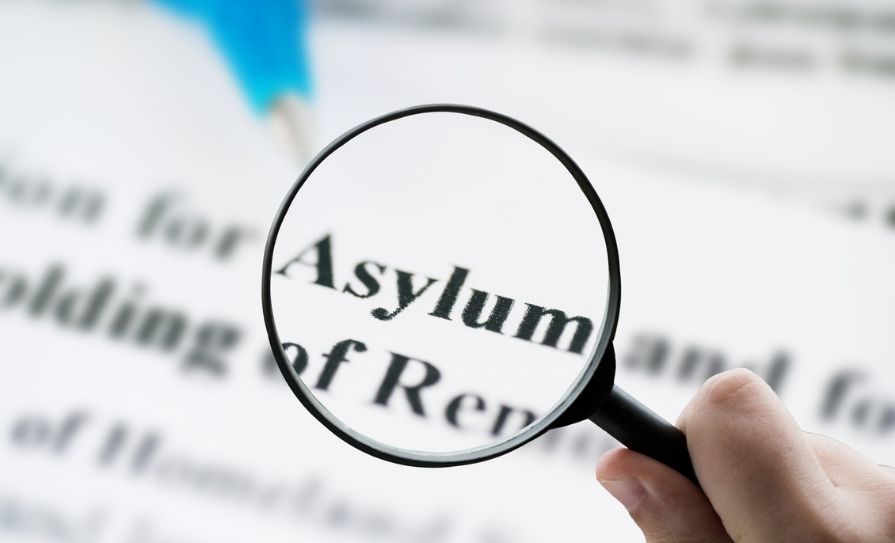
Accommodation transfers, GP availability, and medical card access are affecting care for international protection applicants. Niamh Cahill reports
Concerns have been expressed about inadequate access to medical care for international protection applicants in Ireland.
People with significant health needs, such as patients with suicidal ideation, pregnant women, and children with undescended testes who were not diagnosed, are not receiving satisfactory care, and this often has severe consequences, a doctor told the Medical Independent (MI).
The doctor spoke on condition of anonymity, saying he had previously been targeted for speaking about this issue.
The temporary accommodation arrangements present difficulties for continuity of care, with international protection applicants often required to move at short notice, the doctor stated.
Another barrier is access to medical cards. International protection applicants are entitled to apply for a medical card, but often experience challenges being assigned to a GP list, the doctor outlined.
In 2025, there were 13,162 applications for international protection, according to data from the International Protection Office.
This compared to 18,561 applications in 2024 and 13,277 in 2023.
A spokesperson for the Department of Justice told MI that international protection accommodation services (IPAS) are by nature temporary, and people may at times be asked to move to a different centre.
The spokesperson said this can be due to operational issues, a need for renovation, compliance issues, or because a centre’s contract is ending.
“People who have been granted status to remain in Ireland and are no longer entitled to IPAS accommodation may be offered alternative emergency IPAS accommodation at times,” according to the spokesperson.
“While IPAS recognises that people may be integrating into the community, attending education or working, given the temporary and dispersed nature of our available accommodation options, new accommodation may not be available in the same area that meets people’s family needs. The IPAS mobility team and resident welfare team work to identify any particular considerations such as people with medical needs.”
The spokesperson stated that people seeking international protection access health services through mainstream HSE services, including primary care.
Any person applying for international protection residing in IPAS accommodation is entitled to apply for a medical card, they added. “The IPAS resident welfare team includes professional social workers, who support people to access health and social care services as needed.”
GMS lists
The patient assignment process to a GP GMS list was changed in July 2023 for all people eligible for medical cards, according to the HSE.
Prior to this, the Primary Care Reimbursement Service could assign an eligible person to a GP GMS panel if they had been refused by three GPs. The 2023 GP agreement capped the number of patients that could be assigned to a panel.
“In 2022, the arrival of people displaced by the war in Ukraine into Ireland in such large volumes, coupled with a surge in international protection applicants seeking asylum led to the development of the HSE Health Response for Refugees and Applicants Seeking Protection (RASP) Service Delivery Model,” said the HSE spokesperson.
“The insufficient capacity across the country to enable all arriving applicants for protection to be assigned to a GP GMS panel was acknowledged and the model recommended that the majority of GP services should be delivered via temporary GP sessional clinics for displaced Ukrainians and international protection applicants in line with the Access to GP Services Framework agreed with the IMO in 2022.”
Where it is not possible to assign a specific GP, the HSE provides GP sessional clinics for international protection applicants. The HSE also has migrant health in-reach teams to support and signpost to mainstream services, according to the spokesperson.
“International protection applicants can be issued with an unassigned medical card for the purposes of linking with GP sessional clinics, access to GPs in their area that will offer an appointment, and to all other services provided by the medical/doctor visit card.”
The spokesperson stated that most international protection applicants can avail of the general medical card scheme and access public health services.
Some health services are free of charge without a medical card, such as all maternity and immunisation services, they added.
According to HSE data, migrant health clinics ran 7,074 GP sessions in 2024 resulting in 60,179 GP consultations.
In the first 11 months of 2025, 6,413 GP sessions were held at clinics nationally and 55,096 GP consultations took place.
However, the doctor who spoke to MI said that often clinics run just one day a week and are cancelled when a doctor goes on holidays.
They maintained that the clinics do not have the same facilities or provide the same range of services as those provided in general practice.
The HSE spokesperson outlined that local areas determine the frequency of GP sessional clinics, responding to local need.
Safetynet’s concerns
Safetynet Primary Care, a charity which provides medical care to people experiencing homelessness, has raised concern about access to medical care for international protection applicants.
In a statement released in January, it said that short-notice accommodation transfers create significant challenges for continuity of care.
“We have supported patients scheduled for transfer with 24 hours’ notice whose cancer treatment was interrupted mid-chemotherapy, whose cardiac rehabilitation was disrupted, or whose trauma therapy ended abruptly after months of establishing a therapeutic relationship,” the statement highlighted.
The charity has also raised concerns regarding the International Protection Bill 2026, which proposes major changes in how Ireland’s asylum system operates, in line with European law.
“Our most urgent concern is healthcare access following deportation orders,” according to Safetynet.
Currently, when someone receives a deportation order, they immediately lose access to their medical card.
The period between a deportation order and actual deportation can extend for many months or even years.
“During this time, people with diabetes, heart conditions, HIV, psychiatric conditions, or who are pregnant cannot access essential care,” Safetynet stated.
“From both a humanitarian and health systems perspective, this is unacceptable. We have seen patients with schizophrenia lose medication access, become unwell, and require four months of inpatient hospital care – a direct result of losing their medical card due to a deportation order.”
We have seen patients with schizophrenia lose medication access, become unwell, and require four months of inpatient hospital care – a direct result of losing their medical card due to a deportation order
According to the statement, the Oireachtas joint committee on justice adopted all of Safetynet’s healthcare recommendations during pre-legislative scrutiny.
This included guaranteeing continued healthcare access for those subject to deportation orders, requiring informed consent before sharing medical information, and protecting medical care continuity during transfers.
“However, the Minister’s recent announcement notably omitted these healthcare provisions entirely. As the Bill moves through the committee stage, it is crucial that these adopted recommendations are given legislative effect.”
In 2024, €50 million was provided for the roll-out of the HSE RASP Service Delivery Model. “By the end of 2024, the funding was made recurrent in order to allow service delivery to continue and to develop the model further,” stated the HSE.
The funding is allocated primarily across the Primary Care Reimbursement Service, primary care, including social inclusion and catch-up vaccinations and acute hospital services, the HSE spokesperson said.
When a resident moves from an IPAS centre, the HSE recommended that they contact local surgeries directly and ask to be accepted onto their GMS list or link with GP sessional clinics in the receiving area.
HIQA report
Last month, HIQA published its 2025 overview report on the monitoring and inspection of IPAS centres.
The report found that “significant challenges” continued across the sector, including a systematic inability to meet demand for those arriving in Ireland and those seeking to move out of IPAS centres.
This resulted in 44 per cent of centres being overcrowded – a 19 per cent increase on what was seen in 2024, according to the Authority.
Service providers are required to offer appropriate, person-centred and needs-based support to meet any identified health or social care need.
The report found 94 per cent were ‘compliant’ and 6 per cent were ‘substantially compliant’.
A relatively low number of providers were only ‘partially compliant’ with the standard.
“Following subsequent inspections, their compliance levels increased as they had remedied deficits such as a lack of guidance for staff on the steps they needed to follow when specialised medical care and mental health supports were required for any resident,” according to HIQA.










Leave a Reply
You must be logged in to post a comment.